

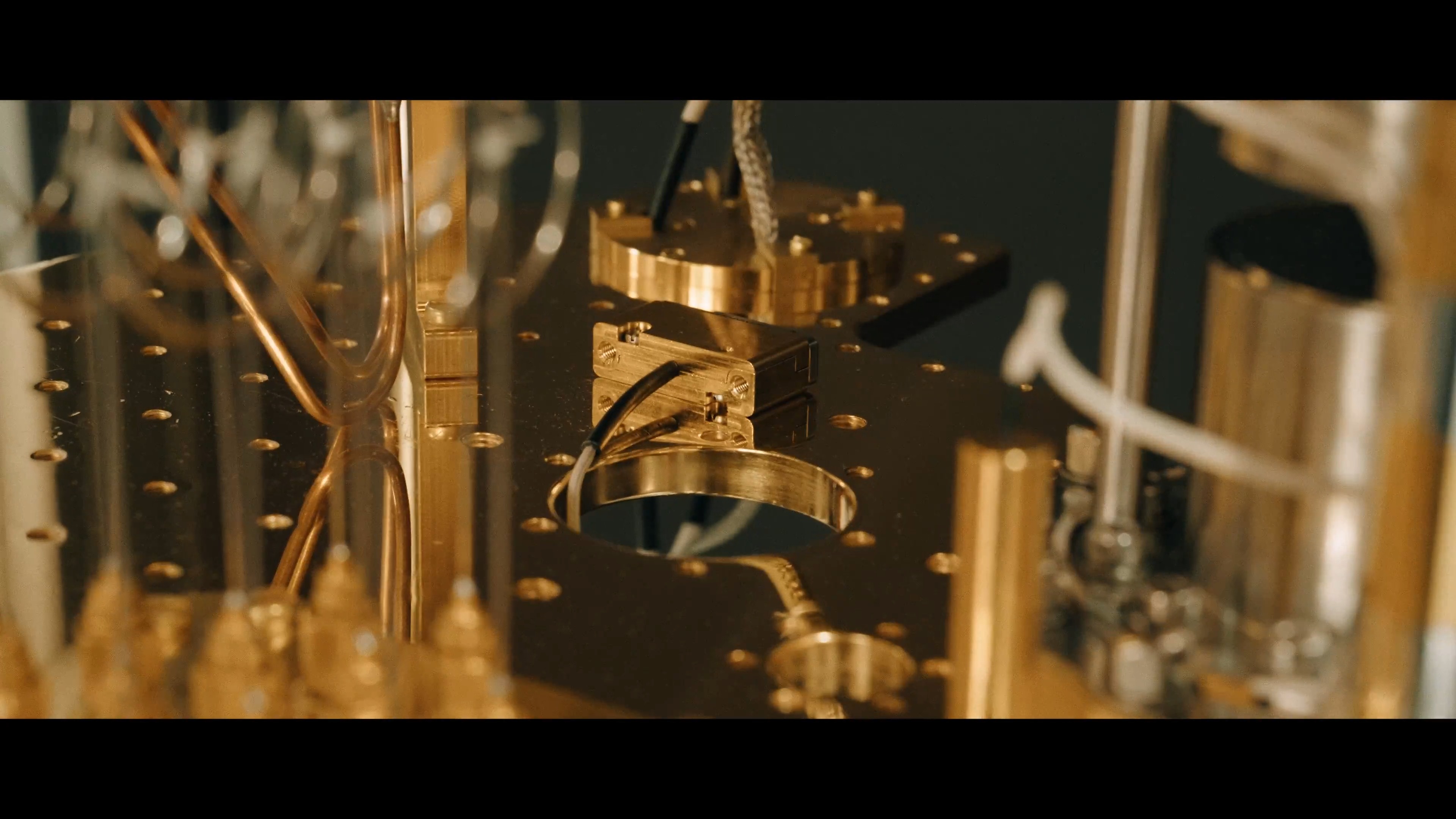
Microsoft is giving the U.S. Defense Advanced Research Projects Agency direct, on-site access to its latest quantum computing hardware, deepening a collaboration that could provide an important test of whether the company’s technology can move from laboratory research toward commercially viable machines.
The software giant said Tuesday it had opened a new quantum research center in Maryland with the University of Maryland and other industry partners. The facility, located in the university’s Discovery District near Washington, D.C., will house a quantum computing system based on Microsoft’s Majorana 2 chip that DARPA will independently test and evaluate.
The arrangement gives the U.S. defense research agency a much more direct role in assessing Microsoft’s technology. Until now, DARPA has evaluated Microsoft’s quantum systems remotely by accessing machines located in Redmond, Washington, and Europe. The Maryland facility will allow DARPA researchers to work directly with the hardware, load their own software, and run the system through their own boot sequences.
Register for the next Tekedia Mini-MBA.
Register for Tekedia AI in Business Masterclass.
Join Tekedia Capital Syndicate and co-invest in great global startups.
“This is a big deal for us because it essentially enables DARPA to kick the tires and to sort of figure out how good this machine is and how it’s performing,” Zulfi Alam, corporate vice president of Microsoft Quantum, said in an interview.
The significance goes beyond providing DARPA with a new testing location. Quantum computing remains one of the technology industry’s most ambitious bets, but the field has yet to demonstrate that sufficiently powerful machines can be built at a cost that makes them useful for large-scale commercial applications.
DARPA is evaluating several competing quantum-computing approaches as part of an effort to determine whether any can produce economically viable systems by 2033. Microsoft’s participation puts its Majorana-based approach under direct scrutiny against other technologies pursuing the same long-term objective.

That makes the Maryland system an important bridge between scientific validation and commercial engineering.
Microsoft has based its quantum strategy on Majorana particles, which the company says can potentially provide a more stable foundation for quantum computing. Its Majorana 2 chip is designed around this approach, with the company seeking to build quantum systems that can eventually scale far beyond today’s experimental machines.
The major challenge is whether the machine can perform useful calculations reliably, repeatedly, and at a cost that justifies its construction and operation. That is where DARPA’s evaluation becomes particularly relevant.

Alam said the agency’s principal metric is whether the value of the computation produced by a quantum system exceeds the cost of operating the system. That effectively shifts the assessment from a purely scientific question to an economic one.
“It enforces a certain amount of engineering rigor that scientific teams normally do not have,” Alam said, describing DARPA as “a completely trusted organization” with which Microsoft can share both its current work and future plans.
That definition matters because quantum computing has attracted enormous investment while remaining at an early stage of practical deployment. Conventional computers remain vastly more capable for most everyday computing workloads, while quantum machines require highly specialized hardware and sophisticated systems to maintain and manipulate fragile quantum states.
The potential payoff, however, is substantial. Quantum computers could eventually solve certain classes of problems that would be impractical for conventional machines, including some problems involving optimization, materials science, chemistry, and cryptography.
National security agencies have a particularly strong interest in the technology because sufficiently capable quantum computers could eventually threaten existing encryption systems. The same technology could also potentially be used to develop new forms of secure communication and solve complex problems relevant to defense and intelligence.
DARPA’s involvement therefore gives Microsoft’s quantum programme significance beyond the commercial technology market. A successful system could have implications for U.S. national-security capabilities as well as for Microsoft’s ambitions in cloud computing and advanced computing infrastructure.
The Maryland system has also been designed with Microsoft’s longer-term development programme in mind. DARPA will initially test the Majorana 2 chip, but the system is being built so that future Microsoft quantum processors can be installed as they become available. That means the facility is not intended to be a one-off demonstration of a single chip. It is being positioned as an evaluation platform through which Microsoft’s successive generations of quantum hardware can be tested.
This could become more important as Microsoft approaches its commercialization target.
The company has said it plans to have commercial quantum computing systems ready by 2029. That leaves roughly three years for Microsoft to translate its current research into a system that meets substantially higher standards for reliability, scalability, performance and cost.
DARPA’s independent testing could help identify weaknesses before Microsoft attempts to commercialize the technology at scale. It also creates an external benchmark for claims about the performance of the company’s quantum architecture at a time when competing technology platforms are pursuing different approaches to building useful quantum computers.
The partnership also illustrates a broader shift in the quantum industry. For years, much of the field was defined by scientific breakthroughs, prototype processors, and increasing numbers of quantum bits. The next phase is likely to place greater emphasis on whether those advances can produce useful computational results and eventually generate economic value.
For Microsoft, that means the question is no longer whether its Majorana technology works in a laboratory environment. It is whether the architecture can ultimately support a scalable computing system whose benefits justify the enormous engineering and infrastructure costs involved.
The Maryland center gives DARPA an unusually close view of that transition.
Microsoft is effectively putting its hardware in front of an independent government evaluator whose mandate is to determine whether the technology can cross the gap between scientific possibility and economically meaningful computing. If the system performs well under that scrutiny, it could provide additional validation for Microsoft’s 2029 commercialization ambitions.
If it falls short, the same testing could expose the technical and economic obstacles that Microsoft still needs to overcome. Either way, giving DARPA physical access marks a significant change in the way Microsoft’s quantum programme will be evaluated.