

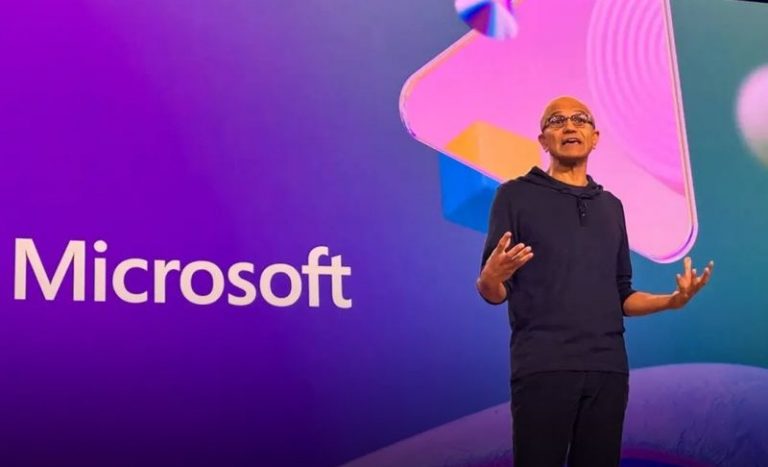
Microsoft has announced ‘Scout’, a new autopilot-style AI agent designed to function as a persistent digital operator across enterprise workflows. Positioned as part of its broader push into agentic computing, Scout is intended to move beyond prompt-based assistance toward autonomous task execution, where the system can plan, coordinate, and complete multi-step objectives with limited human intervention.
Microsoft has framed the system as a layer that sits above traditional productivity software, integrating with cloud services, enterprise data, and developer tooling to execute workflows such as report generation, system monitoring, and customer operations. The launch reflects the company’s continued expansion of AI agents across Microsoft 365, Azure, and GitHub ecosystems.
Microsoft Scout represents a shift in enterprise AI design, emphasizing autonomy over assistive suggestion. Unlike conventional copilots that rely on user prompts for each step, the agent is built to interpret high-level goals and break them down into executable sub-tasks. It can operate across Microsoft’s cloud infrastructure, accessing data pipelines, security layers, and productivity suites to coordinate actions in real time.
Register for Tekedia Mini-MBA edition 20 (June 8 – Sept 5, 2026).
Register for Tekedia AI in Business Masterclass.
Join Tekedia Capital Syndicate and co-invest in great global startups.
Unlike earlier automation tools, Scout is designed with a feedback loop that refines task execution based on outcome evaluation and system telemetry. This allows it to adapt workflows dynamically as conditions in enterprise environments change. Scout is positioned as an orchestration layer for enterprise AI workloads.
This means it is not simply a chatbot interface but a system capable of persistent memory, task scheduling, and cross-application reasoning.
Developers can integrate Scout into internal tools using APIs, allowing automation pipelines to run with minimal supervision. It also supports role-based access controls to ensure that autonomous actions comply with organizational security policies. Integration with existing Microsoft services enables seamless handoff between human users and AI agents within shared workflows.
Early enterprise applications include IT operations monitoring, document synthesis, and customer support triage. Scout can detect anomalies in system logs, generate incident reports, and trigger automated remediation steps without human initiation. Analysts suggest this approach could reduce operational overhead while increasing execution speed across distributed organizations.

The system is also expected to support predictive planning, where it anticipates user needs based on historical patterns. Such capabilities place Scout in the emerging category of agentic AI platforms competing for enterprise dominance. The introduction of Scout signals a broader industry trend toward autonomous AI systems embedded directly into enterprise infrastructure.
If successful, it could redefine how organizations structure digital workflows, shifting from human-in-the-loop processes to agent-driven execution models. However, the deployment of autonomous agents like Scout also introduces governance challenges, particularly around accountability for machine-initiated decisions. Enterprises will need to establish clear audit trails, override mechanisms, and compliance frameworks to manage risk at scale.
Security researchers also warn that autonomous orchestration systems could become high-value targets for adversarial manipulation or data exfiltration. As organizations adopt these tools, the balance between efficiency gains and systemic risk will become a defining factor in adoption speed. Scout reflects a transition phase in enterprise computing where software systems are evolving from passive tools into active participants in operational decision-making.

Industry observers expect rapid iteration cycles, with vendors refining agent reliability, expanding interoperability standards, and embedding stronger human oversight mechanisms as enterprise demand accelerates across cloud-first organizations worldwide. This evolution is expected to reshape procurement decisions, platform competition, and long-term architecture planning within large-scale enterprises adopting AI-first strategies.