

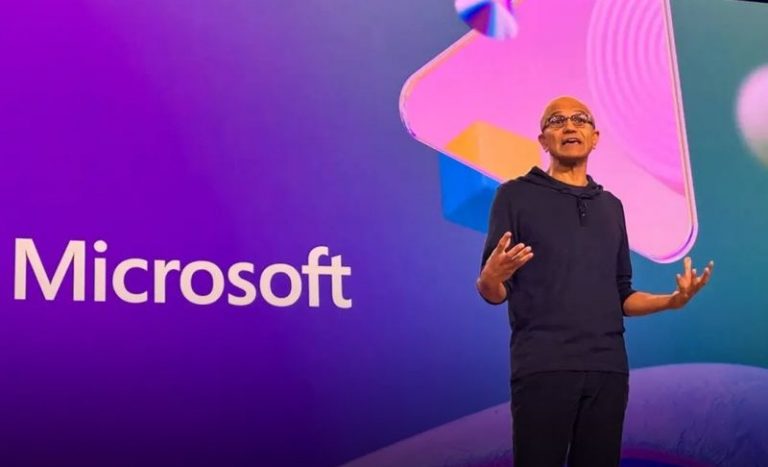
Microsoft is preparing to lay off thousands of employees, with sales teams likely to bear the brunt of the cuts, as the tech giant pushes deeper into artificial intelligence while reining in costs across other business areas.
The layoffs are expected to be announced in early July, shortly after the close of the company’s fiscal year, according to people familiar with the matter who requested anonymity.
Though the final number of affected employees has not been confirmed, the cuts are expected to impact roles beyond sales, suggesting a broad internal restructuring as Microsoft prioritizes its AI infrastructure buildout. The company has so far declined to comment on the upcoming layoffs.
Register for Tekedia Mini-MBA edition 20 (June 8 – Sept 5, 2026).
Register for Tekedia AI in Business Masterclass.
Join Tekedia Capital Syndicate and co-invest in great global startups.
Register for Tekedia AI Lab.
This fresh round of terminations will follow a May downsizing that eliminated around 6,000 positions, most of which came from product development and engineering. Those layoffs spared most customer-facing roles, including marketing and sales. But that appears to be changing as Microsoft increasingly turns to third-party firms to handle sales of its software products to small and mid-sized businesses.
AI Ambitions Forcing a Workforce Rebalance
At the heart of Microsoft’s workforce reshaping is its ambitious AI strategy. The company plans to spend $80 billion in capital expenditures this fiscal year, a massive jump from prior years, with the bulk of the investment directed toward data center construction and server infrastructure. The goal is to ease capacity constraints for its rapidly growing suite of AI services, including those powered by OpenAI, in which Microsoft has invested over $13 billion to date.
These data centers underpin Microsoft’s Azure cloud platform and its integration of AI models into products like Office 365 (Copilot), Bing, and GitHub. But building and maintaining AI capacity is costly, prompting Microsoft to impose strict financial discipline in other business units.

Executives have been clear that the company will “keep a lid on spending” in non-AI areas to meet investor expectations. In recent quarters, CFO Amy Hood has repeatedly signaled that AI-related investments would be offset by cuts in operational costs elsewhere.
Sales Teams in Transition
Microsoft had 228,000 employees globally at the end of June 2024, with around 45,000 working in sales and marketing. Sources indicate that the new layoffs will heavily affect these customer-facing teams, many of whom have seen their responsibilities shift as the company pivots to digital-first and partner-led sales strategies.
Back in April, Microsoft informed employees it would begin outsourcing more sales tasks, particularly in the small and medium business (SMB) segment. This strategy aligns with industry trends: as AI and automated tools become more adept at handling lead generation, customer engagement, and support, traditional sales roles are being reevaluated.

The company has also been reshaping how it sells its enterprise software and cloud products, moving away from labor-intensive direct sales and leaning more heavily on AI-powered tools and partner networks.
A Broader Pattern Across Big Tech
Microsoft’s workforce cuts echo similar moves by other tech giants. Amazon CEO Andy Jassy recently confirmed that generative AI and AI agents will reduce the company’s corporate workforce over time, even as new AI roles emerge.
In recent months:
- Meta has laid off tens of thousands while shifting resources to its Llama AI program.
- Google has consolidated multiple teams and cut staff across ad sales, recruiting, and engineering as it pours funding into Gemini, its AI initiative.
- Salesforce and SAP have made cuts to restructure for AI readiness.
- Even cybersecurity firm CrowdStrike announced a 5% reduction in staff, citing AI as a driver of back- and front-office efficiency.
The Future of Microsoft’s Workforce
While Microsoft insists these layoffs are part of its routine fiscal-year-end reevaluation, this year’s timing and scale suggest something more structural. With AI driving both innovation and disruption, the company is realigning its workforce to meet what CEO Satya Nadella calls “the AI age.”
The company’s fiscal year closes on June 30 and traditionally brings performance reviews, organizational changes, and business model updates. But this year’s changes come with added urgency as Microsoft races to stay ahead in an AI arms race that’s transforming the economics of Big Tech.
In a market where compute power and infrastructure scale define success, Microsoft is betting big on automation—and that means fewer humans in traditional roles. The company is not alone, but as one of the most powerful players in the industry, its strategy sends a message that AI will not just change the way people work—it will change who gets to work at all.