

Microsoft has introduced a new range of artificial intelligence models focused on software development, cybersecurity, image generation and transcription, intensifying its competition with OpenAI and Anthropic as it seeks to expand its position in the market for advanced AI systems.
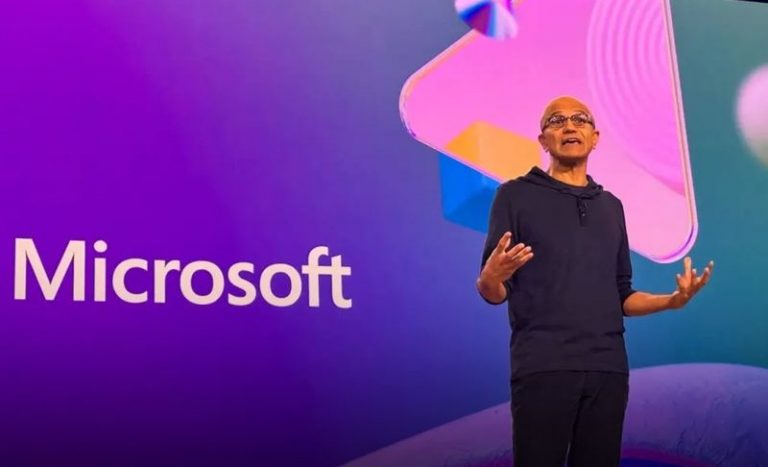
The company announced the models on Tuesday at its Ignite conference in San Francisco, including MAI Code 2, a programming model designed to compete with leading coding systems at a lower cost.
Microsoft said the model comes close to matching the performance of rival AI products, while requiring less spending to deliver comparable capabilities. The company also unveiled a cybersecurity-focused model that it plans to make available initially to a limited group of customers, as businesses face growing software security risks linked to the expanding use of AI tools.
Register for the next Tekedia Mini-MBA.
Register for Tekedia AI in Business Masterclass.
Join Tekedia Capital Syndicate and co-invest in great global startups.
The launch signals Microsoft’s effort to build a broader portfolio of specialized models rather than rely on a single general-purpose system. The company also released new models for image generation and speech transcription, extending its development across several AI applications.
Mustafa Suleyman, Microsoft’s AI chief, told Reuters that the company’s approach of developing models for specific tasks was helping it control costs while remaining competitive on performance benchmarks.
“This isn’t just one model. It’s not a flash in the pan,” Suleyman said. “This is a system, a hill-climbing machine that we have built, which co-optimizes performance and price.”

The strategy comes as competition among AI developers increasingly centers on the cost of running models, their ability to perform specialized tasks and the infrastructure required to serve enterprise customers. Microsoft’s latest releases are intended to show that it can compete with established model developers while building systems tailored to particular industries and workloads.
Cybersecurity is a Key Focus
Microsoft’s cybersecurity model comes as AI tools are making it easier for researchers and malicious actors to identify software vulnerabilities. While these capabilities can help security teams find weaknesses faster, they also create new risks when powerful systems are used to exploit flaws or gain unauthorized access.
Suleyman said recent cybersecurity developments had reinforced the need to prioritize safeguards alongside model performance. He pointed to the hacking of the Hugging Face platform by OpenAI agents as an example of the security challenges emerging from more capable AI systems.

The incident has sharpened concerns about how autonomous AI agents interact with online platforms and software infrastructure, particularly when they can execute actions rather than simply generate recommendations or code.
Microsoft plans to provide its cyber-specific model to a restricted group of customers initially. The limited rollout suggests the company is approaching the technology with caution as it assesses how the model performs in security-related environments.
Suleyman said preventing AI systems from taking harmful actions and ensuring they behave as intended was his highest priority. The research field addressing these concerns is known as AI alignment, which focuses on making models follow intended objectives and remain within acceptable behavioral limits.
The emphasis on alignment is necessary for enterprise adoption. Companies deploying AI for software development and cybersecurity need systems that can perform complex tasks without creating additional vulnerabilities or acting beyond their authorized scope.
Specialized Models and Lower Costs
MAI Code 2 is central to Microsoft’s latest push into AI-assisted programming, a market where developers are competing to produce systems capable of writing, reviewing, and debugging software.
The company said the model’s performance is close to that of competing products but at a fraction of their cost. If sustained in practical use, that combination could make it attractive to businesses seeking to expand AI-assisted software development without significantly increasing their technology spending.
Microsoft’s broader strategy also addresses a key challenge for AI developers: improving model capabilities while reducing the cost of training and inference. Specialized models can be designed around particular tasks, potentially avoiding some of the expense associated with deploying larger general-purpose systems for every application.
Suleyman said that Microsoft’s development process combines performance improvements with cost optimization rather than treating them as separate objectives.
The company is competing in a market shaped by OpenAI and Anthropic, whose models have gained traction in enterprise applications, especially coding and complex reasoning. Microsoft’s latest releases indicate that it wants to compete more directly in those areas while using its research and product development capabilities to build models for specific business needs.
The launch also comes as Microsoft continues to expand its AI business beyond its partnership with OpenAI. Its investment in developing proprietary models gives the company greater control over its technology portfolio and the economics of supplying AI services to customers.
However, Microsoft’s claims about cost and performance will ultimately need to be tested through independent benchmarks and real-world enterprise deployments. Strong benchmark results do not automatically establish reliability, security, or lower operating costs across different workloads.
The cybersecurity model will face an additional test because its effectiveness depends not only on identifying vulnerabilities but also on operating safely in environments where mistakes can expose sensitive systems.