

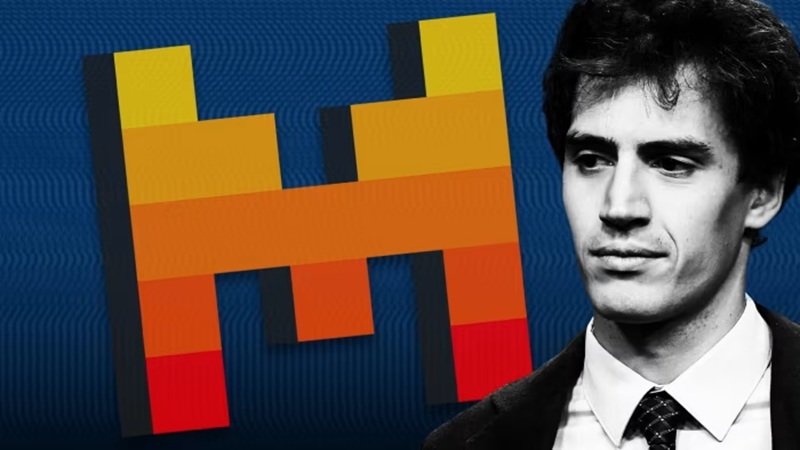
French AI startup’s valuation tops €21 billion as it expands computing infrastructure, develops larger models and positions itself as a European alternative to OpenAI and Anthropic.
French artificial intelligence startup Mistral said Tuesday it has raised €3 billion ($3.5 billion) in fresh funding led by South Korean memory-chip giant Samsung, giving the company a post-money valuation of more than €21 billion as it seeks to establish itself as a leading European alternative to U.S. AI giants OpenAI and Anthropic.
The funding round also includes the Scaleup Europe Fund, a European Union-backed investment vehicle managed by EQT, and existing investor PSG Equity.
Register for the next Tekedia Mini-MBA.
Register for Tekedia AI in Business Masterclass.
Join Tekedia Capital Syndicate and co-invest in great global startups.
The new valuation represents a sharp increase from the €11.7 billion valuation Mistral secured about a year ago in a funding round led by Dutch semiconductor equipment maker ASML. The capital will allow Mistral to accelerate investments in computing infrastructure, including its own data centers, while continuing to rent computing capacity as it scales its model training operations.
Arthur Mensch, Mistral’s chief executive, said the company ultimately wants to rely increasingly on computing infrastructure that it owns.
“Long term, the plan is to fully rely on capacity that we are building ourselves,” Mensch told CNBC. “The amount of compute that we own is going to grow … around 100% in the next five years.”

Mensch said the company would use the additional capacity to train “bigger and faster models,” underscoring the enormous infrastructure requirements facing AI companies as they compete to develop capable systems.
Founded and headquartered in Paris, Mistral has pursued a strategy that differs from the closed, proprietary model approach associated with OpenAI and Anthropic. The company has emphasized open-weight AI models while working directly with businesses to develop customized AI applications that can be integrated into their operations.
That enterprise strategy has already produced a partnership with ASML, where Mistral’s technology is being integrated into manufacturing processes. Mensch said the company intends to pursue a similar relationship with Samsung, potentially extending its AI technology deeper into industrial and semiconductor operations.

The fresh capital also comes as Mistral attempts to convert its growing technological footprint into substantial recurring revenue. Mensch said earlier this year that he expected the company’s annual recurring revenue to exceed $1 billion in 2026.
Asked whether the latest fundraising and partnerships would alter that outlook, Mensch said Mistral expected “to be beating” the $1 billion target if current trends continue, although he declined to provide a revised figure.
“We’re very confident that the fundraising we are doing today is also accelerating and enabling further growth down the line in 2027,” Mensch said.
Mistral’s Sovereign AI Pitch
The fundraising strengthens Mistral’s position at the center of Europe’s push to develop its own AI capabilities rather than relying predominantly on U.S. or Chinese technology companies.
Mistral has increasingly marketed itself as a non-U.S. and non-Chinese option for companies seeking greater control over their AI infrastructure, data and technology supply chains. The approach taps into growing interest in “sovereign AI” across Europe, where governments and businesses are seeking alternatives to dependence on foreign technology providers.
The Scaleup Europe Fund’s investors include the European Commission as well as major corporations including Novo Holdings and Santander, giving the latest investment a broader institutional dimension beyond conventional venture-capital backing.
Mistral’s open-weight approach is also intended to differentiate it from closed systems operated by OpenAI and Anthropic. But the company faces intense competition from Chinese AI developers, whose models have rapidly narrowed the performance gap with leading Western systems.
Mensch said Mistral’s models expected to be released “very soon” would be “very competitive.”
He argued that Chinese AI companies have so far had a more limited presence with enterprise customers outside China, giving Mistral an opportunity to position itself as a more dependable long-term partner for European businesses.
Mistral can also allow some Chinese AI models to run on its infrastructure, the company said, while keeping customer data within Mistral’s environment. The company says that this arrangement limits direct dependence on Chinese AI laboratories.
For European businesses, however, the issue extends beyond model performance. Mensch said companies need confidence that the AI systems they adopt today will continue to receive support and upgrades in the future, while geopolitical tensions could potentially introduce export restrictions or other disruptions affecting access to foreign models.
“At this point in time, we are seeing that the volatility in this space is actually quite extreme,” Mensch said.
That volatility is strengthening Mistral’s case for developing and controlling its own models, he added.
“Now we also need to be a trusted partner for our customers,” Mensch said. Customers want assurance that “in one year from now they will get access to better models than they have access to today.”
“The only way we can provide that guarantee is by continuing to train our models ourselves,” he said.
The strategy, however, comes with high costs. Building data centers and securing large amounts of computing capacity requires billions of dollars of capital at a time when AI companies are engaged in an infrastructure race involving advanced chips, energy, and data-center capacity.