

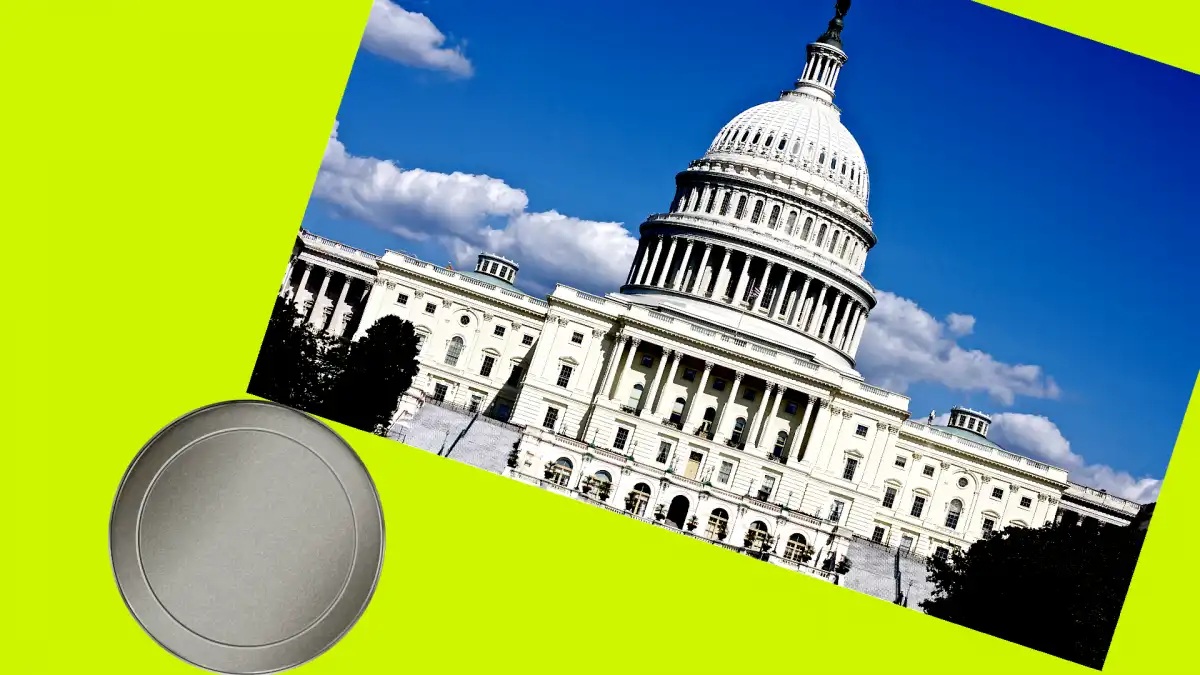
Multiple bipartisan bills have been introduced in Congress in early-to-mid March 2026 aiming to restrict or ban U.S. government officials including the president, vice president, members of Congress, and in some cases their families or senior executive branch officials from participating in prediction markets, particularly on events involving politics, government actions, policy outcomes, war, or other sensitive matters.
Key Bills
PREDICT Act (Preventing Real-time Exploitation and Deceptive Insider Congressional Trading Act): Introduced March 25, 2026, by Reps. Nikki Budzinski (D-IL) and Adrian Smith (R-NE) in the House, with Senate companions involving Sens. John Curtis (R-UT) and Adam Schiff (D-CA), among others. It would prohibit members of Congress, their spouses and dependent children, the president, vice president, and political appointees from trading on prediction markets tied to political events, policy decisions, or other government actions.
Penalties include fines and disgorgement of profits. The goal is to prevent insider trading using nonpublic information.
Register for Tekedia Mini-MBA edition 20 (June 8 – Sept 5, 2026).
Register for Tekedia AI in Business Masterclass.
Join Tekedia Capital Syndicate and co-invest in great global startups.
Register for Tekedia AI Lab.
Public Integrity in Financial Prediction Markets Act of 2026: Bipartisan effort led by Sens. Todd Young (R-IN), Elissa Slotkin (D-MI), John Curtis, and Adam Schiff. It targets the use of material nonpublic information (MNPI) by federal elected officials, congressional staff, political appointees, and executive branch employees when trading certain prediction contracts related to government policy or political outcomes.
Earlier efforts include: A bill from Sens. Jeff Merkley (D-OR) and Amy Klobuchar (D-MN) to ban the president, VP, and Congress from trading event contracts, with limits on senior officials. The BETS OFF Act from Reps. Gabe Amo, Greg Casar, Yassamin Ansari, and Sen. Chris Murphy, focusing on banning wagering on war, terrorism, assassination, or events where officials know/control the outcome.
The STOP Corrupt Bets Act and others targeting broader categories like sports, politics, and military events. These come amid rapid growth in platforms like Polymarket and Kalshi, where trading volume has surged reports of nearly $64 billion in 2025 activity in some contexts. Concerns stem from suspicious high-value bets on events like U.S. strikes on Iran, political leadership changes, or policy shifts.

Prediction markets function like betting platforms but on real-world event outcomes. Proponents argue they provide efficient forecasting and information aggregation. Critics, including these lawmakers, say they create conflicts of interest for officials who have access to nonpublic info, potentially incentivizing leaks or biased decision-making for personal profit. Some platforms have responded preemptively: Kalshi announced it would block politicians and athletes from certain markets.
Broader regulatory scrutiny from the CFTC is ongoing, including advisories on insider trading. Bills vary in scope—some are outright bans for officials on relevant contracts, others focus on MNPI misuse with disclosure or penalties. None have passed yet; they reflect growing bipartisan unease but face the usual legislative hurdles.This is part of a wave of proposals as prediction markets gain mainstream traction, including investments from traditional finance players.
It highlights tension between innovation in information markets and traditional ethics rules for public officials. Polymarket, has faced intense scrutiny and multiple controversies, particularly around insider trading, market integrity, regulatory compliance, and ethical concerns over betting on sensitive real-world outcomes.

The most prominent and ongoing issue involves allegations that traders with access to nonpublic information—potentially classified government or corporate details—have profited handsomely from timely bets on geopolitical, military, and corporate events. Prediction markets like Polymarket aggregate crowd wisdom for forecasting but create incentives for leaks or misuse of insider info.
A brand-new anonymous account bet over $30,000–$32,000 that Nicolás Maduro would be ousted within weeks, just hours before U.S. forces captured him. The trader reportedly pocketed ~$400,000. This sparked immediate outrage, with Rep. Ritchie Torres (D-NY) introducing legislation to crack down on insider trading on prediction markets.
Multiple accounts made massive profits on bets tied to U.S. strikes on Iran, the fate of Supreme Leader Khamenei, and related timelines. One account reportedly earned $515,000–nearly $1 million in a single day or across dozens of bets. Blockchain analytics showed six accounts profiting ~$1.2 million on Iran-related contracts alone. Israel indicted a military reservist and civilian for allegedly using classified info to bet on Polymarket operations during its conflict with Iran.
Separate incidents include a trader netting nearly $1 million on precise Google “Year in Search” rankings and product launch dates, plus a $40,000 bet on an OpenAI browser launch yielding quick profits. Critics argue these suggest access to internal company info.
These cases have fueled bipartisan calls for bans on government officials, politicians, and insiders trading on political, policy, or military events linking directly to the bills discussed previously. Platforms have been accused of enabling “rigged” markets on war, death, and sensitive operations.
While Polymarket defends itself as a tool for efficient forecasting and has proactively tightened rules, the surge in volume has spotlighted real risks of insider abuse, regulatory gaps, and moral hazards. These issues have directly spurred legislation, platform policy shifts, and heightened CFTC oversight as of March 2026.
Proponents argue it reveals valuable information; detractors say it invites corruption. The controversies are evolving rapidly, with more bills and potential enforcement likely.