

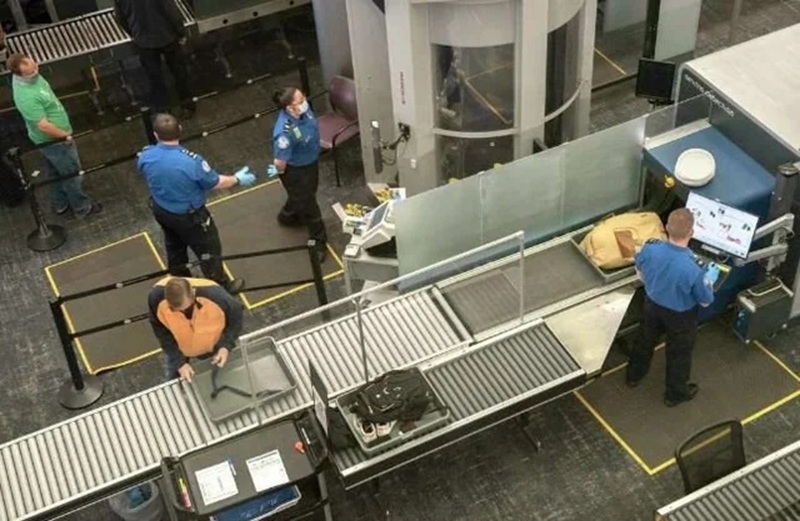
Elon Musk said he would step in to cover the salaries of U.S. airport security officers, inserting himself into a protracted federal funding crisis that has left tens of thousands of workers without pay and exposed growing stress across the country’s aviation system.
“I would like to offer to pay the salaries of TSA personnel during this funding impasse that is negatively affecting the lives of so many Americans at airports throughout the country,” Musk wrote on his social media platform X on Saturday.
The offer comes as a budget deadlock over funding for the Department of Homeland Security enters its fifth week, leaving its aviation security arm, the Transportation Security Administration, operating under mounting strain. TSA officers, classified as essential workers, are required to report for duty even as they miss paychecks. Many are now on the verge of going without a second full salary in six months.
Register for Tekedia Mini-MBA edition 20 (June 8 – Sept 5, 2026).
Register for Tekedia AI in Business Masterclass.
Join Tekedia Capital Syndicate and co-invest in great global startups.
Register for Tekedia AI Lab.
The immediate consequences are visible at major airports, where screening delays have stretched for hours in some locations. Airlines and travel groups warn that absenteeism among the TSA’s roughly 50,000 officers could worsen, particularly over busy travel periods, as financial pressure forces some workers to stay home or seek alternative income.
The economic toll on employees is becoming acute. TSA staff earn an average annual salary of about $61,000, according to federal data. With pay suspended, some airports and local communities have organized food drives and donation efforts to support screeners, an unusual step for a federal workforce that underscores the severity of the disruption.
However, Musk’s intervention, while drawing attention, faces significant legal and operational hurdles. U.S. federal payroll systems are tightly controlled, and there is no established mechanism for a private individual to directly fund the wages of government employees. Any such arrangement would require congressional approval or a formal government framework, neither of which currently exists.

The offer nonetheless highlights a broader breakdown in Washington, where political divisions have stalled funding for a critical national security agency. The dispute is tied to disagreements over immigration enforcement policy and funding priorities within DHS, which oversees border security, disaster response, and airport screening operations.
John Thune said on Friday that bipartisan negotiators have narrowed their differences, but acknowledged that a final agreement has not been reached. The impasse has persisted even after lawmakers reached partial agreements to fund other parts of the government earlier in the year.
The standoff echoes previous shutdown episodes but is becoming more disruptive due to its frequency. TSA workers faced similar pay disruptions within the past six months, raising concerns about retention, morale, and long-term workforce stability.

For the aviation sector, the risks are operational and reputational. TSA screens millions of passengers daily, making it a critical node in the country’s transport infrastructure. Prolonged understaffing or reduced morale could affect throughput and efficiency, even if baseline security standards are maintained.
The situation has also prompted unconventional proposals from political leaders. Donald Trump has floated the idea of deploying immigration enforcement personnel to assist at airports, a suggestion that pinpoints the scale of the staffing strain but has raised questions about training, jurisdiction, and effectiveness.
Musk’s offer introduces a different dimension: the role of private capital in addressing public sector failures. His personal wealth, estimated at over $800 billion dollars, means he could theoretically absorb the short-term payroll costs of TSA workers. But the proposal raises questions about precedent and governance.
But allowing private individuals to fund federal operations, even temporarily, would represent a significant departure from established norms. Watchdogs have warned that it could blur lines of accountability and create expectations for similar interventions in future crises.
At the same time, the gesture aligns with Musk’s pattern of high-profile engagement in public policy debates, often using his platform to intervene directly in issues ranging from infrastructure to energy and technology.
There is also a political undercurrent. The shutdown reflects deeper disagreements over the role and scope of federal agencies, particularly in areas such as immigration and national security. Musk’s public offer, while framed as humanitarian, places additional pressure on policymakers by highlighting the tangible impact of the impasse on everyday operations.
Airports, meanwhile, remain on the front line of the disruption. Longer wait times, strained staff, and uncertain funding conditions are combining to test the resilience of a system designed for stability and predictability.
It is not certain that Musk’s proposal will gain any practical traction. Neither DHS nor TSA has formally commented on the matter, and there is no indication that discussions are underway to operationalize the idea. What is clear, however, is the signal it sends. A private individual offering to fund a core government function underlines the enormity of the current breakdown. It is seen as reflecting a moment where the gap between political negotiation and operational reality has widened to the point that external intervention is being openly contemplated.
For now, TSA workers still report for duty without pay, airports continue to absorb the strain, and negotiations in Washington continue without resolution. Musk’s offer does not resolve those underlying issues, but it has sharpened attention on them.