

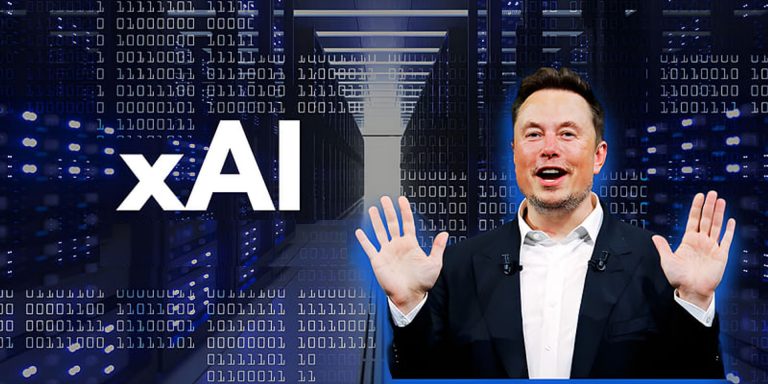
Elon Musk has launched another sweeping overhaul of xAI’s engineering ranks as the company is folded deeper into SpaceX ahead of a record-setting IPO, which underscores intense pressure to close the gap with OpenAI and Google while stabilizing a company hit by departures, layoffs, and mounting questions over execution.
According to an internal memo reviewed by Business Insider, SpaceX executive Michael Nicolls, the senior vice president of Starlink, has now assumed the role of xAI president as the AI company is integrated more closely into SpaceX’s structure.
In the memo, Nicolls told staff that xAI is “clearly behind” competitors and that the company is moving urgently to close the gap. On the compute side, he reportedly described xAI’s training performance as “embarrassingly low,” adding that management intends to improve it significantly within the next two months.
Register for Tekedia Mini-MBA edition 20 (June 8 – Sept 5, 2026).
Register for Tekedia AI in Business Masterclass.
Join Tekedia Capital Syndicate and co-invest in great global startups.
Register for Tekedia AI Lab.
For a company central to a potential $1.75 trillion to $2 trillion SpaceX IPO narrative, that internal assessment is a revealing signal of how much execution risk still sits beneath the valuation story.
SpaceX, which earlier this year absorbed xAI in a transaction valuing the combined group at about $1.25 trillion, has already filed confidentially for an initial public offering, according to reports.
That means xAI is no longer simply a startup fighting for relevance in the generative AI race; it has become a key growth pillar inside the investment case for what could be the largest listing ever brought to market.

The urgency behind the overhaul reflects a widening competitive gulf. OpenAI, Anthropic, and Google have moved aggressively in model performance, enterprise adoption, coding tools, multimodal systems, and developer ecosystems. By contrast, xAI’s flagship Grok platform remains under pressure to demonstrate that it can compete not only in consumer-facing chatbot products but also in enterprise-grade coding, reasoning, voice, and multimodal workloads.
This helps explain the scale of the internal reset. The company has reassigned leadership across nearly every core layer of model development.
Devendra Chaplot will now lead pre-training, the foundational phase where models absorb broad statistical patterns from massive datasets. Aman Madaan takes charge of model factory and tooling, overseeing the infrastructure and pipelines that determine how quickly models can be iterated. Aditya Gupta now leads post-training and reinforcement learning, the crucial final stage where models are aligned with human preferences and refined for deployment.

On the product side, former Cursor engineers Andrew Milich and Jason Ginsburg are now leading Grok Main, Grok Voice, and Grok Imagine, the company’s multimedia generation suite.
Once again, SpaceX talent was imported. Daniel Dueri, a senior SpaceX software engineering leader, is now overseeing compute infrastructure, while Matt Monson, Starlink’s software director, has taken over data operations at xAI.
This mirrors a familiar Musk management pattern. At Tesla and SpaceX, Musk has often responded to execution bottlenecks with rapid centralization, flattening reporting structures, and bringing in trusted lieutenants from adjacent companies. Here, he appears to be applying the same playbook to AI, treating xAI less as a standalone lab and more as an engineering division inside a much larger industrial and infrastructure machine.
The reorganization also comes against a backdrop of significant instability. Since January, eight founding engineers have exited, including senior figures such as Ross Nordeen, Guodong Zhang, Manuel Kroiss, and Toby Pohlen. xAI has also reportedly shed dozens of employees since February, including cuts to Grok Imagine, Macrohard, and, more recently, parts of its recruiting function.
That level of churn is unusual for a company approaching a public-market debut through its parent. Executive departures at this pace inevitably raise questions about culture, strategic clarity, and whether the company’s internal trajectory matches the valuation expectations being built into the SpaceX offering.
Musk himself has acknowledged the scale of the rebuild. In March, he wrote on X that “xAI was not built right first time around, so is being rebuilt from the foundations up.”
He later added that “many talented people over the past few years were declined an offer or even an interview @xAI,” signaling that the company is now revisiting earlier candidates as it attempts to replenish its technical bench. Those remarks are notable because they suggest that the restructuring is not merely cosmetic.
This is a foundational rebuild of architecture, talent, and product direction at a time when the economics of AI are increasingly defined by scale. Model quality today depends as much on compute utilization and training efficiency as on research talent. If, as Nicolls wrote, the compute performance is “embarrassingly low,” then the issue directly affects development speed, inference costs, and eventually profit margins.
But it comes with more central bearing for IPO investors. A SpaceX listing will likely be marketed not only on launch services and Starlink’s subscription cash flows, but also on AI-driven future growth. Yet xAI remains a capital-intensive business with heavy burn rates and a still-unproven commercial moat.
That tension makes the overhaul strategically important as Musk is effectively trying to ensure that by the time SpaceX’s prospectus is fully public, xAI looks less like a company in crisis and more like a scalable strategic engine capable of supporting a trillion-dollar valuation.
How quickly that transformation happens is expected to determine how much of the SpaceX IPO premium markets are willing to attribute to AI rather than rockets and satellites.