

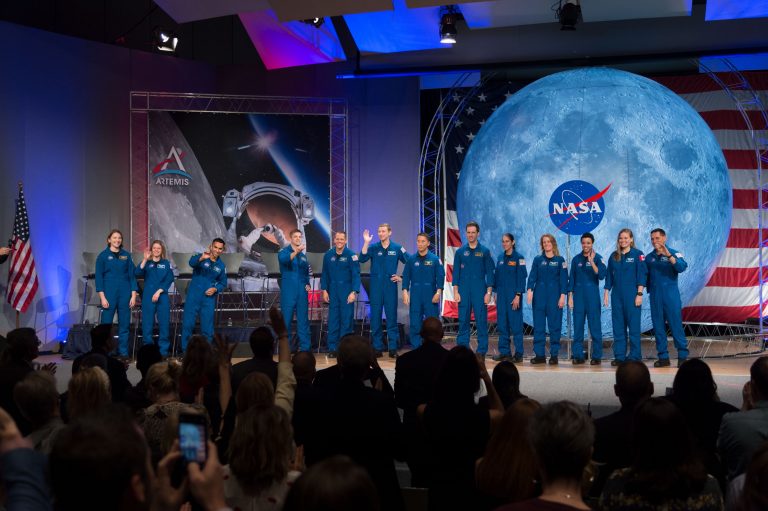
NASA is reopening one of its most exclusive career opportunities, accepting applications for its next astronaut class for the first time since 2024.
The announcement marks a moment for the American space agency as it prepares to expand human exploration beyond Earth orbit, return astronauts to the Moon and send crews toward Mars.
Applications opened on November 7, and eligible candidates have until December 3, 2026, at 11:59 p.m. Eastern time to submit their materials. NASA expects to announce its selections in late 2027, with successful candidates beginning an intensive training programme in 2028.
Register for the next Tekedia Mini-MBA.
Register for Tekedia AI in Business Masterclass.
Join Tekedia Capital Syndicate and co-invest in great global startups.
The recruitment will produce the agency’s 25th astronaut class. The opportunity is closely connected to NASA’s Artemis programme and plans for a sustained human presence on the Moon.
The next generation of astronauts could support missions to the lunar surface, help develop and operate a future Moon Base, and contribute to the technologies and procedures needed for eventual crewed journeys to Mars.
These assignments will require more than the ability to travel in space. Astronauts will need to conduct scientific research, operate complex equipment, maintain spacecraft systems and respond to emergencies in demanding environments.

NASA’s selection standards are demanding. Applicants must be United States citizens and generally need a master’s degree in a science, technology, engineering or mathematics discipline, together with at least three years of relevant professional experience.
The advanced-degree requirement can also be met through qualifying doctoral study, certain medical qualifications or completion of an approved test-pilot school programme.
Candidates must demonstrate strong technical ability, leadership, communication, teamwork and sound judgment. The selection process also involves medical and physical screening.

Applicants must meet NASA’s long-duration astronaut flight medical standards and be prepared for challenging conditions, including confined spaces, irregular schedules and extended periods away from home.
Those selected will spend approximately two years learning essential skills such as spacewalking, operating spacecraft and robotic systems, flying high-performance aircraft and conducting scientific work.
Selection does not guarantee an immediate spaceflight assignment; astronauts may spend years supporting missions and training before receiving an opportunity to fly.
The competition is expected to be intense. During its previous recruitment campaign in 2024, NASA received more than 8,000 applications and selected only 10 candidates, who were announced in 2025.
The agency currently has 32 active astronauts, a small workforce for an ambitious programme involving lunar exploration, space station operations and future deep-space missions. The renewed recruitment reflects the scale of NASA’s plans.
Returning humans to the Moon is not simply a symbolic repeat of the Apollo era. The agency wants to build experience in living and working on another world, test equipment in the lunar environment and develop capabilities that could support much longer journeys.
A permanent or sustained lunar presence would require astronauts with expertise across engineering, medicine, science, aviation and operations. For qualified Americans, the opening offers a rare chance to participate in a defining period of exploration.
It is a reminder that advances in space depend on people whose work begins long before launch. NASA is not merely hiring passengers for rockets; it is recruiting professionals who may help determine how humanity explores beyond Earth. The December 3 deadline makes the opportunity urgent, while the missions ahead give it historic significance.