

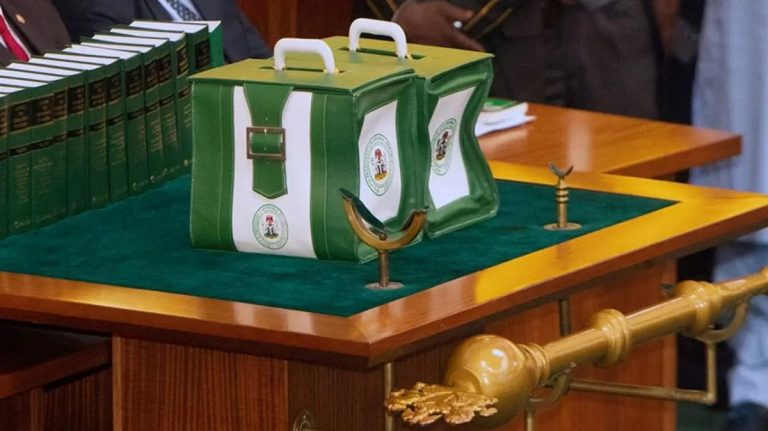
President Bola Ahmed Tinubu, during his presentation of a N49.7 trillion 2025 budget proposal to a joint session of the National Assembly, has emphasized bold economic targets that include a dramatic reduction in inflation and stabilization of the naira.
Speaking on Wednesday during the budget presentation, Tinubu said inflation, which currently stands at 34.6%, is projected to decline to 15% by next year. The president also forecasted an improvement in the exchange rate, with the naira expected to strengthen from approximately N1,700 per US dollar to N1,500.
“This is an ambitious but necessary budget to secure our future,” Tinubu said during his address. “The Budget projects inflation will decline from the current rate of 34.6 per cent to 15 per cent next year, while the exchange rate will improve from approximately 1,700 naira per US dollar to 1,500 naira, and a base crude oil production assumption of 2.06 million barrels per day.”
Register for Tekedia Mini-MBA edition 20 (June 8 – Sept 5, 2026).
Register for Tekedia AI in Business Masterclass.
Join Tekedia Capital Syndicate and co-invest in great global startups.
Register for Tekedia AI Lab.
He explained that the budget’s projections are based on strategic observations, such as the reduction of petroleum product imports, increased export of refined petroleum products, improved agricultural yields due to enhanced security, and reduced reliance on food imports.
Tinubu highlighted key allocations in the budget, with defense and security receiving N4.91 trillion, infrastructure N4.06 trillion, health N2.4 trillion, and education N3.5 trillion.
The president noted that crude oil production is projected at 2.06 million barrels per day, forming a critical component of the budget’s revenue assumptions.

Tinubu’s optimism comes against the backdrop of severe economic challenges that have left Nigerians reeling from inflation and a volatile exchange rate. On Monday, the National Bureau of Statistics (NBS) announced that the headline inflation rate rose to 34.6% in November 2024, up from 33.88% in October. This marks an increase of 0.72 percentage points in a single month.
The year-on-year figures paint an even bleaker picture, with the inflation rate 6.4 percentage points higher than in November 2023, when it stood at 28.2%. Food inflation, which directly impacts the daily lives of Nigerians, surged to 39.93% in November 2024, up from 32.84% in the same month last year.
Meanwhile, the naira has continued its downward spiral in the foreign exchange market, trading as high as N1,700 per dollar in recent days.

How Realistic Are the Projections
Against this backdrop, the president’s projection that the naira will drop to N1500 per dollar has been critiqued. Analysts have noted that the naira’s poor performance in the FX market is largely tied to rising inflation.
“The Naira is currently bad, true. And that’s because the inflation rate in the domestic economy is in tatters. For as long as inflation continues to rise, the FX rate will suffer,” Rufy, a financial analyst, said.
This means, going by the president’s projection that the inflation rate will decline to 15% next year, the exchange rate is expected to drop below N1,000 per dollar.
Budget Assumptions and Challenges
Tinubu’s budget assumes a reduction in petroleum imports as local refineries, including the much-anticipated Dangote Refinery, ramp up production. The government also expects a bumper agricultural harvest fueled by enhanced security measures, which should reduce food import dependency.
However, achieving these goals will not be without challenges, according to economists. Crude oil production has consistently fallen short of targets due to theft and pipeline vandalism, while insecurity in farming regions continues to disrupt agricultural activities.
Furthermore, the removal of fuel subsidies has worded inflation, pushing up transportation and food costs. This has left many Nigerians questioning how the government plans to bring inflation down to 15% without a comprehensive strategy to mitigate these pressures.
The widening gap between official projections and the harsh realities faced by the populace has bolstered these concerns. Critics point to previous budgets that failed to achieve their targets as bases for the lack of trust in government’s ability to implement the current projections.