

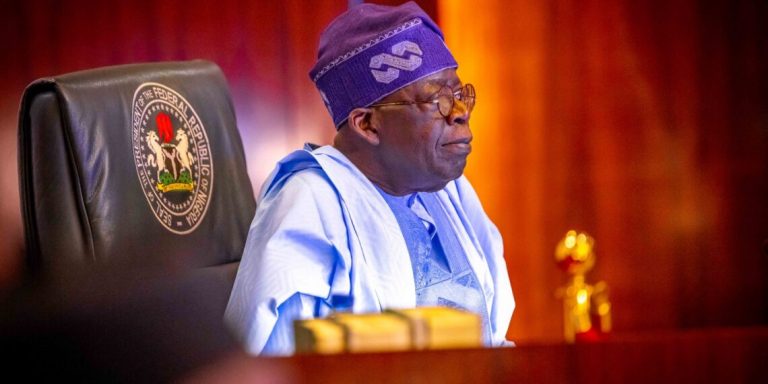
President Bola Tinubu has announced a sweeping directive barring all Ministries, Departments, and Agencies (MDAs) from procuring foreign goods and services where local alternatives exist.
The policy, dubbed the Nigeria First Policy, was one of the resolutions adopted at Monday’s Federal Executive Council (FEC) meeting and announced by Sunday Dare, the President’s Special Adviser on Media and Public Communication, via his official X account. It mandates all MDAs to prioritize Nigerian-made goods in procurement, unless a waiver is granted by the Bureau of Public Procurement (BPP).
According to President Tinubu, the goal is to “invest in our people and our industries by changing how we spend, procure, and build.” He added: “Going forward, Nigerian industry will take precedence in all procurement. Where local supply falls short, contracts will be structured to build capacity here. Contractors will no longer serve as intermediaries sourcing foreign goods while local factories lie idle.”
Register for Tekedia Mini-MBA edition 20 (June 8 – Sept 5, 2026).
Register for Tekedia AI in Business Masterclass.
Join Tekedia Capital Syndicate and co-invest in great global startups.
Register for Tekedia AI Lab.
The new rules include:
- A ban on foreign goods for government procurement where local options exist.
- Mandatory procurement audits by all MDAs to align their budgets with local content rules.
- Sanctions for breaches, including cancellation of contracts and disciplinary actions.
- A new Local Content Compliance Framework to be enforced by the BPP.
While the Presidency insists this marks the start of a new era of “enterprise, self-reliance, and national pride,” some economists and industry leaders have raised concerns that the policy may be premature and could worsen existing inflationary pressures.
Echoes of Food Import Ban
The policy has drawn comparisons to the Central Bank of Nigeria’s restriction on forex for food and agricultural imports during the previous administration, a move that was also intended to boost local production. However, instead of spurring food security, the decision exacerbated food scarcity and helped fuel runaway inflation. A similar trajectory, analysts fear, could unfold if the government fails to address the deep-rooted challenges confronting domestic manufacturers before enforcing such a ban.

At the heart of the criticism is the condition of Nigeria’s manufacturing environment, which industry players say is anything but enabling. Businesses continue to battle erratic electricity supply, poor infrastructure, multiple taxation, foreign exchange volatility, and low access to credit.
Manufacturers have consistently decried the cost of running diesel generators, the difficulty of importing machinery due to forex constraints, and the bottlenecks at ports and customs that delay production timelines.
The Manufacturers Association of Nigeria (MAN) has frequently called on the government to fix these structural issues before attempting to implement protectionist policies. In its most recent industry outlook, MAN noted that capacity utilization remains low, and local manufacturers are already shedding jobs in response to rising costs.

Calls for a Phased, Capacity-Building Approach
Against the backdrop of an unfriendly business environment, critics of the Nigeria First directive are urging the Federal Government to rethink the timeline and implementation strategy. Some experts note that instead of imposing an immediate ban, the government should first commit to fixing the electricity, improving access to finance, and reducing bureaucratic red tape. Only then, they say, should it begin to phase in restrictions on foreign procurement.
Tinubu’s directive also comes at a time when Nigerians are already grappling with the impact of past economic reforms. Since the removal of fuel subsidy and the unification of the naira exchange rate in 2023, inflation has soared, food prices have jumped, and household incomes have plummeted.
While the government defends the reforms, arguing that these painful decisions were necessary to stabilize the economy and attract investment, many Nigerians say they have yet to see the promised benefits. This procurement policy, many believe, may end up transferring more cost burdens to the public, especially if it leads to increased pricing for government contracts that rely on inefficient local supply chains.
A Better Alternative?
Policy watchers say the government’s procurement plan could still succeed—if coupled with urgent investments in power, industrial infrastructure, and business credit. The National Sugar Master Plan II, which ties industry quota allocations to demonstrated local investment, was cited in the Presidency’s statement as a model. However, the scale and urgency required to replicate such a structure across all sectors remain daunting.
There’s also concern that the government has failed repeatedly to practice what it preaches, as most government’s goods, including cars, are sourced from abroad. Political leaders are also notorious of medical tourism, which negates the Nigerian health system.
“The man [President Tinubu, his] official car is a Cadillac Escalade SUV made by an American company. We have Innoson motors, he didn’t buy from them. We have Nord Motors, he didn’t buy that to use. But he’s telling others to buy ‘made in Nigeria’,” Olufunmilayo, a concerned Nigerian, said.
Ultimately, while the Nigeria First policy may be framed as a patriotic shift, experts insist that slogans alone will not drive industrial development. The groundwork—electricity, capital, infrastructure and a good example from the government—must come first.