

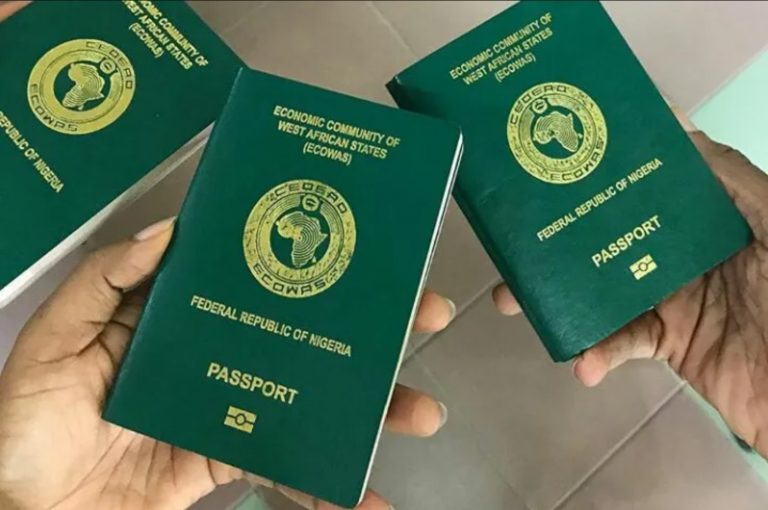
The Nigeria Immigration Service (NIS) has launched a centralized passport personalization system with the capacity to produce up to 5,000 passports daily, a dramatic leap from the 250–300 documents that multiple centers could previously deliver.
The new system was unveiled on Thursday at the NIS headquarters in Abuja during an inspection of the Centralized Passport Personalization Centre by the Minister of Interior, Dr Olubunmi Tunji-Ojo, who described it as “a game-changing reform for passport processing in Nigeria.”
“For the first time in 62 years, NIS is operating a single central passport production hub,” the Minister said. “This project is 100 per cent ready, and it will allow Nigeria to be more productive and efficient in delivering passport services.”
Register for Tekedia Mini-MBA edition 20 (June 8 – Sept 5, 2026).
Register for Tekedia AI in Business Masterclass.
Join Tekedia Capital Syndicate and co-invest in great global startups.
Register for Tekedia AI Lab.
The centralization replaces the decentralized model under which several centers handled production — often leading to inefficiencies, duplication, and backlogs. By consolidating output in one hub, officials say Nigeria can now align with international best practices in passport production, where standardization and uniformity are essential for global trust in travel documents.
Faster Processing and Delivery
Tunji-Ojo said the facility, built in partnership with IRISMAT Technologies Limited, deploys advanced machines capable of producing 1,000 passports per hour. This would enable the NIS to meet daily passport demands within four to five hours of operation.
“We promised two-week delivery, but with automation and optimization, we are now pushing for one week,” the Minister said, adding that the reform would “put an end to the era of backlogs and delays.”

According to him, when the Tinubu administration assumed office, the NIS had inherited over 204,000 pending passport applications. That backlog, he said, “is now closed,” with the centralized system ensuring that Nigerians receive value for their money through “automation and efficiency.”
The Minister positioned the move as part of President Bola Tinubu’s reform agenda to modernize public institutions and restore trust in government.
“This is more than just about documents; it’s about restoring trust and showing Nigerians that their government can deliver effectively,” he said.

The Cost Burden on Citizens
But while the centralization is expected to eliminate delays, it comes with a steep cost for Nigerians. The NIS recently doubled passport fees, effective September 1, 2025.
A 32-page passport with 5-year validity now costs N100,000, up from N50,000. A 64-page passport with 10-year validity has climbed to N200,000 — a 100% increase from N100,000.
The Service says the higher cost reflects the push for efficiency, modernization, and the investment required to sustain advanced facilities like the centralized hub. Still, for ordinary Nigerians already battling inflation and rising living costs, the fee hike has raised concerns that faster services are being delivered at a punishing price.
Implications for Nigerians at Home and Abroad
The new system is expected to ease the frustrations of applicants who, for years, have complained of bottlenecks, unofficial charges, and endless delays in passport processing. Diaspora Nigerians, who often face unique hurdles at consular offices, may also benefit from the improved uniformity in production and quicker turnaround time.
Analysts, however, warn that the doubled cost risks placing passports out of reach for low-income Nigerians, potentially widening inequality in access to international travel and migration opportunities. At N100,000 for a 32-page passport, a Nigerian worker earning N70,000 per month, minimum wage, will need about a month and a half’s work wage to secure one.
However, the centralized hub is believed by many to be a representation of an administrative milestone, given Nigeria’s unpleasant passport history. For citizens, the test will be whether the promised one-week delivery and end to backlogs will be enough to justify the financial strain.