

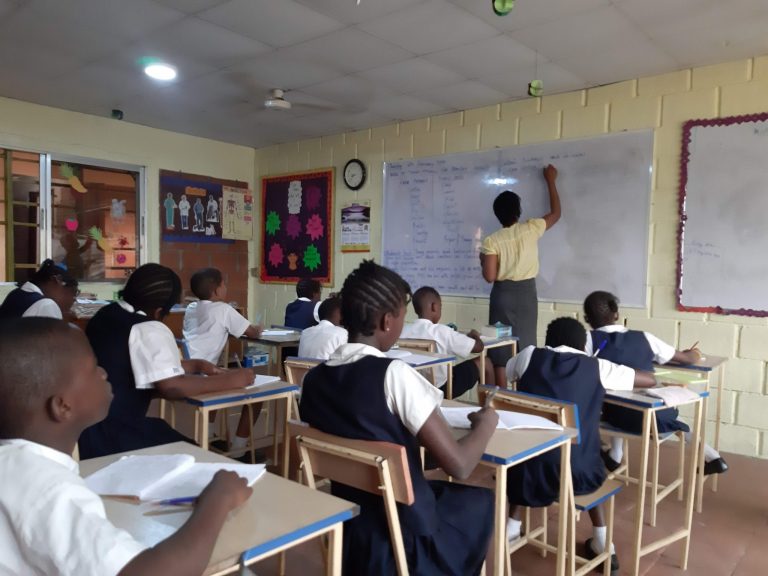
The Nigerian government has ordered principals of 41 Federal Unity Colleges to shut down the schools immediately. The directive, dated November 21, 2025, came from the Federal Ministry of Education and carried the approval of Education Minister Tunji Alausa.
With the country once again reeling from a resurgence of school attacks, the circular said the closure was necessary in light of “recent security challenges” and the urgent need to “prevent any security breaches.”
Hajia Abdulkadir, Director of Senior Secondary Education, signed the memo on behalf of the minister. The document instructed heads of the affected schools—spread across the North-West, North-East, North-Central, and parts of the South—to enforce the shutdown without hesitation.
Register for Tekedia Mini-MBA edition 20 (June 8 – Sept 5, 2026).
Register for Tekedia AI in Business Masterclass.
Join Tekedia Capital Syndicate and co-invest in great global startups.
Register for Tekedia AI Lab.
It was a move that instantly sent shockwaves through parents’ groups, staff unions, and education circles, capturing the sense of a government scrambling to get ahead of a threat it has battled for more than a decade.
The government’s decision follows a grim week in which the country once again became the stage for coordinated assaults on schools. The latest attacks have revived painful memories that never fully faded: Chibok in 2014, Dapchi in 2018, Kankara in 2020, Jangebe in 2021, Tegina, Birnin Yauri, and now a fresh round of kidnappings unfolding almost in real time.
In Niger State, gunmen struck St. Mary’s Primary and Secondary School in Papiri on Friday. The attackers—witnesses counted more than 60 motorcycles—stormed the compound with precision, shot the gatekeeper (who was left critically injured), and abducted an unspecified number of students.

Barely days earlier, another group of assailants seized 25 schoolgirls during an attack in Maga town, Kebbi State. The tempo of the assaults has unsettled communities across the northern belt, where fear now travels even faster than official information.
In Nasarawa, panic sparked by rumours of two abducted pupils at St. Peter’s Academy in Rukubi spread quickly across WhatsApp groups and community radio stations. The police moved to quash the story, calling the report “false and not reflective of the true state of affairs,” but the speed at which the rumor travelled underlined the anxiety in the air.
With tension rising, President Bola Tinubu directed the Minister of State for Defence, Bello Matawalle, to relocate to Kebbi immediately to coordinate rescue operations. The president also postponed his planned trips to Johannesburg and Angola, signaling the seriousness with which the administration is treating the latest wave of attacks.

Officials familiar with the matter said the presidency is worried about an escalation if security agencies do not regain momentum quickly. The northern states have been the epicenter of school kidnappings for years, and the renewed violence threatens to undo the limited progress made in securing schools under the Safe Schools Initiative.
Education, Interrupted — Again
Federal Unity Colleges have long been symbols of national cohesion—institutions meant to mix students from different ethnic and religious backgrounds. Their shutdown is another unfortunate episode of education interruption, orchestrated by insecurity, which has continued to erode the country’s education system, particularly in regions where children already face steep barriers to learning.
The ministry’s directive did not specify how long the schools would remain closed or whether remote learning arrangements would be put in place. For students preparing for examinations, it raises the specter of yet another disrupted academic calendar.
Nigeria has been here before—too many times. Since 2014, learning institutions have become recurring targets for armed groups seeking ransom, attention, or leverage. The pattern has become grimly familiar: attackers on motorcycles, under-protected schools, frantic rescue operations, traumatized students, and parents left waiting for news.
Global organizations, including UNICEF, have repeatedly condemned the recurring abductions and urged the government to secure schools and prioritize the safety of children. Despite years of advocacy, Nigeria’s learning spaces remain deeply vulnerable.
For many communities, the question now is not how this happened again, but whether the latest wave will finally force a different level of response. The recent wave of insecurity in Nigeria has attracted the attention of the U.S. government, with President Donald Trump threatening to order military action in the country if the government fails to act fast to protect lives, especially targeted Christians.