

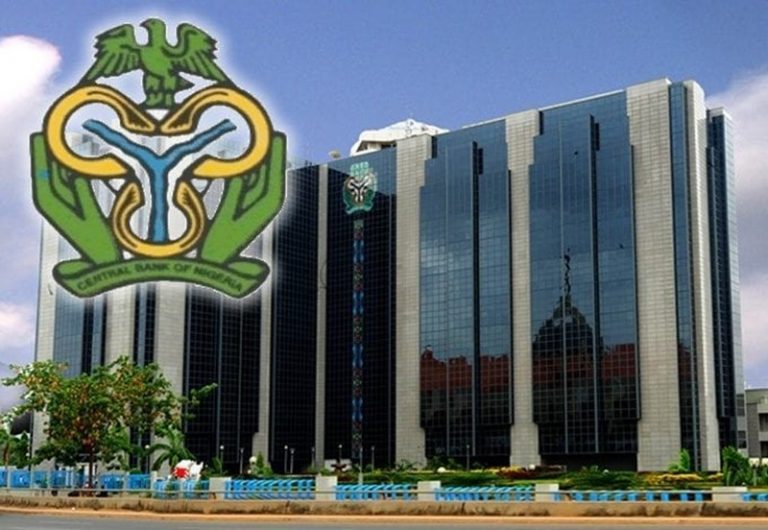
The Central Bank of Nigeria (CBN) has unveiled one of the most consequential regulatory overhauls of the country’s digital payments sector in recent years, ordering banks, fintech firms, mobile money operators, and other payment service providers to store all payment transaction data generated in Nigeria on local servers.
The apex bank also introduced new ownership disclosure rules and market share limits aimed at preventing excessive concentration in the industry.
The sweeping measures signal a decisive shift toward what regulators describe as a more resilient, transparent, and sovereign payments ecosystem at a time when electronic transactions are growing at record levels and a handful of firms are gaining increasing influence across critical segments of the financial system.
Register for the next Tekedia Mini-MBA.
Register for Tekedia AI in Business Masterclass.
Join Tekedia Capital Syndicate and co-invest in great global startups.
Under a circular issued by the Director of the Payments System Supervision Department, Rakiya O. Yusuf, all financial institutions and payment system participants facilitating transactions within Nigeria must ensure that payment transaction data generated domestically is stored and managed within the country in compliance with local data protection regulations.
The regulator set January 1, 2027, as the deadline for full compliance.
The move is seen as another significant step in Nigeria’s broader push toward data sovereignty, bringing the country closer to trends seen in jurisdictions such as India, China, and parts of the European Union, where governments have insisted that sensitive financial and personal data remain within national borders.

For Nigeria, the decision comes against a backdrop of rapid digital transformation. Electronic payments have surged over the past few years, driven by fintech innovation, expanding smartphone penetration, growing internet access, and the CBN’s long-running cashless policy initiatives.
The payments sector has become one of the fastest-growing segments of the Nigerian economy, attracting billions of dollars in investment and producing some of Africa’s most valuable fintech firms. However, regulators are becoming increasingly concerned about the systemic risks that accompany that growth.
In the circular, the CBN noted that while technological advances have improved financial inclusion and accelerated innovation, they have also created new vulnerabilities.

“The Central Bank of Nigeria has observed significant structural developments within the Nigerian Payments ecosystem, characterized by rapid growth in electronic payments, increasing adoption of digital financial services, and the emergence of operators with substantial market presence across key payment activities,” the regulator stated.
The apex bank said these developments have raised concerns over market concentration, operational dependence on external infrastructure, ownership transparency, and the location of critical payment data.
The data localization requirement is remarkable because many financial institutions, fintech companies, and payment processors currently rely on cloud infrastructure and data centers located outside Nigeria for parts of their operations. By requiring transaction records to remain within Nigeria’s jurisdiction, regulators are seeking greater visibility into payment flows, faster access to records during investigations, and stronger protection against disruptions caused by geopolitical tensions, foreign regulatory actions, or cross-border cyber incidents.
The directive also comes at a time when cybersecurity concerns are intensifying.
In April 2026, the Nigeria Data Protection Commission (NDPC) warned that coordinated cyber threats were targeting Nigeria’s financial infrastructure and digital systems. The commission said technical assessments had revealed attempts by what it described as “shadowy threat actors” to compromise critical platforms across banking, telecommunications, cloud computing, and government services.
Against that backdrop, localizing payment data is likely to be viewed by regulators as a safeguard designed to strengthen national control over critical financial infrastructure.
Beyond data storage requirements, the CBN has introduced fresh transparency obligations aimed at revealing who ultimately controls key players in the financial ecosystem.
The regulator directed deposit money banks, payment service providers, and other institutions engaged in digital payment activities to disclose the Ultimate Beneficial Ownership (UBO) of significant shareholders in accordance with anti-money laundering and counter-terrorism financing regulations.
Institutions must also maintain accurate and up-to-date beneficial ownership records and provide them to the CBN whenever requested.
The requirement aligns with a growing global regulatory trend toward greater ownership transparency. Financial regulators around the world have become increasingly concerned that complex corporate structures can be used to conceal true ownership, facilitate illicit financial flows, or obscure influence over strategically important institutions.
For Nigeria, the move could have far-reaching implications, particularly within the fintech sector, where venture capital firms, foreign investors, holding companies, and layered ownership structures are common. The CBN said the objective is to improve transparency and strengthen the integrity of the financial system.
Perhaps the most transformative aspect of the new framework is the introduction of market share restrictions designed to prevent dominant players from controlling multiple segments of the payments value chain.
Under the new rules, any institution controlling more than 25% of the card issuing market over a rolling 12-month period will be prohibited from holding more than 15% market share in merchant acquiring activities. Similarly, institutions with more than 25% of the merchant acquiring market will not be permitted to hold more than 15% of the card issuing market.
Merchant acquiring refers to the processing of card transactions on behalf of businesses and merchants, while card issuing involves providing customers with debit, credit, and prepaid cards.
The restrictions emerge from growing regulatory concern that dominant firms could leverage their strength in one segment of the payments ecosystem to gain an unfair advantage in another, potentially stifling competition and innovation.
Globally, regulators have intensified scrutiny of payment networks and financial infrastructure providers over concerns that excessive concentration could create systemic vulnerabilities. The CBN’s latest framework indicates that Nigerian authorities are adopting a similar philosophy before such risks become entrenched.
Industry observers say the measures could trigger significant structural changes among some banks, payment processors, and fintech operators if their market shares exceed the thresholds established by the regulator.
To facilitate oversight, regulated entities will be required to submit monthly market share returns using templates prescribed by the CBN. Institutions affected by the market concentration rules have until December 31, 2026, to make the necessary adjustments and achieve compliance.
The central bank said it would closely monitor implementation and could impose supervisory sanctions on institutions that fail to comply.
Together, the three pillars of the framework, data localisation, beneficial ownership transparency, and market concentration controls, suggest the CBN is moving beyond traditional payment system regulation toward a broader model focused on financial stability, competition policy, and national digital sovereignty.
The new rules may require substantial investment in local infrastructure, governance systems, and compliance frameworks for banks and fintech operators. For regulators, the changes are designed to reduce systemic risks and improve visibility into a payments ecosystem that has become central to Nigeria’s financial future.