

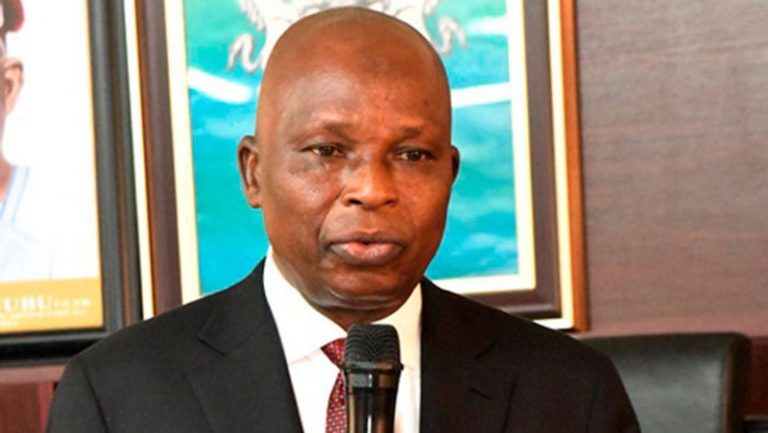
The Office of the Attorney-General of the Federation (AGF) and Minister of Justice has urged the Federal High Court in Abuja to remove his office from a lawsuit seeking to compel MultiChoice Nigeria to introduce a pay-per-view model for its DStv and GOtv services.
The AGF, who is named as the fourth defendant in the case, insists that the lawsuit is an abuse of the court process and lacks any legal basis, arguing that it should be struck out immediately.
The lawsuit, filed on April 29, 2024, by Maduabuchi O. Idam Esq. (Suit No. FHC/ABJ/CS/563/2024), demands that MultiChoice introduce a pay-per-view billing system that would charge Nigerian customers based only on the time they actively watch content. The suit also seeks an order to compel the company to roll over unused subscriptions upon expiration, ensuring that customers fully benefit from their payments.
Register for Tekedia Mini-MBA edition 20 (June 8 – Sept 5, 2026).
Register for Tekedia AI in Business Masterclass.
Join Tekedia Capital Syndicate and co-invest in great global startups.
Register for Tekedia AI Lab.
This legal battle comes at a time when MultiChoice has announced another price hike for its DStv and GOtv packages, which is set to take effect on March 1, 2025. The price increase follows a series of similar hikes in recent years, which the company has justified by citing exchange rate volatility, rising content costs, and increased electricity tariffs.
What Transpired in Court
At the court session on February 19, 2025, presided over by Justice Inyang Ekwo, MultiChoice’s lawyer, Moyosore J. Onigbanjo (SAN), made it clear that the pay-TV provider was opposing the lawsuit.
Justice Ekwo then inquired whether the Federal Competition and Consumer Protection Commission (FCCPC) and the National Broadcasting Commission (NBC) had filed their responses to the lawsuit. The legal representatives of both agencies confirmed that they had submitted counter-affidavits opposing the claimant’s suit.

The AGF’s lawyer also confirmed filing a motion to strike out the case, prompting the judge to ask the claimant if he had received all responses and if he had filed a reply.
“Yes, my Lord, I have responded,” the claimant said but added that further affidavits needed to be exchanged between him and the legal teams of the AGF and NBC.
In response, Justice Ekwo stated: “I am going to give you a date for the hearing, believing that by then, parties should have filed and exchanged whatever necessary processes.”

The judge subsequently fixed the hearing for May 6, 2025.
AGF’s Motion to Strike Out the Suit
In its motion dated October 25, 2024, the AGF formally requested the court to strike out or dismiss the lawsuit on the grounds that the claimant failed to establish any cause of action against the AGF. The AGF’s legal team, led by Maimuna Lami Shiru, argued that the lawsuit had no connection to the office of the Attorney-General, making it inappropriate for the AGF to be named as a defendant.
Shiru further argued that: “The AGF is not a regulatory body in respect of the subject matter of the claim and has no business in the suit.
“The AGF is not a proper or necessary party to the suit.
“The originating process is premature and defective as it relates to the AGF.”
The AGF’s office emphasized that it does not regulate MultiChoice or any other TV provider in Nigeria, accusing the claimant of failing to seek the court’s permission before filing the case. The AGF’s lawyer labeled the lawsuit as frivolous, urging the court to strike it out immediately.
Push for Pay-Per-View Has Been Ongoing for Years
For years, Nigerian consumers have demanded that MultiChoice introduce a pay-per-view model, believing it would offer a fairer pricing system by allowing them to pay only for the content they consume. The issue has sparked legislative and regulatory interventions, but MultiChoice has consistently rejected the proposal, arguing that such a model is not technically or financially viable in Nigeria.
Chief Executive Officer of MultiChoice Nigeria, John Ugbe, told a Senate committee in 2022: “Whilst it may appear to be a noble intent for this Committee to be concerned over the rising cost of subscription services; however, the Pay-Per-View (PPV) model being canvassed by this Committee will not work either to the benefit of the consumer or the industry.
“It would appear that this problem is because of some confusion in understanding the basic definitions and distinctions between some of the existing operational business models in telecommunications and pay-tv broadcasting.”
Industry experts and pay-TV analysts have also warned that a pay-per-view system would be highly expensive and unaffordable for most Nigerian subscribers. Unlike cable providers in the United States, where pay-per-view is used for one-off events like boxing matches and concerts, implementing such a model for daily television programming would require a completely different pricing structure that could result in higher costs for consumers.
Since 2016, the Nigerian National Assembly has been investigating MultiChoice over its pricing model, with lawmakers at one point, urging the company to introduce pay-per-view billing. However, after a review of the pay-TV business model, and following a series of interventions, the National Broadcasting Commission (NBC) said it has no enabling law to either regulate or control the prices being charged by cable television operators.
MultiChoice has been at the center of numerous legal disputes over its pricing structure. In 2024, a Nigerian tribunal fined MultiChoice N150 million and ordered the company to provide a one-month free subscription to customers after it was found to have violated an interim court order. However, MultiChoice challenged the ruling, and the case was eventually struck out after a public interest lawyer withdrew the suit.
Despite these legal battles, MultiChoice has continued to raise its subscription fees, citing economic pressures. Its latest price increase, set to take effect on March 1, 2025, comes after the company suffered a significant loss of subscribers in 2024 due to repeated price hikes, inflation, and the difficult economic environment.