

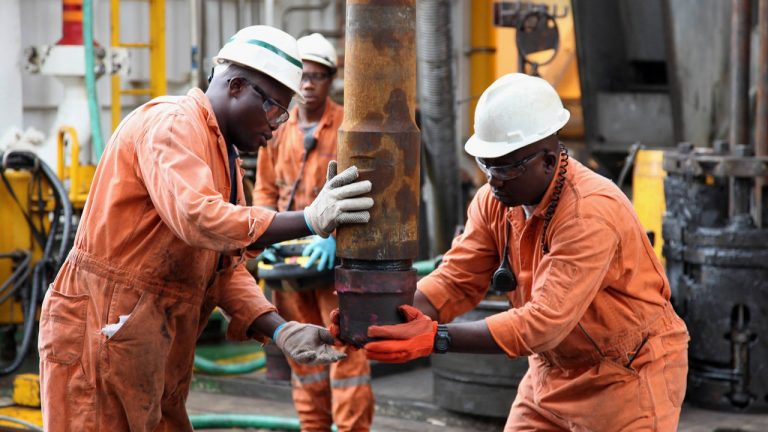
Nigeria’s energy sector received a significant boost in 2024, with a total of $6.7 billion in investments, according to the “Presidency Energy Sector Wrap-Up 2024,” a comprehensive report released by the Office of the Special Adviser to the President on Energy.
The report highlighted that of the total investment, $5.5 billion was channeled into the oil and gas sector, $400 million was allocated to the Presidential Metering Initiative (PMI), and $700 million was directed toward clean mobility and clean cooking projects.
Oil and Gas Sector Dominates
The oil and gas sector emerged as the primary beneficiary, securing $5 billion of the total investment through Shell Nigeria Exploration and Production Company’s (SNEPCO) Bonga North Deep Offshore Project. This marks the first greenfield deep offshore project in over a decade, with the potential to increase Nigeria’s oil production capacity by approximately 110,000 barrels per day.
Register for Tekedia Mini-MBA edition 20 (June 8 – Sept 5, 2026).
Register for Tekedia AI in Business Masterclass.
Join Tekedia Capital Syndicate and co-invest in great global startups.
Register for Tekedia AI Lab.
The report also listed five major acquisitions in the sector:
- Renaissance Consortium’s Acquisition of Shell Petroleum Development Company (SPDC): A $1.3 billion deal.
- Seplat Energy Plc’s Acquisition of Mobil Producing Nigeria Unlimited (MPNU): A $1.3 billion transaction with ExxonMobil Corporation.
- Chappal Energies’ Purchase of Equinor Nigeria Energy Company (ENEC): A $1.2 billion deal with Norway’s Equinor ASA.
- Chappal Energies’ Acquisition of TotalEnergies’ 10% Stake in SPDC JV Licenses: Valued at $860 million.
- Oando Plc’s Acquisition of the Nigerian Agip Oil Company (NAOC): An $800 million agreement.
These transactions underscore renewed investor confidence in Nigeria’s oil and gas sector.
Presidential Metering Initiative and Clean Energy Investments
In addition to oil and gas, the federal government allocated $400 million to the Presidential Metering Initiative, which aims to improve on-grid power availability, affordability, and reliability. Olu Verheijen, the President’s special adviser on Energy, emphasized the administration’s commitment to energy reform.

“We launched, among other interventions, the new Presidential Metering Initiative (PMI). Our goal, working with all industry stakeholders across public and private sectors, is to improve the availability, affordability, and reliability of on-grid power,” Verheijen stated.
A further $700 million was directed toward clean energy initiatives, focusing on clean mobility and clean cooking, aligning with Nigeria’s long-term energy transition goals.
The report noted that Nigeria achieved a landmark by receiving the highest upstream oil and gas investments in Africa in 2024, accounting for four of the five major investments on the continent.

“In the Oil & Gas sector, 2024 was a year of bold reforms that improved Nigeria’s investment competitiveness,” the report stated.
Nigeria’s Missed LNG Opportunities
Nigeria, despite its vast natural gas reserves, has failed to fully capitalize on its liquefied natural gas (LNG) potential, a situation that has significantly undermined its oil and gas revenue streams. Energy experts are increasingly critical of the government’s inability to meet the Nigeria LNG Limited (NLNG) requirement for 3.5 billion standard cubic feet of gas daily.
Currently, Nigeria’s capacity utilization stands at a dismal 65%, a figure projected to drop further to 44% with the commissioning of the NLNG Train 7 project in 2025.
The Train 7 expansion, expected to raise Nigeria’s LNG installed capacity from 22 million tons per annum (mta) to 30 mta, now risks becoming a monument to missed opportunities. Since October 2022, Nigeria has operated under a state of force majeure, a direct consequence of its chronic inability to meet gas supply obligations.
Energy analysts attribute Nigeria’s failures to a lack of foresight, poor policy frameworks, and chronic mismanagement of its oil and gas sector. Kelvin Emmanuel, an energy analyst, noted the government’s failure to develop a fiscal framework to attract international investments, particularly for deep water fields under production-sharing contract (PSC) models.
“The government’s failure to provide a fiscal framework for deep water fields that fall under the production-sharing contract model has limited institutional-level investments from International Oil Companies (IOCs) interested in participating in the global ramp-up of gas as a transition fuel,” Emmanuel explained.
Emmanuel contrasted Nigeria’s stagnation with global trends, highlighting how nations like the United States have surged ahead in the LNG market. In 2011, the U.S. and Russia were nearly tied, contributing approximately 18–19% of global LNG output. However, by 2025, the U.S. is projected to hold a commanding 26% share of global LNG production, while Russia will drop to 14%, hindered by geopolitical tensions and sanctions.
The U.S.’s dominance in the global oil and gas market is further bolstered by its massive natural gas production capacity of 79.8 billion standard cubic feet daily, derived from its 13.3 million barrels of crude oil. Meanwhile, Nigeria struggles to meet its domestic and international obligations, failing to position itself competitively in the global energy transition.
The Impact of Global Oil Price Volatility
Emmanuel also raised concerns about global oil price dynamics. The U.S., under policies initiated by former President Donald Trump, is planning to add another 3 million barrels of crude oil per day to global markets, a move likely to depress prices further.
This development poses a significant risk to Nigeria, which has based its 2025 budget on an oil price benchmark of $75 per barrel. Emmanuel warned that the government might be forced to present a supplementary budget by Q2 if oil prices fall below this threshold.
“Russia has practically lost out because most of its LNG shipments are sold at an extra premium by third parties to avoid sanctions,” Emmanuel said. “Oil prices are definitely coming back down, and the President needs to revise his benchmark OSP of $75 for 2025 or prepare for a budgetary shortfall.”
A Call to Action
Emmanuel said that Nigeria must shift its focus to gas as a transition fuel, aligning with global trends and the G-7 communique emphasizing the importance of natural gas in the energy transition.
“The government must wake up from its slumber and finally join the global race to turn Nigeria into a gas nation,” he urged.
The NLNG Train 7 project, once seen as a game-changer, now risks becoming a symbol of Nigeria’s inability to leverage its natural resource wealth.
However, the report projected that the country could attract over $5 billion in gas investments by 2029, enhancing gas availability for export and supporting the global energy transition. Additionally, it anticipates Nigeria tapping into more than $30 billion in deep offshore investments within the same period.
“We will continue engaging, collaborating, and communicating with stakeholders across the energy sector and welcome your feedback and comments,” Verheijen said.