

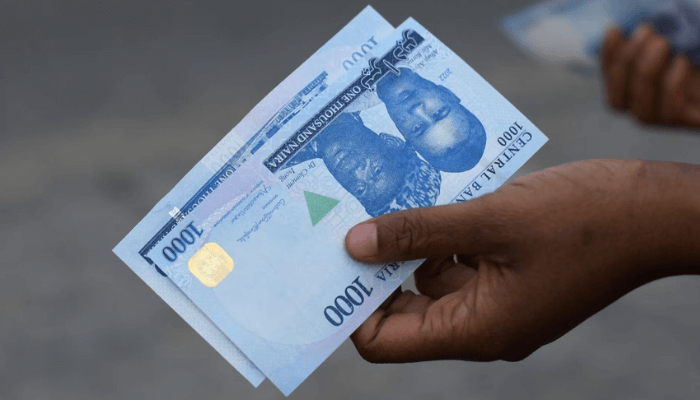
Nigeria’s broad money supply continued to expand in September 2026, highlighting the growing liquidity in the economy and raising important questions about inflation, monetary policy and financial stability.
Broad money supply, measured by M3, increased by 5.40% month-on-month to ?146.60 trillion, representing a 24.47% increase compared with the same period last year.
The latest figures significantly exceed the Central Bank of Nigeria’s (CBN) target of 8.0% M3 growth for 2026, underscoring the challenges facing policymakers as they attempt to maintain price stability while supporting economic growth.
Register for the next Tekedia Mini-MBA.
Register for Tekedia AI in Business Masterclass.
Join Tekedia Capital Syndicate and co-invest in great global startups.
The monthly increase in M3 indicates that more money is circulating through Nigeria’s financial system. Although rising liquidity can support consumption, investment and business activity.
Excessive monetary expansion may intensify inflationary pressures when the growth in money supply outpaces the availability of goods and services. This imbalance is particularly important in an economy where households and businesses remain sensitive to rising living costs, exchange-rate movements and borrowing expenses.
The slower expansion of narrow monetary aggregates provides another perspective on the country’s liquidity conditions. Nigeria’s M2 money supply rose by 1.38% in September to ?141.00 trillion, considerably below the monthly growth recorded by M3.

The difference highlights the importance of understanding how money is held and distributed across the financial system, rather than relying on a single indicator to assess economic conditions.
Money supply measures the amount of money available within an economy for transactions and other financial purposes. Narrow money generally includes cash and demand deposits that can be accessed readily.
While broader measures incorporate additional liquid financial assets. M3 therefore offers a wider picture of monetary conditions, helping policymakers evaluate developments beyond the funds immediately available for spending.

The annual M3 growth rate of 24.47% presents a substantial gap between actual monetary expansion and the CBN’s stated 8.0% target. This difference does not automatically mean inflation will rise by the same percentage.
The relationship between money supply and prices depends on several factors, including the velocity of money, credit creation, economic output, exchange-rate conditions and public demand for cash.
Sustained liquidity growth can complicate the central bank’s efforts to bring inflation under control. If additional money fuels demand faster than domestic production can respond, businesses may raise prices, weakening household purchasing power.
Higher liquidity can influence foreign-exchange demand, potentially adding pressure to the naira if confidence in domestic assets deteriorates. For the CBN, the challenge is to manage monetary expansion without unnecessarily restricting productive economic activity.
Interest-rate decisions, liquidity-management operations and banking-sector regulations remain important tools for influencing financial conditions. Policymakers must distinguish between liquidity supporting productive investment and expansion that contributes primarily to speculative activity or consumption-driven price increases.
For investors and businesses, the September figures reinforce the importance of monitoring inflation expectations, interest rates and exchange-rate developments. Persistent monetary growth could affect savings decisions, financing costs and asset valuations.
Particularly if the central bank responds with tighter policy. Nigeria’s rising money supply presents both opportunities and risks. Greater liquidity can support economic activity, but growth significantly above the CBN’s target raises questions about monetary discipline and price stability.
The direction of inflation, credit growth and economic output in the coming months will help determine whether the expansion supports sustainable growth or creates additional challenges for Nigeria’s economic recovery.