

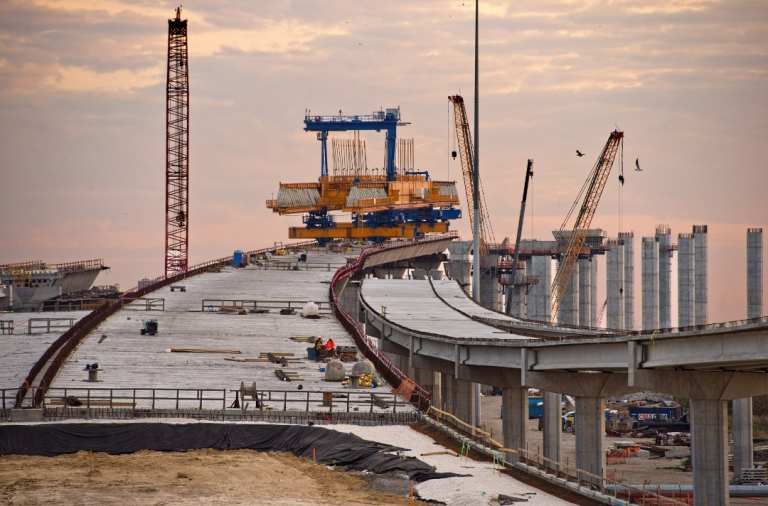
The Debt Management Office (DMO) has announced that the Federal Government of Nigeria has successfully raised N1.09 trillion through the Sovereign Sukuk since its debut in 2017. The funds have been channeled into critical infrastructure projects, primarily roads and bridges, spanning the entire country.
Speaking at an all-parties meeting in Lagos on Wednesday for the issuance of the seventh series of the Sukuk, DMO Director-General Patience Oniha disclosed that the latest issuance aims to raise an additional N300 billion for capital projects.
Oniha recounted the early days of the initiative, saying, “We recall that the first Sukuk was issued in September 2017. After extensive marketing, the offer, which was for N100 billion with a tenor of seven years, received a total subscription of N105.878 billion.”
Register for Tekedia Mini-MBA edition 20 (June 8 – Sept 5, 2026).
Register for Tekedia AI in Business Masterclass.
Join Tekedia Capital Syndicate and co-invest in great global startups.
Register for Tekedia AI Lab.
Encouraged by the initial success, the government has since expanded the program, using the funds to finance a broad range of infrastructure projects. Between 2017 and December 2023, a total of N1.09 trillion has been raised, facilitating the construction and rehabilitation of over 4,100 kilometers of roads and nine bridges across Nigeria’s six geopolitical zones and the Federal Capital Territory (FCT).
The Sukuk’s Impact on Infrastructure and the Economy
The Sovereign Sukuk has played a transformational role in Nigeria’s infrastructure development. The DMO highlighted several key benefits such as improved road networks, which have significantly reduced travel time for commuters, allowing businesses and individuals to move goods and services more efficiently. The upgrades have also enhanced road safety, reducing accident rates that have historically plagued Nigeria’s highways.
With the execution of these projects, thousands of jobs have been created across multiple sectors, including construction, engineering, and logistics, providing much-needed employment opportunities at a time of rising economic uncertainty, according to DMO.

Unlike conventional government bonds, the Sovereign Sukuk is structured as an Islamic financial instrument, meaning it is project-tied and adheres to ethical investment principles. The funds raised can only be used for tangible infrastructure projects, ensuring transparency and accountability.
This project-specific nature of the Sukuk has increased investor confidence, leading to high subscription rates in previous issuances. Investors in the Sukuk benefit not only from contributing to national development but also from receiving semi-annual income payments, making it a viable financial instrument for both institutional and retail investors.
High Demand and Investor Participation
Since its introduction, the Sovereign Sukuk has seen overwhelming demand, with each issuance receiving high subscription rates from investors. Unlike conventional government bonds, Sukuk investors earn returns semi-annually, making it an appealing alternative for those looking to diversify their portfolios while contributing to national development.

The issuance of the Sovereign Sukuk has been facilitated by financial advisory firms, including Lotus Financial Services Limited, Buraq Capital Limited, Stanbic IBTC Capital Limited, Greenwich Merchant Bank Limited, and Vetiva Capital Management Limited. These firms have played a crucial role in structuring the Sukuk, managing the offering process, and ensuring broad investor participation. Their involvement has helped to deepen Nigeria’s domestic financial market by providing alternative investment options beyond traditional government securities.
As the DMO prepares to launch the seventh series of the Sovereign Sukuk, it remains committed to leveraging Islamic finance as a tool for sustainable infrastructure development. With Nigeria facing persistent economic challenges, widening fiscal deficits, and deteriorating public infrastructure, the Sukuk has become an essential funding mechanism for capital projects.
Oniha stressed that the government is determined to sustain the momentum, positioning the Sukuk as a long-term strategy to boost infrastructure investment while deepening Nigeria’s domestic financial market. The continued success of the Sukuk program highlights the growing role of alternative financing models in addressing the country’s infrastructure deficit.