

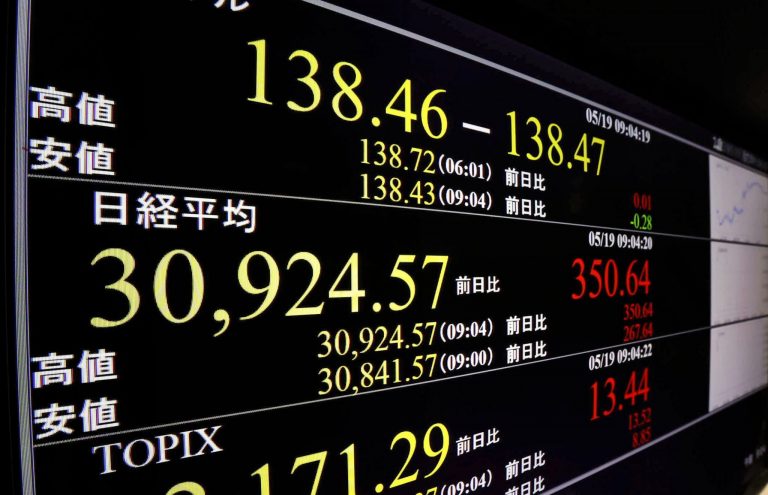
Japan’s stock market staged a dramatic comeback as approximately ¥36 trillion ($240 billion) was added to market value in a single trading session, with the Nikkei 225 surging 2.8%.
The rebound came just days after one of the most severe sell-offs in recent years, during which Japanese equities lost nearly ¥120 trillion in market capitalization following a brutal 9% plunge. The sharp recovery highlights both the resilience and volatility currently defining global financial markets.
The previous week’s sell-off had sent shockwaves across Asia and beyond.
Investors were rattled by a combination of global economic uncertainties, rising geopolitical tensions, and concerns over monetary policy shifts among major central banks.
Register for the next Tekedia Mini-MBA.
Register for Tekedia AI in Business Masterclass.
Join Tekedia Capital Syndicate and co-invest in great global startups.
Japan, whose stock market had enjoyed a historic rally over the past two years, suddenly became vulnerable to profit-taking and risk aversion. The magnitude of the decline raised fears that the country could be heading toward a prolonged correction after reaching multi-decade highs.
Financial markets often move in cycles of fear and optimism, and the latest rebound demonstrates how quickly sentiment can change. Bargain hunters and institutional investors moved aggressively to buy Japanese equities at discounted valuations, believing that the previous week’s decline had been excessive.
Strong buying activity across technology, industrial, and export-oriented companies fueled the recovery, helping restore confidence among market participants. Several factors also contributed to the renewed optimism.

Investors increasingly believe that Japan’s economic fundamentals remain relatively strong despite global headwinds. Corporate governance reforms, rising shareholder returns, and continued wage growth have made Japanese companies more attractive to both domestic and foreign investors.
The weaker yen continues to support major exporters by enhancing the competitiveness of Japanese goods in international markets. The rebound also reflects broader expectations that global central banks may adopt a more cautious approach toward additional monetary tightening.
Any indication of slower interest-rate hikes tends to boost equity markets, particularly in export-driven economies like Japan.
Investors are closely monitoring developments in the United States and Europe, where inflation and economic growth remain key determinants of global market sentiment. The recovery does not eliminate the risks facing Japan’s financial markets.

The loss of nearly ¥120 trillion in just one week serves as a reminder of how fragile investor confidence can be in an environment characterized by elevated uncertainty. Concerns surrounding global trade, geopolitical conflicts, and the sustainability of economic growth continue to linger.
Market analysts warn that volatility could remain high in the coming months. Rapid advances in Japanese equities over recent years have left valuations vulnerable to sudden corrections whenever negative catalysts emerge.
Foreign investors, who have played a crucial role in driving Japan’s market rally, could quickly shift their positions if global conditions deteriorate. The addition of ¥36 trillion in market value in a single day underscores the depth and liquidity of Japan’s financial markets.
It also highlights the enduring appeal of Japanese equities, which have increasingly attracted global capital seeking diversification away from other major markets.
The latest rebound may not fully erase the pain caused by last week’s historic sell-off, but it offers an important reminder that financial markets are often driven as much by sentiment as by fundamentals.
Japan’s stock market remains at the center of global investor attention, and its ability to recover from sharp declines suggests that confidence in the country’s long-term economic prospects remains largely intact.
Whether this recovery marks the beginning of a sustained rally or merely a temporary reprieve will depend on the evolving global economic landscape and investors’ willingness to embrace risk once again.