

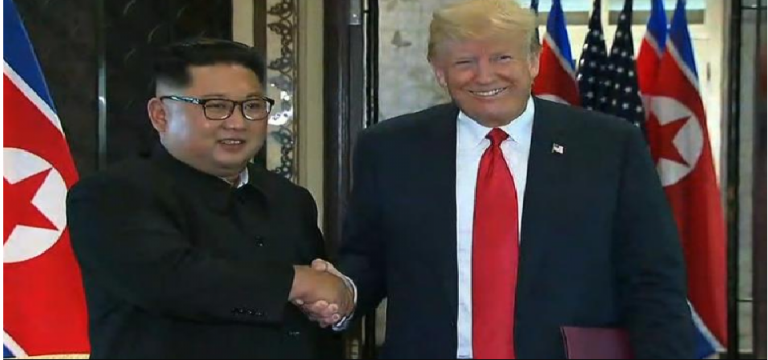
The decision by North Korea to reportedly amend its constitution so that a nuclear strike would be automatically launched if leader Kim Jong Un is assassinated represents one of the most alarming developments in modern nuclear doctrine.
The policy reflects not only the extreme militarization of the North Korean state, but also the growing fear within Pyongyang that foreign powers could attempt regime change through targeted assassination or decapitation strikes. By embedding such a policy into the nation’s constitutional framework, North Korea is signaling that its nuclear weapons are no longer merely defensive tools, but instruments directly tied to the survival of its ruling leadership.
Historically, nuclear deterrence has relied on the principle of mutually assured destruction. Major nuclear powers such as the United States and Russia developed systems intended to prevent enemies from launching first strikes by guaranteeing devastating retaliation.
North Korea’s reported constitutional update appears to adopt a more radical version of this doctrine. Instead of retaliation requiring political approval after an attack, the launch mechanism would theoretically become automatic if Kim Jong Un were killed. Such a posture dramatically reduces the time available for diplomacy, verification, or de-escalation during a crisis.
Register for the next Tekedia Mini-MBA.
Register for Tekedia AI in Business Masterclass.
Join Tekedia Capital Syndicate and co-invest in great global startups.
The move also reveals how central Kim Jong Un’s personal authority is to the structure of the North Korean government. In many countries, political institutions outlive individual leaders. In North Korea, however, the state ideology has long revolved around dynastic leadership and absolute loyalty to the Kim family.
By linking the nation’s nuclear arsenal directly to the fate of its leader, Pyongyang is effectively declaring that the survival of Kim Jong Un and the survival of the state are inseparable. This transforms any perceived threat against him into a potential trigger for nuclear war.
Internationally, the implications are severe. Regional rivals such as South Korea and Japan may view the doctrine as evidence that North Korea is becoming increasingly unpredictable. The United States, which maintains military alliances across East Asia, could also interpret the change as a warning against discussions of preventive military action.
In effect, Pyongyang may be attempting to deter assassination plots or surgical strikes by raising the consequences to catastrophic levels. At the same time, such a doctrine introduces enormous strategic risks. Automated or semi-automated launch systems are inherently dangerous because they reduce human oversight during moments of confusion or misinformation.

History contains numerous examples of false alarms during the Cold War that nearly resulted in accidental nuclear conflict. If North Korea’s system were activated during a chaotic event, a misunderstanding could escalate into a global disaster within minutes. Beyond military strategy, the announcement reflects the broader instability of the current geopolitical climate.
Nations increasingly perceive existential threats from cyber warfare, economic sanctions, and foreign intervention. North Korea’s response is to double down on nuclear deterrence as the ultimate guarantee of regime survival. Yet this approach may deepen the country’s isolation and intensify international fears rather than provide lasting security.
The reported constitutional amendment is less about military confidence and more about political vulnerability. It demonstrates how fragile regimes often rely on extreme deterrence to preserve power. By tying nuclear retaliation directly to the life of Kim Jong Un, North Korea has elevated the stakes of any future confrontation to unprecedented levels, making diplomacy and crisis management more critical than ever before.
