

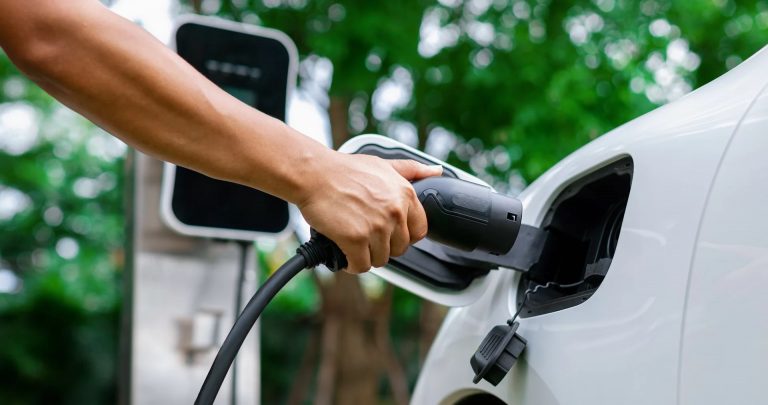
Norway has moved to the brink of eliminating petrol and diesel cars from its new vehicle market, after electric vehicles accounted for an unprecedented 95.9% of all new passenger car registrations in 2025, cementing the country’s status as the global frontrunner in the shift to clean transportation.
Data published on Friday by the Norwegian Road Traffic Information Council (OFV) showed that nearly all new cars sold last year were fully electric, up sharply from 88.9% in 2024. The transition accelerated dramatically toward the end of the year, with electric vehicles making up 98% of all new registrations in December alone.
The surge came in a year of record-breaking overall car sales. Norway registered 179,549 new passenger cars in 2025, a 40% increase from the previous year and the highest annual total ever recorded, surpassing the earlier peak set in 2021. The figures underline how the electrification push has coincided not with a contraction in car ownership, but with a strong rebound in demand.
Register for Tekedia Mini-MBA edition 20 (June 8 – Sept 5, 2026).
Register for Tekedia AI in Business Masterclass.
Join Tekedia Capital Syndicate and co-invest in great global startups.
Register for Tekedia AI Lab.
“2025 has been a very special car year. We see the effect of long-term and targeted electric car policy, and how specific tax decisions have immediate effects on the market,” OFV director Geir Inge Stokke said.
He pointed to a late-year rush by buyers seeking to take advantage of favorable incentives before a value-added tax change takes effect from January 1, 2026, which is expected to raise the cost of some electric models.
“The final sprint towards the end of the year has been historically strong, and there is no doubt that the VAT change from January 1, 2026 has contributed to a great many choosing to secure a new electric car before the year was over,” Stokke added.

Norway’s approach stands out globally because it has relied on sustained incentives rather than outright bans on internal combustion engine vehicles. Successive governments have offered generous tax exemptions, reduced tolls, free or discounted parking, and access to bus lanes for EV drivers, while steadily increasing taxes on petrol and diesel cars. The result has been a market-driven transition that has reshaped consumer behavior over more than a decade.
Norway’s Deputy Transport Minister Cecilie Knibe Kroglund said last year that the country’s success was rooted in policy consistency rather than abrupt restrictions. She stressed that predictable, long-term measures supporting electric vehicles gave both consumers and automakers the confidence to invest in the shift away from fossil-fuel cars.
The implications stretch beyond Norway’s borders. As an oil- and gas-producing nation with one of the world’s highest EV adoption rates, Norway has become a real-world test case for other countries weighing how quickly they can decarbonize road transport without undermining mobility or economic activity. Policymakers and automakers across Europe and beyond routinely study the Norwegian market to gauge how incentives, pricing, and infrastructure interact at scale.

Tesla remained the single biggest winner in Norway’s electric boom. The U.S. automaker was the country’s top-selling car brand for a fifth straight year, accounting for nearly one in five new cars sold. A total of 34,285 new Tesla passenger vehicles were registered in 2025, a 41% increase from 24,259 in 2024, according to OFV data.
The Model Y dominated Tesla’s performance, with 27,621 new registrations nationwide, making it by far the most popular individual model on Norwegian roads. Stokke said Tesla’s performance was notable not just for its market share, but for the scale it achieved with a relatively narrow lineup.
“Taking almost 20 percent market share in a year with record-high new car sales is in itself remarkable,” he said. “When a brand also achieves such volumes with so few models, it says a lot about both demand and Tesla’s impact in the Norwegian market.”
Norway offered Tesla a rare bright spot in Europe during 2025, as the company faced slowing demand and intensifying competition in several other major markets. That contrast was underscored by Tesla’s broader delivery figures released on Friday, showing global fourth-quarter deliveries of 418,227 vehicles, down 16% from the same period in 2024.
While battery electric vehicles now overwhelmingly dominate Norway’s new car sales, the transition is not entirely complete. A small share of registrations still includes plug-in hybrids and a dwindling number of combustion-engine vehicles, typically linked to specialized needs or niche buyers. However, with EVs already close to total market saturation, analysts say it is increasingly a matter of when, not if, petrol and diesel cars effectively disappear from Norway’s new car showrooms.
Attention is now shifting to how policy changes, including adjustments to taxes and incentives, will shape demand in a market that is already almost fully electric. Even so, Norway’s 2025 figures mark a milestone that few other countries have yet approached, offering a glimpse of what a post-combustion car market can look like on a national scale.