

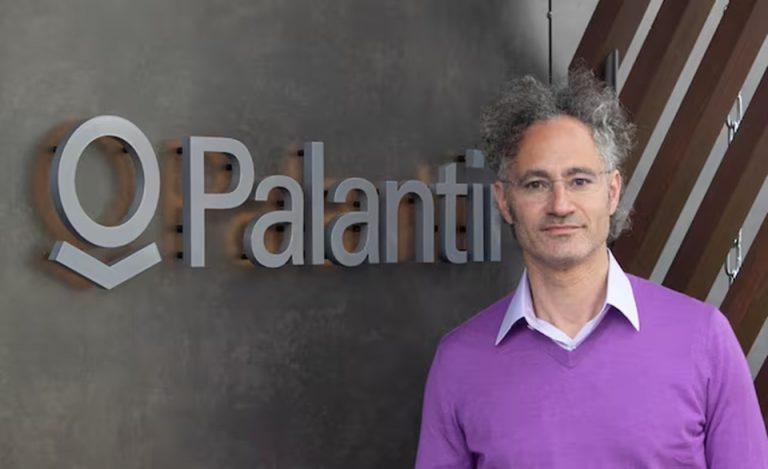
Nvidia and Palantir Technologies announced a partnership to deliver what they’re calling a Sovereign AI Operating System Reference Architecture often referred to as an “AI operating system” or AI OS reference architecture.
This is not a traditional consumer OS like Windows or macOS, but a reference blueprint for building complete, production-ready AI infrastructure—essentially a turnkey AI data center stack. It combines: Nvidia’s hardware and infrastructure: Based on Nvidia Enterprise Reference Architectures, featuring Blackwell Ultra systems (with eight GPUs per setup) and Spectrum-X Ethernet networking for high-performance AI training and inference.
Palantir’s software suite: Fully integrated and tested to run Palantir’s platforms, including AIP (Artificial Intelligence Platform), Foundry, Apollo, Rubix, and AIP Hub. The focus is on sovereign AI—enabling governments, enterprises, and organizations to deploy AI systems with full data control and sovereignty.
This allows end-to-end management from hardware procurement to application deployment, emphasizing security, control, and independence. This builds on their earlier collaboration, where Palantir integrated Nvidia’s accelerated computing, CUDA-X libraries, and open-source Nemotron models into its Ontology framework for operational AI in enterprises and government contexts.
Register for Tekedia Mini-MBA edition 20 (June 8 – Sept 5, 2026).
Register for Tekedia AI in Business Masterclass.
Join Tekedia Capital Syndicate and co-invest in great global startups.
Register for Tekedia AI Lab.
The announcement came during Palantir’s AIPCon 9 event, highlighting applications in defense, national security, supply chains, and complex industrial operations. It’s positioned as a way to operationalize AI at scale while maintaining sovereignty over data and infrastructure.
Reactions on X range from excitement about the tech stack’s potential to concerns about its implications for control, privacy, and power given Palantir’s history with government and intelligence work and Nvidia’s dominance in AI comput. Some view it as a step toward an “AI-first” foundational layer, akin to how OSes shaped past computing eras.
This deepens the integration between Nvidia’s compute leadership and Palantir’s data and intelligence platforms, targeting massive opportunities in sovereign and enterprise AI infrastructure.

Sovereign AI refers to the ability of nations, governments, enterprises, or organizations to develop, train, deploy, and control AI systems using their own infrastructure, data, workforce, models, and governance frameworks—rather than relying heavily on foreign cloud providers, third-party platforms, or external dependencies.
This approach, emphasized in partnerships like the recent Nvidia-Palantir Sovereign AI Operating System Reference Architecture, enables full-stack control from hardware to software while prioritizing data residency, security, and independence. Sovereign AI addresses growing concerns around data control, geopolitical risks, compliance, and economic competitiveness in an AI-driven world.
Sensitive data (personal, national security, intellectual property, or proprietary business information) stays within national borders or controlled environments. This minimizes risks of breaches, unauthorized access, foreign surveillance, or data leakage to external providers.
It enables tailored security measures like zero-trust access, encryption, and isolated processing—crucial for regulated sectors like healthcare, finance, defense, and government. Sovereign AI makes it easier to meet strict local and international laws. Organizations can demonstrate full visibility into data handling, model training, and decision-making processes, avoiding penalties, fines, or market access restrictions.

This is especially valuable in cross-border operations or highly regulated industries. By owning or controlling the AI stack, entities avoid disruptions from geopolitical tensions, vendor lock-in, service outages, export controls, or changes in foreign policies. This builds business continuity and strategic independence—protecting against “compute divides” where access to advanced GPUs or cloud resources is limited.
AI models can be trained on local languages, cultures, histories, datasets, and needs—leading to more accurate, relevant, and effective applications e.g., preserving indigenous languages, addressing region-specific challenges in healthcare or supply chains. This drives better performance, user trust, and innovation aligned with national or organizational values.
Sovereign AI keeps economic value domestic rather than flowing to foreign tech giants. It fosters local ecosystems, talent development, high-tech industries, and compounding GDP growth e.g., projections of trillions in global AI value, with sovereign approaches capturing more locally. First-movers gain differentiation, trust from stakeholders, and the ability to customize AI for strategic goals.
For governments and critical infrastructure, sovereign AI safeguards against external influence, ensures control over mission-critical applications e.g., defense, intelligence, energy grids, and aligns AI deployment with national priorities—positioning countries as leaders in the global digital economy.
In the context of the Nvidia-Palantir partnership, this “AI operating system” reference architecture delivers a turnkey, production-ready stack for on-premises, edge, or sovereign cloud deployments—emphasizing speed, efficiency, trust, and total control over data, models, and applications. It’s particularly targeted at defense, national security, enterprises with latency-sensitive or distributed needs, and entities requiring unbreakable sovereignty.
While sovereign AI requires significant investment in infrastructure and talent, its proponents argue the long-term payoffs in security, autonomy, and value capture far outweigh the costs—especially as AI becomes foundational to economies and societies.