

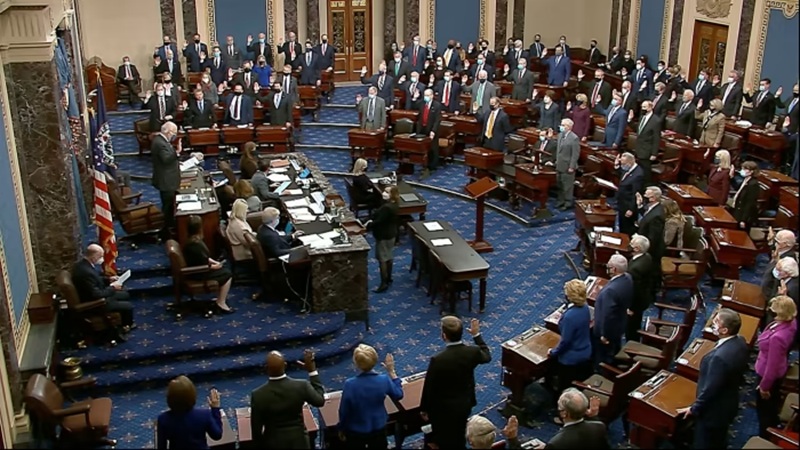
The partial U.S. federal government shutdown—triggered by a lapse in appropriations on October 1—has entered its 10th day. Non-essential services remain halted, affecting hundreds of thousands of federal workers, national parks, and research funding.
Negotiations in Congress have stalled amid partisan disputes over spending priorities, with no immediate resolution in sight. Prediction markets like Polymarket, where users trade shares priced between $0.01 and $1.00 reflecting implied probabilities, are increasingly pricing in a prolonged shutdown.
The platform’s “When will the Government shutdown end?” market resolves based on the U.S. Office of Personnel Management (OPM) announcement of the end of the lapse in appropriations.
Register for Tekedia Mini-MBA edition 20 (June 8 – Sept 5, 2026).
Register for Tekedia AI in Business Masterclass.
Join Tekedia Capital Syndicate and co-invest in great global startups.
Register for Tekedia AI Lab.
These probabilities are derived from share prices: e.g., a “Yes” share for “shutdown lasts 30+ days” trading at $0.37 implies a 37% chance. Trading volume exceeds $1.5 million, with bets tilting toward extension due to failed Senate votes and fiscal hawk resistance.
Similar trends appear on rival platform Kalshi, where the average expected duration is now 24.7 days. Senate votes on funding bills have repeatedly failed, with odds of passage by Oct. 15 dropping from 56% (Oct. 3) to 26% (Oct. 6).
The 2018-2019 shutdown lasted 35 days—the longest on record. Current bets suggest this could approach that if no deal by late October. WSJ reports highlight traders “raising bets on shutdown dragging to end of October,” driven by economic ripple effects like delayed jobs data.

If new developments emerge via breakthrough vote, these odds could shift rapidly—prediction markets update in real-time. While short shutdowns (under a week) typically cause minimal long-term damage, this one is already generating measurable economic strain, with analysts warning of escalating costs if it extends beyond mid-October.
The Council of Economic Advisers (CEA) estimates a baseline hit of $15 billion to GDP per week, driven by reduced federal spending, furlough-related income losses, and ripple effects on private sectors.
For context, the 2018-2019 shutdown 35 days cost $11 billion overall, including $3 billion in permanent losses. These stem from halted operations and mandatory back pay for furloughed workers required by law once funding resumes.

Furloughs equate to temporary layoffs, potentially adding 43,000 unemployed in a monthlong scenario. Indirectly, federal contractors, ~$2 billion in delayed SBA loans from past shutdowns and small businesses face cash flow crunches.
The Bureau of Labor Statistics (BLS) has suspended surveys, delaying the September jobs report (due Oct. 4), October CPI (Oct. 10), and potentially the Social Security 2026 COLA announcement tied to Q3 inflation data.
This “data blackout” leaves Wall Street “in the dark,” complicating Fed rate decisions—officials are still eyeing an October cut despite slowdown signals. Goldman Sachs notes a 0.15 percentage point drag on Q4 GDP from furloughs alone.
National parks like Everglades, Yosemite are closed, costing $76 million/day in visitor spending U.S. Travel Association. Airports face longer TSA lines due to unpaid staff working without pay; air travel disruptions could add $1-2 billion in losses if prolonged.
SNAP benefits are funded through October, but WIC Women, Infants, and Children may exhaust funds by late October, affecting 6.7 million participants. States like Connecticut and Colorado are dipping into reserves to cover gaps, but reimbursement is uncertain—exacerbating fiscal strain amid record $600 billion in 2025 municipal bond issuance.
NIH grants are paused, delaying medical trials; FDA inspections halted could slow drug approvals. Medicare and Social Security processing slows, with longer wait times for 72 million beneficiaries.
Stocks have shrugged it off so far S&P 500 hit records on AI rallies, but prolonged uncertainty could erode consumer confidence—already at 55.1 University of Michigan index, down from 70.3 last year. Gold surged past $4,000/oz as a hedge against debt/inflation fears.
Treasury Inflation-Protected Securities face volatility from delayed CPI. States are fronting costs for federal programs such as Head Start reviews stalled, with unclear repayment prospects. In D.C.-heavy economies like Alaska federal jobs = 15% of workforce, termination threats amplify risks.
Consumer sentiment surveys show 65% expecting rising unemployment, up from 35% a year ago. If the shutdown lasts 15+ days 35-45% odds on Polymarket, indirect effects could tip the U.S. economy—already vulnerable from tariffs and slowing jobs—toward recession.
The 2019 event’s $3 billion irrecoverable hit was just 0.01% of GDP, but today’s higher debt $35+ trillion amplifies multiplier effects. Fed Vice Chair Michael Barr noted “uncertainty remains” on impacts. Most damage is reversible upon resolution, but prolonged stalemate risks confidence erosion 70% of GDP is consumer-driven.