

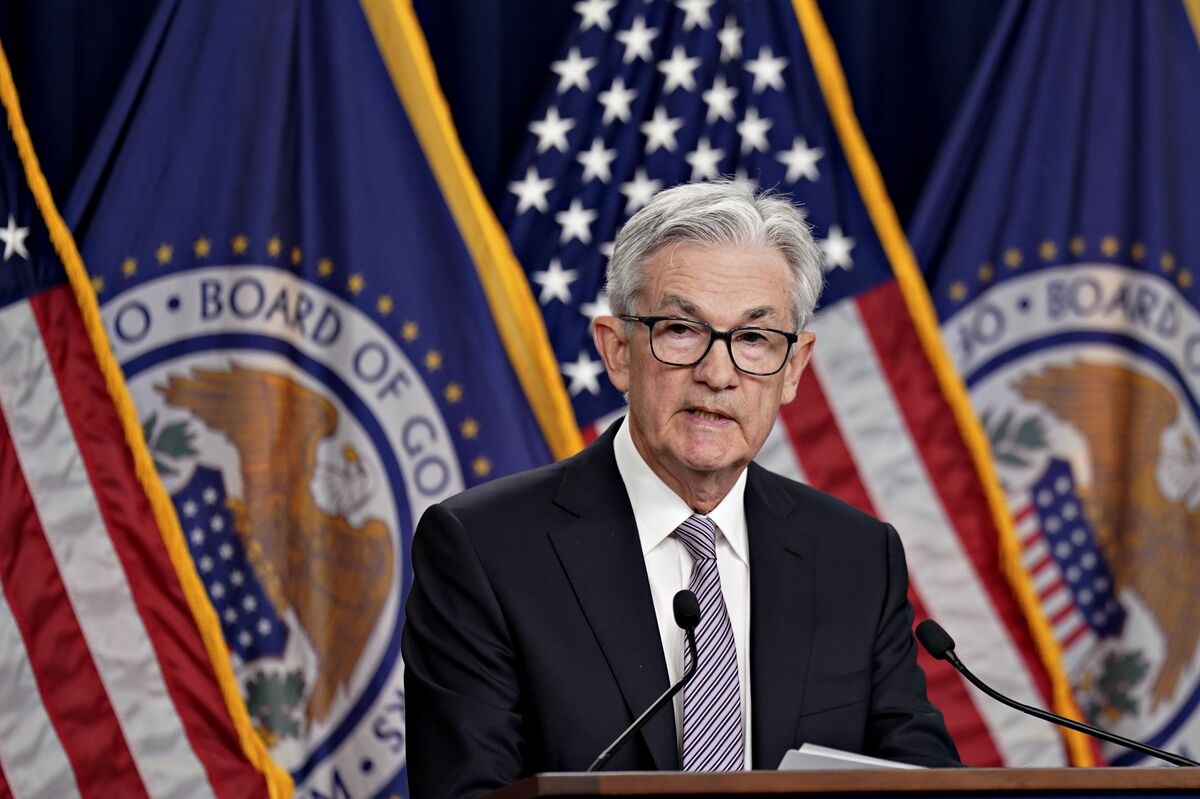
The risk of a U.S. recession is rising at a pace that is beginning to unsettle both policymakers and markets, as the economic fallout from the Middle East conflict feeds through energy prices, weakens hiring, and complicates the Federal Reserve’s policy path.
Days after Jerome Powell downplayed fears of stagflation, a growing number of forecasters are warning that the balance of risks has shifted. Estimates compiled across Wall Street now place the probability of a downturn far above historical norms. Moody’s Analytics sees recession odds at 48.6% over the next year, while Goldman Sachs puts the figure at 30%. Wilmington Trust and EY-Parthenon are even more cautious, clustering around 40% to 45%.
In ordinary conditions, the risk hovers near 20%. The current projections, while not definitive, signal an economy operating with diminishing margins for error.
Register for Tekedia Mini-MBA edition 20 (June 8 – Sept 5, 2026).
Register for Tekedia AI in Business Masterclass.
Join Tekedia Capital Syndicate and co-invest in great global startups.
Register for Tekedia AI Lab.
The war involving Iran has driven a sharp rise in crude prices, reviving a pattern that has preceded nearly every U.S. recession since the 20th century. Fuel costs have surged rapidly, with data from AAA showing gasoline prices up by more than $1 per gallon in just a month.
“The negative consequences of higher oil prices happen first and fast,” said Mark Zandi of Moody’s Analytics. “If oil prices stay kind of where they are through Memorial Day… that’ll push us into recession.”
Some analysts are drawing an even starker line. Across commodity and macro desks, a growing consensus is forming around a critical threshold: if crude prices were to climb toward $150 per barrel, the shock would likely be severe enough to tip not just the United States, but the global economy, into recession. At that level, energy costs would ripple through transport, manufacturing, and food supply chains simultaneously, triggering a broad-based contraction in demand.

The mechanics are already visible at lower price levels. Higher fuel costs are eroding household purchasing power, particularly among lower-income consumers, while businesses face rising input expenses that either compress margins or force price increases. The result is a dual squeeze—slower growth alongside persistent inflation—that complicates the Federal Reserve’s response.
Powell has rejected comparisons to the stagflation of the 1970s, noting that unemployment and inflation are far below the extremes of that era.
“That’s not the case right now,” he said, arguing that the term should be reserved for periods of double-digit inflation and joblessness.

Yet the current environment is beginning to resemble a milder version of that dynamic. Inflation risks are being driven externally by energy, while domestic growth drivers are losing momentum.
The labor market, long a pillar of resilience, is showing cracks. The U.S. economy added just 116,000 jobs across all of 2025 and lost 92,000 in February. The unemployment rate has held at 4.4%, but largely because layoffs remain subdued rather than because hiring is strong, according to CNBC.
More concerning is the narrow base of job creation. Outside healthcare, where demographic demand is driving more than 700,000 new roles, employment has declined significantly. Over the past year, non-healthcare payrolls have fallen by more than half a million, raising questions about the sustainability of job growth.
“I think there’s much less inflation risk than [Fed officials] think, and more risk to the labor market to the downside,” said Luke Tilley of Wilmington Trust.
Dan North of Allianz described the imbalance as structurally fragile: “It’s no way to run a railroad if you’re doing it on one engine.”
That fragility matters because employment underpins consumer spending, which drives more than two-thirds of U.S. economic activity. So far, spending has held up, supported in part by rising asset prices. But that support is weakening as equity markets come under pressure from the same geopolitical risks driving oil higher.
Tilley estimates that as much as a quarter of recent consumption growth has been fueled by the “wealth effect” from stock market gains. With major indexes declining during the conflict, that cushion is beginning to erode.
Consumer sentiment is already reflecting the shift. A March survey by NerdWallet found that 65% of Americans expect a recession within the next year, underscoring how quickly perceptions are deteriorating.
Growth, while still positive, is losing momentum. The Federal Reserve Bank of Atlanta estimates first-quarter GDP growth at around 2%, following a weak 0.7% expansion in the final quarter of last year. The expected rebound has been muted, suggesting that underlying demand is softening.
However, there are still buffers. Fiscal support from the 2025 “One Big Beautiful Bill,” alongside regulatory easing and increased domestic production, is expected to provide some offset to external shocks.
“There is support underneath,” North said, adding that he remains cautious about declaring a recession outright.
But those supports may not be sufficient if the external shock intensifies. The trajectory of oil prices, and by extension, the conflict driving them, remains the decisive variable.
A diplomatic resolution that restores stability to energy markets could ease inflation pressures, stabilize expectations, and give the Fed room to recalibrate. Many economists, including Zandi, still view that as the baseline outcome.
If that path fails, the consequences could escalate quickly. A sustained rise in crude toward the $150 threshold would likely trigger a synchronized global slowdown, forcing central banks into tighter policy even as growth contracts—a combination that has historically proved difficult to manage.