

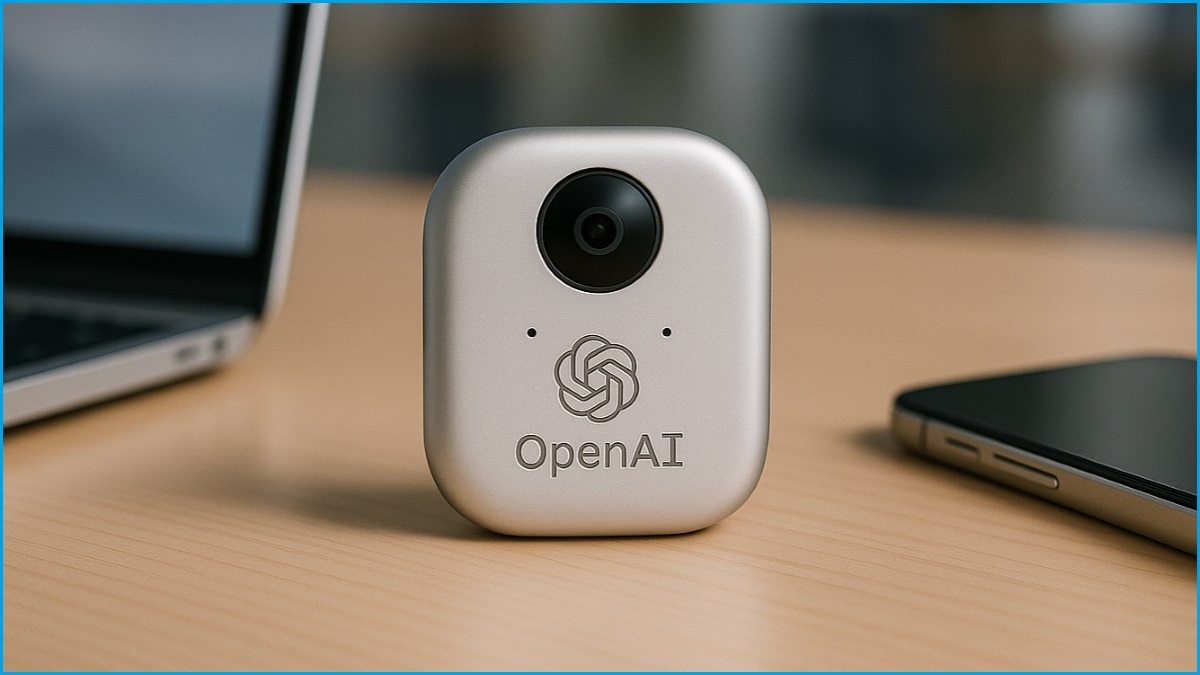
The artificial intelligence industry continues to evolve at a remarkable pace, and OpenAI has once again captured global attention by teasing the development of Codex-branded hardware.
While the company has not yet revealed full details about the product, the announcement has sparked widespread speculation about what dedicated AI hardware could mean for developers, businesses, and everyday users.
If realized, Codex-branded devices could represent a significant shift in how people interact with AI, moving beyond cloud-based applications toward specialized hardware designed specifically for intelligent computing.
Codex is already recognized as the AI model that powers advanced coding assistance, helping developers write, debug, and understand software more efficiently.
Register for the next Tekedia Mini-MBA.
Register for Tekedia AI in Business Masterclass.
Join Tekedia Capital Syndicate and co-invest in great global startups.
Since its introduction, it has become a symbol of AI-assisted programming, enabling users to generate code from natural language prompts and automate repetitive development tasks. By extending the Codex brand into hardware, OpenAI appears to be signaling its ambition to create a more integrated AI ecosystem where software and hardware work together seamlessly.
Although the company has remained secretive about the hardware’s specifications, industry analysts believe it could be optimized for running AI models locally or in hybrid cloud environments.
Such devices may feature custom processors designed to accelerate machine learning workloads while reducing latency and improving privacy. Running AI tasks directly on dedicated hardware can also reduce dependence on constant internet connectivity, making intelligent applications faster, more secure, and more reliable.

For software developers, Codex-branded hardware could provide an enhanced environment for AI-assisted programming. Instead of relying entirely on cloud services, developers may have access to powerful local AI capabilities capable of generating code, testing applications, and suggesting improvements in real time.
This could significantly streamline software development workflows while enabling faster iteration and experimentation. Businesses could also benefit from specialized AI hardware. Organizations handling sensitive information often face concerns about transmitting proprietary data to external cloud servers.
If Codex hardware supports secure on-device processing, companies could leverage advanced AI while maintaining greater control over confidential information. This approach aligns with the growing demand for privacy-focused AI solutions across industries such as healthcare, finance, manufacturing, and government.

The teaser also reflects a broader trend within the technology industry. Major technology companies are increasingly investing in purpose-built AI chips and intelligent devices as generative AI becomes more computationally demanding.
Rather than relying solely on traditional CPUs and GPUs, companies are designing hardware specifically optimized for AI inference and training. OpenAI’s move suggests it intends to compete not only in software but also in the rapidly expanding AI hardware market.
Despite the excitement, many questions remain unanswered. OpenAI has not confirmed whether Codex-branded hardware will target consumers, professional developers, enterprise customers, or research institutions.
Pricing, availability, technical specifications, and software compatibility are still unknown. It is also unclear whether the hardware will function as a standalone device or integrate with existing computing platforms.
The announcement has generated considerable enthusiasm across the AI community. If OpenAI successfully combines powerful AI models with optimized hardware, it could redefine how developers create software and how organizations deploy intelligent systems.
Codex-branded hardware represents more than a new product—it signals the possibility of a future where artificial intelligence is deeply embedded into the devices people use every day.
As OpenAI prepares to share more details, the technology world will be watching closely to see whether this ambitious vision becomes the next major milestone in the evolution of AI computing.