

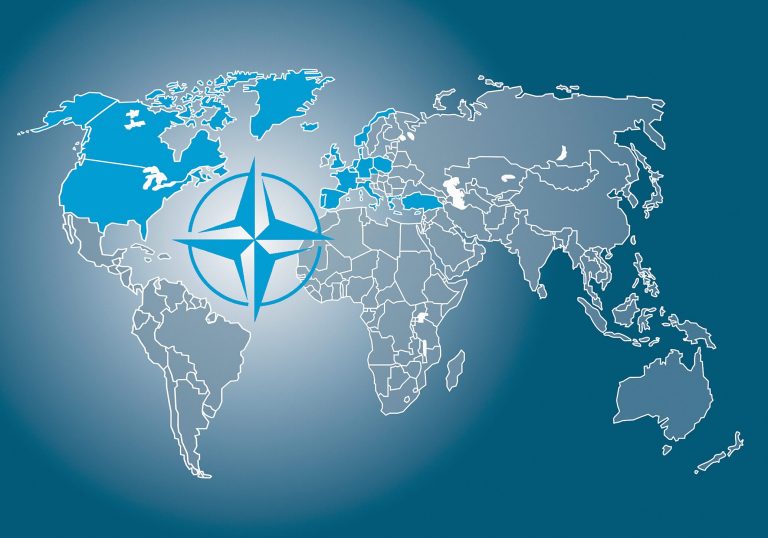
OpenAI is considering a contract to deploy its artificial intelligence systems on the “unclassified” networks of the North Atlantic Treaty Organization, according to a person familiar with the matter, who was quoted by Reuters.
The potential agreement comes days after the ChatGPT-maker secured a deal to operate within the Pentagon’s classified network, underscoring a deepening push into military and government contracts.
The Wall Street Journal first reported the possible NATO arrangement. The newspaper said Chief Executive Sam Altman initially told employees that OpenAI was exploring deployment across NATO’s classified systems. A company spokeswoman later clarified that Altman misspoke and that the discussions relate to NATO’s unclassified networks.
Register for Tekedia Mini-MBA edition 20 (June 8 – Sept 5, 2026).
Register for Tekedia AI in Business Masterclass.
Join Tekedia Capital Syndicate and co-invest in great global startups.
Register for Tekedia AI Lab.
The NATO discussions follow OpenAI’s announcement last week that it would deploy its technology within the U.S. Department of Defense’s classified systems. The agreement came after U.S. President Donald Trump directed the federal government to stop working with rival AI firm Anthropic, altering the competitive dynamics for high-value defense contracts.
Anthropic’s removal followed a dispute over contractual terms. Its chief executive, Dario Amodei, has emphasized opposition to using AI models for mass domestic surveillance or fully autonomous weapons. The Pentagon has said it has no interest in deploying AI for surveillance of Americans or for weapons that operate without human involvement, while maintaining that lawful uses of AI should be permitted.
In an updated statement on Monday, OpenAI said its systems “shall not be intentionally used for domestic surveillance of U.S. persons and nationals,” and added that the Pentagon affirmed the AI services would not be used by intelligence agencies such as the National Security Agency.

Altman acknowledged internal concern about reputational fallout. “I think this was an example of a complex, but right decision with extremely difficult brand consequences and very negative PR for us in the short term,” he said during a company meeting, according to the Journal.
A pivot toward defense revenue
Taken together, the Pentagon agreement and potential NATO deployment signal that OpenAI is actively pursuing military and government contracts as a strategic growth channel. Defense institutions offer large, multi-year contracts, predictable funding, and strategic leverage at a time when AI companies are under mounting pressure to convert rapid technological progress into sustainable revenue.
OpenAI operates in a capital-intensive sector. Training frontier AI models requires vast computing infrastructure, specialized chips, and access to large-scale cloud capacity. Backed by major investors including Microsoft and Amazon, the company has expanded aggressively into enterprise services. Still, the broader AI industry is navigating high operating costs and expectations for profitability.

Government contracts, particularly in defense, can provide stable revenue streams less sensitive to consumer spending cycles. They also embed AI providers into the core national infrastructure, strengthening their long-term strategic position. OpenAI appears to be positioning itself as a trusted infrastructure provider rather than solely a consumer-facing chatbot company by securing footholds in the Pentagon and potentially NATO systems.
Unclassified Networks and Their Implications
A deployment on NATO’s unclassified networks would likely focus on administrative, logistical, cybersecurity, or analytical tasks rather than direct battlefield systems. Even so, the symbolic significance is considerable. NATO members have increasingly emphasized AI integration for operational efficiency, cyber defense, and interoperability across allied forces.
Embedding AI tools into alliance-wide systems could give OpenAI visibility across multiple national defense environments. It would also strengthen its standing in future procurement cycles as NATO and member states expand AI capabilities.
At the same time, such moves heighten scrutiny. Civil society groups and some policymakers have raised concerns about the militarization of advanced AI technologies. OpenAI’s contractual language restricting domestic surveillance use appears aimed at mitigating those concerns while preserving access to government markets.
Profit pressures and governance trade-offs
The AI sector is undergoing consolidation around a handful of well-capitalized firms capable of training and deploying cutting-edge models. As competition intensifies and infrastructure costs remain high, companies face pressure to secure durable revenue sources. Defense contracts can offer both financial returns and strategic alignment with national governments eager to maintain technological leadership.
However, deeper involvement in military systems carries reputational and governance risks. Public commitments to safety and responsible use must be balanced against operational demands from defense agencies. Altman’s acknowledgment of “negative PR” underscores the sensitivity surrounding such partnerships. OpenAI has recorded massive uninstallation in the past few days following its deal with the Pentagon.
The potential NATO agreement remains under consideration, and details are limited. Yet the trajectory is that OpenAI is moving beyond consumer and enterprise markets into the realm of national security infrastructure. In doing so, it is seeking not only revenue growth but also long-term leverage in shaping how advanced AI systems are embedded within government and military institutions.