

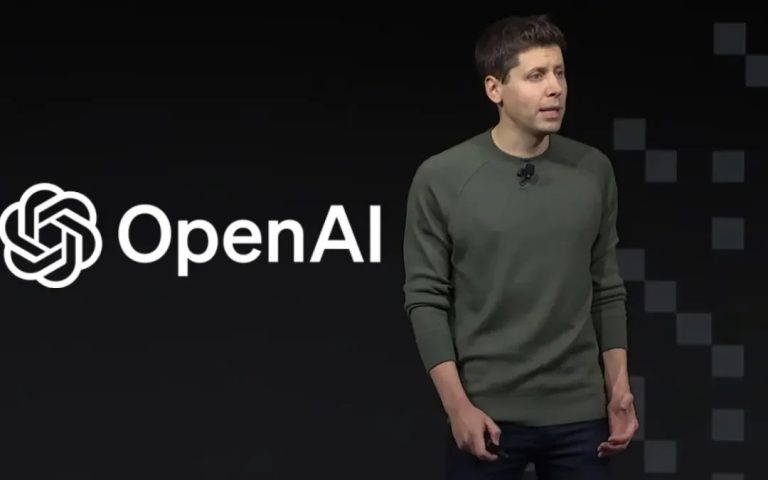
OpenAI is preparing to expand its workforce to about 8,000 employees by the end of 2026, a near doubling from current levels.
The hiring plan, reported by the Financial Times, comes at a time when OpenAI is under pressure to convert rapid adoption of its tools into durable revenue streams. It is seen as a sign that the company is aggressively positioning for the next phase of the AI race while trying to answer growing questions about profitability.
The company has secured one of the largest capital injections in the sector, with a recent funding round valuing it at about $840 billion and bringing in roughly $110 billion from investors including Amazon, SoftBank, and Nvidia.
Register for Tekedia Mini-MBA edition 20 (June 8 – Sept 5, 2026).
Register for Tekedia AI in Business Masterclass.
Join Tekedia Capital Syndicate and co-invest in great global startups.
Register for Tekedia AI Lab.
But while that capital provides room to expand, it also raises the stakes.
OpenAI’s spending has surged alongside its ambitions. Training and running large-scale AI systems requires vast compute resources, expensive chips, and continuous infrastructure upgrades. Revenue has grown quickly, driven by enterprise subscriptions and API usage, but investors are increasingly focused on the gap between income and the cost of sustaining that growth.
The workforce expansion is believed to be a direct response to that tension. By that move, OpenAI is attempting to accelerate both innovation and monetization, compressing the timeline between research breakthroughs and commercial returns.

Chief executive Sam Altman signaled that urgency late last year. After Google introduced its Gemini 3 model, Altman initiated a “code red,” pausing non-essential work and pushing teams to move faster on core products.
The hiring push builds on that shift. More engineers to shorten development cycles, more sales staff to convert enterprise interest into contracts, and more technical specialists to help clients integrate AI into existing systems.
Large companies adopting AI often struggle to move from pilot projects to full deployment, making those integration roles critical. Thus, OpenAI appears to be attempting to remove that bottleneck and capture more value from each customer relationship by embedding technical support deeper into its offering.

As of February 2026, OpenAI has more than 900M weekly active users and more than 50 million consumer subscribers, according to the company’s website.
This suggests that, besides competing on model performance, OpenAI is now building a full commercial stack around those models, from infrastructure partnerships to enterprise services.
But that expansion, some have noted, carries risk. This is because rapid hiring can strain internal coordination and increase operating expenses at a time when the company is already spending heavily on data centers and talent. The larger the organization, the harder it becomes to maintain the speed that defined its early breakthroughs.
There is also a market concern that extends beyond OpenAI itself. The scale of recent funding rounds across the AI sector has prompted comparisons to earlier technology bubbles, where valuations ran ahead of proven business models. OpenAI sits at the center of that debate. Its backers are watching closely, none more so than Microsoft, which has invested more than $13 billion since 2019 and integrated OpenAI’s models into its own products and cloud services.
Microsoft’s position is not just financial as its Azure platform underpins much of OpenAI’s infrastructure.
That relationship has become more complex as OpenAI expands its partnerships. Earlier this week, the Financial Times reported that Microsoft is weighing legal action against OpenAI over a $50 billion cloud partnership with Amazon. The potential lawsuit is based on the concern that the chances of Microsoft’s investment in OpenAI to continue to translate into preferential access and returns may be usurped by the latter’s partnership with Amazon.
Against the backdrop of a widening gap between investment and profit, the hiring surge is understood to be more than a staffing decision. It is seen as a sign that the company is betting heavily on its ability to scale into profitability, even as costs rise and competition intensifies from rivals such as Google, Anthropic, and Meta.
It also suggests confidence that demand for AI will remain strong enough to absorb that expansion. Enterprise adoption is accelerating, but customers are becoming more selective, looking for clear returns on investment rather than experimentation. OpenAI’s emphasis on sales and deployment support indicates it is adapting to that shift. The company is pushing to ensure contracts and models translate into sustained usage and revenue.
Investors who have poured billions into the sector are beginning to look for clearer paths to profit, not just growth metrics. For OpenAI, maintaining its lead will depend on how effectively it can convert scale into efficiency.
However, the planned expansion indicates that OpenAI, in its quest to become profitable, is doubling down, committing more people and capital to the AI race, where a slip will mean losing ground to competitors.