

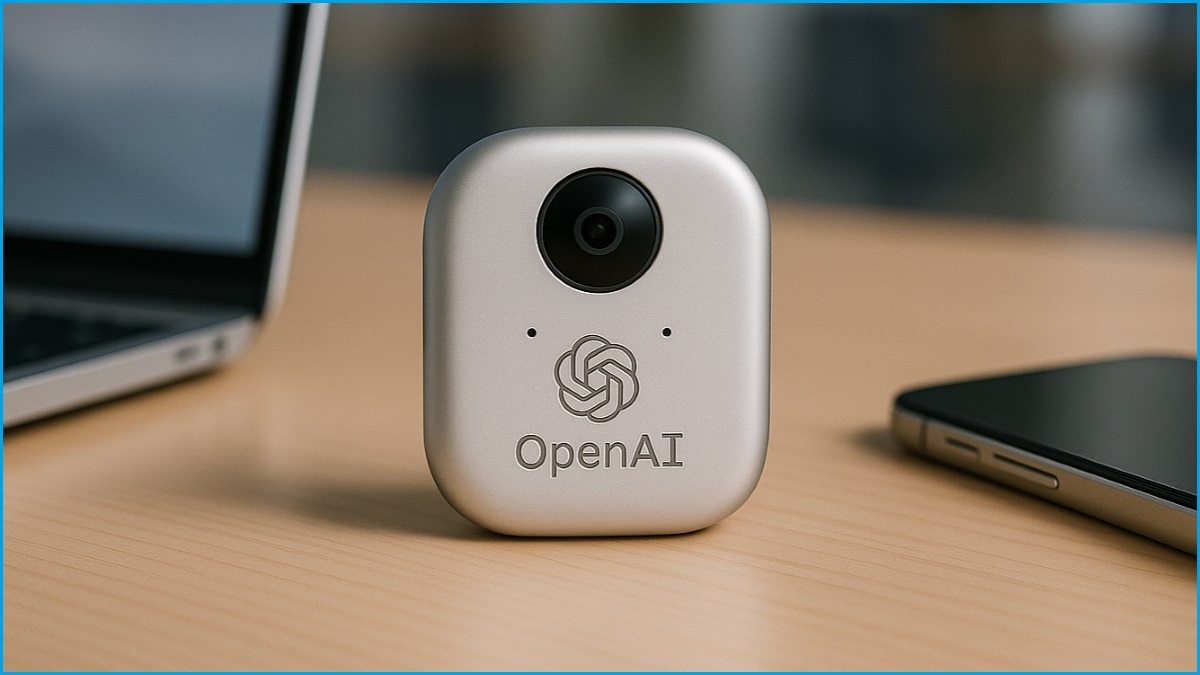
Donut-shaped hardware being developed with Jony Ive’s LoveFrom is expected to combine a premium design with an always-available AI experience
OpenAI’s reported device, expected to enter the consumer hardware market with a new artificial intelligence designed to bring ChatGPT into users’ homes, now has a price tag.
The company’s first major hardware product, reportedly taking a distinctive donut-shaped form, is potentially costing as much as $400.
Register for the next Tekedia Mini-MBA.
Register for Tekedia AI in Business Masterclass.
Join Tekedia Capital Syndicate and co-invest in great global startups.
The device, which has previously been described as an AI-powered smart speaker and the “physical manifestation” of ChatGPT, is being developed in partnership with LoveFrom, the design studio founded by former Apple design chief Jony Ive.
According to Bloomberg, the device will be donut-shaped, a design intended to make it easier for users to carry around their homes and place in different locations, including on a bedside table or kitchen counter.
The product is expected to be made from high-quality metal and have a premium appearance. It will also reportedly contain moving parts, although details about what those components will do remain unclear. The reported design marks a significant departure from the conventional smart-speaker format, where devices typically remain stationary and rely on microphones, speakers and physical or touch controls.

OpenAI’s approach appears aimed at creating a device that is less like a traditional speaker and more like a dedicated physical interface for an AI assistant.
The product could also carry a substantially higher price than mainstream smart speakers.
The reported price range of $300 to $400 would place the device well above many existing smart-home speakers. Amazon’s smart speakers, for example, generally sell at considerably lower prices, with its lineup ranging from entry-level devices costing around $40 to higher-end models priced at roughly $240.

That pricing could become one of OpenAI’s biggest challenges as it attempts to establish a new hardware category around generative AI.
Smart speakers have historically been difficult businesses, with manufacturers often using them to strengthen broader ecosystems rather than generate significant hardware margins. Amazon, Google and Apple have used smart speakers and related devices to connect consumers to their respective software, advertising, commerce and subscription ecosystems.
OpenAI does not have an equivalent hardware ecosystem, which means the company would be asking consumers to pay a premium primarily for access to an AI experience.
That could make the success of the device heavily dependent on whether users see enough value in having ChatGPT available continuously in their physical environment rather than accessing the service through smartphones, computers and existing voice-enabled devices.
The proposed product could nevertheless give OpenAI a way to deepen its relationship with consumers.
Instead of requiring users to open an application and initiate a conversation, a dedicated device could provide an always-available interface for asking questions, managing information, controlling compatible devices and potentially performing tasks through AI agents.
The reported portability of the device could be particularly important to that strategy. Users could move it from the bedroom to the kitchen or another part of the house, potentially positioning it as a persistent AI companion rather than a conventional smart speaker tied to a single location.
The partnership with LoveFrom adds another dimension to OpenAI’s hardware ambitions.
Ive became one of the technology industry’s most influential designers during his years at Apple, where he played a central role in the development of products including the iMac, iPod, iPhone and iPad.
His involvement gives OpenAI access to a design philosophy centered on industrial design and user experience at a time when AI companies are seeking ways to move beyond conventional screens and keyboards.
OpenAI is reportedly targeting a 2027 launch, although the company has not publicly confirmed the final design, specifications, price or release date.
The hardware push also comes with significant legal and commercial challenges.
Apple has sued OpenAI, accusing the company of misappropriating trade secrets. OpenAI has denied wrongdoing. The dispute adds another complication to the AI company’s efforts to establish itself in a hardware market historically dominated by companies with extensive manufacturing, distribution and consumer-product expertise.
OpenAI’s hardware strategy also points to a broader shift in the AI industry toward dedicated devices. As generative AI becomes more capable of understanding voice, images and context and of taking actions on behalf of users, technology companies are exploring interfaces that could reduce reliance on traditional applications.
The potential opportunity is substantial, but so are the risks. A $300-to-$400 device would need to offer capabilities sufficiently different from those available through smartphones and existing smart speakers to persuade consumers to purchase another device.
OpenAI would also need to demonstrate that its AI can operate reliably in a home environment, where privacy, accidental activation, latency and the accuracy of responses become more consequential than they are in a conventional chatbot.
Analysts note that if OpenAI succeeds, the device could become an important step toward making AI a persistent part of consumers’ physical environments.
For now, the donut-shaped device remains largely a reported project rather than a confirmed commercial product, leaving its final design, capabilities, pricing and launch timetable subject to change.