

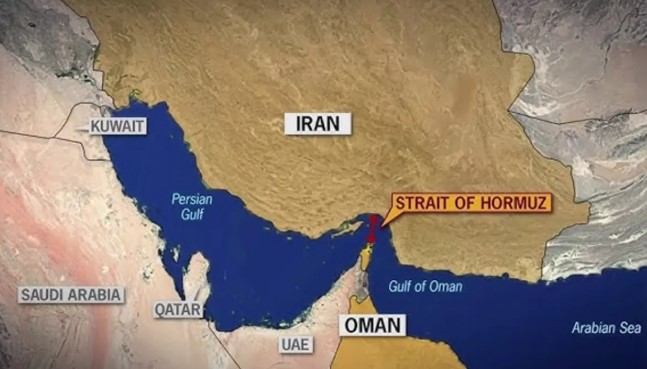
A proposal under discussion between Iran and Oman to introduce a system that would give Tehran a role in controlling and potentially charging ships transiting the Strait of Hormuz faces significant legal, sanctions, and insurance obstacles, according to four industry sources familiar with the matter cited by Reuters.
The proposal has emerged as one of the most contentious issues in negotiations aimed at ending the conflict in Iran, with control of the strategic waterway at the center of discussions over how commercial shipping would resume.
Before the U.S.-Israeli airstrikes at the end of February triggered the war in Iran, the Strait of Hormuz was a critical international shipping route through which roughly one-fifth of global oil supplies and other essential commodities moved. The waterway operated without transit fees and was open to commercial vessels.
Register for the next Tekedia Mini-MBA.
Register for Tekedia AI in Business Masterclass.
Join Tekedia Capital Syndicate and co-invest in great global startups.
Under the latest proposal, Iran would be able to intervene when necessary in relation to inbound vessels, while outbound ships would use a route between Iranian and Omani waters. Vessels leaving the Gulf would notify Iran and obtain clearance through Oman, according to a senior Iranian official cited by Reuters.
The proposed arrangement, however, could prove difficult for international shipping companies to use because of existing U.S. sanctions and insurance restrictions.
Iran has reportedly sought fees equivalent to between 5% and 7% of the value of cargoes transported through the strait, while Oman has discussed charges of about 3%. The United States, meanwhile, wants vessels to transit without paying any fees.

The proposed charges have raised concerns among international shipping organizations that the arrangement could effectively turn the waterway into a toll route.
“The ability of merchant ships to navigate international waterways ‘safely, predictably and without unnecessary impediment is fundamental to resilient supply chains, economic stability and energy security,'” the world’s leading shipping associations said in an open letter to the UN’s shipping agency.
The organizations described compulsory transit or service charges as “a toll in all but name”, warning that such a system could establish a precedent that undermines the international legal framework governing straits used for navigation.

The Strait of Hormuz operates under a two-way traffic separation scheme adopted by the International Maritime Organization in 1968 with the agreement of countries in the region. The system established designated shipping corridors through Iranian and Omani waters.
The IMO’s governing council said in July that countries bordering the strait should guarantee the “non-discriminatory and unimpeded right of transit passage of all ships” and that passage should remain free of tolls and charges.
The Challenges of Insurance and U.S. Sanctions
Beyond the question of international maritime law, the proposed fees create a more immediate problem for shipping companies: U.S. sanctions compliance.
Washington has sanctioned the Persian Gulf Strait Authority, an Iranian body established in May to operate the waterway. The U.S. Treasury has also prohibited U.S. persons from receiving services from the Iranian government associated with a “guarantee of safe passage”.
That means companies could face sanctions exposure if payments are made to Iranian authorities in exchange for transit or protection, the industry sources said.
The consequences could extend beyond the companies making the payments. Any transaction that breaches U.S. sanctions could potentially expose participants to asset freezes or other enforcement measures, making the cost of complying with the proposed system considerably higher than the fee itself.
Insurance rules add another layer of uncertainty.
In late July, the Lloyd’s Market Association introduced wording for war-risk insurance policies that would terminate coverage for a vessel if it paid a transit fee, toll or other charge to pass through the Strait of Hormuz.
“Under the clause, insurers have no liability to indemnify any such payment and, where such a payment has been made, are discharged from obligations in respect of the relevant vessel,” the LMA said.
The provision is particularly significant because vessels operating through a conflict zone generally require additional war-risk insurance to cover potential damage during transit.
That leaves shipping companies caught between competing requirements. Paying Iran or another authority could expose them to U.S. sanctions and cause them to lose insurance protection, while refusing to pay could prevent them from securing permission to transit under the proposed system.
One insurance industry source described the situation as a “catch 22”.
The dispute therefore goes beyond the question of how much ships would pay to cross Hormuz. It raises fundamental questions about who has authority to regulate commercial traffic through one of the world’s most strategically important waterways and whether any new system can operate within international maritime law, U.S. sanctions regimes and the insurance framework used by global shipping.
For oil markets, the implications are potentially significant. The Strait of Hormuz has historically carried a substantial share of global crude and petroleum-product flows, meaning prolonged restrictions, higher transit costs or uncertainty over access could increase freight, insurance and energy costs even if physical oil production resumes.
A workable agreement would therefore need to address not only Iran’s demand for a role in controlling traffic, but also the status of transit fees, sanctions exposure, insurance coverage and the internationally recognized right of passage.
Until those issues are resolved, analysts believe that a formal reopening of the waterway may not automatically translate into a return to normal commercial shipping.