

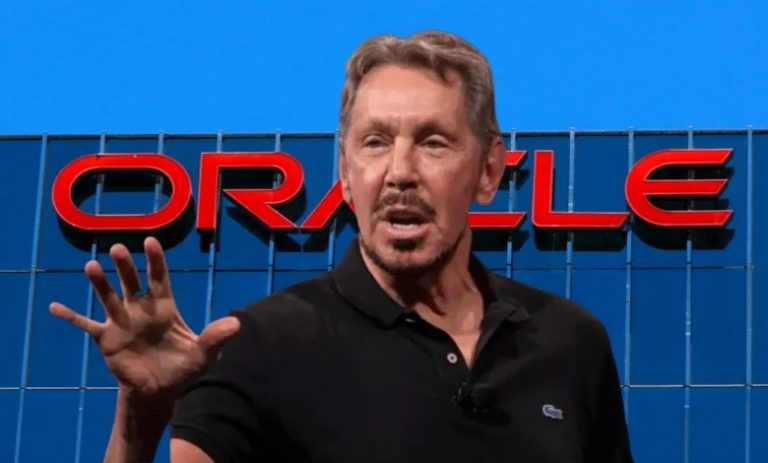
Oracle is reshaping its Fusion cloud software so that AI agents can take over the drudgery of data entry and routine execution, leaving human workers to focus on the judgment calls that actually move the business forward.
The overhaul, unveiled Tuesday at an event in London, is the latest sign that makers of heavyweight corporate systems are scrambling to adapt to a world where autonomous agents handle the mechanical work.
Steve Miranda, Oracle’s executive vice president of applications development, put it plainly: the aim is to let managers ask real business questions, how to design a new product more cheaply and faster while avoiding supply chain blowups, and let the system hunt down the scattered data, pull it together, and lay out options.
Register for Tekedia Mini-MBA edition 20 (June 8 – Sept 5, 2026).
Register for Tekedia AI in Business Masterclass.
Join Tekedia Capital Syndicate and co-invest in great global startups.
Register for Tekedia AI Lab.
That data lives across Fusion modules and linked third-party applications. The AI will track it, compile the information, and suggest next steps. Humans, Miranda said, will spend more time on the things machines still cannot do well: negotiating with suppliers, weighing risk tolerance, and making the final calls.
“Typing in an invoice isn’t a particularly high-value skill to your enterprise or to the person who does that part of their job,” he told the audience. “Decision making is still kind of up to that human and weighing the different pros and cons of that case. But certainly the execution, the typing of the invoices, the typing of the purchase order, that is what is going to be replaced in whole by AI.”
Oracle’s shares have dropped about 40 percent this year as investors fret that AI could eventually eat into the need for complex enterprise software. Company executives have pushed back, insisting they are leaning into the technology rather than waiting to be overtaken. By making Fusion more agent-friendly, Oracle hopes to keep its flagship product indispensable even as generative tools reshape how companies run their back offices.

Fusion handles core operations from factory planning to revenue collection. The update turns those pieces into a more intelligent system where agents can move data, flag exceptions, and generate recommendations without constant human babysitting. The shift mirrors what Salesforce, Workday, and SAP are also attempting: turning their platforms into launchpads for autonomous workflows rather than static record-keeping tools.
For large companies already running Fusion, the change could mean quicker cycles on everything from procurement to financial close. It also carries the usual caveats. Accuracy, audit trails, and human oversight will matter more than ever when agents start touching real money and real supply chains.
Oracle has not detailed every safeguard, but Miranda made clear the system is built with controls that keep people in the loop on consequential decisions.

The broader market reaction has been muted. Oracle’s stock has been under pressure for months, caught in the same AI-induced reevaluation that has hit other enterprise software names. Some investors worry the very tools Oracle is embracing could shrink the addressable market for traditional ERP suites. Others see the move as a necessary defense — a way to stay relevant as customers demand systems that do more than store data.
But Oracle is not alone in this bet. The entire sector is racing to agent-enable its platforms, hoping to turn potential disruption into an upsell opportunity. Anthropic has just initiated a move to give its Claude system the ability to operate a user’s computer and carry out tasks with limited supervision.
With Oracle now in the picture, the agentic AI race is believed to be escalating. This means the heavy lifting of corporate data work is increasingly headed for automation. The humans who used to do it will be asked to do something harder — and, Oracle hopes, more valuable. But that increases the concern of AI taking over jobs.