

As Osun State approaches the August 15, 2026 governorship election, the campaign atmosphere has moved beyond the familiar rhythms of Nigerian electoral politics. What is unfolding is not simply a contest between parties; it is a referendum on competing ideas of governance, economic management, and political legitimacy.
Analysts increasingly describe the election as an “epochal referendum” because the two leading candidates embody sharply contrasting philosophies. Incumbent Governor Ademola Adeleke, now contesting on the platform of the Accord Party, presents himself as a people-first populist whose administration prioritizes welfare, infrastructure renewal, and grassroots interventions. His principal challenger, Munirudeen Bola Oyebamiji (AMBO) of the All Progressives Congress (APC), offers a technocratic alternative centered on fiscal discipline, industrial revival, and systematic governance.
This ideological divide gives the election unusual significance. Nigerian governorship races often revolve around patronage networks and personality politics, but Osun 2026 is increasingly framed as a choice between welfarism and technocracy.
Register for the next Tekedia Mini-MBA.
Register for Tekedia AI in Business Masterclass.
Join Tekedia Capital Syndicate and co-invest in great global startups.
Adeleke’s campaign is built around his first-term performance. His supporters highlight road construction projects, workers’ welfare measures, and social intervention programs. The administration points to a substantial reduction in the state’s inherited road deficit and the implementation of a ?75,000 minimum wage as evidence that government can improve everyday life when resources are directed toward citizens.
The APC disputes that narrative. Oyebamiji’s campaign argues that beneath the visible projects lies a pattern of financial mismanagement and institutional decay. It accuses the administration of bypassing procurement processes and neglecting productive sectors such as agriculture. His seven-point “PROSPER” agenda seeks to reposition Osun through financial engineering, industrial development, and administrative efficiency.
The language used by both camps reveals the deeper contest. Accord portrays its approach as “grassroots community impact” and labels the APC model “corporate elitism.” The APC counters by presenting itself as the guardian of “robust financial engineering” needed to rescue the state from “fiscal recklessness.” In effect, each side is trying to define not only its opponent’s policies but also its moral relationship with ordinary Osun citizens.

Adding another layer is the presence of Najeem Folasayo Salaam of the African Democratic Congress (ADC). Endorsed by former governor Rauf Aregbesola, Salaam represents a potentially important third force. Even if he does not win, his candidacy could reshape voting patterns by drawing support from disaffected APC and PDP loyalists, particularly in areas where Aregbesola retains influence.
Yet the most consequential factor may not be policy at all. The election has become a test of incumbency versus federal might. Adeleke enters the race with an established statewide political structure, while the APC benefits from the strategic importance that the Federal Government places on reclaiming Osun. This dynamic mirrors a broader national pattern in which opposition governors must defend local political capital against the institutional advantages of a ruling party at the center.
Unfortunately, the campaign is unfolding under the shadow of insecurity. Political violence has already produced clashes in Ile-Ife and Osogbo, including vandalism of campaign materials and fatal shootings. INEC and security agencies have identified 385 election flashpoints across all 30 local government areas, along with 200 difficult terrains that could complicate election-day logistics.

The seriousness of the security threat is reflected in recent law-enforcement actions. The Inspector-General of Police has publicly warned against shielding wanted suspects, and security agencies have arrested dozens of suspected political thugs following high-level visits to the state. Such measures may deter violence, but they also underscore how fragile the pre-election environment has become.
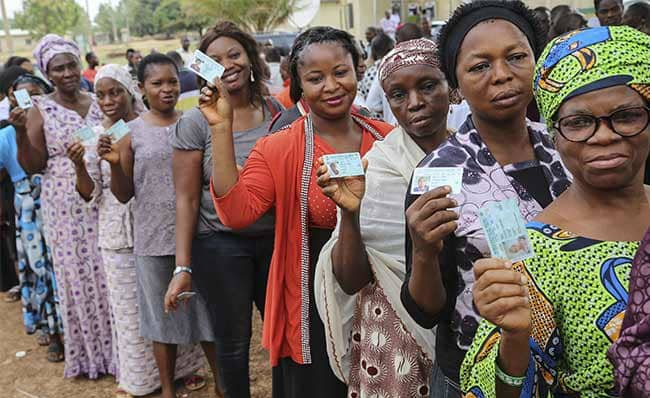
Perhaps the greatest long-term concern is voter participation. Osun has experienced a steady decline in turnout over the past two decades. Despite having roughly 2.3 million registered voters, turnout fell to 42.09% in 2022, the lowest in the state’s history. Fear of violence, distrust of institutions, and the normalization of vote-buying threaten to push participation even lower in 2026.
INEC is attempting to rebuild confidence through technological and procedural safeguards. The commission has introduced a neutrality oath for security personnel and plans to deploy 3,763 BVAS machines to upload results directly to the IReV portal. These steps are important, but technology alone cannot restore democratic trust if citizens believe that elections are ultimately determined by intimidation or inducement.
What happens in Osun will resonate beyond the state. If Adeleke secures re-election, it could strengthen the argument that visible welfare and infrastructure delivery remain powerful electoral assets even against a federally backed challenger. If Oyebamiji prevails, it may signal growing voter appetite for technocratic governance and tighter fiscal management.