

President Trump announced via Truth Social that, following what he described as “very good and productive” conversations with Iranian officials aimed at a “complete and total resolution” of hostilities including issues around the Strait of Hormuz, he had instructed the U.S. military to postpone any strikes on Iranian power plants and energy infrastructure for five days.
This came after he had issued a 48-hour ultimatum over the weekend threatening to “obliterate” such targets if Iran did not fully reopen the Strait of Hormuz. Iran quickly denied that any substantive bilateral talks or negotiations were occurring, calling Trump’s characterization inaccurate.
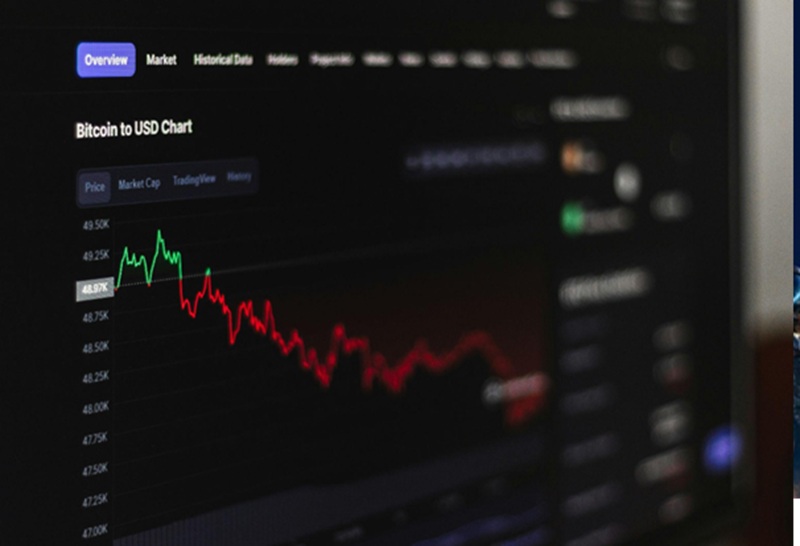
The de-escalation tone triggered an immediate risk-on surge: Bitcoin pumped roughly $2,900–$3,000 in a sharp candle, briefly pushing toward the $71,000 level. Broader crypto markets followed, with sentiment flipping bullish on reduced geopolitical risk.
In the ~15 minutes following Trump’s statement, approximately $250–265 million in short positions were liquidated across crypto derivatives; Bitcoin accounted for the bulk, around $248–250M in shorts wiped out. Total 24-hour liquidations exceeded $700–800M, affecting hundreds of thousands of traders.
Register for Tekedia Mini-MBA edition 20 (June 8 – Sept 5, 2026).
Register for Tekedia AI in Business Masterclass.
Join Tekedia Capital Syndicate and co-invest in great global startups.
Register for Tekedia AI Lab.
This was a classic short squeeze amplified by high leverage in the crypto futures market. Traders who had piled into shorts betting on further downside from weekend escalation fears got caught off guard by the sudden reversal. Traditional markets also reacted: U.S. stock futures rose, while oil prices dropped sharply on lowered fears of major supply disruptions from the Gulf region.
This fits into a broader, volatile period of U.S./Israeli actions against Iran, including prior strikes on energy-related targets and Iranian threats of retaliation; targeting Gulf infrastructure or closing the Strait. Volatility remains high—headlines can flip quickly as seen with Iran’s denial, and some analysts expect continued back-and-forth between escalation rhetoric and negotiation signals.
Crypto’s extreme sensitivity here highlights how leveraged derivatives amplify headline-driven moves far beyond spot price action. It’s a textbook example of geopolitics meets crypto leverage: one tweet-style announcement, massive short pain, and a fast rebound.
Markets hate uncertainty, but they love a surprise “pause for talks” narrative—even if the other side disputes it. A short squeeze is a rapid, self-reinforcing surge in an asset’s price (stock, crypto, commodity, etc.) driven primarily by short sellers being forced to buy back the asset to close (or “cover”) their positions, rather than by strong underlying fundamentals.
A trader believes the price of an asset will fall. They borrow the asset; shares of a stock or equivalent contracts in futures/perpetuals from a broker or lender. They immediately sell it at the current market price.

Later, they hope to buy it back at a lower price, return the borrowed asset, and pocket the difference as profit. If the price falls as expected, the short seller profits. If it rises instead, losses mount quickly—potentially unlimited in theory, since there’s no upper limit to how high a price can go.
High short interest builds up: Many traders pile into short positions, betting on downside. This can reach extreme levels e.g., 20–100%+ of available shares or open interest in derivatives. Unexpected positive news, a tweet, earnings beat, or sudden buying pressure pushes the price higher. In the recent crypto example, Trump’s announcement of postponing strikes on Iranian infrastructure flipped sentiment from “geopolitical risk = sell” to “de-escalation = risk-on,” driving Bitcoin up sharply.
Short sellers feel pain: Rising prices create unrealized losses. Brokers issue margin calls demanding more collateral. If unmet, or if automatic stop-losses trigger, positions are forcibly closed. Forced covering: To exit, shorts must buy back the asset. This buying adds sudden demand.

Feedback loop: The new buying pushes the price even higher ? more shorts hit their pain thresholds ? more forced buying ? price accelerates further. This is the “squeeze.” Liquidation cascade (especially in crypto/futures): In leveraged derivatives markets (perpetual futures common in crypto), exchanges automatically liquidate positions when margin runs out. Each liquidation executes a market buy order, amplifying the upward move and triggering the next wave.
This is why $250M+ in shorts can get wiped out in minutes—leverage often 10x–100x makes small price moves catastrophic for shorts. A sharp vertical candle upward, often with massive volume, even if the “real” news isn’t that bullish long-term.
Traders had built up bearish bets expecting escalation in the Middle East to hurt risk assets like Bitcoin. Trump’s “productive talks” post reversed that narrative instantly. Shorts rushed to cover or got auto-liquidated, creating the exact cascade: Bitcoin jumped ~$3,000 quickly, liquidating over $250M in shorts in ~15 minutes. Iran’s quick denial later cooled things, showing how headline-driven these moves can be.
Short squeezes are often short-lived; once most shorts are squeezed out, the price can reverse if fundamentals don’t support the new level. They hurt shorts badly but can reward longs who timed the catalyst. In crypto, perpetual futures with funding rates make squeezes more frequent and violent because positions don’t expire.
A short squeeze turns a modest price increase into a rocket because the very act of shorts trying to escape creates the fuel for even more upside. It’s pure supply-demand dynamics on steroids, amplified by leverage and psychology. Always high risk—markets can squeeze in either direction.