DD
MM
YYYY

PAGES

DD
MM
YYYY

spot_img

PAGES

Home Blog Page 10

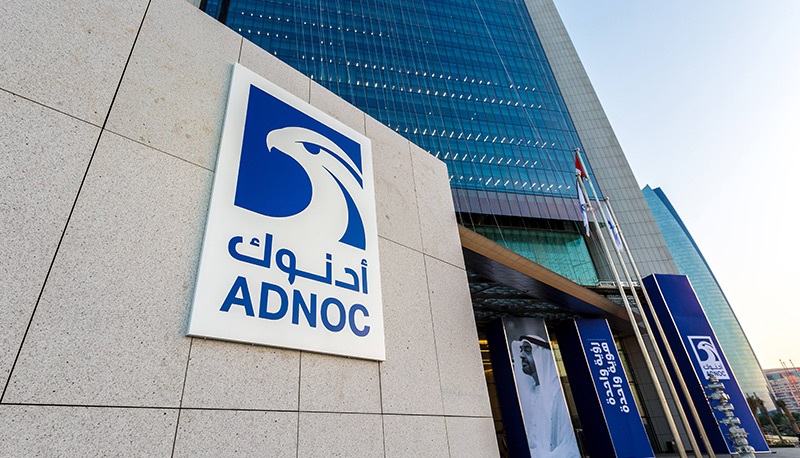
ADNOC Commits $6.2bn To Umm Shaif Gas Expansion As UAE Accelerates LNG Ambitions

0

Abu Dhabi National Oil Company (ADNOC) will invest $6.2 billion to develop the Umm Shaif Gas Cap, one of the United Arab Emirates’ largest offshore oil and gas projects, as the Gulf producer accelerates efforts to expand natural gas output, strengthen energy security and establish itself as a leading global supplier of liquefied natural gas (LNG).

The investment comes at a moment when global energy markets are in turmoil. The prolonged conflict in the Middle East and disruptions to shipping through the Strait of Hormuz, a strategic waterway that normally handles about 20% of global LNG trade and roughly a fifth of the world’s oil shipments, have heightened concerns over supply security and reinforced the importance of developing new gas resources outside traditional export routes.

ADNOC is developing the Umm Shaif Gas Cap alongside TotalEnergies, Eni and China National Petroleum Corporation (CNPC). The project is expected to produce more than 600 million standard cubic feet per day of natural gas and associated gas liquids once operations begin by 2030, equivalent to nearly 10% of the UAE’s current daily natural gas consumption.

The project forms part of ADNOC’s broader integrated gas strategy, which aims to monetize the country’s vast gas reserves while supporting rising domestic demand, expanding LNG exports and strengthening the UAE’s position in increasingly competitive global gas markets.

The UAE possesses the world’s seventh-largest proven natural gas reserves, while maintaining crude oil production exceeding 4 million barrels per day. Abu Dhabi is also pursuing aggressive upstream expansion after the UAE exited OPEC earlier this year, removing production quota constraints and allowing the country to target oil production above 5 million barrels per day as early as next year.

“ADNOC is accelerating its integrated gas strategy to further harness the UAE’s vast gas resources and expand our global LNG platform, as global demand for natural gas continues to rise,” ADNOC Chief Executive Sultan Ahmed Al Jaber said in a statement.

The Umm Shaif investment underscores Abu Dhabi’s ambition to diversify beyond crude oil by becoming a major player in the rapidly expanding global LNG market, where demand is expected to remain robust as countries seek cleaner-burning alternatives to coal while ensuring energy security.

ADNOC has set a target of expanding LNG production capacity to 47 million metric tons per annum by 2035, supported by investments across production, liquefaction, shipping and global trading operations. The strategy aligns with forecasts from major energy agencies that natural gas will continue to play a critical role in the global energy mix over the coming decades, particularly in Asia, where demand for LNG continues to grow as economies transition toward lower-carbon fuels.

The latest investment also shows that there is increasing commercial value of gas following repeated geopolitical disruptions that have tightened global supplies and driven price volatility.

The project has gained additional significance as military tensions in the Gulf continue to disrupt regional energy flows. With the Strait of Hormuz remaining effectively closed amid the ongoing Middle East conflict, energy markets have become increasingly focused on supply resilience, particularly for LNG exporters.

The waterway serves as the primary export route for Qatar, one of the world’s largest LNG producers, and any prolonged disruption threatens to tighten global gas markets, particularly across Europe and Asia.

Against that backdrop, expanding domestic gas production has become both an economic and national security priority for the UAE.

Currently, roughly one-third of the country’s natural gas demand is met through pipeline imports from Qatar under the Dolphin Gas Project, an agreement scheduled to expire in 2032. Increasing domestic production through projects such as Umm Shaif would reduce Abu Dhabi’s dependence on imported gas while providing additional volumes for export as LNG, improving both energy independence and long-term revenue generation.

Beyond its economic importance, Umm Shaif occupies a central place in the UAE’s petroleum industry.

The offshore field has been producing hydrocarbons for more than six decades and hosted Abu Dhabi’s first offshore oil well. It supplied the crude used in the emirate’s inaugural oil exports in 1962, laying the foundation for what has become one of the world’s largest energy industries. The latest investment transforms the historic field into a cornerstone of the UAE’s next phase of energy development, shifting its focus increasingly toward natural gas and LNG as global demand evolves.
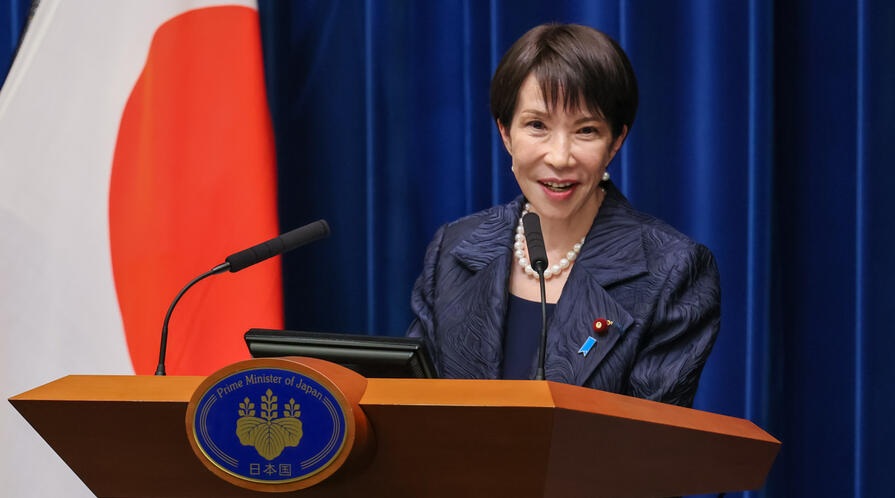

Japan Pledges $2.28tn Investment Drive Through 2040 to Revive Long-term Growth

0

Japanese Prime Minister Sanae Takaichi on Tuesday unveiled her administration’s first comprehensive economic policy blueprint, pledging to mobilize more than 370 trillion yen ($2.28 trillion) in public and private investment through fiscal 2040 to revive long-term growth.

The plan, however, has been overshadowed by investor concerns that the government could pressure the Bank of Japan (BOJ) to keep interest rates low, fueling a selloff in government bonds.

The blueprint seeks to position investment in strategic industries as the centerpiece of Japan’s long-term growth plan, but repeated revisions to its language on monetary policy underscore growing market sensitivity over the relationship between the government and the central bank.

Japan’s government bond yields have climbed to multi-decade highs in recent weeks as investors worry that Takaichi’s emphasis on fiscal stimulus and accommodative monetary policy could delay efforts to contain inflation while worsening the country’s already heavy debt burden. The benchmark 10-year Japanese government bond yield, which reached a three-decade high of 2.9% on July 9, eased modestly to 2.73% on Tuesday but remains near levels not seen in decades.

The economic blueprint underwent several revisions before receiving cabinet approval after earlier drafts unsettled financial markets.

An initial version called for monetary policy that would “bolster private demand,” language that disappeared as bond yields continued rising. A subsequent draft linked monetary policy more directly to the government’s economic growth strategy, prompting another negative market reaction and further revisions.

The final document states that the BOJ should conduct monetary policy appropriately “to achieve stable price rises,” while adding a footnote referencing Japan’s law guaranteeing the central bank’s operational independence.

The blueprint nonetheless retains language calling for the BOJ to coordinate its policy with the government’s economic objectives, reflecting the longstanding framework established under Japanese law, which requires close cooperation while preserving the central bank’s authority over monetary decisions.

“To achieve a strong economy, it is very important for monetary policy to be conducted appropriately to see stable price rises,” the final blueprint said.

Echoes of Abenomics

Takaichi has consistently expressed support for the economic philosophy associated with former Prime Minister Shinzo Abe, whose “Abenomics” strategy relied on aggressive fiscal stimulus, ultra-loose monetary policy and structural reforms to combat decades of deflation.

Her latest blueprint amplifies that approach by emphasizing government-led investment to stimulate private sector spending.

“Under the Takaichi administration, the government will take the initiative and, together with the private sector, invest in strategic areas, thereby ending the trend of under-investment that has mired Japan,” the document said.

The government plans to work alongside private businesses to channel capital into strategic sectors over the next 15 years, with combined public and private investment projected to exceed 370 trillion yen by fiscal 2040.

Unlike previous administrations, however, the blueprint avoids making explicit commitments to restoring fiscal health, instead stating that the government will seek to balance economic growth with “fiscal sustainability.”

Markets Remain Unconvinced

Investors remain concerned that the administration’s policy mix could increase pressure on the BOJ to slow or pause further interest rate increases, allowing the government to finance additional spending at lower borrowing costs.

Those concerns have intensified since Takaichi took office in October, as she has repeatedly pledged to expand fiscal spending while expressing reservations about the BOJ’s recent tightening cycle.

The BOJ ended nearly a decade of ultra-loose monetary policy in 2024 and has since raised its benchmark interest rate several times, including a hike in June. Even after those increases, Japan’s policy rate stands at just 1%, remaining among the lowest in the developed world.

The central bank has signaled that additional rate increases remain possible if inflation and wage growth continue evolving in line with its forecasts.

Any perception that political leaders are attempting to influence those decisions risks undermining confidence in the BOJ’s independence, a cornerstone of modern monetary policy.

Japan already carries the highest public debt burden among advanced economies, with government debt exceeding twice the size of annual economic output. Higher bond yields increase borrowing costs for the government, making investors especially sensitive to policies that could require additional debt issuance.

The combination of increased fiscal spending, persistent inflation and expectations of further BOJ tightening has driven Japanese government bond yields steadily higher in recent months.

Analysts say investors are increasingly demanding higher compensation to hold long-term Japanese debt amid uncertainty over the government’s fiscal trajectory.

“We’ve guided economic and fiscal policy paying due heed to fiscal sustainability and the need to maintain market trust. We will continue to do so based on this blueprint,” Takaichi said during a government panel meeting on Tuesday.

Some economists argue that revisions to the blueprint’s wording do little to address broader concerns about the administration’s policy intentions.

Former BOJ board member Seiji Adachi said markets remain focused on the government’s broader objective of maintaining low borrowing costs.

“The administration wants the BOJ to keep rates low so that it can issue more debt,” Adachi said.

“That’s not a good message to send to markets.”

Gold Rises Above $4,060, Oil Prices Drop, Treasury Yields Hold Steady As Stocks Weigh Ceasefire Hopes And AI Earnings

0

Gold prices rebounded sharply on Tuesday as investors weighed renewed diplomatic efforts to end hostilities in the Middle East, with expectations that any progress toward a ceasefire could ease oil prices, temper inflation risks and reduce pressure on central banks to keep interest rates elevated for longer.

The rally in bullion came as global financial markets remained caught between geopolitical uncertainty, shifting expectations for U.S. monetary policy and an earnings season that is expected to determine whether the artificial intelligence-driven equity rally can regain momentum after recent volatility.

Spot gold rose 1.5% to $4,064.89 an ounce, while U.S. gold futures for August delivery gained 1.4% to $4,069.70.

The recovery follows a sharp correction from gold’s record highs earlier this year, with investors increasingly searching for signs that the precious metal has established a near-term floor after months of profit-taking.

“Gold has been in search of a price floor after its epic rally in January this year when it hit an all-time high and there is some sense the worst in terms of a sell-off may now be behind us,” said independent analyst Ross Norman.

“That said, gold does struggle to discover any upside momentum just now and caution remains the watchword,” he added.

Ceasefire Diplomacy Tempers Oil Market Anxiety

Investor sentiment improved after reports emerged that fresh diplomatic efforts were underway to prevent the conflict involving the United States and Iran from escalating further.

A senior Iranian official told Reuters that Tehran had received a proposal from international mediators calling for a 10-day ceasefire, aimed at preserving an interim agreement reached last month and creating space for renewed negotiations.

The proposal briefly eased fears of a broader regional conflict that could disrupt global energy supplies.

Oil prices initially fell about 1% before recovering later in the session as markets balanced hopes for diplomacy against continued military exchanges across the region. Brent crude nevertheless remained elevated, reflecting persistent geopolitical risks, while investors monitored developments involving Yemen’s Iran-backed Houthi movement.

The Houthis announced they intended to impose a naval blockade on Saudi Arabia, opening a potential new front in the regional conflict and raising fresh concerns over shipping lanes and global energy security beyond the Strait of Hormuz.

Any sustained decline in crude oil prices would likely help moderate inflation expectations by reducing energy costs, a development closely watched by financial markets after months of renewed inflation concerns driven largely by higher fuel prices.

The prospect of softer energy prices has important implications for monetary policy. Lower oil prices could reduce pressure on consumer inflation, potentially allowing central banks greater flexibility in determining future interest rate decisions.

Gold, traditionally viewed as both a safe-haven asset and a long-term hedge against inflation, tends to benefit when expectations for interest rate increases ease because lower yields reduce the opportunity cost of holding non-interest-bearing assets.

However, markets continue to anticipate further tightening by the Federal Reserve. According to the CME FedWatch Tool, traders currently assign roughly a 63% probability to a Federal Reserve rate increase at its September meeting. That outlook continues to cap gold’s upside even as geopolitical risks support demand for defensive assets.

Treasury Market Remains Resilient Despite Middle East Tensions

U.S. Treasury yields were broadly stable on Tuesday as investors evaluated the competing forces of geopolitical uncertainty, moderating oil prices and expectations for future monetary policy.

The benchmark 10-year Treasury yield held near 4.594%, while the 30-year Treasury bond yield remained around 5.118%. The two-year Treasury yield, which is particularly sensitive to Federal Reserve policy expectations, edged slightly higher to 4.198%.

BMO Capital Markets noted that the Treasury market had shown remarkable resilience despite the latest escalation in the Middle East, largely because renewed ceasefire negotiations had prevented a more sustained spike in oil prices.

The bank cautioned, however, that government bond markets remain highly sensitive to developments in energy markets.

“The degree to which nominal yields can decline will be tempered by the market’s ongoing focus on the energy sector and geopolitical tensions,” BMO strategists said, adding that July and August inflation reports would provide a clearer indication of whether energy-driven price pressures had begun to ease.

With few major U.S. economic releases scheduled this week, investors are expected to focus heavily on geopolitical developments until Friday’s release of the S&P Global Flash Purchasing Managers’ Index (PMI), which will provide an updated snapshot of activity across the manufacturing and services sectors.

Markets Await Defining Week for AI Earnings

While geopolitical developments continue to dominate short-term trading, investors are increasingly shifting their attention toward one of the busiest weeks of the U.S. earnings season. Corporate results from several technology giants are expected to provide a crucial test of investor confidence in the artificial intelligence investment cycle that has powered global equity markets over the past two years.

Alphabet, Tesla and Intel are among the most closely watched companies scheduled to report, with investors looking for evidence that AI-related spending continues to justify elevated market valuations.

Technology earnings carry added significance after recent weakness across semiconductor stocks. The Philadelphia Semiconductor Index, widely regarded as a barometer of AI-related hardware demand, officially entered bear market territory last week after falling more than 20% from its late-June record high.

Although the index recovered modestly with a 0.6% gain on Monday, sentiment across the semiconductor sector remains fragile. Market participants will pay particular attention to guidance from chipmakers including Intel and Texas Instruments for indications that demand from hyperscale cloud providers and AI infrastructure builders remains intact.

LSEG data currently projects S&P 500 second-quarter earnings growth of 26% year-on-year, up from earlier expectations of 23.7%, with technology companies expected to account for the majority of that expansion.

U.S. equities finished lower on Monday as investors refrained from making aggressive bets ahead of both earnings releases and further developments in the Middle East. The Dow Jones Industrial Average fell 307 points (0.59%) to 51,839.26, while the S&P 500 declined 0.19% to 7,443.28. The Nasdaq Composite, supported by renewed buying in semiconductor shares, slipped just 0.05% to 25,508.07, outperforming the broader market.

Technology Shares Showed Mixed Performance.

Microsoft was among the strongest contributors to the S&P 500, while Apple weighed most heavily on the benchmark after falling about 2%. Alphabet gained 1.5% after reports that Google is developing a new Gemini-integrated server chip designed to improve AI efficiency and reduce dependence on third-party computing hardware, reinforcing investor optimism surrounding the company’s expanding AI infrastructure strategy.

Elsewhere, Domino’s Pizza rose 2.1% after reporting quarterly revenue that narrowly exceeded analysts’ expectations, while Global Payments jumped 5.8% after Morgan Stanley upgraded the stock to “overweight” and substantially raised its price target.

At the opposite end of the market, Carvana fell 4.8%.

Market breadth remained weak, with declining stocks significantly outnumbering advancing issues on both the New York Stock Exchange and Nasdaq, reflecting continued investor caution even as AI-related shares attempted to stabilize.

Trading volumes were also relatively subdued, suggesting many institutional investors are waiting for clearer signals from both corporate earnings and geopolitical developments before making larger portfolio adjustments.

Precious Metals Broadly Stronger

Gold’s advance was accompanied by gains across the broader precious metals complex as investors increased exposure to defensive assets.

Spot silver surged 4.8% to $59.11 per ounce, platinum rose 1.9% to $1,624.88, while palladium added 2.3% to $1,281.75.

The synchronized gains highlight continued investor demand for hard assets amid heightened geopolitical uncertainty, even as hopes for diplomatic progress in the Middle East temporarily reduced fears of a prolonged energy-driven inflation shock.

U.S., Mexico Resume USMCA Talks As Trump Presses For More American Manufacturing And Canada Faces New Tariffs

0

U.S. and Mexican trade officials begin a third round of high-stakes negotiations on Tuesday aimed at rewriting key elements of the North American trade agreement, as President Donald Trump’s administration intensifies efforts to reshape regional supply chains and expand U.S. manufacturing while escalating trade pressure on Canada.

The three-day talks in Mexico City are the first formal negotiations on revising the United States-Mexico-Canada Agreement (USMCA) since the Trump administration declined on July 1 to extend the six-year-old trade pact, triggering a 10-year countdown after which the agreement could expire unless all three countries agree on a revised framework.

The negotiations are taking place without Canada, highlighting growing divisions within North America’s trading bloc after Washington imposed a fresh round of punitive tariffs on Canadian goods on Monday.

The exclusion of Canada from the latest talks underscores the Trump administration’s preference for advancing bilateral negotiations with Mexico, which U.S. officials have described as more constructive, while relations with Ottawa have deteriorated over retaliatory tariffs and broader trade disputes.

USMCA, which replaced the North American Free Trade Agreement (NAFTA) in 2020 during Trump’s first term, underpins nearly $1.6 trillion in annual trade among the United States, Mexico and Canada, making it one of the world’s largest regional trade arrangements.

Business groups across North America have urged the administration to preserve the agreement’s trilateral structure and maintain largely tariff-free trade, warning that prolonged uncertainty could discourage investment and disrupt highly integrated manufacturing supply chains.

U.S. Trade Representative Jamieson Greer, who is scheduled to join the negotiations on Wednesday, said President Trump’s primary objective is to reduce America’s trade deficits with its North American partners while encouraging more production to return to the United States.

“The number one goal” is to reduce U.S. trade imbalances and bring manufacturing back home, Greer said in an interview with CNBC.

According to U.S. Census Bureau data, the U.S. goods trade deficit with Mexico widened by $28 billion, or 17%, last year to $197 billion, while the trade deficit with Canada narrowed by $12.9 billion, or 21%, to $48.3 billion.

Greer said the administration is already seeing progress, citing automakers that have announced plans to expand production capacity in the United States.

“We want the outcomes to make sense. We want to have more auto manufacturing here, and we’re seeing it,” Greer said, pointing to Toyota’s decision to expand truck production at its Texas plant, which will manufacture vehicles previously assembled in Mexico.

“So that’s the outcome that he wants,” Greer added.

He also said the administration wants a revised agreement that increases North American content in products traded across the region.

“I think also if we can have an arrangement with Mexico, with Canada, that we are trying to emphasize Canadian, Mexican, U.S. content in goods traded in North America, that’s a good outcome because that helps get supply chains back here in North America.”

A major focus of the negotiations remains the automotive sector, one of North America’s most integrated industries.

During bilateral discussions in May, the Office of the U.S. Trade Representative proposed requiring that 50% of the value of every North American-built vehicle originate in the United States, a significant tightening of the current rules of origin.

Such a requirement would represent one of the most consequential changes to USMCA, forcing automakers to redesign supply chains that have evolved over decades across the United States, Mexico and Canada. Industry executives have warned that stricter domestic content rules could increase production costs and reduce the competitiveness of North American vehicles globally.

Beyond automobiles, negotiators are expected to discuss steel, aluminum, agriculture, labor standards and intellectual property protections.

Economic Security and China

Another central theme is what the Trump administration calls “economic security,” an effort to strengthen regional production while limiting China’s ability to access the U.S. market through North American partners.

Washington is pushing Mexico and Canada to adopt trade policies more closely aligned with those of the United States, including imposing stronger barriers on goods originating outside the region. People familiar with the negotiations say the U.S. wants its partners to implement similar restrictions on imports of vehicles, auto parts, steel, aluminum and other industrial products from non-North American countries.

China’s growing presence in Mexico’s automotive market has emerged as a particular concern.

Reuters reported this week that Chinese vehicle sales in Mexico increased 30% during the first half of 2026, even after Mexico imposed 50% tariffs on Chinese vehicles in January. Chinese automakers have increased their market share in Mexico to 17%, up from 14% a year earlier.

U.S. officials worry that Chinese manufacturers could use Mexico as a production and export platform to gain preferential access to the U.S. market under regional trade rules.

Mexico enters the negotiations seeking exemptions from several Trump administration tariffs while broadly supporting efforts to strengthen North American manufacturing.

Mexico’s new ambassador to the United States, Roberto Lazzeri, said last week he expects a revised agreement to be completed before the end of the year.

“Every moment that we’re losing, I think we are losing competitiveness, market share and investment, so it’s in the best interest of all three of us to get to a position of resolution soon,” Lazzeri said.

He said Mexico shares Washington’s objective of expanding manufacturing across North America, including within the United States.

A key priority for Mexico, however, is securing relief from the Trump administration’s 25% national security tariff on Mexican automobiles and 50% tariffs on steel and aluminum, measures that have weighed on some of the country’s largest export industries.

Greer has praised Mexico’s negotiating approach, noting that unlike Canada, Mexico has largely refrained from retaliatory tariffs against U.S. products.

He also cited progress in discussions covering export controls, intellectual property protections and efforts to prevent exports of avocados produced on illegally deforested land.

Canada Pushed to The Sidelines

The latest negotiations come one day after the Trump administration announced new tariffs on nearly $20 billion worth of Canadian imports, responding to Canada’s retaliatory duties on U.S. automobiles, steel, aluminum and alcoholic beverages, as well as Ottawa’s high tariffs on dairy imports.

The move further widens the gap between Washington and Ottawa at a time when Canada has been largely sidelined in the USMCA review process.

Canadian Prime Minister Mark Carney said his government has presented comprehensive proposals aimed at resolving trade disputes with Washington, while arguing that previous U.S. tariffs violated the North American trade agreement.

The contrasting approaches toward Mexico and Canada indicate that the Trump administration is keen on rewarding partners viewed as cooperative while increasing pressure on those it believes have been less willing to make concessions.

India Faces Oil, Monsoon Risks to FY27 Growth Outlook, IMF Says, Plans Review of GDP Data Quality

0

India’s economic growth faces mounting downside risks from rising geopolitical tensions in the Middle East and the possibility of a weaker-than-normal monsoon, factors that could push up inflation and weigh on domestic demand in one of the world’s fastest-growing major economies, according to an International Monetary Fund (IMF) official.

The warnings come after the IMF this month trimmed its growth forecast for India for the 2026/27 fiscal year by 10 basis points to 6.4%, while raising its projection for 2027/28 by 20 basis points to 6.7%, reflecting expectations that longer-term growth fundamentals remain intact even as near-term risks increase.

Ranil Salgado, the IMF’s Senior Resident Representative for India and Bhutan, said the country’s outlook remains vulnerable because of its heavy dependence on imported crude oil and uncertainty surrounding this year’s monsoon season.

“The downside risks are probably twofold,” Salgado told Reuters in an interview on Monday.

“One is that the war is already starting to expand again, and that has implications for oil prices.”

Oil Shock Threatens Inflation and External Balances

India imports nearly 80% of its crude oil requirements, making it particularly exposed to spikes in global energy prices.

The renewed conflict in the Middle East has heightened concerns over oil supplies, particularly after fighting involving the United States, Israel and Iran raised fears of disruptions to shipping through the Strait of Hormuz, a critical route for global crude exports. Brent crude briefly traded above $90 per barrel last week as markets priced in supply risks before easing following reports of U.S.-Iran mediation efforts. However, geopolitical tensions remain elevated following fresh attacks and renewed threats by Yemen’s Houthi movement to blockade Saudi Arabia.

For India, higher oil prices could have wide-ranging economic consequences. A sustained rise in crude prices would increase the country’s import bill, widen the current account deficit, place downward pressure on the rupee and raise fuel and transportation costs across the economy. Those pressures would likely feed into broader inflation, potentially limiting the Reserve Bank of India’s room to ease monetary policy.

There is also concern that higher energy costs could squeeze corporate profit margins and reduce household purchasing power, slowing consumption, which remains the primary driver of India’s economic growth.

Weak Monsoon Poses Agricultural Risk

Alongside geopolitical uncertainty, the IMF identified weather-related risks as another significant challenge. Salgado said this year’s IMF forecasts did not fully incorporate the potential economic impact of a weaker monsoon associated with the El Niño weather pattern.

“This is an El Niño year that could lead to a poor monsoon,” he said.

“We had a delayed monsoon, some recovery in July, but we will have to see how that plays out.”

Agriculture remains a crucial component of India’s economy, employing a large share of the workforce while heavily influencing food prices and rural incomes.

An inadequate monsoon can reduce crop yields, increase food inflation and weaken rural consumption, affecting sectors ranging from consumer goods to automobiles and financial services.

Although rainfall improved during July after a delayed start to the season, uncertainty remains over whether precipitation will be sufficient to support agricultural production through the remainder of the growing season.

IMF to Reassess India’s GDP Statistics

Beyond the macroeconomic outlook, the IMF also plans to reassess the quality of India’s national accounts after the government completes a major revision of its GDP methodology.

Salgado said the review would take place during the IMF’s next Article IV consultation later this year, with the findings expected to be published next year after India’s statistics office releases revised historical GDP data based on the new 2022/23 base year.

“It will be reassessed at the next Article IV consultation, expected later this year, with the report out next year,” he said.

He noted that several important reforms have already been completed, while additional work remains before the assessment is finalized.

Among the remaining improvements are incorporating newly rebased wholesale price index (WPI) and index of industrial production (IIP) data into the national accounts framework and aligning historical GDP estimates with the revised base year.

The review follows criticism from the IMF last November, when India’s national accounts received the Fund’s second-lowest “C” rating because of methodological shortcomings.

The IMF identified several weaknesses, including the use of an outdated GDP base year, extensive reliance on wholesale price indices to adjust for inflation, and the widespread use of single deflation techniques, which are considered less accurate than double deflation in measuring real manufacturing output.

Since then, Indian authorities have undertaken significant statistical reforms.

These include updating the GDP base year to 2022/23, expanding the use of item-level price deflators, introducing double deflation for manufacturing output and strengthening the use of administrative and digital datasets to improve economic measurement.

A more favorable assessment from the IMF would strengthen confidence in India’s economic statistics, which are closely monitored by global investors, multilateral institutions and credit rating agencies when evaluating the country’s long-term growth prospects.

Despite the near-term risks, India’s projected growth of 6.4% for 2026/27 remains among the highest for major economies, supported by resilient domestic demand, government infrastructure spending, manufacturing expansion and continued investment in digital infrastructure.

However, economists note that the combination of elevated oil prices, weather-related disruptions and persistent global uncertainty could test the resilience of that growth trajectory over the coming quarters.