DD
MM
YYYY

PAGES

DD
MM
YYYY

spot_img

PAGES

Home Blog Page 10

Clock Ticking on BlockDAG’s 50% Bonus at $0.0000077 While Hedera & Stellar Price Consolidate

0

Major networks are refining their infrastructure as trading activity stabilizes across major trading pairs. Hedera trades near $0.07 after posting a 7.6% weekly increase, while institutional inflows into spot HBAR ETF products continue. Meanwhile, Stellar holds around $0.180 as 3 Tier 1 validators join its main network.

Beyond these network upgrades, BlockDAG is gaining attention among top crypto gainers today by pairing structured user incentives with working products. BlockDAG (BDAG) currently features an entry price of $0.0000077 alongside a CLAIM50 bonus, giving participants a 50% reward allocation.

The network has already processed over $200 million in wagering activity, while early buyers gain early access to a September 1 buyback program. These elements keep BlockDAG closely watched heading into its public rollout.

Hedera Price Consolidates Within Narrow Trading Range

The Hedera price recently showed modest short-term gains, climbing above $0.07 despite broader technical resistance. While HBAR gained roughly 7.6% over the past week, it remains below key moving averages, indicating ongoing pressure from sellers. On the fundamental side, the network continues to attract institutional interest, backed by inflows into spot HBAR ETF products and expansion in real-world asset tokenization.

Technical indicators suggest the Hedera price is currently navigating a period of weak momentum and oversold market conditions. Analysts expect price action to consolidate within a narrow range between $0.0640 and $0.0780 over the coming days.

Unless market buyers can reclaim critical resistance levels, the Hedera price may remain vulnerable to sideways trading or further near-term downside risks.

Stellar Price Consolidates Following Validator Addition

The Stellar price currently sits around $0.180 following a minor daily pullback. Despite recent chart weakness, buyers are actively defending key support near $0.175 while the broader network continues to expand.

To strengthen decentralization and network security, the Stellar Development Foundation recently added three major Tier 1 validators, including payment provider MoneyGram. While technical indicators point to cooling short-term momentum, the overall Stellar price remains bounded within a firm trading range.

On-chain metrics reveal that user activity and open interest remain steady, suggesting market participants are staying engaged despite the price consolidation. Traders are now watching resistance near $0.189, as a breakout could help stabilize the Stellar price and signal a renewed upward trend.

BlockDAG Takes the Lead With Its Limited-Time 50% Bonus

When evaluating the top crypto gainers today, promotions alone rarely tell the full story. The more important question is whether a project is creating lasting value beyond temporary incentives. BlockDAG currently presents both.

The immediate attraction is the CLAIM50 campaign, available for only two more days. Buyers who complete three qualifying purchases unlock a 50% BDAG bonus that applies to existing claim allocations as well as newly acquired tokens. Combined with the current entry price of $0.0000077, the promotion allows participants to increase their holdings before the sale closes.

Long-term appeal comes from the broader ecosystem. BlockDAG’s casino and sportsbook platform has already generated more than $200 million in wagering activity, providing measurable evidence that the network is supporting real transactions. Development has continued with the introduction of BDAG AI, a launch that contributed approximately $500 million to the project’s valuation.

Another milestone is approaching with the planned rollout of a dedicated exchange featuring both spot and futures markets on Apple and Google app stores. Early participants also receive access to the buyback program beginning September 1, allowing redemption at $0.02 a full month before the October 1 date available to everyone else. That earlier timeline adds another incentive alongside the promotional bonus.

Rather than depending on a single catalyst, BlockDAG brings together utility, ecosystem expansion, and structured incentives, qualities that support its place among the top crypto gainers today.
Conclusion

Hedera and Stellar maintain defined trading ranges during this period of market consolidation. Hedera trades near $0.07 supported by spot ETF inflows, while Stellar holds near key $0.175 support following recent validator additions. Both networks continue to prioritize fundamental infrastructure over price swings.

Meanwhile, BlockDAG stands out among top crypto gainers today. Its CLAIM50 campaign provides a 50% bonus on 3 qualifying purchases at $0.0000077 for 2 more days.

Beyond promotions, $200 million in sportsbook wagering, a $500 million boost from BDAG AI, and planned Apple and Google app store exchanges for spot and futures show real utility. A September 1 buyback at $0.02 precedes October 1. Utility drives value.

Presale: https://purchase.blockdag.network

Website: https://blockdag.network

Telegram: https://t.me/blockDAGnetworkOfficial

Discord: https://discord.gg/Q7BxghMVyu
LayerZero and Keeta Network Bring Tokenized Bank Deposits to Solana

0

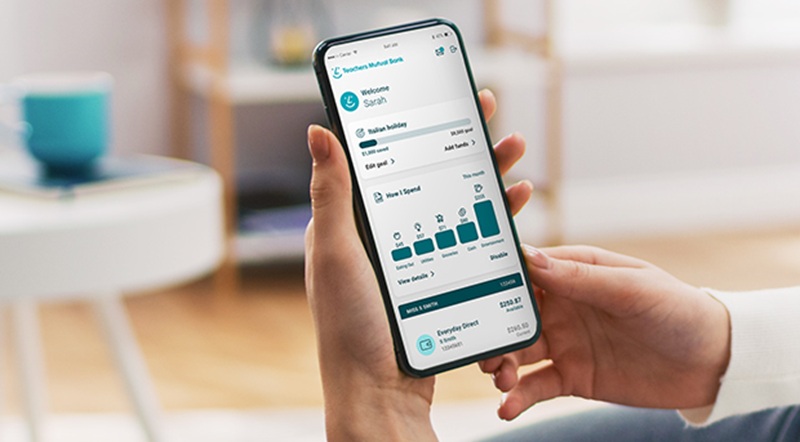
LayerZero and Keeta Network have expanded the scope of real-world assets on Solana by introducing tokenized bank deposits, a development that could significantly reshape how traditional finance interacts with blockchain technology.

Rather than relying solely on stablecoins as digital representations of fiat currency, tokenized bank deposits allow actual commercial bank liabilities to move across blockchain networks while remaining linked to regulated banking infrastructure.

This advancement represents another major step in bridging decentralized finance (DeFi) with the global banking system.

The collaboration combines the strengths of LayerZero, a leading omnichain interoperability protocol, and Keeta Network, a blockchain focused on high-speed financial settlement and real-world asset tokenization.

They enable regulated financial institutions to issue tokenized deposits that can be transferred onto the Solana blockchain, where they can be used for payments, settlement, lending, and other financial applications.

Unlike traditional stablecoins, which are typically backed by reserves held by issuers, tokenized bank deposits are direct digital representations of deposits held within regulated banks.

This distinction is important because tokenized deposits remain integrated with existing banking systems while benefiting from blockchain’s speed, transparency, and programmability. For institutional users, this creates a familiar financial product with significantly improved settlement efficiency.

LayerZero’s interoperability infrastructure plays a central role in this integration. The protocol enables secure communication between multiple blockchain networks, allowing tokenized deposits to move seamlessly across ecosystems without fragmenting liquidity.

Financial institutions can therefore issue assets that are not confined to a single blockchain but instead remain accessible wherever demand exists.

Keeta Network contributes the banking-focused infrastructure required to connect traditional financial institutions with decentralized networks.

Its technology is designed to support compliance requirements such as identity verification, transaction monitoring, and regulatory reporting while preserving the speed and efficiency expected from blockchain-based transactions.

This combination of compliance and interoperability makes the solution particularly attractive to banks exploring digital asset adoption. For Solana, the launch further strengthens its position as one of the leading blockchains for institutional finance.

The network’s high throughput, low transaction costs, and fast finality make it well suited for handling payment systems and tokenized financial products at scale. As more regulated assets migrate on-chain, Solana continues to establish itself as an infrastructure layer capable of supporting both retail and enterprise-grade financial activity.

The introduction of tokenized bank deposits also reflects a broader trend toward tokenizing real-world financial instruments.

Governments, asset managers, and financial institutions worldwide are increasingly experimenting with tokenized treasury securities, money market funds, private credit, and other traditional assets.

Bank deposits represent another major category moving onto blockchain, expanding the range of financial products available within decentralized ecosystems. Institutional adoption could accelerate as tokenized deposits reduce settlement times from days to seconds while lowering operational costs.

Cross-border payments, corporate treasury management, and wholesale financial settlements are among the areas likely to benefit most. Businesses could transfer value globally around the clock without relying on legacy payment rails that operate only during banking hours.

For the broader blockchain industry, the partnership signals continued convergence between traditional finance and decentralized infrastructure. Rather than replacing banks, blockchain is increasingly being used to modernize existing financial systems by improving efficiency, transparency, and interoperability.

As regulatory frameworks mature, collaborations like the one between LayerZero and Keeta Network may become increasingly common, bringing more institutional capital and financial products onto public blockchains.

The arrival of tokenized bank deposits on Solana therefore represents not just another blockchain integration, but a meaningful milestone in the ongoing transformation of global finance through tokenization and interoperable digital infrastructure.

Nigeria Capital Market Masterclass Opens Registrations for Oct 2026 edition

0

Tekedia Nigeria Capital Market Masterclass is a practitioner-led, intensive program designed to deepen the human capabilities needed to power Nigeria’s modern capital market. The Masterclass blends applied knowledge, real-market processes, regulatory frameworks, technology infrastructure, and hands-on case studies covering the entire capital market value chain.

The program will run for 8 weeks, with assignments, simulations, and industry projects. Some participants who complete the program successfully will be provided internship opportunities within capital-market institutions in Nigeria. Our goal is for any person irrespective of location to understand how the capital market works.

Minimum entry requirement: Secondary school education.

Program Date: Oct 5 – Nov 28, 2026

Location and Mode of Delivery: program is completely online, no physical component. It includes 8 weekends of LIVE Zoom sessions by experienced faculty on 8 Saturdays lasting two hours each. The program ssyllabus is below:

Module 1: Introduction to Nigeria’s Capital Market – Foundations & Architecture

Module 2: SEC Nigeria – Registration, Regulations & Market Oversight


Module 3: Market Operators – Roles, Responsibilities & Interdependencies

Module 4: Capital-Raising Instruments – IPOs, Bonds, Commercial Papers & Private Markets


Module 5: Listing Processes, Documentation & Regulatory Compliance

Module 6: Capital-Market Operations – Trading, Settlement & Surveillance


Project 1: A project with relevance in the Nigerian capital market will be assigned for the week.


Module 7: Derivatives, Structured Products & Hedging Instruments

Module 8: Technology & Financial Market Infrastructure (FMI)


Module 9: Digital Assets, Tokenization & ISA 2025 Framework

Module 10: Compliance, Risk Management & Ethics in Capital Markets


Module 11: Careers, Business Opportunities & Promising Regulated Sole Proprietorships

Module 12: Business Development, Market Strategy & Capital-Market Innovation

Project 2: Program Capstone

Contisx Securities Exchange Plc, an upcoming securities exchange in Nigeria, is partnering on this program, and will provide remote internship opportunities.

To learn more, visit Tekedia Institute and register 

Mubadala Capital Launches Alternative Solutions Fund on Solana as Tryramp Introduces 24/7 Stablecoin Payments

0

The Solana ecosystem continues to attract major institutional and financial infrastructure providers, with two significant developments highlighting the network’s growing role in global finance.

Mubadala Capital’s Alternative Solutions Fund has gone live on Solana through KAIO, while Tryramp has introduced 24/7 stablecoin accounts and payment services that settle directly on the blockchain.

These milestones demonstrate how Solana is evolving beyond a cryptocurrency network into a foundation for institutional investing and always-on digital payments.

Mubadala Capital, the asset management arm of Abu Dhabi’s sovereign wealth ecosystem, bringing its Alternative Solutions Fund to Solana via KAIO represents another step in the tokenization of real-world assets (RWAs).

By making investment products accessible on a public blockchain, institutional funds can potentially benefit from faster settlement, enhanced transparency, and broader accessibility.

Rather than relying solely on traditional financial rails that often involve multiple intermediaries and limited operating hours, tokenized fund structures can leverage blockchain technology to streamline ownership records and improve operational efficiency.

KAIO’s infrastructure enables institutional-grade financial products to exist on-chain while maintaining compliance and professional asset management standards. This reflects a broader industry trend in which leading investment firms are exploring blockchain technology to modernize capital markets.

As regulatory frameworks around digital assets continue to mature, tokenized investment funds are increasingly viewed as a bridge between conventional finance and decentralized infrastructure.

Tryramp’s launch of 24/7 stablecoin accounts and payment services on Solana addresses one of the longstanding limitations of traditional banking: restricted operating hours.

Conventional financial systems generally pause settlements during weekends, holidays, and after business hours. Blockchain networks, however, operate continuously, allowing transactions to be processed at any time of the day.

With stablecoin accounts settling on Solana, businesses and individuals gain access to near-instant transfers without waiting for banking windows to reopen. This capability is particularly valuable for international commerce, payroll, remittances, and treasury management, where delays can create unnecessary costs and liquidity constraints.

Stablecoins have already become one of the fastest-growing sectors in digital finance, and infrastructure providers like Tryramp are building practical tools that integrate these digital dollars into everyday financial operations.

The choice of Solana is also significant. The blockchain has established itself as one of the industry’s highest-performance networks, offering low transaction costs, rapid settlement, and high throughput.

These characteristics make it attractive for applications requiring frequent transactions, including payments, tokenized securities, and institutional financial products. As more enterprises seek scalable blockchain infrastructure, Solana continues to position itself as a preferred destination for real-world financial applications.

These announcements also reinforce a larger trend unfolding across global finance. Rather than viewing blockchain solely as a speculative technology, institutions are increasingly using it as financial infrastructure.

Tokenized funds, stablecoin payments, and on-chain settlement systems are gradually becoming practical services with measurable efficiency gains. Financial firms are recognizing that blockchain can reduce friction, improve transparency, and enable new business models that were difficult to implement within legacy systems.

For the broader digital asset industry, the participation of established institutions such as Mubadala Capital and the expansion of payment services through companies like Tryramp add credibility to blockchain adoption.

Each successful deployment demonstrates that public blockchain networks can support enterprise-grade financial operations while serving users across different jurisdictions.

These developments illustrate how Solana’s ecosystem is expanding beyond decentralized finance into mainstream financial services. As tokenized investment products and always-on payment solutions continue to gain traction, the network is strengthening its position as a key layer for the future of digital finance.

If this momentum continues, Solana could play an increasingly important role in connecting traditional capital markets with the next generation of blockchain-powered financial infrastructure.

Tokenized Intel Stock Marks New Era for Blockchain-Based Equity Investing

0

Intel’s tokenized stock ($INTC) has officially gone live through Backpack Securities and Sunrise, marking another significant step in the convergence of traditional finance and blockchain technology.

At the same time, JTX has opened its unified trading platform to the public, allowing users to trade major cryptocurrencies, meme coins, and real-world assets (RWAs) from a single interface.

These developments highlight how tokenization and integrated trading infrastructure are reshaping global financial markets by making investments more accessible, efficient, and interoperable.

The launch of tokenized Intel shares demonstrates the growing demand for blockchain-based representations of publicly traded equities.

Tokenized stocks mirror the value of traditional shares while existing on blockchain networks, enabling faster settlement, greater transparency, and potentially round-the-clock trading.

Instead of relying solely on conventional stock exchanges that operate during fixed market hours, investors can access tokenized assets through digital asset platforms, creating a bridge between traditional capital markets and decentralized finance.

Backpack Securities and Sunrise are positioning themselves at the forefront of this transformation. By offering tokenized Intel shares, they provide investors with exposure to one of the world’s most recognized semiconductor companies while leveraging blockchain infrastructure for ownership records and settlement.

As demand for tokenized securities grows, more publicly traded companies may become available in digital form, expanding investment opportunities for both retail and institutional participants.

The timing is also significant. Interest in real-world asset tokenization has accelerated over the past two years as financial institutions increasingly recognize blockchain’s ability to modernize legacy financial systems.

Tokenized stocks, bonds, treasury products, and private credit instruments are becoming key pillars of the emerging on-chain economy. Analysts believe that tokenization could eventually unlock trillions of dollars in value by improving liquidity and reducing operational inefficiencies across financial markets.

Meanwhile, JTX’s decision to open its unified trading surface to all users represents another milestone in simplifying digital asset investing. Traditionally, traders have needed separate platforms to access blue-chip cryptocurrencies, speculative meme coins, and tokenized real-world assets.

This fragmentation creates unnecessary complexity, requiring users to move capital between exchanges and wallets while navigating different interfaces. By integrating majors, meme tokens, and RWAs into a single trading environment, JTX aims to deliver a more seamless user experience.

Traders can diversify their portfolios without switching platforms, making it easier to respond to rapidly changing market conditions. Unified trading also improves capital efficiency by allowing users to manage multiple asset classes under one account while benefiting from consolidated liquidity and streamlined execution.

The inclusion of real-world assets alongside cryptocurrencies also reflects the industry’s changing priorities. While speculative tokens continue to attract significant attention, investors are increasingly looking for blockchain-based assets tied to tangible economic value.

Tokenized equities like Intel, government securities, commodities, and private credit instruments are helping broaden the appeal of digital assets beyond purely crypto-native participants.

These two announcements also reinforce a broader trend toward financial convergence.

The boundaries separating traditional finance, decentralized finance, and centralized crypto exchanges are becoming increasingly blurred. Financial platforms are evolving into comprehensive ecosystems where users can access stocks, cryptocurrencies, stablecoins, tokenized assets, and DeFi services without leaving a single application.

Tokenized equities and unified trading platforms are expected to play a central role in the next phase of digital finance. As regulatory clarity improves and institutional adoption continues to expand, more global companies could see their shares represented on blockchain networks.

At the same time, integrated trading platforms like JTX may become the standard gateway for accessing a wide spectrum of financial assets. These innovations signal that the future of investing will be increasingly digital, interoperable, and accessible to a global audience.