DD
MM
YYYY

PAGES

DD
MM
YYYY

spot_img

PAGES

Home Blog Page 101

Unlike Nigeria, Ghana Cuts Benchmark Rate to 18% as Inflation Drops to Its Lowest Level in Over Four Years

0

The Bank of Ghana has lowered its benchmark rate by 350 basis points to 18 percent, the third successive cut, as inflation tumbles and economic conditions ease.

Governor Johnson Asiama, speaking in Accra, said the decision reflected improved real interest rate conditions and a sustained outlook for stable inflation through mid-2026. The governor explained that elevated real rates created enough room to ease monetary policy in order to support growth recovery. The central bank projects inflation to remain near its target band well into the first half of 2026.

Ghana’s recent inflation trajectory has been dramatic. After peaking at over 54 percent in December 2022 — the highest in two decades — consumer price inflation fell sharply, returning to the BoG’s 6–10 percent target range by September this year. By October, inflation had dropped to 8 percent, the lowest in more than four years.

Key factors behind the decline include improved fiscal discipline and a rally in global gold prices. As the continent’s largest gold producer, Ghana benefited from surging commodity prices; the resulting strengthening of the cedi — up roughly 30 percent against the U.S. dollar this year — helped lower import costs and ease inflationary pressures.

Ghana’s government, through Finance Minister Cassiel Ato Forson, has pledged continued fiscal consolidation as the country prepares to exit its programme with the International Monetary Fund (IMF). The budget projection targets a primary surplus of 1.5 percent of GDP by 2026, with the overall fiscal deficit expected to narrow from a projected 2.8 percent in 2025 to 2.2 percent in 2026.

Forson also forecasts economic growth of at least 4.8 percent in 2026, up from an estimated 4 percent for the current year. Data from national sources show food inflation dropped sharply to 9.5 percent in October from 11.8 percent in September, supported by harvest season supply and favorable base effects.

In contrast to Ghana’s aggressive easing, Nigeria’s central bank opted to hold its benchmark rate steady at 27 percent even as inflation has come down markedly. As of October 2025, headline inflation in Nigeria stood at 16.05 percent, nearly a full percentage point lower than the previous reading. The decision to maintain the Monetary Policy Rate (MPR) was announced by CBN Governor Olayemi Cardoso following the bank’s latest Monetary Policy Committee meeting.

While many had expected at least a modest cut, given inflation’s steady decline, the CBN resisted. Officials argued that despite the recent disinflation, double-digit inflation remains too high to warrant a rate cut. Instead, the central bank adjusted the interest-rate corridor around the MPR, narrowing it to plus 50 / minus 450 basis points, and kept other tools such as the Cash Reserve Ratio and liquidity ratio unchanged. The adjustment is widely interpreted as an effort to encourage banks to lend rather than hoard deposits, hinting at cautious optimism about liquidity conditions and future stability.

Nigeria’s measured approach reflects concern that inflation remains elevated and underlying price pressures persist. While lower inflation is recognized, policymakers appear to prefer waiting for a sustained trend, especially in food and core inflation, before loosening monetary policy further.

The diverging strategies between Ghana and Nigeria highlight contrasting assessments. For instance, Ghana, benefiting from strong external tailwinds, improved currency strength, and a steep inflation reversal, feels confident enough to ease rates aggressively. Nigeria, on the other hand, appears more cautious despite disinflation to 16 percent. The central bank appears unwilling to loosen against a backdrop of still-high inflation and structural uncertainties.

The apex bank seems committed to ensuring that the disinflation path is durable before reducing borrowing costs, even if that means foregoing some short-term economic boost.

However, analysts have noted that if Nigeria’s inflation fails to moderate significantly, the decision to hold could preserve macro stability — but also risk keeping borrowing costs high just as economy-wide costs remain steep.

Apple Poised to Overtake Samsung in 2025 Smartphone Shipments for the First Time Since 2010, Counterpoint Says

0

Apple is on track to ship more smartphones than Samsung in 2025, marking the first time in 14 years the iPhone maker will displace its long-time rival at the top of the global market, according to new data from Counterpoint Research.

The research firm told CNBC that Apple is projected to ship around 243 million iPhones this year, compared with Samsung’s expected 235 million shipments. That places Apple at an estimated 19.4% share of the global smartphone market, ahead of Samsung’s 18.7%.

While shipments don’t directly equate to sales, they remain a core indicator of how smartphone vendors measure demand and gauge expected retail performance across regions.

The shift is being driven by the momentum behind Apple’s latest flagship lineup. Counterpoint said the iPhone 17 series — launched in September — delivered a “bumper” holiday season, outpacing expectations and helping lift Apple’s shipment outlook for the year.

In the United States, sales of the iPhone 17 series, including the iPhone Air, were 12% higher during the first four weeks after launch when compared with the iPhone 16 series, excluding the iPhone 16e. In China, which remains one of Apple’s most strategically important markets, sales of the iPhone 17 lineup were 18% higher than its predecessor during the same four-week window.

Counterpoint Research Senior Analyst Yang Wang said the strong reception for the iPhone 17 series is only part of the story. He highlighted an industry-wide shift as the primary driver behind the boost in Apple’s shipment forecast.

“Beyond the highly positive market reception for the iPhone 17 series, the key driver behind the upgraded shipment outlook lies in the replacement cycle reaching its inflection point. Consumers who purchased smartphones during the COVID-19 boom are now entering their upgrade phase,” Wang said.

Samsung, meanwhile, faces a tougher landscape. Counterpoint noted that Chinese manufacturers are applying pressure in the low-to-mid-tier segments of the market, making it harder for the South Korean company to reclaim the top spot. That competition is particularly intense in regions where value-priced Android devices continue to outsell premium phones.

Long-term advantage for Apple

Looking further ahead, Counterpoint Research forecasts that Apple will maintain the number-one position through 2029. The firm points to several structural advantages underpinning Apple’s long-term dominance.

One key factor is the vast second-hand market for iPhones. Counterpoint noted that about 358 million second-hand iPhones were sold between 2023 and the second quarter of 2025. Many of those users remain locked into Apple’s ecosystem and are likely to upgrade to brand-new models in the coming years, maintaining a steady demand pipeline.

Apple has also benefited from external and macroeconomic factors. The company experienced a lower-than-expected impact from tariffs under the existing U.S.–China trade truce, which helped stabilize its supply chain. Meanwhile, growth in emerging markets and a weaker U.S. dollar supported demand for iPhones during periods when other premium smartphone brands faced slower consumer spending.

“With these structural tailwinds, Apple is well-positioned to surpass Samsung in annual shipments in 2025,” Wang said.

Counterpoint added that Apple’s product roadmap could help preserve its lead through the decade. The firm expects Apple to launch the entry-level iPhone 17e in 2026, alongside a foldable iPhone that would allow the company to compete directly with foldable-focused brands such as Samsung and Huawei.

The research firm also pointed to ongoing improvements to Apple’s virtual assistant Siri and said a major iPhone design overhaul is expected in 2027 — changes that could reinvigorate demand across regions.

Apple’s strategy now includes widening price tiers to reach more consumers. Apple aims to strengthen its grip on the lower premium smartphone segment — an area projected to grow faster than the broader market- by expanding the “e” series, adjusting the launch cadence for its Pro and base models, and tailoring devices for aspirational buyers in emerging markets.

“Given an increasing preference for the iOS ecosystem, compatibility between devices and a substantial number of older models within Apple’s installed base due for renewal, Apple will retain the lead over other smartphone OEMs through the end of the decade,” Counterpoint said.

Implications of Klarna’s KlarnaUSD Launch on Tempo Blockchain

0

Klarna, the Sweden-based digital bank and buy-now-pay-later giant, announced the launch of KlarnaUSD, its first stablecoin.

This USD-pegged token is designed to enable faster and lower-cost cross-border payments, targeting Klarna’s massive user base of over 114 million customers and $112 billion in annual gross merchandise volume (GMV).

The announcement marks a significant pivot for Klarna, whose CEO Sebastian Siemiatkowski previously expressed skepticism about crypto but now sees it as “fast, low-cost, secure, and built for scale.”

KlarnaUSD is fully backed by U.S. dollars and issued via Bridge a Stripe subsidiary acquired for $1.1 billion earlier in 2025. It’s initially focused on internal uses, like reducing international payment costs for Klarna’s operations, with no immediate plans for integration into its consumer installment services.

The token is live on the testnet of Tempo often stylized as “tempo” in announcements, a new layer-1 blockchain developed by Stripe and crypto investment firm Paradigm specifically for payment use cases. A mainnet launch is planned for 2026, enabling broader adoption.

Klarna positions itself as the first bank to launch on Tempo, highlighting its role as a pioneer in blending traditional banking with blockchain infrastructure. This aligns with Tempo’s goal of challenging legacy payment networks, which rack up ~$120 billion in annual cross-border fees.

This move comes amid surging stablecoin adoption, with global transaction volumes hitting $27 trillion annually—rivaling Visa and Mastercard combined. Klarna joins peers like PayPal which launched PYUSD and Stripe (via Bridge in leveraging stablecoins for efficiency.

Regulatory tailwinds, such as the U.S. GENIUS Act passed in July 2025 and Europe’s MiCA framework, have accelerated institutional entry into the space. Community reactions highlight excitement for real-world crypto applications, though some noted the 2026 mainnet delay as a cautious rollout.

Klarna’s announcement positions the company as a trailblazer in bridging traditional fintech with blockchain, leveraging its 114 million customers and $112 billion annual GMV to drive real-world stablecoin adoption.

While the stablecoin is initially testnet-bound and focused on internal efficiencies, its 2026 mainnet rollout could reshape payments, competition, and regulatory landscapes.

KlarnaUSD targets the $120 billion annual cost of cross-border payments, where traditional networks like correspondent banks impose high fees and delays. By settling on Tempo—a payments-optimized Layer-1 blockchain from Stripe and Paradigm—Klarna can slash these by up to 90%, using blockchain for instant, low-cost transfers.

This starts internally like treasury operations, merchant settlements before expanding to peer-to-peer and remittances, reducing reliance on external credit lines and FX desks. The stablecoin also lets Klarna capture yield on reserves backed by USD cash/bills, which it couldn’t previously earn on U.S. deposits.

As one analyst noted, this “turns all of that into its own payments and funding layer,” boosting margins by minimizing “rent” paid to banks. For a BNPL leader bleeding on FX friction, this could transform liquidity ops across 26 markets, potentially integrating with consumer services long-term despite CEO Sebastian Siemiatkowski’s past crypto skepticism.

Stablecoins already process $27 trillion annually—rivaling Visa/Mastercard— with supply hitting $300 billion, Tether at $184B, USDC at $75B. Klarna’s entry, as the first bank on Tempo, validates “stablecoin chains” like Tempo for enterprise use, drawing in more fintechs beyond PayPal’s PYUSD or Visa’s expansions on Stellar/Avalanche.

It signals a shift from crypto experimentation to core infrastructure, with projections of $1.9 trillion issuance by 2030.This intensifies rivalry in the $304 billion stablecoin sector, prompting incumbents to prioritize proprietary blockchains for settlement.

Tempo gains immediate scale via Klarna’s volume, fostering integrations and ecosystem investments like its $25M in Commonware. Community buzz highlights this as “crypto entering the real economy,” with faster/cheaper transfers becoming the “checkout default.”

Consumers especially Klarna’s U.S.-heavy base stand to gain from seamless, borderless payments—think instant refunds or remittances without $120B in hidden fees. Merchants benefit from quicker settlements, reducing working capital needs.

Near-instant cross-border transfers; lower fees on BNPL/remittances. Limited initial rollout; education on stablecoin use. Faster settlements; yield-earning reserves. Integration costs; dependency on Tempo’s uptime. 90% fee cuts; yield capture on $112B GMV.

U.S. GENIUS Act and Europe’s MiCA have cleared paths for institutional stablecoins, but Klarna’s launch tests boundaries—e.g., yield remuneration rules in the U.S./EU. As a EU-licensed bank, Klarna’s compliance focus could set precedents for “self-repaying loans” or retail integrations, though regulators may eye centralized control.

Market-wise, it underscores blockchain’s edge over legacy rails, potentially sparking a fintech arms race independent of crypto volatility. This isn’t hype—it’s a pragmatic step toward $27T-scale disruption, proving stablecoins can move as fast as the internet.

Solana and Ethereum ETFs Continue to See Inflows While BTC ETFs See Outflows

0

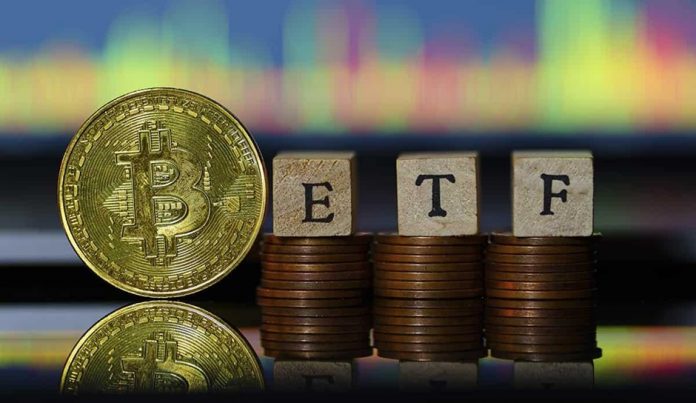
Spot exchange-traded funds (ETFs) for Solana (SOL) and Ethereum (ETH) have been recording consistent net inflows over the past few weeks, driven by institutional interest in high-yield and growth-oriented assets.

In contrast, Bitcoin (BTC) ETFs have faced substantial outflows amid broader market volatility, profit-taking, and macroeconomic pressures like tightening liquidity. This divergence highlights a rotation of capital toward altcoins, even as BTC and ETH prices hover near yearly lows (BTC around $82,000–$86,000, ETH under $2,800).

SOL ETFs, launched in late October 2025, offer staking yields of 5–7%, attracting investors seeking productive returns that BTC ETFs lack. They’ve maintained an unbroken streak of positive flows, signaling strong conviction despite a 15% SOL price dip this month.

ETH ETFs have shifted from heavy outflows earlier in November to recent inflows, buoyed by DeFi exposure and products like BlackRock’s ETHA. BTC ETFs are experiencing their worst month since launch, with cumulative outflows approaching records, as investors de-risk amid a stalled rally and leveraged liquidations.

This pattern suggests “smart money” is repositioning into yield-bearing alts like SOL, potentially forming a support floor for prices. However, volatility persists—SOL tests $139 resistance, while BTC/ETH risk deeper corrections if outflows accelerate.

The Federal Reserve’s monetary policy remains a pivotal driver for risk assets like cryptocurrencies, influencing liquidity, investor sentiment, and capital flows into ETFs.

In November 2025, the Fed has shown signs of internal division following its October 29 rate cut, with hawkish undertones tempering expectations for further easing.

However, dovish signals—such as comments from New York Fed President John Williams—have boosted December rate cut probabilities to 69–84%, alongside the planned end of quantitative tightening (QT) on December 1. This mixed environment has exacerbated crypto volatility, contributing to Bitcoin’s recent drawdown while supporting altcoin ETF inflows as a hedge.

The Fed’s September and October 2025 cuts totaling 50 basis points, bringing the federal funds rate to 3.75%–4.00% aimed to balance cooling inflation with employment goals, but minutes from the October FOMC revealed a 10-2 vote with dissenters wary of over-easing.

Upcoming December 10–11 meeting odds favor a 25-basis-point cut, but persistent inflation data could pivot to a pause or hike, per divided policymaker views.

Richmond Fed’s Jefferson speech: Signals steady balance sheet post-December, passive reserve decline. Powell era of consensus ends with split on cuts. BTC tests $85K support; increased X chatter on risk-off. FOMC minutes release: Opposition to December cut grows; inflation uncertainty highlighted.

BTC -12% weekly drop; $3.79B BTC ETF outflows. Dovish Williams comments spike Dec cut odds to 69%+; QT end confirmed for Dec 1. Optimism builds—BTC rebounds slightly to $85K; SOL/ETH ETF inflows accelerate +$50M+ daily.

Impacts on Cryptocurrency Markets and ETFs

Fed policy shifts create a “liquidity lever” for crypto: Easing cuts, QT end reduces yields on safe assets, driving capital to high-beta plays like BTC/ETH/SOL, while tightening prompts de-risking and outflows.

November’s hawkish tilt has amplified BTC’s sensitivity, but anticipated dovish pivots could catalyze a reversal. Bitcoin directly tied to macro liquidity. Hawkish signals triggered a 2025 downturn, with BTC falling below $86K amid $3.79B in ETF redemptions—its worst monthly outflows since launch.

Historical patterns show rate cuts spark 10–20% rallies within a week; the December pivot could establish a $85K floor and reverse flows, as lower rates lower BTC’s opportunity cost and fuel institutional adoption now 71% of holdings.

BTC’s low beta to equities/bonds positions it as a hedge, but leverage unwinds exacerbate drops. Ethereum benefits from DeFi yields but mirrors BTC on liquidity shocks. Early November saw rapid outflows (ETH price < $3,100), but recent dovish odds shifted to +$78M inflows.

A policy easing would amplify this via ETF demand (e.g., BlackRock’s ETHA), potentially pushing ETH toward $3,500 if QT ends inject broader liquidity. Solana less macro-sensitive due to staking yields (5–7%), enabling resilience. Inflows hit +$53M (Nov 25), extending a 21-day streak amid BTC weakness—investors rotate for “productive” alts.

Dovish shifts could supercharge this, with SOL ETFs drawing pension/hedge fund allocations, targeting $150+ if risk-on sentiment returns. Uncertainty has led to a “liquidity reset,” with declining stablecoin supply and leverage liquidations pressuring prices.

Yet, 96% of institutions view crypto as a long-term allocation, accelerated by ETF access and regulatory clarity. Risks include negative economic surprises decoupling crypto from Fed support. A confirmed December cut could add $1–2B in weekly ETF inflows across assets, per analyst models.

Bitcoin Unstoppable, Warns Tether CEO Amid Growing Opposition

0

In a bold assertion about the future of Bitcoin, Tether CEO Paolo Ardoino has emphasized the crypto asset’s enduring resilience, noting that it will stand the test of time.

According to Ardoino, despite efforts by various organizations to undermine it, Bitcoin will continue to thrive driven by people’s unwavering choice for financial freedom.

In a post on X, he wrote,

“Bitcoin will withstand the test of time. Those organizations that try to undermine it, will fail and become dust. Simply because they can’t stop people’s choice to be free.”

His statement claims that Bitcoin’s strength lies not in regulation or opposition, but in the collective will of its global community. Several users on X also shared the same sentiment as Ardoino, noting that the crypto asset is unstoppable.

@henrychang wrote,

“Innovation is definitely dynamic, and so is Bitcoin. It’s only natural that it’s volatile, but it will inevitably survive in the end.”

@Ladybird wrote,

Institutions fade, but the ledger endures forever.”

@promirexy wrote,

Those institutions that refuse to adopt bitcoin now would definitely end up playing catch-up up. It’s just a matter of time”.

@reemtechmaven wrote,

Bitcoin’s transformative potential is fundamental! Its promise of financial freedom keeps us empowered and driving innovation globally.”

It is understood that a growing number of institutions globally are issuing warnings, crafting regulations, and promoting alternatives to Bitcoin. These efforts amount to a coordinated shift toward more control, oversight, and institutionalised digital money often at the expense of decentralised cryptocurrencies.

Bodies like BIS and IMF are signalling that the future lies in tokenised central bank money, suggesting that Bitcoin may be sidelined if regulators succeed in promoting CBDCs or fiat?backed digital money.

BIS argues that crypto lacks the core characteristics required for sound money stability, backing, and a unified monetary base. On the other hand, the IMF has repeatedly warned that widespread adoption of crypto-assets poses risks to macroeconomic stability, potentially weakening monetary policy effectiveness, facilitating capital flight, and undermining financial integrity in emerging and low-income countries.

Notably, JPMorgan Chase arguably one of Bitcoin’s highest-profile institutional critics, has publicly cast doubt on its intrinsic value and warned of illicit uses. At the same time, the bank’s newer moves show it’s unwilling to ignore demand entirely, rather it is experimenting with stablecoins and blockchain-based tokenized assets and is cautiously opening a channel for clients to access Bitcoin through investments (albeit without custody).

Aside statements from financial institutions, public figures such as Bloomberg’s senior macro strategist Mike McGlone, issued one of his starkest warnings regarding Bitcoin. McGlone in a recent statement, predicts that the world’s largest crypto asset could collapse to zero, as volatility heightens and investor confidence wavers.

Amidst all these, Tether CEO Ardoino has repeatedly called Bitcoin “the only decentralized currency.” He argues that unlike most other cryptocurrencies which may be controlled or altered by developer groups, Bitcoin rules.

His comment comes at a time when Bitcoin is facing a price drop as investors’ concerns heighten. Recall that BTC rose to a time high of $126,251 in early October, driven partly by massive inflows into exchange-traded funds. Then came a market crash sparked by massive liquidations in leveraged bets that sent Bitcoin tumbling.

At the time of this report, Bitcoin was trading at $87,233, up from Friday’s low of $80,524. The crypto asset according to several analysts is poised to continue to rise upward directly, with some stating that the price decline witnessed is only a short-term drama for a bullish move.

Outlook

Despite heightened regulatory pressure, institutional skepticism, and recent market volatility, Bitcoin’s long-term trajectory remains shaped by two powerful and opposing forces; growing institutional control and grassroots demand for decentralized freedom.

Looking ahead, Bitcoin is likely to navigate a complex environment where regulation tightens, institutional narratives evolve, and its community grows more resolute. If adoption continues to expand, especially in emerging markets, and among retail users, the crypto asset Bitcoin may validate Ardoino’s assertion that it will “stand the test of time”.