DD
MM
YYYY

PAGES

DD
MM
YYYY

spot_img

PAGES

Home Blog Page 1014

J.P. Morgan Cuts 2028 Stablecoin Market Forecast to $500bn, Says Trillion-Dollar Bets Are Overblown

0

J.P. Morgan has sharply lowered its projections for the global stablecoin market, forecasting that the total value of stablecoins in circulation will only reach $500 billion by 2028.

The estimate, released Thursday, counters far more bullish forecasts by other market watchers, including Standard Chartered and Bernstein, who see the stablecoin market growing as high as $2 trillion and even $4 trillion over the next decade.

In a note to investors, J.P. Morgan analysts said expectations that stablecoins would revolutionize mainstream payments are “far too optimistic,” pointing to persistent structural challenges, limited real-world use cases, and a lack of regulatory clarity as key obstacles.

“The idea that stablecoins will replace traditional money for everyday use is still far from reality,” the brokerage firm stated.

Limited Real-World Use

According to J.P. Morgan, stablecoin usage remains heavily concentrated within the crypto ecosystem. The bank estimates that only 6% of current demand—about $15 billion—is related to payments, while the overwhelming majority of stablecoins are still being used in crypto trading, decentralized finance (DeFi), and as collateral on exchanges.

That puts a ceiling on their current utility in broader financial markets. “Payments adoption is minimal,” the analysts noted, adding that the notion of stablecoins overtaking traditional money remains “speculative at best.”

The report pegs the current stablecoin market size at around $250 billion—halfway to its 2028 projection. That figure aligns with data from blockchain analytics platforms, which track the combined market capitalization of top stablecoins such as Tether (USDT), USD Coin (USDC), and DAI.

A Stark Contrast with Bullish Forecasts

J.P. Morgan’s conservative view contrasts sharply with earlier predictions. Standard Chartered in May said the market could grow to $2 trillion by 2028 if stablecoins are increasingly used for remittances, digital payments, and smart contracts. Bernstein, in a note dated June 30, projected the market could hit $4 trillion within the next 10 years—assuming regulatory clarity and adoption by banks and fintechs accelerate.

Those optimistic forecasts have been fueled by developments such as the U.S. Senate’s passage of the GENIUS Act, a bipartisan bill designed to provide a regulatory framework for stablecoins. Analysts have touted the bill as a potential catalyst for greater investment and adoption of stablecoins in payment systems, settlement rails, and cross-border transfers.

But J.P. Morgan is urging caution. It says the GENIUS Act, while a step forward, has yet to translate into real-world use or regulatory alignment across key jurisdictions.

Regulatory Uncertainty, Global Competition

Beyond the U.S., global competition and regulatory fragmentation continue to slow adoption. In June, China’s central bank reaffirmed its commitment to expanding the international use of the digital yuan (e-CNY), the country’s central bank digital currency (CBDC). Beijing sees e-CNY as a strategic alternative to dollar-based stablecoins, especially for cross-border trade and Belt and Road economies.

Meanwhile, Chinese fintech giant Ant Group—an affiliate of Alibaba—said last month it would seek a license to issue stablecoins through its Hong Kong-based arm, Ant International. The move underscores growing interest in stablecoin issuance from established players in the digital payments space.

Still, J.P. Morgan downplayed the potential impact of both e-CNY and platforms like Alipay and WeChat Pay as models for global stablecoin growth.

“Neither the rapid expansion of e-CNY nor the success of Alipay and WeChat Pay represent templates for stablecoin expansion in the future,” the firm said.

Market Focus Remains Crypto-Native

For now, the stablecoin market remains mostly crypto-native. Tether (USDT), the largest stablecoin, dominates trading volumes and reserves, despite persistent concerns over transparency and reserve audits. USD Coin (USDC), backed by U.S.-based Circle, has tried to position itself as the more regulated and transparent option, but even it has seen usage fluctuate amid market volatility and U.S. banking sector risks.

J.P. Morgan noted that while stablecoins have appeal as digital cash equivalents, their ability to displace traditional payments is constrained by:

  • Low or no yield for holders,
  • Regulatory risk,
  • Limited merchant acceptance,
  • Poor on/off ramp infrastructure for converting to and from Fiat,
  • And the dominance of well-established real-time payment systems in countries like India, Brazil, and China.

The firm’s $500 billion estimate reflects a more cautious but realistic trajectory for stablecoins. Growth will likely continue but at a moderate pace, concentrated in crypto-native applications and niche financial services. Broader adoption as a payments tool will require both technological improvements and a more uniform global regulatory environment—both of which are still developing.


Investor’s Accelerate 2025’s Best Crypto Presale Neo Pepe Coin ($NEOP) through Stage 3

0

Meme Coin Surge Reflects Broad Market Enthusiasm

Recent headlines highlight a growing wave of interest in structured meme coin launches, with investors eagerly watching and participating in these new opportunities. Ethereum’s recent network upgrades have rejuvenated investor confidence, leading to increased activity and bullish sentiment across the broader cryptocurrency market. Notable meme coins such as PEPE and DOGE are experiencing significant volatility and trading volumes, fueled by strategic partnerships, heightened social media visibility, and endorsements from influential crypto personalities.

The resurgence of meme coin interest aligns closely with previous bull cycles, during which community-driven projects dramatically outperformed expectations. Historical examples like Shiba Inu and Dogecoin’s meteoric rises continue to inspire investors, prompting them to seek the next breakout star in this highly speculative yet lucrative niche. This renewed vigor is underscored by trading volumes and community engagement on platforms such as decentralized exchange Uniswap, where new meme coins frequently debut and rapidly gain momentum.

Crypto influencer Bull?Run?Angel and Gems?Booster have notably highlighted this market trend, underscoring the significant investor enthusiasm and endorsement power influencing the trajectory of emerging projects. Speculation is also mounting around potential new listings on major centralized exchanges such as Binance, further propelling investor interest and market dynamics.

Presale Innovation Driving Momentum

Unlike impulsive launches, Neo?Pepe’s 16-stage presale model has been praised as among the best crypto presale structures this year. Its tokenomics are designed to scale from $0.05 toward $0.16 per token, with each stage rewarding early investors through systematic pricing tiers—the current Stage?3 price is roughly $0.07, just before the Stage?4 increase to approximately $0.08. Auto-liquidity and CertiK audit (score?71.96) further bolster investor confidence.

Top 5 Crypto Presales to Buy in 2025:

  1. Neo Pepe Coin ($NEOP) – Current Price: ~$0.07, Stage 4 Price: ~$0.08, Community-driven governance, Auto-liquidity mechanism, Cross-chain integration
  2. Remittix (RTX) – Blockchain-based remittance solution focusing on fast, secure, and low-cost cross-border payments.
  3. Solaxy (SOLX) – A decentralized finance ecosystem built on Solana, promoting sustainable investment and staking opportunities.
  4. Bitcoin Bull (BTCBULL) – Leveraging Bitcoin’s popularity, offering investors structured yield products with high liquidity and transparency.
  5. Kaanch (KNCH) – An innovative NFT-focused platform enhancing digital art marketplaces with unique utility tokens and advanced blockchain features.

Strategic Presale Design & Governance

Neo?Pepe stands out with an automated 2.5% transaction fee routed into Uniswap liquidity, where LP tokens are burned—bolstering long-term stability through built-in demand. Governance resides entirely with $NEOP holders via the NEOPGovernor DAO, secured by a treasury timelock—ensuring transparency on exchange listings, treasury allocation, and strategic decisions.

Whale Activity & Ecosystem Expansion

Over $2?million has poured in during the presale’s explosive third stage, nudging $NEOP closer to Stage?4—generating a price fetch to $0.08. Social volume is surging, trade activity spiking, and on-chain developments hint at upcoming application launches on Ethereum, BSC, and Base—the latter enhancing cross-chain accessibility.

What Makes Neo Pepe the Best Pepe Coin?

Despite being a “meme” project, Neo?Pepe exhibits a rare fusion of strategic structure, tokenomics, and meaningful utility—qualifying it as a top Pepe coin. It blends viral energy with durable mechanisms: stage-based pricing, auto-liquidity, and community-led governance. Influencer voices like Bull?Run?Angel validate its standout approach, citing its clear advantage over traditional meme launches. With hourly token unlocks post-launch and cross-chain options on ETH, BNB, and Base, it positions itself as one of the best crypto presale offers today.

CRYPTO QUEEN & BLOCKCHAIN Examines Neo Pepe’s Unique Crypto Position

In a concise and insightful review, CRYPTO QUEEN & BLOCKCHAIN evaluates Neo Pepe’s notable qualities, emphasizing its originality in contrast to other meme tokens. She praises Neo Pepe’s intelligently crafted token structure, appealing community-led decision-making, and efficient presale strategy. Her commentary positions Neo Pepe as a promising digital asset, distinguishing it clearly from similar market participants.

Early Chance Before Price Hike

Right now, Stage?3 tokens are available at about $0.07. As Stage?4 nears—where price climbs to approximately $0.08—the urgency intensifies. You don’t want to miss moving into this phase: you might want to get a little Neo?Pepe while you still can—an opportunity that connects timing with innovation.

Take part in the best pepe coin journey and learn more about the ongoing top pepe coin presale on the official site—this structured presale may represent one of the best crypto presale chances this cycle.

Break Free from Financial Centralization—Join Neo Pepe’s Memetrix

Are you ready to unplug from centralized financial systems and step into the Memetrix? Neo Pepe Coin isn’t just another meme—it’s your gateway to genuine decentralization, community-driven innovation, and financial empowerment. Embrace your role in the Memetrix revolution. Choose the red pill, support true decentralization, and secure your stake in a movement redefining crypto freedom. Join Neo Pepe today, and let your investment echo across the decentralized landscape.

Get Started with $NEOP

  • Website: Neo Pepe Coin Official
  • Whitepaper: Neo Pepe Coin Whitepaper
  • Telegram: Neo Pepe Coin Telegram
  • Twitter/X: Neo Pepe Coin Twitter

BlackRock IBIT Surpasses iShares Core S&P 500 ETF

0

BlackRock’s iShares Bitcoin Trust ETF (IBIT) has surpassed the iShares Core S&P 500 ETF (IVV) in annual fee revenue, despite IVV managing significantly more assets. IBIT, with approximately $75 billion in assets under management (AUM) and an expense ratio of 0.25%, generates around $187.2 million in annual fees. In contrast, IVV, with about $624 billion in AUM but a lower expense ratio of 0.03%, brings in roughly $187.1 million annually.

This means IBIT earns slightly more—by about $100,000—despite its smaller AUM, due to its higher fee structure. The rapid growth of IBIT, launched in January 2024, reflects strong investor demand for regulated Bitcoin exposure, with $52.4 billion in inflows, the highest among U.S. spot Bitcoin ETFs. The higher fees for IBIT stem from the complexities of managing a Bitcoin ETF, including custody and regulatory requirements, compared to the more established and fee-compressed equity market for IVV.

This shift highlights a growing institutional and retail interest in Bitcoin, with IBIT becoming one of the top-traded ETFs, though its volatility is converging closer to that of the S&P 500. The fact that BlackRock’s iShares Bitcoin Trust ETF (IBIT) generates more fee revenue than the iShares Core S&P 500 ETF (IVV), despite managing far fewer assets, carries significant implications for investors, the financial industry, and the broader market.

IBIT’s higher fee revenue reflects strong demand for regulated Bitcoin exposure, with $52.4 billion in inflows since its January 2024 launch. This suggests investors, both retail and institutional, are increasingly prioritizing cryptocurrency as a legitimate asset class, even at higher costs (0.25% expense ratio for IBIT vs. 0.03% for IVV). Bitcoin’s appeal as a non-correlated asset (though its volatility is converging toward the S&P 500) is driving investors to allocate capital to crypto ETFs, potentially at the expense of traditional equity ETFs like IVV.

IBIT’s 0.25% expense ratio, while modest for crypto products, is significantly higher than IVV’s 0.03%. This reflects the higher operational costs of managing Bitcoin ETFs (e.g., custody, security, regulatory compliance) and the willingness of investors to pay a premium for regulated crypto exposure. The fee revenue gap underscores how ultra-low-fee equity ETFs like IVV face margin compression in mature markets, while crypto ETFs can command higher fees due to their novelty and complexity. This could push asset managers to prioritize innovative products over traditional ones.

IBIT’s success (largest U.S. spot Bitcoin ETF by inflows) signals a maturing crypto ETF market, with BlackRock capitalizing on its brand and infrastructure to capture market share. This could spur further competition, with firms launching more crypto-related products (e.g., Ethereum ETFs, crypto index funds). BlackRock’s ability to generate significant fees from IBIT reinforces its dominance in the ETF market, potentially widening the gap between major asset managers and smaller players.

IBIT’s success highlights growing regulatory acceptance of crypto products, as spot Bitcoin ETFs provide a safer, regulated way to invest compared to direct crypto ownership. However, higher fees reflect the regulatory and operational risks asset managers face. While Bitcoin’s volatility is decreasing, it remains riskier than the S&P 500. Investors paying higher fees for IBIT may face amplified losses during crypto market downturns, raising questions about long-term sustainability.

IBIT’s fee revenue surpassing IVV underscores a shift from traditional equity investments (S&P 500) to alternative assets like Bitcoin. The S&P 500 represents established, diversified exposure to corporate earnings, while Bitcoin is a speculative, decentralized asset with no intrinsic cash flows. This divide reflects differing investor philosophies: stability and fundamentals vs. innovation and disruption.

The higher fees for IBIT (0.25%) vs. IVV (0.03%) highlight a structural divide. Traditional ETFs operate in a hyper-competitive, low-fee environment, while crypto ETFs can charge premiums due to their novelty and complexity. This could lead to a two-tiered ETF market, with crypto products commanding higher margins. Investors in IBIT are likely more risk-tolerant, seeking high-upside potential in crypto, while IVV investors prioritize stability and long-term growth. This creates a divide between speculative and conservative investors.

IBIT’s popularity may attract younger, tech-savvy retail investors and institutions with crypto expertise, while IVV appeals to a broader, more traditional investor base. However, higher fees for IBIT could disproportionately impact smaller retail investors, exacerbating wealth inequality within the crypto space. The success of IBIT reflects a divide between investors with access to regulated crypto products (via ETFs) and those in jurisdictions or economic conditions where such products are unavailable or unaffordable.

Younger investors, more comfortable with digital assets, are driving crypto ETF demand, while older generations may stick to traditional equities. This generational divide could reshape wealth distribution as crypto gains mainstream traction. IBIT bridges the gap between decentralized crypto and centralized finance, but it also highlights a philosophical divide. Some crypto purists may view ETFs as diluting Bitcoin’s ethos of decentralization, while TradFi embraces them as a way to integrate crypto into existing systems.

Jurisdictions with clear crypto ETF regulations (e.g., the U.S.) benefit from products like IBIT, while others lag, creating disparities in global investor access and market development. IBIT’s ability to generate more fees than IVV signals a pivotal moment in the financial industry, where crypto ETFs are challenging the dominance of traditional equity ETFs. This shift highlights investor enthusiasm for Bitcoin, the profitability of higher-fee crypto products, and BlackRock’s strategic pivot toward innovation.

Bitwise CIO Matt Hougan Predicts $10B Inflows To Ethereum

0

The prediction of $10 billion in net Ethereum ETF inflows for the second half of 2025 was made by Bitwise Chief Investment Officer (CIO) Matt Hougan, not the CEO, Hunter Horsley. Hougan’s forecast is based on growing institutional interest, Ethereum’s role in tokenized assets like stablecoins and equities, and recent ETF momentum, with $1.17 billion in inflows recorded in June 2025 alone. He argues that Ethereum’s blockchain utility and regulatory clarity make it appealing to traditional investors, potentially driving significant capital into spot Ethereum ETFs.

The prediction of $10 billion in net Ethereum ETF inflows in the second half of 2025, as forecasted by Bitwise CIO Matt Hougan, carries significant implications for the cryptocurrency market, Ethereum’s ecosystem, and the broader financial landscape. $10 billion in inflows signals growing confidence from institutional investors, such as hedge funds, pension funds, and wealth managers, in Ethereum as a long-term asset. This could boost Ethereum’s price and market capitalization, potentially pushing it closer to or beyond its all-time highs.

The influx of traditional capital via ETFs further legitimizes Ethereum in mainstream finance, reinforcing its role as a foundational blockchain for decentralized applications (dApps), smart contracts, and tokenized assets like stablecoins. Increased investment could drive more activity on Ethereum’s blockchain, supporting developers and projects building on layer-1 and layer-2 solutions. This may accelerate innovation in areas like DeFi, NFTs, and tokenized real-world assets (RWAs).

Higher ETF inflows may encourage more ETH staking, strengthening network security and supporting Ethereum’s proof-of-stake mechanism. This could also benefit layer-2 scaling solutions like Arbitrum and Optimism. Significant inflows could lead to short-term price spikes, but also volatility, as speculative trading often follows institutional moves. Investors may see increased market liquidity, but also potential corrections if expectations outpace fundamentals.

Ethereum ETFs could compete with Bitcoin ETFs for investor capital, potentially shifting market share. Ethereum’s unique value proposition (smart contracts, dApps) may appeal to investors seeking exposure beyond Bitcoin’s store-of-value narrative. The success of U.S.-based Ethereum ETFs could pressure other jurisdictions to approve similar products, expanding global access to Ethereum exposure.

Regulatory clarity around Ethereum (e.g., not being classified as a security) supports ETF growth, but increased inflows may draw further regulatory scrutiny to ensure investor protection and market stability. Large inflows from institutional investors could drive up ETH prices, potentially pricing out smaller retail investors who lack the capital to participate in the rally. ETFs, while accessible, often favor wealthier investors with access to sophisticated financial advisors or platforms.

Those who invested in Ethereum early may see significant gains, widening the wealth gap with latecomers who face higher entry costs. Investors in regions without access to Ethereum ETFs (e.g., countries with restrictive crypto regulations) may miss out on the benefits of regulated, low-risk exposure to ETH. This could exacerbate global inequalities in crypto investment opportunities. Understanding ETFs and their implications requires financial literacy, which may exclude less-educated or less-experienced investors, creating a divide between those who can navigate traditional finance and those who cannot.

The influx of traditional capital into Ethereum via ETFs may create tension between crypto’s decentralized ethos and the centralized, regulated nature of ETFs. Some crypto purists may view this as a “sell-out” to traditional finance, while others see it as necessary for mainstream adoption. Institutional dominance in ETF inflows could shift influence over Ethereum’s market dynamics away from decentralized communities toward Wall Street, potentially affecting governance or development priorities.

Increased ETF inflows may disproportionately benefit Ethereum’s layer-1 blockchain or specific layer-2 solutions, potentially sidelining competing blockchains (e.g., Solana, Cardano). This could consolidate Ethereum’s dominance but stifle innovation in other ecosystems. The focus on tokenized assets (e.g., stablecoins, RWAs) may prioritize certain Ethereum use cases over others, such as niche dApps or smaller DeFi protocols, creating a divide between mainstream and experimental applications.

The projected $10 billion in Ethereum ETF inflows could significantly boost Ethereum’s price, adoption, and ecosystem development, while further bridging crypto and traditional finance. However, it may also deepen divides between institutional and retail investors, regions with varying regulatory frameworks, and competing blockchain ecosystems. These dynamics highlight the need for balanced growth to ensure Ethereum’s rise benefits a broad range of stakeholders, rather than exacerbating existing inequalities or tensions in the crypto space.

Erebor’s Launch Could Reshape Startup Financing, Legitimize Crypto In Traditional Banking

0

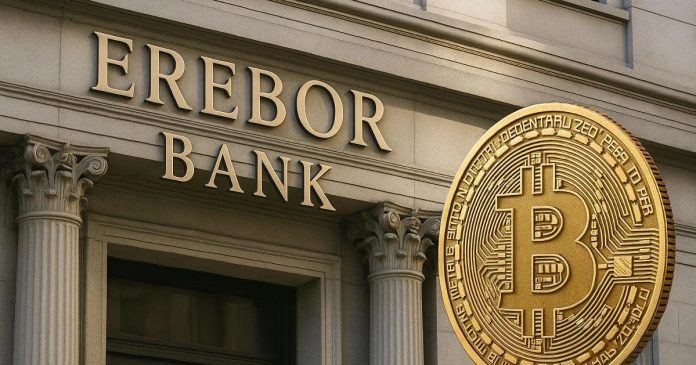
Peter Thiel, along with tech billionaires Palmer Luckey and Joe Lonsdale, is backing Erebor, a new U.S. digital bank aimed at serving cryptocurrency and tech startups, filling the void left by Silicon Valley Bank’s 2023 collapse. Named after the “Lonely Mountain” in J.R.R. Tolkien’s “The Lord of the Rings”, Erebor has applied for a national bank charter and plans to offer traditional banking services like loans and payroll, alongside blockchain-powered features such as stablecoin transactions.

The bank, headquartered in Columbus, Ohio, with an office in New York, will focus on underserved sectors like crypto, AI, and defense startups, which often struggle to access credit from traditional banks. Co-CEOs Jacob Hirshman (ex-Circle) and Owen Rapaport (Aer Compliance), with President Mike Hagedorn (ex-Valley National Bank), will lead operations, emphasizing regulatory compliance and digital-only services. Erebor aims to bridge traditional finance and Web3, potentially reshaping banking for high-growth industries.

Erebor’s launch could have significant implications for the crypto and tech startup ecosystem, as well as the broader financial landscape. Post-Silicon Valley Bank collapse, startups, especially in crypto, AI, and defense, have faced banking challenges due to traditional banks’ risk aversion. Erebor’s focus on these sectors could provide tailored financial services, enabling growth for underserved businesses.

By offering blockchain-powered features like stablecoin transactions alongside traditional banking (loans, payroll), Erebor could bridge Web3 and conventional finance, making crypto more accessible for businesses and potentially driving mainstream adoption. Erebor’s pursuit of a national bank charter signals a commitment to regulatory compliance, which could set a model for other crypto-focused institutions. Success here might encourage regulators to clarify rules for digital asset banking, fostering innovation while ensuring stability.

Erebor’s digital-only model and specialized services could pressure traditional banks to modernize or lose market share in high-growth sectors. It may also spur competition among fintechs, leading to better offerings for startups. By providing credit and banking solutions to crypto and tech startups, Erebor could stimulate job creation, innovation, and economic activity in these sectors, particularly in its Ohio and New York hubs.

The bank’s crypto focus could face scrutiny from regulators wary of digital assets’ volatility and fraud risks. Additionally, its success hinges on navigating a complex regulatory landscape and building trust among skeptical traditional investors. If Erebor succeeds, it could inspire similar ventures globally, accelerating the integration of crypto into mainstream finance and positioning the U.S. as a leader in digital banking innovation.

The rise of decentralized finance (DeFi) and stablecoins is pushing banks to adopt blockchain for secure, intermediary-free transactions like smart contracts and cross-border payments. Erebor’s plan to hold stablecoins and offer virtual currency services positions it at the forefront of this trend, catering to crypto-focused businesses.

Open banking, driven by APIs, allows third-party apps to access financial data, enhancing user experiences through account aggregation and personal finance tools. Erebor’s digital-only model likely relies on API-first solutions to integrate with fintechs and provide seamless services, reflecting this trend.

With digital banking’s growth, robust security measures like AI-driven fraud detection, biometrics, and quantum-resistant encryption are critical. Erebor’s emphasis on being a highly regulated entity for stablecoin transactions indicates a strong focus on compliance and security, aligning with the industry’s push for trust and safety.