DD
MM
YYYY

PAGES

DD
MM
YYYY

spot_img

PAGES

Home Blog Page 1031

CBN Orders Banks Under Regulatory Forbearance to Halt Dividends, Bonuses, and Foreign Ventures in Capital Preservation Drive

0

The Central Bank of Nigeria (CBN) has issued a fresh directive instructing banks operating under regulatory forbearance to immediately suspend dividend payments, defer bonuses to executives, and halt new investments in foreign subsidiaries or offshore ventures.

The apex bank said the decision is part of broader efforts to reinforce capital buffers, improve the resilience of bank balance sheets, and ensure prudent capital retention across the financial system.

According to the CBN, the new restriction applies specifically to banks currently enjoying regulatory forbearance due to breaches in their credit exposures and Single Obligor Limits—indicators of potential financial stress. The regulator clarified that these suspensions will remain in place until such banks fully exit the forbearance regime and the central bank independently verifies that their capital adequacy and provisioning levels meet prevailing regulatory standards.

In a statement issued with the directive, the CBN said, “This temporary suspension is until such a time as the regulatory forbearance is fully exited and the banks’ capital adequacy and provisioning levels are independently verified to be fully compliant with prevailing standards. This supervisory measure is intended to ensure that internal resources are retained to meet existing and future obligations and to support the orderly restoration of sound prudential positions.”

The move is seen as a clear signal that the CBN is shifting from its previous relief-based approach to one of fiscal discipline and regulatory tightening. This comes at a time when Nigeria’s banking sector is entering a crucial phase of recapitalization, with new capital thresholds set to be implemented in stages until 2026. Under the new recapitalization mandate announced by the CBN last year, commercial banks will be required to significantly increase their capital base—some by up to 500 percent—raising pressure on institutions to retain earnings and limit speculative investments.

Analysts believe the CBN’s action is a response to mounting macroeconomic risks, including volatility in Nigeria’s foreign exchange market, high inflation, and growing exposure of banks to risky sectors such as oil and gas. The regulator appears to be taking preemptive steps to prevent systemic vulnerabilities from escalating as monetary conditions tighten and market uncertainties grow.

This is not the first time the central bank has moved to restrict how banks manage profits and risk exposure. In April 2022, the CBN extended interest rate forbearance on restructured loans to ease post-pandemic pressures on borrowers. While the measure provided temporary relief, it also left banks exposed to heightened credit risks without recognizing losses on time. Then in September 2023, the CBN issued a circular barring banks from using gains from FX revaluation for dividends or capital expenditures, ordering such profits to be warehoused in a “Special Regulatory Reserve.”

The CBN followed up in March 2024 by reinforcing that FX gains were volatile and temporary in nature and should not be relied on for capital decisions. It warned banks against using such gains to fund dividend payments or executive bonuses and directed lenders to retain the proceeds to fortify their capital positions as Nigeria transitioned to a unified exchange rate regime under the Tinubu administration.

This latest directive now goes further by not only limiting how profits are deployed but also regulating who receives them and where they can be invested. It reflects a deeper concern by the CBN that, unless properly managed, the sector’s earnings could be siphoned away from productive use at a time when Nigeria’s broader financial stability agenda depends on a strong and well-capitalized banking system.

The central bank’s tone is crystal: banks benefitting from forbearance must now prove that they are financially sound before returning to business as usual. This means that until then, dividend distribution, executive compensation, and foreign expansion plans will have to wait.

Shopify In Partnership With Coinbase and Stripe Has Introduced USDC Payments For Checkout

0

Shopify has introduced support for USDC (USD Coin) payments, allowing merchants to accept this stablecoin as a payment method during checkout. This feature, rolled out in partnership with Coinbase and Stripe, is integrated into Shopify Payments and operates on the Base network, an Ethereum layer-2 solution designed for fast, low-cost, and secure transactions.

Currently in early access for select merchants, with broader rollout planned for later in 2025. Customers can pay with USDC using supported crypto wallets, either through guest checkout or Shop Pay. Merchants receive payouts in their local currency by default, with no foreign exchange or multi-currency fees, or they can opt to receive USDC directly into their own wallet.

The integration eliminates the need for additional gateways, supports instant settlements, and reduces transaction costs compared to traditional credit card fees (which range from 1.5% to 3.5%). Shopify also plans to offer 1% cashback on USDC transactions in the U.S. to encourage adoption. A smart contract-based protocol, developed by Shopify and Coinbase, handles e-commerce needs like tax finalization, refunds, and delayed payment capture, mimicking the flexibility of credit card transactions.

Currently, USDC payments are supported only on the Base network, which has drawn criticism for limited blockchain interoperability. Some advocate for multi-chain support to increase accessibility. Merchants can enable this feature through their Shopify admin settings, and payouts follow the existing Shopify Payments schedule. This move marks a significant step toward mainstream adoption of stablecoins in e-commerce, leveraging USDC’s stability as a dollar-pegged currency.

The integration of USDC as a payment method on Shopify’s platform has several implications for merchants, customers, the e-commerce ecosystem, and the broader adoption of cryptocurrencies. USDC transactions on the Base network have lower fees compared to traditional credit card processing (1.5%-3.5%). This could increase profit margins, especially for high-volume or low-margin businesses.

Accepting USDC enables merchants to reach crypto-savvy customers globally, particularly in regions with limited access to traditional banking or high currency volatility. Instant settlements with USDC reduce delays compared to traditional payment methods, improving cash flow. Merchants can choose to receive payouts in local currency (avoiding crypto volatility) or USDC, offering strategic options for those already engaged in crypto markets.

Early adopters may attract crypto users, enhancing brand appeal among tech-forward audiences. Limited blockchain support (Base network only) may restrict accessibility. Merchants unfamiliar with crypto may face a learning curve, and regulatory compliance (e.g., tax reporting) could add complexity.

USDC payments via wallets or Shop Pay simplify crypto spending, especially for guest checkouts, lowering barriers to adoption. The 1% cashback offer in the U.S. encourages USDC use, potentially increasing customer savings. Customers in underbanked regions or those holding USDC can shop seamlessly without currency conversion hassles.

As a stablecoin pegged to the U.S. dollar, USDC reduces volatility concerns compared to other cryptocurrencies like Bitcoin. Customers need a supported crypto wallet and USDC holdings, which may exclude non-crypto users. Limited blockchain support could also frustrate those using other networks. Shopify’s scale (millions of merchants) normalizes stablecoin use, pushing cryptocurrencies closer to mainstream payment methods.

The smart contract protocol for e-commerce (handling taxes, refunds, etc.) sets a precedent for blockchain-based payment systems, potentially inspiring competitors to adopt similar tech. Lower fees and faster settlements could challenge credit card companies and payment gateways, prompting them to innovate or reduce costs. Widespread stablecoin use may attract stricter regulations, particularly around anti-money laundering (AML) and know-your-customer (KYC) compliance.

Reliance on the Base network could centralize transaction activity, raising concerns about scalability or network outages. Integration with Shopify strengthens USDC’s position as a leading stablecoin, potentially increasing its market share over competitors like Tether (USDT). Using Base (an Ethereum layer-2) highlights the viability of scalable, low-cost blockchain solutions, encouraging further development of layer-2 technologies.

Shopify’s move aligns with Web3 trends, fostering integration between e-commerce and decentralized finance (DeFi), such as crypto-based loyalty programs or tokenized assets. Limiting support to Base may alienate users of other blockchains, slowing broader crypto adoption until multi-chain support is implemented. Partnership with reputable players like Coinbase and Stripe enhances trust in crypto payments, countering perceptions of risk or fraud.

USDC payments could empower unbanked or underbanked populations to participate in global e-commerce, particularly in developing economies. Increased stablecoin use may challenge fiat currencies in certain markets, prompting central banks to accelerate digital currency development (e.g., CBDCs). While Base is energy-efficient compared to Ethereum’s mainnet, crypto payments still face scrutiny over environmental impact, which could influence public perception.

Normalizing crypto payments may accelerate a shift toward decentralized financial systems, influencing consumer behavior and expectations. Evolving stablecoin regulations could impose restrictions or compliance costs, impacting adoption. While USDC is stable, broader crypto market fluctuations could affect consumer confidence in digital assets. Slow merchant or customer uptake due to unfamiliarity or technical barriers could delay impact.

Wallet vulnerabilities or smart contract bugs could lead to losses, undermining trust. Overall, Shopify’s USDC integration is a pivotal step toward blending traditional e-commerce with blockchain technology, with the potential to reshape payment systems, expand market access, and drive crypto adoption—though its success depends on overcoming technical, regulatory, and adoption hurdles.

Tether’s Acquisition of 31.9% Stake In Elemental Altus Is A Strategic Play

0

Tether Investments S.A. de C.V., an affiliate of the Tether Group, acquired a 31.9% stake in Elemental Altus Royalties Corp., a Canadian gold-focused royalty company, on June 10, 2025. The transaction involved purchasing 78,421,780 common shares from La Mancha Investments S.à.r.l. at C$1.55 ($1.14) per share, totaling approximately $89.4 million. This move aligns with Tether’s strategy to integrate stable assets like gold and Bitcoin into its ecosystem, enhancing the backing of its stablecoin USDT and gold-backed token XAUt.

Elemental’s royalty and streaming model provides Tether diversified exposure to global gold production without direct mining risks. Additionally, Tether secured an option to acquire 34,444,580 more shares from AlphaStream Limited, exercisable after October 29, 2025, pending Elemental’s approval. The acquisition complies with Canadian securities regulations and supports Tether’s goal of building resilient, transparent financial infrastructure.

The acquisition of a 31.9% stake in Elemental Altus Royalties Corp. by Tether Investments S.A. de C.V. has several implications for both the cryptocurrency and traditional resource sectors, highlighting a growing convergence between digital assets and tangible commodities like gold. Tether’s investment in a gold-focused royalty company strengthens its portfolio by backing its stablecoin (USDT) and gold-backed token (XAUt) with exposure to physical gold production. This aligns with Tether’s stated goal of building a resilient financial ecosystem by combining stable, tangible assets with cryptocurrencies.

By investing in a royalty and streaming model, Tether gains indirect exposure to gold without the operational risks of mining (e.g., labor disputes, environmental regulations, or production costs). Elemental’s diversified portfolio, spanning 11 countries and including 17 principal royalties, provides a steady revenue stream tied to global gold production. This move may bolster confidence in Tether’s reserves, addressing longstanding criticisms about the transparency and backing of USDT. By linking its operations to a tangible, high-value asset like gold, Tether could enhance its credibility among investors and regulators.

Tether’s entry into the gold royalty sector signals a blending of cryptocurrency and traditional commodity markets. This could encourage other crypto firms to explore investments in physical assets, narrowing the gap between decentralized finance (DeFi) and conventional finance. The acquisition may attract institutional investors to Elemental Altus, as Tether’s involvement highlights the growing acceptance of crypto-related entities in traditional markets. This could drive up Elemental’s stock value or spur similar investments by other crypto firms.

The $89.4 million influx from Tether provides Elemental with significant capital to expand its royalty portfolio or fund new streaming agreements, potentially accelerating its growth in the gold sector. Tether’s option to acquire an additional 34.4 million shares suggests a long-term commitment, which could lead to deeper collaboration, such as integrating blockchain technology into Elemental’s operations or exploring tokenized gold assets.

Association with Tether, a major player in the crypto space, could increase Elemental’s visibility among investors, particularly those interested in the intersection of crypto and commodities. Amid economic uncertainty and inflation concerns in 2025, gold remains a safe-haven asset. Tether’s investment reflects a broader trend of crypto firms hedging against volatility in digital markets by diversifying into stable, inflation-resistant assets.

Tether’s high-profile move into a regulated industry like gold royalties may draw regulatory attention, particularly regarding compliance with Canadian securities laws and international financial regulations. This could set a precedent for how crypto firms navigate traditional markets. The crypto community often champions decentralization and distrust of centralized financial systems, while gold royalties are rooted in traditional, regulated markets. Tether’s investment may be seen as a pragmatic compromise by some crypto purists, who might view it as a departure from the ethos of decentralization, while others see it as a necessary step to legitimize and stabilize the crypto ecosystem.

Cryptocurrencies like USDT are often associated with speculative trading, whereas gold royalties represent a stable, long-term investment. This acquisition highlights a tension between short-term crypto volatility and the long-term value preservation offered by gold. Crypto investors (often retail-driven, tech-savvy, and risk-tolerant) differ from traditional resource investors (typically institutional, risk-averse, and focused on fundamentals). Tether’s move could bridge these groups, attracting crypto investors to gold royalties and traditional investors to tokenized assets like XAUt.

Gold royalties are less liquid and more capital-intensive than cryptocurrencies. Tether’s involvement could spark interest in tokenizing royalty streams, making them more accessible to retail investors via blockchain platforms, though this risks alienating traditional investors wary of crypto’s volatility. Tether operates in a lightly regulated crypto space, while Elemental Altus is subject to stringent Canadian securities laws and mining regulations. This creates a potential clash in operational cultures, with Tether needing to navigate compliance requirements unfamiliar to its core business.

Tether has faced criticism for opaque reserve management. Its investment in a public company like Elemental, which adheres to strict disclosure rules, may force Tether to adopt greater transparency, potentially easing or exacerbating tensions with regulators and investors. Existing shareholders may welcome the capital and strategic partnership but could be cautious about Tether’s controversial reputation in crypto markets, fearing volatility or regulatory risks.

USDT and XAUt holders may view this as a positive step toward stabilizing Tether’s reserves, but skeptics might question whether the investment diverts focus from core crypto operations. Some may see this as a betrayal of crypto’s anti-establishment roots, while others view it as a savvy move to integrate with traditional markets, potentially driving mainstream adoption.

Tether’s acquisition of a stake in Elemental Altus is a strategic play to diversify its portfolio, stabilize its stablecoin ecosystem, and bridge the divide between cryptocurrency and traditional commodities. It reflects a growing trend of crypto firms engaging with tangible assets to hedge against volatility and enhance credibility. However, the divide between crypto’s decentralized ethos and traditional finance’s regulated structure creates tensions that will shape how this partnership evolves.

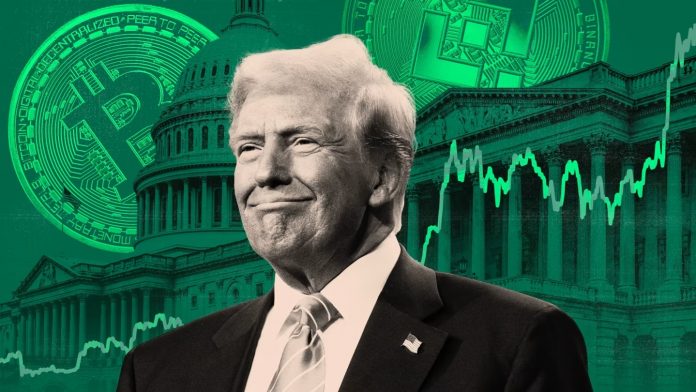
Trump’s $600m Windfall: Crypto Craze, Golf Resorts, and Licensing Bonanza Power President’s Expanding Empire

0

President Donald Trump reported earning over $600 million in 2024 from a wide range of ventures including cryptocurrency, golf resorts, licensing deals, and passive investments, according to a newly released financial disclosure signed on June 13.

The document, which sheds light on the business affairs of America’s billionaire president, offers a sweeping look at Trump’s financial landscape and his increasing entanglement with the crypto industry — a sector he once dismissed but now embraces as central to his economic agenda.

The disclosure, reviewed by Reuters and confirmed to cover the 2024 calendar year, places Trump’s minimum declared assets at $1.6 billion. That estimate is based on the lowest values in the reported ranges, meaning the true figure is likely far higher. While Trump has long maintained that he relinquished day-to-day management of his empire to a trust run by his children, the filing reaffirms that income from those businesses continues to accrue to him directly — raising ongoing ethical questions, particularly as many of those sectors, such as crypto, are affected by government policy decisions.

Crypto Craze Becomes Presidential Strategy

2024 marked a pivotal year for Trump’s financial strategy as he plunged full force into the cryptocurrency market, both personally and through policy. The most striking development was the release of the $TRUMP meme coin, a digital token bearing his name and likeness. Initially launched in early 2024 with relatively little institutional backing, the coin quickly exploded in popularity among online traders and conservative crypto enthusiasts, fueled by Trump’s public endorsements and relentless marketing.

Within weeks, the coin’s market cap ballooned, and frenzied speculation led to one of the most volatile and lucrative meme coin rallies in recent memory. Investors poured in, sending prices soaring and transaction volumes into the hundreds of millions. The disclosure reveals that $TRUMP generated an estimated $320 million in fees alone, though it remains unclear how much of that went directly to Trump or the entities he controls.

That rally served not just as a financial windfall, but also as a turning point in Trump’s political embrace of digital assets. His administration has since begun positioning cryptocurrency and blockchain technologies as essential to America’s next economic boom, signaling a policy shift that could entrench crypto as part of federal infrastructure and monetary policy.

From Digital Gold to Real Estate Gold

While crypto has become Trump’s flashiest new income source, his traditional businesses, particularly his Florida-based golf empire, continued to perform strongly. His trio of golf properties in the Sunshine State — Trump National Doral, Trump National Golf Club Jupiter, and Trump International Golf Club West Palm Beach — along with the Mar-a-Lago private club, together raked in at least $217.7 million in revenue during 2024.

Trump National Doral, renowned for its “Blue Monster” course, was the crown jewel, accounting for $110.4 million in revenue, making it his single largest income source. These figures represent gross revenues rather than profits, but they underscore the continuing profitability of Trump’s luxury lifestyle brand — especially as it intersects with the political elite who frequent his clubs.

A Global Footprint and Licensing Boom

Trump’s international business also remains active. He reported $5 million in license fees from a Vietnam development project, $10 million from India, and $16 million from a Dubai venture. These projects reflect the enduring global appeal of the Trump name, even as political tensions around the world increase scrutiny on U.S.-linked business activity abroad.

Beyond real estate, Trump has capitalized heavily on his brand, earning $2.8 million from Trump Watches, $2.5 million from Trump Sneakers and Fragrances, and $1.3 million in royalties from the Greenwood Bible, which is billed as “the only Bible officially endorsed by Lee Greenwood and President Trump.”

Meanwhile, Trump’s digital collectibles — his NFTs, or non-fungible tokens — netted $1.16 million in 2024, while First Lady Melania Trump brought in $216,700 from her own NFT line. These ventures signal how the Trumps have turned their political fame into a monetized digital persona, finding yet another frontier to market their brand.

Passive Wealth and Financial Infrastructure

Trump’s more conventional investments also pulled in returns. The president reported at least $12 million in passive income from interest and dividends, anchored by significant holdings in investment funds such as Blue Owl Capital and government bond portfolios managed by Charles Schwab and Invesco. These investments, estimated at over $211 million, suggest Trump’s financial base remains diversified even as his more public ventures dominate headlines.

A substantial chunk of Trump’s perceived wealth remains tied up in Trump Media & Technology Group, the owner of the social media platform Truth Social. Though the company has faced questions about user growth and monetization, it continues to serve as a key part of Trump’s political communication strategy — and potentially, a lucrative asset if digital political media firms surge in value.

However, many believe that Trump’s deepening ties to sectors influenced by U.S. regulation, particularly crypto and digital finance, create potential conflicts of interest, especially as the policy under his administration begins favoring those very sectors.

For example, the U.S. Treasury and SEC have recently signaled openness to integrating blockchain solutions in federal finance, a move seen by some as aligning too closely with Trump’s personal financial interests.

XRP Hits $2.33, SUI Clears $3.49, Yet Everyone’s Talking About BlockDAG’s X1 Mobile Miner and its 2M Users

0

What’s pushing the XRP price rally and fueling the SUI price raise right now? Traders are watching both closely, XRP is testing breakout levels after its Guggenheim partnership news, while SUI just surged past $3.49 with ETF buzz lighting up charts. But while these coins are moving, another project is quietly becoming the highest trending crypto, and it’s not even listed yet.

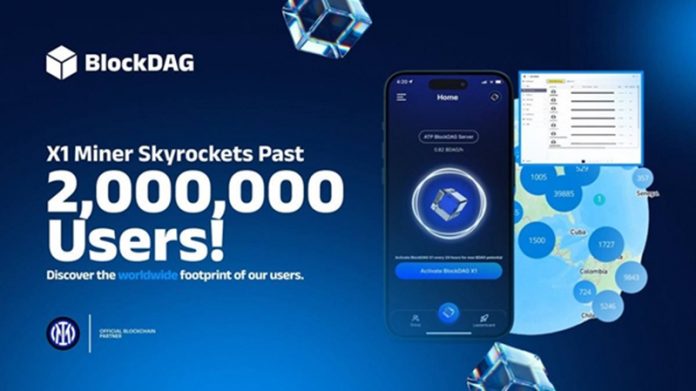
BlockDAG is changing the game with a mobile-first mining experience through its X1 Miner app. Forget bulky hardware and complicated setups, this is mining built for Gen Z. Missed out on Bitcoin in 2011? You’ve got a second shot. The X1 app lets anyone with a phone earn BDAG daily. No energy bills, no waiting. Over 2 million users are already mining before the token even launches. With its clean design, referral boosts, and streak rewards, this might be the most accessible crypto move you make all year.

BDAG Mining on Mobile? It’s Already Happening

Back in 2011, Bitcoin mining was limited to tech insiders with custom setups. Today, BlockDAG is flipping that script with the X1 app, a mobile-first mining platform built for everyday users. Whether you’re a student, gamer, or just someone with a smartphone, you can start mining BDAG in seconds, no expensive rigs, no steep learning curve. You tap, you earn. That’s the pitch Gen Z is responding to, and over 2 million people are already doing it.

The X1 app rewards users with up to 20 BDAG daily through simple, tap-based engagement. No energy use, no hardware noise, just consistent accumulation through Proof-of-Engagement. Bonus streaks keep users logging in, while referrals multiply rewards. It’s not a simulation; users are collecting real BDAG before it even hits exchanges. It’s this hands-on accessibility that’s turning BlockDAG into the highest trending crypto across mining communities.

The presale numbers back it up. BlockDAG has raised over $303 million, selling 22.4+ billion BDAG across 29 batches. Right now, there’s a temporary price rollback to $0.0018, the lowest rate since early fundraising. This deal ends June 13, after which the price jumps to $0.0276, aiming for a $0.05 listing, giving early buyers a shot at up to 2,670% ROI. And with 20 exchange listings announced at the June 13 GO LIVE event, timing couldn’t be more critical.

BlockDAG isn’t just a presale, it’s a working ecosystem. It’s CertiK-audited, EVM-compatible, and already in the hands of over a million users. If you’re watching the highest trending crypto stories of the year, this one’s already unfolding, right on your phone.

XRP Price Rally Gathers Momentum After Key Breakout

The XRP price rally is getting serious attention as the coin pushes above $2.30, driven by bullish technical patterns and institutional momentum. Analysts point to a double-bottom breakout and strong support between $2.25–$2.28. Volume is climbing, and open interest in XRP futures has now crossed $5 billion. If XRP clears $2.33 resistance, targets of $2.50 and even $5 are on the table in the short term.

Backing this rally is real activity. Ripple’s recent $10 million partnership with Guggenheim to tokenize U.S. Treasury assets has added fuel. On-chain growth, ETF speculation, and the upcoming XRPL Summit have also kept sentiment strong. With short-term projections aiming for $2.37 and mid-range goals hitting $7.5, the XRP price rally is looking well-supported. A potential ETF announcement or continued whale accumulation could be what pushes it even further. Traders are watching this setup closely.

SUI Price Raise Strengthens on ETF Buzz and Technical Breakout

The SUI price raise has turned heads after the token cleared $3.49, confirming a bullish breakout backed by high trading volume. With support now firm between $3.45 and $3.46, SUI is targeting $3.75 in the near term and possibly $4.25 if momentum continues. Technical signals like a golden cross and EMA alignment are keeping traders bullish, especially with volume now outperforming its 24-hour average.

Fueling this move is Nasdaq’s recent filing for a 21Shares SUI ETF, which has triggered institutional interest and speculation. Even after a large $215 million token unlock, SUI held strong, showing solid buyer confidence. Analysts see potential for a push toward $5, and in aggressive scenarios, even $7.5, if market conditions stay favorable. The SUI price raise is shaping up as more than a spike; it’s a well-supported move backed by fundamentals, ETF news, and active ecosystem growth.

What It All Means

The XRP price rally is gaining strength with key resistance levels being tested and new institutional interest pushing forecasts as high as $7.5. Meanwhile, the SUI price raise is holding strong above $3.45, boosted by ETF filings and bullish technical patterns. Both tokens are moving, but neither offers what BlockDAG is delivering right now.

This isn’t just another presale, it’s the highest trending crypto with real users mining through the X1 app. You don’t need hardware, experience, or power-hungry rigs. Just your phone. Over 2 million people are already earning BDAG daily, before launch. The presale price is temporarily rolled back to $0.0018 until June 20, with a listing target of $0.05, offering up to 2,670% ROI. Missed Bitcoin in 2011? This is the moment to catch up. BlockDAG is the highest trending crypto because it’s mobile-first, live now, and still early enough to matter.


Join the Presale now:

Presale: https://purchase.blockdag.network

Website: https://blockdag.network

Telegram: https://t.me/blockDAGnetworkOfficial

Discord: https://discord.gg/Q7BxghMVyu