DD
MM
YYYY

PAGES

DD
MM
YYYY

spot_img

PAGES

Home Blog Page 1051

Solaxy Slide Over Because Neo Pepe Coin Here to Reshape Solana and Ethereum

0

Memetrix Activation Sends Investors Into Overdrive

This early stage crypto project has emerged as one of the most exciting crypto presales currently gaining massive traction in the space.

Neo Pepe ($NEOP) is erupting onto the crypto scene with energy that has investors scrambling for presale access. It stands at the forefront of crypto presale trends, offering more than hype. It’s backed by clear tokenomic engineering, advanced DAO integration, and transparent, immutable DeFi mechanics. Built atop Ethereum and themed around the narrative-laced “Memetrix”—a conceptual digital battleground for decentralization—Neo Pepe fuses deep community ethos with ironclad financial architecture. Analysts tracking market behavior are now openly suggesting that $NEOP may10x in value before its presale concludes.

With its presale launching at $0.05 and climbing toward $0.16 through 16 meticulously priced stages, this best memecoin presale offers one of the most calculated and structured price ladders in memecoin history. Urgency is baked directly into the model—an escalating structure that simultaneously incentivizes early adoption and drives token scarcity. At the same time, foundational mechanisms like auto-liquidity injection and hourly unlocks prevent the boom-and-bust patterns that have plagued other memecoins.

Smart Mechanics Reward First Movers Fast

The Neo Pepe tokenomics are another area where it triumphs. Designed for long-term viability and early-stage reward, the breakdown ensures clarity and intention across all allocations

Allocation Percentage Purpose
Presale 45% Fair launch with staged pricing
Marketing 25% Global outreach, partnerships
Development 10% Ecosystem upgrades, maintenance
Liquidity 10% DEX liquidity and incentives
Ecosystem 5% Community initiatives, grants
Giveaways 5% Promotional events and airdrops

Each stage of the presale has a limited token cap, ensuring rising scarcity as time progresses. Once a stage sells out, the next tier price is immediately active. This model turns every token acquisition into a high growth crypto opportunity with embedded FOMO mechanics.

The tokenomics also speak to the ethos of long-term engagement. By rewarding both early contributors and future developers, the design acknowledges the full life cycle of a token—from hype to utility to maturation.

Smartest Presale Setup Investors Have Ever Seen

Neo Pepe distinguishes itself from countless memecoins by building investor trust from day one. Unlike hastily-launched meme projects with anonymous founders and vague tokenomics, Neo Pepe is transparent and verifiable:

  • Immutable Smart Contracts: Developed using OpenZeppelin standards, these contracts cannot be altered or revoked.
  • Hourly Token Unlocks: Instead of cliff-vesting or single massive drops, token releases occur hourly post-launch, offering measured entry and reducing market dumps.
  • LP Token Burns: With every buy and sell, 2.5% of the transaction value is used for liquidity and the LP tokens are immediately burned, making the liquidity permanent and unrecoverable.

The burn mechanism in particular represents a bold design philosophy. By reducing circulating supply over time, Neo Pepe effectively combats inflationary pressures common to meme-based assets. This strategy elevates the project above temporary hype cycles and fosters long-term investor confidence. Together, these elements make Neo Pepe a premium crypto launch project that institutional analysts and grassroots investors alike are paying close attention to.

$NEOP Governance Isn’t Theory—It’s Total Control

At the heart of Neo Pepe lies its decentralized autonomous organization (DAO), which is not just a placeholder—it’s functional, transparent, and powerful. Unlike memecoins that claim community involvement with no actual governance infrastructure, Neo Pepe uses a full on-chain system to enforce participation.

  • Governor Contract: The primary DAO contract through which all proposals and votes are executed.
  • TimelockController: Ensures a 48-hour delay post-vote approval before execution, giving time for deliberation and protection against rash decisions.
  • Gnosis Safe + Zodiac Integration: Used to connect the treasury with the DAO while enforcing strict multisig security.

All community members with at least 1 million $NEOP (a threshold designed to balance participation with commitment) can propose governance changes. Token holders control listings, treasury allocations, burns, marketing partnerships, and future strategic pivots. This creates a crypto investment star built not by central developers but by its own users.

The transparency of this system is enhanced by public dashboards that allow anyone to view proposals, voting results, and the current status of the treasury. This level of openness is rare, and it places Neo Pepe among the few crypto assets where governance is both accessible and consequential.

Why No Other Token Stands a Chance

Neo Pepe’s dominance isn’t just theory—it’s evident in the metrics, structure, and comparisons with other trending presales. Competitors like Catslap (SLAP), Bitcoin Bull (BTCBULL), and Solaxy (SOLX) offer hype-driven opportunities, but Neo Pepe surpasses them in real utility and investor protection.


Feature Neo Pepe SLAP BTCBULL SOLX
Token Unlocking Hourly, post-launch Instant Vesting-based Flat
Governance True DAO Centralized Minimal Limited
Auto-Liquidity 2.5% Burned None Partial Locked
Exchange Listing Power Community-Decided Founder-Decided Founder-Decided Founder-Decided
Smart Contract Audits OpenZeppelin-Based None Unverified Partial

Neo Pepe’s smart architecture has pushed it far ahead on all key performance indicators. Communities tracking crypto presale trends see it not just as a meme token—but as a decentralized movement.

No Wallet? No Problem—Multi-Chain Payments Live

Neo Pepe is fully ERC-20 compatible and accessible via MetaMask, Trust Wallet, and other leading Ethereum-based wallets. Purchases can be made using ETH, USDT, or USDC across the Ethereum, Base, and Binance Smart Chain (BSC) networks—ensuring broad compatibility and ease of participation for users on any major chain.

This accessibility is another reason it’s quickly being regarded as a best token opportunity. By eliminating friction at the point of entry, Neo Pepe attracts both experienced crypto veterans and first-time buyers.

Multichain support isn’t just convenience—it’s strategy. The wider the net, the greater the capital inflow, and Neo Pepe has optimized this aspect to perfection. Few presales manage such seamless integration across major networks.

Secure Your Stake Before Price Accelerates

Acquiring Neo Pepe during its presale is straightforward:

Step 1: Set up an ERC-20 wallet such as MetaMask
Step 2: Fund it with ETH, USDT, or USDC
Step 3: Connect to the official presale site
Step 4: Swap your tokens for $NEOP
Step 5: Confirm the transaction and secure your tokens
Step 6: Prepare for hourly token unlocks after launch

This crypto opportunity now is time-sensitive. Each passing stage reduces the remaining allocation and raises the token price, making immediate participation critical for maximizing potential upside.

Analysts See $NEOP as Market’s Next Breakout

Several indicators are fueling speculation that $NEOP may experience a 10x run-up before even reaching CEX listings:

  • Limited Supply: 1 billion token cap with strict per-stage allocations
  • Massive Engagement: Thousands joining from Telegram, Discord, and Twitter channels
  • Real-World Utility: DAO-powered decision-making and treasury governance
  • Deflationary Mechanism: Auto-burns reduce supply over time
  • Rapid Stage Progression: Presale stages are closing faster than expected due to FOMO

Neo Pepe is also benefiting from a powerful narrative. The Memetrix theme resonates deeply with communities tired of centralized control, and that resonance translates to real capital. It’s more than a meme—it’s a manifesto.

These fundamentals, combined with flawless execution thus far, suggest Neo Pepe could soon join the ranks of crypto’s rising stars, but with governance tools even giants like Shiba Inu and Dogecoin lack.

Final Call to Escape Crypto Illusion

Neo Pepe is about more than just hype. It is a mission to return power to the crypto community. By buying Neo Pepe tokens, people are taking steps toward something more than just a temporary flavor of the month. They are working to achieve something very close to the heart of any crypto project: decentralized financial autonomy.

And while connected wallets might seem like just another service enjoyed by access token holders, in too many crypto projects, it’s model that more resembles an oligarchy than a true democracy where every voice counts equally. In that context, the good governance promised by the Neo Pepe kind of alchemy is nothing short of revolutionary.

Join Neo Pepe and claim your place in this next gen crypto phenomenon.

Dogecoin Memecoin But Even Better Communtiy Features Neo Pepe Coin on Ethereum Network

0

Drive Decentralization Forward—Memetrix Activated

The crypto market surges this year and the spotlight shines on Neo Pepe ($NEOP), the radical crypto project shaking up the sector. Neo Pepe takes decentralized finance in a bold new direction and combines it with an utterly profound and powerful meme, setting a new stratospheric standard that far exceeds that of run-of-the-mill memecoins.

Neo Pepe is fully equipped with next-gen crypto token and operates via a built-to-last infrastructure that delivers smooth and robust experiences to its investors. But that’s not all: Neo Pepe is something far more revolutionary. It offers critical and meaningful engagement to its vibrant community, allowing members to participate in governance that truly matters. And speaking of governance, Neo Pepe has set up a path to fully decentralized governance. Its community holds the keys to make very significant decisions for the project, ranging from how to manage liquidity (when to use which pool) to big, strategic partnership choices. Here are my top reasons for why $NEOP, and the project behind the token, are far more than just a meme. 

Epic Crypto Growth Powered by Neo Pepe’s Tokenomics

The tokenomics of Neo Pepe isn’t just innovative; it’s revolutionary. The presale, which has 16 stages, is constructed so that investors can get in at an extremely low price at Stage 0 (just $0.05) and still find it compelling to invest all the way up to Stage 15 (an impressive $0.16). In the context of the rest of the crypto market, which has been downturning, this top crypto presale is a refreshing take on getting investors involved in an early stage of a project.

Here’s a quick breakdown of the potent tokenomics:

  • Stages: 16 dynamic phases (Stage 0: $0.05 ? Stage 15: $0.16)
  • Raise Goal: A monumental $50 Million
  • Token Unlocks: Hourly post-launch for optimal market stability
  • Auto-Liquidity: Immediate burning of 2.5% per transaction, safeguarding continuous liquidity
  • Governance: Fully decentralized community-driven decision-making for exchange listings and strategic moves

Neo Pepe has an extraordinary automatic liquidity mechanism that instantly burns pool tokens. This secures those pools in such a way that they are safely collateralized. And there’s not much you can do to them if it’s done at the right price and in the right way, and also if it is firmly, perniciously encrypted.

Dominating Crypto Rivals with Unmatched Advantages

In an arena populated by presale behemoths like Antix (ANTIX) and SUBBD (SUBBD), Neo Pepe shines brightest in outclassing the competition. Antix operates with a simpler governance structure, but Neo Pepe leads the way with community-driven governance that allows token holders to have their say in vital decisions. While SUBBD takes a rudimentary approach to liquidity, Neo Pepe has a far more sophisticated strategy involving immediate token burns, which ensures that it will be a market force for the foreseeable future.

Epic Transparency and Trustworthy Security

Neo Pepe sets a storied precedent in the realm of cryptocurrency for how secure and transparent it is. Every single operational decision is made via smart contracts that are totally in the open and fully audited. Plus, there’s a rigorous timelock system in place that guarantees real community oversight of every conceivable decision. This is all so absurdly transparent that you can hardly ask for a setup less prone to any funny business.

Neo Pepe’s Governance Breakthrough

Neo Pepe contrasts sharply with traditional memecoins like Dogecoin (DOGE) and Shiba Inu (SHIB). It cannot be governed in a centralized manner because it uses the NEOPGovernor smart contract, which makes every token holder part of a decentralized, and thus, a legitimate governing body. Traditional memecoins are lighthouses with no real ships; Neo Pepe is the expression of a truly decentralized art project with governance by meaningful juries.

Roadmap to Legendary Innovation

In contrast to traditional meme coins such as Dogecoin (DOGE) and Shiba Inu (SHIB), Neo Pepe operates under a truly decentralized governance model. The token’s name may be cute, but it is not without significance: “Meme governance for the new millennium” is a pretty accurate description of what Neo Pepe offers. The NEOPGovernor smart contract serves as the token’s governance structure, meaning all you holders actually do have a seriously good amount of say in where the project itself goes and how the funds of the already-established treasury are utilized. Any rumors you may have heard about the NEOPGovernor being a hoax can now be put to rest.

Ultimate Crypto Investment Opportunity

Neo Pepe is an irreplicable and focused movement, a radical transformation poised to redefine the future of finance by fighting for what needs to be protected; your wallet. The scarcity and strategic distribution inherent in Neo Pepe’s presale demand immediate action from forward-thinking investors eager to join this early crypto presale.

Here’s a concise, actionable guide to securing your stake in Neo Pepe:

  1. Wallet Activation: Secure an ERC-20 wallet like MetaMask.
  2. Wallet Funding: Load ETH, USDT, or USDC from trusted platforms.
  3. Presale Connection: Head to the Neo Pepe presale site to link your wallet seamlessly.
  4. Token Acquisition: Swiftly swap ETH, USDT, or USDC for $NEOP tokens.
  5. Transaction Confirmation: Verify and approve details meticulously.
  6. Secure Storage: Protect your tokens securely in your ERC-20 wallet. 

Your Moment to Shape the Future—Act Now

Neo Pepe’s launch offers an unmatched opportunity for you to influence the future of defi and cryptocurrency. This is about taking charge of the memetrix revolution with Neo Pepe ($NEOP), and if you don’t know what that is, you should really get started on understanding this once in a lifetime chance.

Trump Scraps Key Biden Cybersecurity Policies, Calls Them “Distracting,” Slashes AI, Quantum Security Mandates

0

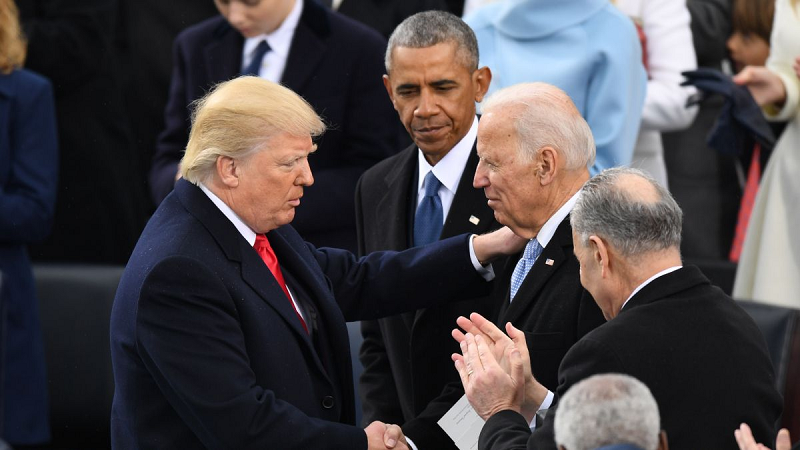
President Donald Trump on Friday signed a sweeping executive order that eliminates a wide range of cybersecurity protections and initiatives established under his Democratic predecessor, including major policies meant to bolster the U.S. government’s defenses against artificial intelligence-driven threats and prepare for quantum-era encryption risks.

In a statement accompanying the directive, the White House accused the Biden administration of slipping in “problematic and distracting issues” just days before leaving office. Trump’s new order cancels or rewrites many of those last-minute rules—most of which had roots in a years-long effort by the Biden White House to use federal power to push software vendors, research agencies, and defense institutions toward more robust cyber hygiene.

“President Trump has made it clear that this Administration will do what it takes to make America cyber secure,” the White House said. “That includes focusing relentlessly on technical and organizational professionalism… not bureaucratic checklists and impractical requirements.”

But the move is not well welcomed by many, including business leaders who warn that the United States may now be left more vulnerable than ever at a time when cyber threats are evolving rapidly, and adversaries are racing ahead in artificial intelligence.

AI Safety Gutted

Among the most controversial reversals in the executive order is Trump’s decision to cancel nearly all of Biden’s artificial intelligence cybersecurity directives. Biden’s order, signed just five days before leaving office on January 15, instructed key government agencies—including the Pentagon and Department of Energy—to prioritize the use of advanced AI systems for threat detection, network defense, and vulnerability analysis. It also committed federal research funds to projects focused on secure AI development, including safe coding and the prevention of adversarial attacks on machine learning systems.

All those provisions have now been axed.

Many believe that the rollback not only eliminates protections that could have helped the U.S. stay ahead of increasingly sophisticated AI-powered cyberattacks but also sends a message that AI safety is no longer a national security priority.

Others warn that the canceled programs could have provided vital insights into how AI can defend critical infrastructure, particularly in the energy and defense sectors, which face growing threats from state-backed hackers in China, Russia, and North Korea.

Quantum Cryptography Plans Rolled Back

Trump’s order also dismantles much of the federal government’s transition strategy for post-quantum cryptography (PQC)—encryption that can withstand the power of quantum computers. While the Biden administration had instructed federal agencies to adopt quantum-resistant encryption “as soon as practicable” and pushed vendors to integrate these standards, Trump’s order strips away those requirements.

In place of action, the new policy only asks the Cybersecurity and Infrastructure Security Agency (CISA) to maintain a list of product categories where quantum-secure technology is available—without any mandate for agencies or companies to adopt them.

The administration also canceled directives instructing the State and Commerce departments to promote U.S. post-quantum encryption standards abroad—seen by many as an attempt to preserve global leadership in emerging technologies.

Software Vendor Compliance Scrapped

Trump’s order also eliminates the Biden-era requirement that software vendors doing business with the federal government must submit “secure software development attestations,” backed by technical documentation to verify that their code meets modern security standards. Under Biden’s framework, these attestations would have been reviewed by CISA and the Office of the National Cyber Director, with failed claims potentially referred to the Justice Department.

Trump’s administration dismissed these as burdensome and bureaucratic, claiming they prioritized “compliance checklists over genuine security investments.” The White House said the new approach would reduce red tape while still encouraging best practices, though critics say that’s unlikely.

Though NIST’s collaborative work with industry on updating the Secure Software Development Framework (SSDF) remains intact, the Trump order severs any direct link between those updates and requirements for federal software vendors.

Email Encryption, Identity Protections Also Dropped

The order also eliminates numerous other provisions from Biden’s January directive. Gone are the requirements for agencies to adopt phishing-resistant multi-factor authentication, implement strong email encryption, and secure internet routing. Also discarded is a directive for agencies to explore digital identity documents to reduce fraud in public benefit programs—a project Trump called “inappropriate.”

The Office of Management and Budget’s mandate to review risks associated with IT vendor concentration—a lesson from high-profile breaches like SolarWinds—was also dropped, raising concern among lawmakers and watchdogs who had championed those reforms.

Trump even revised an Obama-era sanctions authority, narrowing it so that the Treasury Department can only target foreigners who carry out cyberattacks on U.S. systems. The White House claimed this would prevent the “misuse of cyber sanctions powers against domestic political opponents,” language that critics say politicizes a critical national security tool.

One Initiative Survives

One of the only Biden-era programs left untouched is a Federal Communications Commission effort modeled after the Energy Star certification system. The initiative applies security labels to consumer tech products tested in federally approved labs, and beginning in 2027, will be mandatory for vendors selling internet-of-things devices to the federal government.

Across the cybersecurity community, the reaction to Trump’s sweeping rollback has been one of growing concern.

While Trump’s administration insists the focus is now on “real security” and efficiency, experts fear the abrupt elimination of AI and quantum preparedness policies may cost the U.S. dearly in the years ahead.

OpenAI Revenue Surges to $10 Billion ARR Amid Soaring Business Demand

0

OpenAI has reached a staggering $10 billion in annual recurring revenue (ARR), marking one of the fastest growth trajectories ever recorded by a U.S. tech company.

The milestone, achieved less than three years after the launch of its breakout product ChatGPT, signals not just surging demand for generative artificial intelligence, but also a critical turning point in OpenAI’s evolution from a research-focused startup to a full-blown commercial powerhouse.

The company’s ARR now includes revenue from its consumer-facing ChatGPT app, business-grade ChatGPT Enterprise tools, and usage of its application programming interface (API), which powers AI features in third-party apps and platforms. However, the figure does not include licensing revenue from Microsoft or one-time enterprise contracts, according to a spokesperson. That means the $10 billion estimate captures only recurring revenue — the kind investors value most — from OpenAI’s core commercial operations.

The jump in revenue from $5.5 billion in 2023 to $10 billion in mid-2024 reflects a significant acceleration in the company’s monetization efforts, and it’s helping to quiet growing concerns from backers about whether OpenAI’s products could ever become sustainably profitable. OpenAI reportedly burned through around $5 billion last year, prompting questions about the sustainability of its business model given the enormous infrastructure costs involved in training and serving its large language models.

Now, however, that narrative is beginning to shift. The revenue surge offers a clearer path to profitability and comes at a time when OpenAI’s valuation has ballooned to $300 billion — a figure that investors are betting will yield massive returns if the company can maintain its momentum. OpenAI’s current valuation translates to 30 times its annual revenue, a premium investors appear willing to pay given the belief that the company will be foundational to future software, productivity, and search tools globally.

Microsoft, OpenAI’s largest investor and strategic partner, has so far poured over $13 billion into the company, including a mix of equity investment and cloud infrastructure support. Much of OpenAI’s model training and inference is run on Microsoft’s Azure platform, further entrenching the two companies. The rapid uptick in OpenAI’s revenue — and growing adoption of its business products — is a positive signal for Microsoft, which has been under increasing pressure to justify its enormous investment.

Sources familiar with the matter say Microsoft is now beginning to see signs of return on investment through its ability to embed OpenAI’s models into Microsoft 365, Azure, and other enterprise software tools — an arrangement that not only improves its offerings but helps generate new enterprise customers. In effect, Microsoft is monetizing OpenAI twice: once as an investor and again as a reseller of its capabilities.

The broader adoption of OpenAI tools across industries has also been accelerating. As of March, OpenAI reported 500 million weekly active users, driven by continued interest in ChatGPT and its integrations across devices and platforms. The company also confirmed it now has over three million paying business users, up from two million in February — reflecting its expanding presence in enterprise environments, where firms are seeking AI-powered productivity gains.

Even more ambitious is OpenAI’s long-term revenue goal: $125 billion by 2029, according to internal targets cited by The Information. That would place the AI firm in the same revenue tier as tech titans like Amazon Web Services or Apple’s services division — an extraordinary goal for a company that was largely unknown outside academic and tech circles just a few years ago.

But to get there, OpenAI must navigate mounting challenges. Rivals like Google DeepMind, Anthropic, Meta, and Mistral are racing to build better and cheaper AI models. At the same time, governments across the U.S., Europe, and Asia are drafting regulations to rein in the potential harms of advanced AI systems, which could add compliance burdens and slow down deployment.

However, few companies have managed to turn hype into recurring revenue as quickly and forcefully as OpenAI. The company’s transformation from a nonprofit AI lab to a commercial juggernaut has not been without criticism, but it has undeniably changed the technology industry.

With revenue climbing, enterprise adoption spreading, and investor confidence returning, OpenAI is believed to be in a stronger position now than ever to chart the future of artificial intelligence — and to make good on the massive bets its backers have placed.

WWDC: Apple Unifies Operating System Naming with iOS 26 and a Sweeping Redesign

0

Apple has made a significant change to how it names its operating systems, shifting from version-based numbering to a unified year-based system.

The update, announced during the company’s annual Worldwide Developers Conference (WWDC), means all of Apple’s OS platforms — iOS, macOS, iPadOS, watchOS, tvOS, and visionOS — will now carry the same version number: 26. The change is aimed at simplifying the user experience by making it easier to know whether a device is running the latest software.

This year’s upcoming iPhone software update, iOS 26, marks the beginning of this new approach. Previously expected to be called iOS 19, the jump in numbering aligns the iPhone’s operating system with macOS, now called macOS Tahoe 26, and the rest of Apple’s platforms. This unified numbering will roll forward each year, taking the guesswork out of software updates across the Apple ecosystem.

A New Visual Language: “Liquid Glass”

The biggest change coming with iOS 26 is a new design language called “Liquid Glass.” Inspired by the visionOS interface designed for the Vision Pro headset, Liquid Glass introduces translucent UI elements that mimic the behavior of real-world glass. Apple says the redesign uses real-time rendering to create fluid reactions to movement, including highlights and color shifts, giving apps, buttons, sliders, the Control Center, and even the homescreen a more dynamic and immersive feel.

Tabs in apps now shrink and expand as users scroll, and the new visual styling touches nearly every part of the interface, creating a more unified look across devices.

Upgrades to Messages for Group Chats

Apple is also bringing long-overdue enhancements to its Messages app, especially for group conversations. iOS 26 will let users customize chat backgrounds to personalize threads, introduce polls to streamline group decision-making, and finally add typing indicators for group chats — a feature that should bring conversations to life and reduce awkward overlaps in responses.

Phone App Gets Smarter with AI Features

Taking cues from competitors, Apple is building more intelligence into the Phone app. A new call screening feature will allow users to filter spam or unwanted calls. Meanwhile, a “Hold Assist” feature can stay on the line for you during long hold times, letting you step away until a real person answers.

Apple is also introducing a unified layout in the Phone app, combining Favorites, Recents, and Voicemails into a single streamlined view.

Live Translation for Real-Time Multilingual Conversations

One of the most ambitious new features is Live Translation, which will let users translate conversations during phone calls in real-time. Built into Messages, FaceTime, and the Phone app, the feature relies on Apple Intelligence — the company’s on-device AI framework — to translate both text and spoken language on the fly. Apple emphasized that these translations happen entirely on-device, maintaining user privacy.

Small but Notable Apple Intelligence Enhancements

While Apple’s broader Siri upgrade is still pending, iOS 26 will introduce smaller Apple Intelligence-powered features. “Visual Intelligence” will allow users to identify and take action on items shown on their screen. “Genmoji” lets users blend two emojis into a custom hybrid. And Apple’s Shortcuts app will benefit from smarter automation through AI-powered workflow enhancements.

A New Games App

With iOS 26, Apple is also launching a dedicated Games app. It serves as a central hub for everything related to gaming on the iPhone. The Home tab tracks updates and events in your games. Apple Arcade has its own section, while the Library collects every game you’ve ever downloaded from the App Store. A Play Together tab shows what friends are playing, encouraging multiplayer engagement.

Public Beta Coming in July

The full version of iOS 26 is expected to be released in the fall alongside new iPhone models. For those eager to test it early, a developer beta is already available, with a public beta set to roll out in July.

Apple’s decision to simplify its naming scheme while introducing a bold new look and intelligent features points to a larger push toward ecosystem consistency and AI integration. With iOS 26, the company isn’t just updating software — it’s rethinking how its users interact across every Apple device.