DD
MM
YYYY

PAGES

DD
MM
YYYY

spot_img

PAGES

Home Blog Page 1053

Musk-Trump Feud Reveals Government’s Leverage Over Musk’s Empire, Says Cathie Wood

0

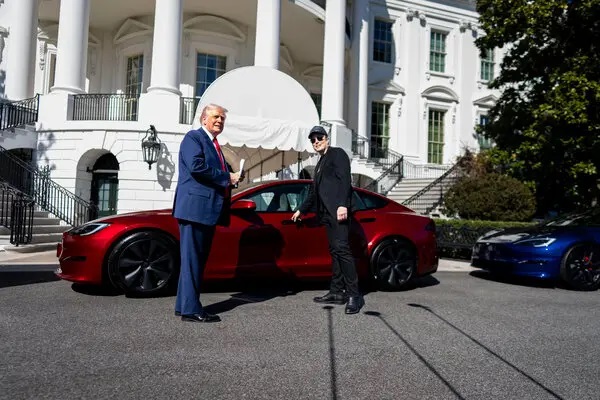
The public feud between Elon Musk and President Donald Trump has exposed how deeply dependent Musk’s companies are on the U.S. government — a reality Ark Invest CEO Cathie Wood says investors can no longer ignore.

In a video posted Friday to Ark Invest’s YouTube channel, Wood said the rapidly escalating tensions are showing the market just how much influence Washington holds over Musk’s empire, from aerospace to electric vehicles and medical tech.

“Elon, Tesla, and investors are beginning to understand more and more just how much the government has control here,” she said.

The Feud: From Policy Critique to Personal Fallout

The spat, now out in the open, began earlier last week after Musk slammed Trump’s latest legislative proposal — dubbed the “One Big Beautiful Bill” — as a “disgusting abomination” on his platform, X (formerly Twitter). Musk accused the package of being fiscally irresponsible, warning it would expand the national deficit at a time of mounting U.S. debt.

The comment struck a nerve. The bill, which bundles tax cuts and infrastructure provisions along with incentives for oil and gas development, had become a major policy plank for Trump’s economic plan.

By Thursday, the fallout had turned personal. Trump responded by publicly threatening to cut off Musk’s federal contracts, telling advisers he was “done with Elon” and hinting at reviews of Tesla’s tax benefits and SpaceX’s federal contracts.

Musk retaliated just hours later. In a post that stunned investors and Washington insiders, he announced SpaceX would begin “immediate decommissioning” of its Dragon spacecraft — the same capsule that had just returned NASA astronauts Suni Williams and Butch Wilmore from the International Space Station. The threat alarmed defense officials and space industry executives, as Dragon plays a critical role in both civilian and defense space logistics. Musk later retracted the statement, signaling what Ark Invest’s Wood called an attempt to “walk it back.”

Billions at Stake

The feud has significant financial implications. SpaceX has at least $22 billion in federal contracts, according to COO Gwynne Shotwell, ranging from NASA missions to satellite work for the U.S. Department of Defense. Tesla, too, has thrived in part thanks to government support, benefiting from electric vehicle tax credits, battery subsidies, and other green energy programs.

Even Neuralink, Musk’s controversial brain-computer interface company, must operate under the regulatory authority of the Food and Drug Administration. Tesla’s robotaxi project also depends on approval from regulators in Washington, a fact that could delay or derail deployment if relations continue to sour.

Wood said the market reaction — with Tesla shares falling more than 14% on Thursday — wasn’t just about volatility.

“This is a moment of reckoning for investors,” she said. “When you’re building world-changing companies, you also end up under the microscope of the world’s most powerful government.”

Musk and Trump: From Allies to Adversaries

Musk and Trump were once close, with Musk serving on White House advisory councils during Trump’s first term. They shared common ground on issues like deregulation, space exploration, and skepticism toward legacy media.

But relations cooled after Musk criticized Trump’s decision to pull the U.S. out of the Paris climate agreement in 2017. The final break came in 2022, when Trump mocked Musk at a rally, calling him “another bull**** artist” and urging the Tesla CEO to “stay out of politics.” Since then, their relationship has been teetering between uneasy alliance and outright hostility.

This week’s events appear to have pushed it into full collapse.

“I have no intention of speaking to him,” Trump told NBC News on Saturday. “He’s been very disrespectful. You cannot disrespect the office of the President.”

However, some members of Trump’s circle are holding out hope for reconciliation. Vice President JD Vance, speaking on Thursday during an appearance on the Theo Von podcast, said he thought Musk’s public criticism was “a huge mistake,” but added, “I hope he figures it out and comes back into the fold.”

Trying to Rebrand — or Disengage?

Cathie Wood speculated that Musk may be trying to distance himself from partisan politics and the perception that his companies are aligned too closely with any single administration.

“One of the hypotheses out there is that what has happened was partly — not entirely — orchestrated,” she said. “There has been some brand damage to Tesla, which he readily admits. I think he’s trying to disengage from the government and being associated with one party or the other.”

Musk himself hinted at a shift in direction back in April, announcing that he would step back from government-related partnerships to focus more on commercial ventures and AI development.

But as Wood pointed out, it may be too late for a clean break. “When you build a business model that scales with public money and public infrastructure, you don’t get to pick your regulators,” she said.

Despite the turmoil, Wood believes Musk will adapt. “He works really well under pressure,” she said. “He creates a lot of that chaos and pressure himself.”

However, the broader message to Silicon Valley is that while innovation can challenge governments, it often still relies on them — and crossing a sitting U.S. president can come with high costs.
US Senate Republicans Modify Tax Bill to Preserve Controversial AI Regulation Ban, Tying It to Broadband Funding

0

Senate Republicans have modified a controversial provision in their sweeping tax bill that would restrict states from regulating artificial intelligence, after facing sharp criticism from lawmakers on both sides of the aisle — including within their own ranks.

The original House-passed version of the legislation included a blanket ten-year ban on any current or future state laws aimed at regulating artificial intelligence technologies. But after backlash from state legislators, digital rights advocates, and some federal lawmakers, Senate Republicans restructured the language in a bid to preserve the provision while making it more palatable under Senate rules and political pressure.

Under the new language unveiled Thursday night, instead of an outright ban, the bill now proposes denying federal broadband funding to states that attempt to regulate AI over the next decade. The change reframes the issue as a budgetary condition, attempting to pass constitutional and procedural muster while maintaining a deterrent effect on state legislatures.

“These provisions fulfill the mandate given to President Trump and Congressional Republicans by the voters: to unleash America’s full economic potential and keep her safe from enemies,” said Sen. Ted Cruz, chairman of the Senate Commerce Committee, in a statement defending the AI-related amendment.

The move is believed to have been buoyed by members of the Republican Party who said the federal government had no business overriding the rights of individual states to govern emerging technologies in their own jurisdictions.

Rep. Marjorie Taylor Greene, R-Ga., who had voted in favor of the bill in the House, publicly walked back her support after learning of the provision.

“We should be reducing federal power and preserving state power. Not the other way around,” she wrote on social media. Greene admitted she had not read the AI provision before casting her vote.

Several GOP state lawmakers also denounced the measure, warning it sets a dangerous precedent for centralized overreach. Some stated that the federal government should not be using funding as a weapon to coerce states into surrendering their legislative authority — especially in matters as consequential and fast-moving as AI.

The backlash reflects a deepening rift in Republican ideology: while many in the party support limited government and states’ rights, others are prioritizing a unified federal approach to technological innovation, particularly in sectors where the United States faces stiff competition from global rivals like China.

Adding to the controversy, digital safety experts and civil liberties advocates warned that stripping states of their ability to legislate AI oversight leaves millions of Americans vulnerable. They point to risks associated with bias in AI systems, facial recognition surveillance, data privacy, and automated decision-making tools increasingly deployed by businesses and law enforcement.

Despite these concerns, several leading AI executives have lobbied for a centralized regulatory framework.

However, no bipartisan agreement has emerged in Congress over how to regulate AI at the federal level. Democrats have proposed stronger consumer protections and guardrails on algorithmic use, while Republicans have focused more on fostering innovation and limiting what they view as government overreach.

To help ensure the tax bill survives the fast-track budget reconciliation process, which allows it to pass with only a simple majority, Senate Republicans altered the AI provision to tie it to federal spending. They argue the measure qualifies as budget-related rather than a purely policy-driven initiative, by threatening to withhold broadband infrastructure funds from non-compliant states. Sen. Cruz said he plans to make this case to the Senate parliamentarian, who is expected to issue a determination in the coming days.

In addition to the AI language, the tax package includes a renewal of key tax cuts from Donald Trump’s 2017 legislation, new business incentives, expanded commercial spectrum access for telecom firms, and sweeping cuts to social safety net programs.

Senators are aiming to pass the legislation by the end of June, though the future of the AI provision remains uncertain. However, the revised approach has only intensified the debate over how much authority states should retain in shaping the rules for one of the most disruptive technologies of the 21st century.

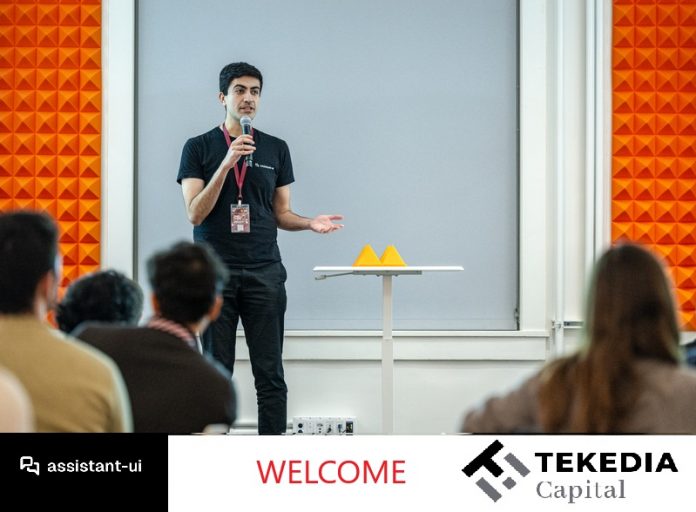
Tekedia Capital Welcomes Assistant-UI, An Innovator on Typescript/React library for AI chat

0

Tekedia Capital welcomes assistant-ui to our expanding startup universe. Assistant-UI is an open-source Typescript/React library for AI chat, and it is one of the world’s finest species. Hundreds of projects use assistant-ui to build in-app AI assistants, including companies like Browser Use, Stack, and Athena Intelligence.

With >50k+ monthly downloads, assistant-ui is the most popular UI library for AI chat. But this is more than a library, assistant-ui has a backend as a service, with first class integrations into popular agent frameworks like LangGraph and Vercel AI SDK. Your chats in this agentic era are being baked with assistant-ui.

To learn more about assistant-ui and use it in your integration, go here https://www.assistant-ui.com/ and schedule to speak with Simon’s team; for Tekedia Capital, here capital.tekedia.com

China’s RedNote Joins AI Arms Race by Open-Sourcing Its LLM

0

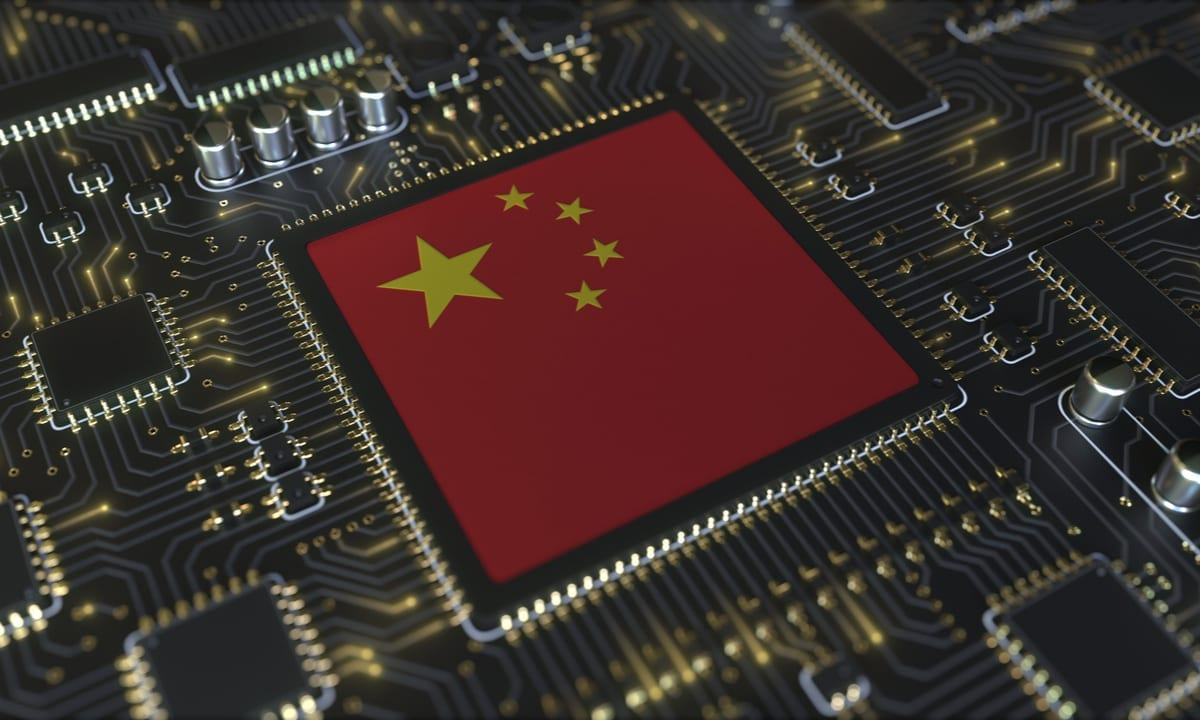
Chinese social media giant RedNote, also known by its Chinese name Xiaohongshu, has released its first large language model as open source, deepening Beijing’s push to expand its influence in artificial intelligence despite rising geopolitical barriers.

The model, called dots.llm1, was made available on developer platform Hugging Face on Friday, accompanied by a technical paper outlining its capabilities and architecture.

The move aligns RedNote with other major Chinese tech firms like Alibaba and DeepSeek that have recently adopted open-source strategies in AI. Unlike U.S. giants OpenAI and Google, which have kept their most advanced models proprietary, China’s AI developers have turned to open source not just to build credibility and developer ecosystems but also to challenge Western dominance in the rapidly evolving sector.

RedNote’s dots.llm1 is a mixture-of-experts model containing 142 billion parameters, but it only activates 14 billion parameters per query. The design prioritizes computational efficiency without significantly compromising performance. According to the company’s paper, the model was trained on over 11.2 trillion tokens of real-world data—intentionally excluding synthetic sources to improve trustworthiness and accuracy.

Benchmark tests show dots.llm1 performs competitively against Alibaba’s Qwen 2.5 series in programming tasks, while it falls short of top-tier models like DeepSeek-V3. On C-SimpleQA, a Chinese language benchmark, dots.llm1 scored 56.7—slightly below DeepSeek-V3’s 68.9, but close to Qwen2.5-72B in multilingual and mathematical evaluations.

RedNote’s research team also published intermediate training checkpoints for every trillion tokens, allowing the academic community to track the model’s learning curve over time. This transparency further distinguishes the project in a space where many companies still guard technical details.

RedNote’s open-source move comes at a critical time for China’s AI sector. With the United States maintaining strict export controls on advanced semiconductors and high-performance GPUs, Chinese firms are looking for alternative routes to assert technological leadership.

These companies are building global developer networks, strengthening diplomatic ties through technological cooperation, and asserting China’s relevance in AI policy discourse, by releasing models like dots.llm1 to the public.

The open-source strategy has proven effective for others in China’s tech ecosystem. Earlier this year, Alibaba launched Qwen 3, the latest in its series of public AI models, while startup DeepSeek released its low-cost R1 model, earning global attention for achieving strong performance at a fraction of the cost of Western counterparts.

DeepSeek’s newer V3 series has been ranked in benchmarks alongside OpenAI’s GPT-4o and Anthropic’s Claude 3.5 Sonnet. With dots.llm1 now in the open-source arena, RedNote is clearly aiming to join this elite group of Chinese innovators challenging U.S. leadership in AI.

RedNote’s Global Expansion

Best known as an “Instagram-like” social app popular among China’s Gen Z, RedNote gained wider global attention earlier this year when some American users began migrating to the platform amid fears of a TikTok ban in the U.S.

The company has since opened an overseas office in Hong Kong and expanded its product offerings. Its AI strategy includes Diandian, a new AI-powered search assistant that helps users navigate Xiaohongshu content—an indicator that the firm is preparing for more global and AI-integrated products.

Since 2023, shortly after OpenAI launched ChatGPT, RedNote has stepped up investment in large language models. Dots.llm1 is its most ambitious public AI initiative to date.

The release of dots.llm1 has added to a growing perception that China is moving quickly—and openly—to compete in AI development, despite export bans and geopolitical tension. With more Chinese firms embracing open source, the global AI industry is becoming more distributed and competitive.

While American firms like Meta have also pursued open-source models, many others have opted for closed systems, citing safety and competitive concerns. RedNote’s entry into open-source AI deepens the divide between the American and Chinese approaches to AI deployment, governance, and access.

But it may also force global policymakers and tech leaders to reckon with a more multipolar future for artificial intelligence—one where China, with or without U.S. semiconductors, plays a central role in shaping how machines learn and reason.

As developers begin experimenting with dots.llm1 and creating finetuned derivatives, RedNote’s strategy could further shift the momentum in favor of open access, and in doing so, extend China’s soft power in digital infrastructure.

Implications of Vanadi Coffee’s $1.1B Bitcoin Acquisition Plan

0

Vanadi Coffee SA, a Spanish coffee chain, has proposed a plan to invest approximately $1.1 billion (€1 billion) in Bitcoin, aiming to pivot from a traditional coffee business to a “Bitcoin-first” company. This strategy, led by Chairman Salvador Martí, is inspired by MicroStrategy’s approach to accumulating Bitcoin as a treasury reserve asset. The proposal, which involves raising funds through stock issuance and convertible financing, is set to be reviewed by the board on June 29, 2025.

Vanadi’s move comes amid financial struggles, with the company reporting a $3.7 million net loss in 2024, exceeding its annual revenue of $2.28 million, and a 91% drop in its stock price (VANA) since its July 2023 IPO. Martí already tested the strategy by purchasing 5 BTC for $527,110, which briefly boosted the stock price by 22% before it fell back to €0.28 ($0.32) as Bitcoin’s price dropped from $111,000 to $105,000. This volatility highlights the risks of tying the company’s financial health to Bitcoin’s price fluctuations.

While some see this as a bold move to capitalize on Bitcoin’s potential as a hedge against inflation and attract tech-savvy investors, critics like Jacob King of WhaleWire argue it’s a publicity stunt, noting Vanadi’s small scale (six locations) and limited online presence. The plan’s success hinges on shareholder approval and Bitcoin’s market performance, with analysts projecting potential BTC price targets of $114,000–$120,000 if bullish trends continue. However, the European regulatory environment and Bitcoin’s volatility pose significant risks.

Vanadi Coffee’s audacious plan to invest $1.1 billion in Bitcoin signals a radical shift in its business model, with far-reaching implications for the company, its stakeholders, and the broader mmarket. Bitcoin’s price volatility (e.g., recent drop from $111,000 to $105,000) could destabilize Vanadi’s financial position, especially given its 2024 net loss of $3.7 million against $2.28 million in revenue. A significant Bitcoin price crash could exacerbate losses.

The initial 22% stock price surge after purchasing 5 BTC shows market sensitivity to Bitcoin moves, but the subsequent drop to €0.28 reflects skepticism and volatility risks. A $1.1 billion bet could amplify these swings. Raising €1 billion through stock issuance and convertible financing may dilute existing shareholders’ equity and strain liquidity, especially for a company with only six locations and limited operational scale.

By emulating MicroStrategy, Vanadi aims to reposition itself as a crypto-focused entity, potentially attracting a new investor base (crypto enthusiasts, hedge funds). This could diversify its revenue streams beyond coffee sales. The move could enhance Vanadi’s brand among tech-savvy consumers but risks alienating traditional customers and investors wary of crypto’s speculative nature. European regulators, particularly in Spain, may impose stricter oversight due to Bitcoin’s association with financial instability and money laundering concerns, potentially complicating Vanadi’s operations.

A $1.1 billion Bitcoin purchase could drive short-term price increases, especially if executed during a bullish market (analysts project BTC at $114,000–$120,000). However, Vanadi’s small scale limits its influence compared to larger players like MicroStrategy. Success could inspire other small- to mid-sized firms to adopt Bitcoin as a treasury asset, accelerating corporate crypto adoption. Failure, however, could deter similar moves and reinforce skepticism.

Approval on June 29, 2025, will depend on shareholder confidence in Bitcoin’s long-term value versus Vanadi’s operational struggles. Dilution from stock issuance could spark dissent. A shift to a Bitcoin-first model may require operational changes, potentially affecting jobs or customer experience if resources are diverted from core coffee operations. Vanadi’s plan has sparked a polarized debate, reflecting broader tensions around corporate Bitcoin adoption:

Bitcoin maximalists and investors like those on X (e.g., posts citing MicroStrategy’s success) view this as a visionary move to hedge against inflation and fiat devaluation. They argue Bitcoin’s potential upside (e.g., projected $120,000 price) could transform Vanadi’s financial outlook. The strategy could attract younger, crypto-friendly investors, boosting Vanadi’s market relevance despite its small size.

Supporters believe Bitcoin’s integration could modernize Vanadi’s brand, making it a pioneer in blending traditional business with crypto innovation. Analysts like Jacob King (WhaleWire) call it a “publicity stunt,” arguing Vanadi’s $2.28 million revenue and six locations lack the scale for a $1.1 billion crypto bet. Critics highlight the risk of insolvency if Bitcoin crashes. Shareholders wary of crypto’s volatility and Vanadi’s 91% stock price drop since its 2023 IPO may see this as a desperate gamble rather than a strategic pivot.

Critics note Europe’s cautious stance on crypto, with potential for regulatory pushback or penalties that could hinder Vanadi’s plan. The divide reflects differing views on Bitcoin’s role in corporate finance—innovative asset versus speculative gamble. Vanadi’s success will depend on. Executing purchases during a Bitcoin bull run could validate supporters, while a bear market could embolden critics. Clear communication about risk management (e.g., hedging strategies) could ease shareholder concerns.

Maintaining coffee operations while integrating Bitcoin will be crucial to avoid alienating customers and employees. Ultimately, Vanadi’s move is a high-stakes experiment that could either redefine its future or underscore the risks of tying a small business to a volatile asset. The June 29, 2025, board decision will be pivotal in determining which side of the divide prevails.