DD
MM
YYYY

PAGES

DD
MM
YYYY

spot_img

PAGES

Home Blog Page 1055

Klarna CEO Warns AI Could Trigger Recession as White-Collar Job Displacement Accelerates

0

Sebastian Siemiatkowski, the CEO of Swedish fintech company Klarna, has warned that the rise of artificial intelligence could spark a recession, as white-collar workers are increasingly displaced by new technologies.

“There will be an implication for white-collar jobs,” Siemiatkowski said during an episode of The Times Tech podcast. “And that usually leads to at least a recession in the short term. Unfortunately, I don’t see how we could avoid that with what’s happening from a technology perspective.”

While many voices in the AI industry and beyond have raised concern over the looming threat to professional jobs, Siemiatkowski’s warning stands out as one of the first from a major tech executive to explicitly link that displacement to the possibility of a recession. His comments are a stark shift from the more optimistic narratives often pushed by tech firms, who prefer to frame AI adoption as a tool for unlocking human potential rather than eliminating it.

At Klarna, the transformation is already well underway. The company has downsized from about 5,500 employees to 3,000 in just two years, a contraction that Siemiatkowski attributes directly to efficiency gains powered by AI.

Klarna has been one of the most aggressive adopters of artificial intelligence among consumer-facing financial firms. In February 2024, the company announced that its AI assistant, developed using OpenAI technology, was handling tasks previously managed by 700 customer service agents.

By late 2023, Klarna had also imposed a hiring freeze, and Siemiatkowski declared in a Bloomberg interview that AI was already capable of performing “all of the jobs” humans do. But earlier this year, the CEO appeared to backtrack slightly, admitting during a gathering at Klarna’s Stockholm headquarters that the automation push may have gone too far.

“From a brand perspective, a company perspective, I just think it’s so critical that you are clear to your customer that there will always be a human if you want,” he said, suggesting the company would return to modest hiring.

While Siemiatkowski’s remarks have added urgency to the debate, he is not the only high-profile figure warning of AI’s disruptive potential on white-collar labor.

Dario Amodei, CEO of leading AI lab Anthropic, has been even more blunt. In a statement earlier this year, Amodei projected that artificial intelligence could eliminate up to 50% of entry-level white-collar jobs within the next five years.

“We, as the producers of this technology, have a duty and an obligation to be honest about what is coming,” he said.

Anthropic’s Chief Product Officer, Mike Krieger, also cautioned that entry-level roles — particularly in engineering — are becoming increasingly difficult to justify. According to him, firms are shifting towards experienced hires who can work alongside AI tools rather than compete with them.

“You want people who know how to delegate work to machines and evaluate the output critically,” Krieger said, adding that future job functions may center more on overseeing and refining what AI systems produce.

While labor disruptions caused by technology have historically taken time to ripple through economies, the scale and pace of AI’s advancement — coupled with its focus on office-based, knowledge-heavy roles — introduces new risks that haven’t been fully mapped out. The risks now have gone beyond displacement to contemplate a broader economic fallout, recession, according to Siemiatkowski’s warning.

Many white-collar professions, once considered protected from automation, are now increasingly vulnerable. Analysts, paralegals, marketing specialists, journalists, junior engineers, and customer support agents are among those already seeing job descriptions rewritten or roles made redundant.

Klarna’s case shows how quickly the shift can occur. With fewer staff and higher productivity per employee, companies are becoming leaner — but also potentially triggering a domino effect on consumer spending, household income, and job creation, especially in economies heavily reliant on service-sector employment.

“I don’t want to be one of those CEOs who downplay the consequences of AI,” Siemiatkowski said. “I want to be honest, I want to be fair, and I want to tell what I see so that society can start taking preparations.”

Whether policymakers, businesses, or workers are prepared to deal with the structural transformation that AI is already bringing remains an open question. But if Siemiatkowski is right, the economic implications may arrive sooner and hit harder than many had anticipated.

Gemini Files for Initial Public Offering With U.S. SEC

0

Gemini, the cryptocurrency exchange founded by Cameron and Tyler Winklevoss, confidentially filed for an initial public offering (IPO) with the U.S. Securities and Exchange Commission (SEC) on June 6, 2025. The filing was submitted as a draft registration statement on Form S-1 for an offering of its Class A common stock. Details such as the number of shares and price range have not been disclosed, and the IPO is expected to proceed after the SEC completes its review, subject to market conditions.

Gemini is reportedly working with investment banks Goldman Sachs and Citigroup on the offering. This move follows the resolution of regulatory hurdles, including a $5 million settlement with the Commodity Futures Trading Commission (CFTC) in January 2025 and the SEC closing its investigation without enforcement action in February 2025. The implications of Gemini’s IPO filing in the U.S. and the potential divides it may create or highlight are multifaceted, touching on financial, regulatory, and social dimensions.

Gemini’s IPO signals further integration of cryptocurrency into mainstream financial markets. As a prominent crypto exchange, its public listing could boost investor confidence in digital assets, attracting institutional capital and retail investors alike. It sets a precedent for other crypto firms to pursue public listings, following the likes of Coinbase, which went public in 2021. This could accelerate the normalization of crypto as an asset class.

The IPO comes after Gemini resolved significant regulatory issues, including a $5 million CFTC settlement and the SEC closing its investigation without action. This suggests Gemini has navigated a complex regulatory landscape, potentially paving the way for a smoother IPO process. However, the SEC’s review of the IPO filing will likely intensify scrutiny on Gemini’s compliance with securities laws, anti-money laundering (AML) regulations, and know-your-customer (KYC) standards. Any missteps could delay or derail the offering.

A successful IPO could strengthen Gemini’s position against competitors like Binance, Kraken, and Coinbase by providing capital to expand services, enhance technology, or pursue acquisitions. It may also pressure private crypto firms to accelerate their own public offerings to remain competitive, potentially leading to a wave of crypto IPOs. The IPO offers retail and institutional investors a chance to gain exposure to the crypto market without directly holding volatile digital assets. However, Gemini’s stock price will likely be influenced by broader crypto market trends, introducing volatility.

Investors will scrutinize Gemini’s financials, user base, and fee structures, which may reveal insights into the profitability and scalability of crypto exchanges. A successful IPO could drive bullish sentiment in the crypto market, potentially boosting prices of major cryptocurrencies like Bitcoin and Ethereum, as seen with Coinbase’s IPO. Conversely, any negative developments during the IPO process (e.g., regulatory pushback or weak financial disclosures) could dampen market enthusiasm.

Supporters of cryptocurrency may view the IPO as a victory for the industry, proving that crypto firms can meet the rigorous standards of traditional financial markets. This could embolden advocates pushing for lighter regulation. Regulators and traditional finance purists may argue that crypto exchanges like Gemini still face significant compliance challenges. The divide between those favoring innovation-friendly policies and those demanding stringent oversight will persist, with the IPO serving as a flashpoint for debates over consumer protection and market stability.

The IPO may favor institutional investors with better access to early share allocations through investment banks like Goldman Sachs and Citigroup. Retail investors, particularly those in the crypto community who may lack the capital or access to participate, could feel sidelined. Crypto-native investors who prefer decentralized finance (DeFi) may view the IPO as a departure from crypto’s ethos of decentralization, creating tension with traditional investors who see public listings as a natural evolution.

Gemini’s IPO reinforces the trend of centralized crypto exchanges aligning with traditional financial systems, which may alienate purists who advocate for fully decentralized platforms. This could deepen the rift between centralized crypto entities (like Gemini) and decentralized protocols like Uniswap or SushiSwap. Some in the crypto community may criticize Gemini for “selling out” to Wall Street, while others may see it as a pragmatic step to bridge crypto and mainstream finance.

Gemini’s focus on the U.S. market for its IPO highlights the regulatory disparity between the U.S. and other jurisdictions. Countries with clearer crypto regulations (e.g., Singapore, Switzerland) may attract firms that find the U.S. environment too restrictive, potentially diverting capital and innovation. Non-U.S. investors may face barriers to participating in the IPO due to regulatory restrictions, exacerbating a divide between U.S.-centric opportunities and global crypto communities.

A successful IPO could enrich Gemini’s founders, early investors, and employees, widening the wealth gap within the crypto industry. Meanwhile, smaller exchanges or startups without access to public markets may struggle to compete. If the IPO fuels a crypto market rally, early adopters and large holders of digital assets could see significant gains, while latecomers or undercapitalized investors may miss out.

Gemini’s IPO is a landmark event that could accelerate the mainstream adoption of cryptocurrency while highlighting tensions within and beyond the industry. It underscores divides between crypto and traditional finance, centralized and decentralized ideologies, and varying levels of access to economic opportunities. The outcome of the IPO—whether it succeeds or faces hurdles—will likely shape these divides, influencing regulatory debates, market dynamics, and the broader perception of crypto’s role in the global economy.

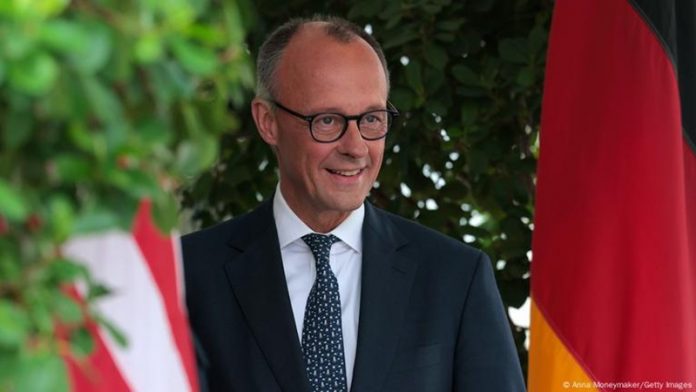
Germany’s Industry Is Optimistic Following Friedrich Merz Visit To The U.S.

0

German industry is cautiously optimistic following Chancellor Friedrich Merz’s visit to the U.S. on June 5, 2025, where he met with President Donald Trump to discuss trade, among other issues. Merz, a staunch advocate for free trade, pushed for a reduction in U.S. tariffs, particularly the 25% levy on imported vehicles and parts and the 10% tariff on other goods, which significantly impact Germany’s export-driven economy, especially its automotive sector. These tariffs, combined with a 50% duty on steel and aluminum, threaten German manufacturers, who employ around one million people in the U.S. through their operations.

During the visit, Merz and Trump agreed to strengthen cooperation on trade, with Merz expressing hope for progress before the EU-U.S. trade deal deadline of July 9, 2025. He emphasized a “zero-for-zero” tariff approach, aiming to eliminate industrial duties entirely, a stance he reiterated in discussions with European Commission President Ursula von der Leyen. German industry leaders, particularly in automotive and manufacturing, are hopeful this signals a path toward de-escalation, as a trade war would exacerbate existing challenges like high energy costs and declining competitiveness.

However, Merz warned that the EU could retaliate against U.S. tech companies if trade tensions escalate, pointing to the U.S. services trade surplus as a potential target. While the talks were described as “extremely satisfactory” by Merz, with Trump praising their personal rapport, no concrete agreements were announced, leaving industries awaiting tangible outcomes. The German automotive sector, a cornerstone of the economy, remains particularly vulnerable, with exports to the U.S. valued at €157.9 billion in 2023. Progress in upcoming EU-U.S. negotiations, potentially discussed at the G7 and NATO summits in June, will be critical for German industry’s outlook.

The implications of German Chancellor Friedrich Merz’s U.S. visit and the push for trade talk progress are significant for German industry, the EU, and global trade dynamics. Progress toward a “zero-for-zero” tariff deal could reduce or eliminate U.S. tariffs (e.g., 25% on vehicles, 10% on goods, 50% on steel/aluminum), protecting Germany’s €157.9 billion export market to the U.S., especially for automakers like Volkswagen, BMW, and Mercedes-Benz. Lower tariffs would safeguard jobs and competitiveness, critical amid Germany’s economic stagnation and high energy costs.

Failure to secure concessions could intensify trade barriers, raising costs for German manufacturers and potentially forcing production shifts to the U.S. or other markets. A trade war would exacerbate pressures on an already struggling industrial base, with ripple effects on supply chains and SMEs. Successful talks could strengthen EU-U.S. trade ties, aligning with Merz’s and von der Leyen’s goal of a broader industrial tariff agreement by July 9, 2025. This could stabilize transatlantic economic relations and counterbalance China’s trade influence.

If negotiations stall, Merz’s warning of EU retaliation against U.S. tech giants (e.g., Google, Apple) could spark a broader trade conflict, disrupting the U.S.’s services surplus (€70 billion in 2023) and escalating tensions. This tit-for-tat risks fracturing EU-U.S. economic cooperation. A de-escalation in U.S.-EU tariffs could set a precedent for multilateral trade agreements, encouraging open markets globally. Conversely, a breakdown could embolden protectionist policies, disrupting WTO frameworks and global supply chains, particularly in automotive and tech sectors.

Emerging markets reliant on EU or U.S. trade could face indirect impacts, as German industry’s performance influences global demand for raw materials and components. For Merz, securing trade progress bolsters his leadership and Germany’s economic credibility within the EU, especially after his recent election. Failure could weaken his coalition and fuel criticism from pro-protectionist factions. In the U.S., Trump’s willingness to negotiate may hinge on domestic political pressures, balancing his “America First” agenda with demands from U.S. industries reliant on EU imports.

Most at risk, with 25% tariffs threatening profitability and U.S. market share. A deal could preserve Germany’s 1 million U.S.-based jobs. EU retaliation could hit U.S. tech firms, raising costs for consumers and complicating digital trade. Trade stability would support Germany’s energy-intensive industries, while disruptions could worsen cost pressures. The outcome of these talks, likely shaped by G7 and NATO summits in June 2025, will determine whether German industry gains breathing room or faces heightened economic strain, with broader consequences for global trade stability.

Why Do We Have Companies? Ndubuisi Ekekwe Answers As Tekedia Mini-MBA Begins on Monday

0

We will begin the next edition of Tekedia Mini-MBA tomorrow, Monday, June 9, 2025. In a 50+ page lecture note, I will take time to explain why we have companies, and why companies exist. Yes, we need to understand the necessity of having companies before we can move into the phase of understanding how to run or manage them.

Once that necessity component is established, I will then focus on the three pillars upon which all companies in the world are built upon, and why the improvements in firms revolve around those pillars. The three pillars of People, Processes and Tools are central in everything we do in markets, and all domains of competitions are designed and engineered to shift market positioning around those three pillars. Because if you have the best mix of those pillars, you will win territories as your equations of markets will balance:

Great Company =: Awesome Products + Superior Execution

Innovation =: Invention + Commercialization

But remember, as in construction, pillars must be built on things, and those are the elemental factors of productions. We will examine the role of Knowledge in this building process, and most importantly how that Knowledge is rearchitecting business management. In other words, if knowledge becomes commoditized because of pervasive artificial intelligence, how do we build new competitive advantages in markets and what should managers of business be expected to do?

Good People, from Oriendu Market in Ovim to Wall Street banks in New York, we will use the next 12 weeks to understand the foundational mechanics of markets. I welcome hundreds of young people who have signed up for another academic festival in Tekedia Institute. Thank you and get ready for a co-learning experience as we advance together “to restore the dignity of man and woman” [credit to UNN] by fixing frictions in markets. Welcome to the #BestSchool!

Ndubuisi Ekekwe

Tekedia Institute | school.tekedia.com

The Volodin-Merz Spat Highlights A Broader Russia-West Divide

0

The Speaker of the Russian State Duma, Vyacheslav Volodin, warned German Chancellor Friedrich Merz against actions that could escalate tensions with Russia, particularly following Merz’s statements in the United States about World War II. Volodin’s message, sent to Bundestag President Julia Klöckner and parliamentary faction leaders, accused Merz of distorting the history of the victory over Nazism and claimed that Germany’s government was creating preconditions for provoking clashes with Russia.

This warning aligns with broader Russian concerns about Merz’s policies, especially his support for Ukraine, including permitting Kyiv to use German-supplied weapons for long-range strikes inside Russia. Russian officials, including Foreign Minister Sergei Lavrov and Kremlin spokesman Dmitry Peskov, have criticized Merz’s remarks as escalatory, suggesting they imply a pre-existing, secretive decision to allow such strikes. Russian parliamentarians, like Leonid Ivliev and Dmitry Kolesnik, have further cautioned that any threat to Russia’s security could prompt a swift and forceful response, referencing capabilities like the Iskander missile system.

Merz’s rhetoric, including his push to supply Taurus missiles to Ukraine and his coalition’s stance labeling Russia as a major threat to European peace, has fueled Moscow’s accusations of provocation. Russia’s reaction reflects its ongoing strategy of issuing warnings to deter Western escalation in the Ukraine conflict, as seen in prior threats over missile deliveries. However, these warnings have often been described as saber-rattling, with Russia failing to follow through on nuclear or other extreme threats when Western red lines were crossed.

The Russian narrative may exaggerate Merz’s statements to justify its own military posture, while Merz’s coalition faces domestic pressure to balance robust support for Ukraine with avoiding direct NATO-Russia confrontation. Without independent verification of Merz’s exact WWII remarks, the Russian response could be leveraging historical sensitivities to amplify its diplomatic pressure. Always consider that state-driven narratives, whether from Russia or the West, may prioritize geopolitical agendas over factual nuance.

The warning from Russian State Duma Speaker Vyacheslav Volodin to German Chancellor Friedrich Merz underscores a deepening geopolitical divide between Russia and Western powers, particularly Germany, with significant implications for European security, NATO-Russia relations, and the ongoing Ukraine conflict. Merz’s support for Ukraine, including allowing German-supplied weapons for long-range strikes into Russia and advocating Taurus missile deliveries, heightens the risk of escalation. Russia’s warning signals its intent to deter further Western military involvement, but its repeated threats (e.g., nuclear rhetoric or missile strikes) have historically been more posturing than action.

However, miscalculation remains a concern, as any Russian retaliation—such as targeting German assets or expanding strikes in Ukraine—could draw NATO closer to direct conflict. The Russian narrative, amplified by figures like Lavrov and Peskov, frames Merz’s policies as provocative, potentially justifying preemptive or asymmetric responses. This could include cyberattacks, energy disruptions, or increased hybrid warfare tactics in Europe.

Strain on European Unity

Germany’s shift toward a more hawkish stance under Merz’s leadership (assuming he’s chancellor in this context) may create friction within the EU and NATO. Countries like Hungary and Slovakia, which favor dialogue with Russia, could resist Germany’s push for stronger military support to Ukraine, complicating EU sanctions or NATO defense strategies. Domestically, Merz faces a balancing act. His coalition’s hardline rhetoric appeals to voters favoring robust Western alignment but risks alienating those wary of economic fallout (e.g., energy costs or trade disruptions) or direct confrontation with Russia.

Volodin’s accusation that Merz distorts WWII history reflects Russia’s strategy of weaponizing historical memory to rally domestic support and pressure the West. By invoking the Soviet victory over Nazism, Russia casts itself as a defender against a resurgent “fascist” threat, framing Germany’s actions as historically insensitive or aggressive. This tactic deepens the ideological divide, as Western leaders like Merz prioritize current security threats (Russia’s invasion of Ukraine) over Russia’s historical sensitivities. Without Merz’s exact WWII remarks, it’s unclear if Russia is exaggerating for effect, but the dispute highlights how history fuels mistrust.

Long-Term NATO-Russia Tensions

Merz’s policies align with NATO’s broader strategy to counter Russia, including increased defense spending and forward deployments in Eastern Europe. Russia’s warnings aim to deter NATO’s expansion of military aid to Ukraine, but they may instead solidify Western resolve, pushing countries like Germany to invest more in deterrence. The divide risks a prolonged new Cold War dynamic, with Europe as the primary theater. Russia’s reliance on threats and military posturing could backfire, isolating it further economically and diplomatically, while NATO’s cohesion strengthens.

Russia seeks to maintain a sphere of influence in its near abroad, viewing Ukraine’s alignment with the West as a red line. It uses threats and historical narratives to deter NATO expansion and weaken Western unity. Germany/West prioritizes supporting Ukraine’s sovereignty and countering Russian aggression, seeing it as critical to European security. Merz’s push for escalation (e.g., long-range strikes) reflects a shift toward proactive deterrence, contrasting with earlier German caution under leaders like Scholz.

Russia frames the West, particularly Germany, as escalatory and historically revisionist, accusing Merz of downplaying the Soviet WWII role. This resonates domestically, reinforcing Putin’s narrative of Russia under siege. Germany/West views Russia’s actions in Ukraine as a direct threat to the rules-based international order. Merz’s rhetoric, labeling Russia a major threat, reflects a consensus in Western capitals that appeasement has failed. Russia’s invocation of WWII taps into a deep cultural narrative of sacrifice and victory, portraying Western actions as ungrateful or provocative.

Germany, aware of its WWII guilt, navigates a delicate balance but prioritizes modern security over historical deference to Moscow. This clash over history widens the emotional and ideological gap, making diplomatic off-ramps harder to find. Germany’s earlier dependence on Russian energy (e.g., Nord Stream) has shifted to diversification, reducing Moscow’s leverage. Russia’s warnings may aim to exploit lingering European fears of economic disruption, but Germany’s pivot to alternative energy sources weakens this threat.

The Volodin-Merz spat highlights a broader Russia-West divide, with immediate risks of escalation in Ukraine and long-term implications for European security. Russia’s warnings aim to deter but may entrench Western resolve, while historical disputes deepen mistrust. The divide—strategic, political, and cultural—shows no signs of narrowing, as both sides prioritize incompatible goals. Merz’s challenge is to sustain support for Ukraine without crossing Russian red lines that could spark wider conflict, while Russia’s posturing risks further isolation if its threats prove hollow. Always approach state narratives critically, as both sides may exaggerate for domestic or diplomatic gain.