DD
MM
YYYY

PAGES

DD
MM
YYYY

spot_img

PAGES

Home Blog Page 1056

Shiba Inu (SHIB) Traders Rotate to Early-Stage Coin Set for 17820% Bull Run

0

Early Shiba Inu (SHIB) traders who saw its astronomical growth in the early part of 2021 are now focusing on Rexas Finance (RXS), an early-stage coin, which is set to enjoy an amazing bull run. The analysts support this change with a daring forecast of the 17,820% rise based on RXS’s efforts to address a multi-trillion-dollar real-world asset (RWA) market. This transition indicates a growing trend among smart investors who are looking for projects with real utility and high growth prospects.

Rexas Finance Is Breaking Barriers — Real Asset Ownership Now Just a Token Away!

Rexas Finance stands out as it allows the tokenization of real-world assets including real estate, art, commodities, and intellectual property. This ability enables RXS holders to trade in markets that have been unavailable to many investors, thus narrowing the gap between decentralized finance and ownership of real assets. The tools of the platform such as Rexas Token Builder and QuickMint Bot facilitate token creation and distribution without the need for technical skills, opening up the options for adoption.

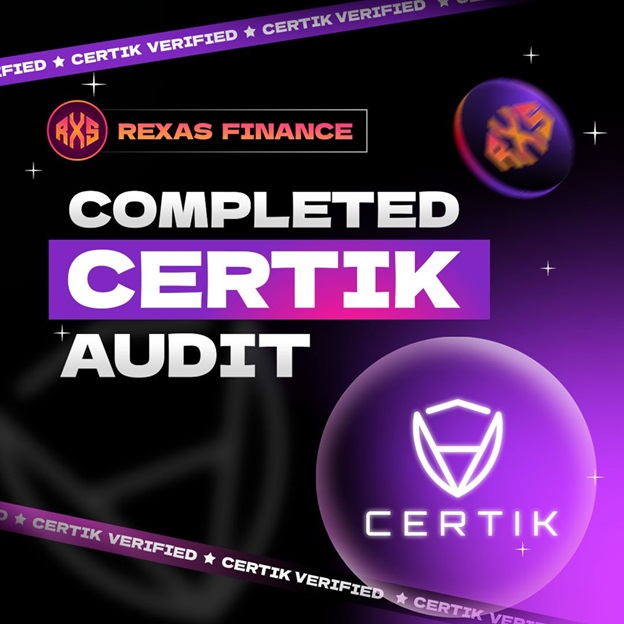
This practicality contrasts with numerous speculative tokens, constituting the basis for the sustainable development. The RXS token is already listed on CoinMarketCap and CoinGecko, and it has undergone security audit by CertiK, thus increasing its credibility and security in the crypto environment.

RXS Presale 93% Sold — Early Investors Lock in Gains Before Launch Price Surge!

The presale’s close to being completed at 92.97% with $48,969,596 collected evidence of the high demand for RXS. This degree of involvement shows that the investors understand the potential of the token to exploit the huge RWA market. The presale cost of $0.20 per token has drawn vast amounts of capital, and at the official launch price of $0.25, early investors will reap instant value increase. This pre-sale success is a good indicator that RXS is set for a huge growth with the help of thriving community and strategic partnerships. The no-VC policy guarantees fair distribution, ruling out mass sell-offs that may jeopardize price stability after the launch.

Apart from tokenization, Rexas Finance has a set of utilities that are meant to increase the value of the ecosystem. The Rexas Launchpad allows crowdfunding of crypto startups and real estate projects, while the AI-powered analytics solutions offer market insights and maximize yield farming prospects. Safety attributes like Rexas AI Shield prevent the users from fraud and hacking creating a trustworthy relationship with them and promoting long-term interaction. These utilities not only make the token more useful but also attract institutional investors who are looking for alternatives to extremely volatile assets such as SHIB. The all-inclusive strategy of integrating RWAs into DeFi places RXS as a game-changing entity in the crypto market.

RXS Set for 17,820% Surge — Don’t Miss the Next Big Crypto Breakout!

The RXS’ 17,820% bull run projection is a reflection of the token’s unique value proposition and increased appetite for asset-backed cryptocurrencies. This prediction, which is reinforced by market analysts and early investors, is propelled by the fact that RXS has an ability to access a multi-trillion market that has real-world applications. The closer it gets to the completion of the presale, the higher the eagerness is to have the token officially listed and traded. The solid fundamentals, useful functionality, and opportune timing indicate that RXS could provide exceptional returns, a reason which makes RXS an attractive investment proposition for those who are seeking to go beyond meme coins like SHIB.
Conclusion

Rexas Finance is on the radar of Shiba Inu traders and greater crypto investors due to its token that is linked to real-world backing and definite growth prospects. 92.97% of its presale is complete and over $49 million raised, the token is poised to take off on its official launch at $0.25 from June 19, 2025. The predicted 17,820% bull run only highlights the potential for the token to mimic or even beat the explosive growth experienced by early SHIB investors.

Website: https://rexas.com

Whitepaper: https://rexas.com/rexas-whitepaper.pdf

Twitter/X: https://x.com/rexasfinance

Telegram: https://t.me/rexasfinance
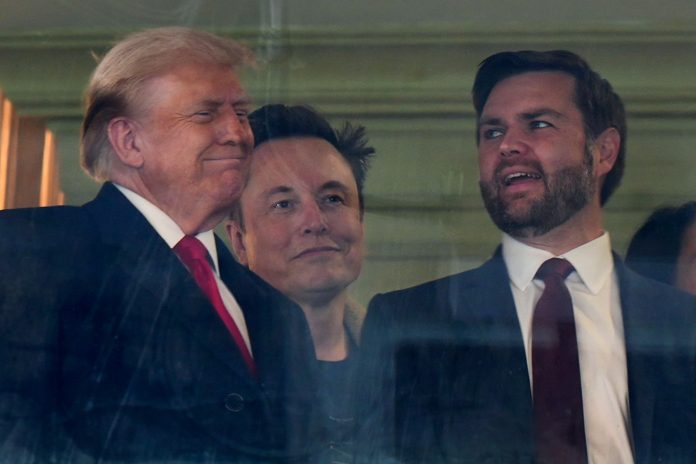
“He’s very disrespectful:” Trump Shuts Door on Musk Amid Fallout That Could Help Democrats and Rebrand Tesla

0

President Donald Trump has ruled out reconciling with Elon Musk, saying he’s not interested in mending their relationship after it dramatically collapsed this week. Speaking to NBC News on Saturday, Trump was blunt when asked if their alliance was over: “I would assume so, yeah.”

The president accused the billionaire of being “disrespectful to the office of the President,” a remark that came just days after Musk publicly criticized Trump’s tax reform bill—legislation Trump has proudly branded the “One Big Beautiful Bill.” That criticism sparked a rapid-fire exchange between the two men on their respective social media platforms, where Trump threatened to terminate government contracts tied to Musk’s businesses. Musk retaliated with a now-deleted post referencing Trump’s alleged ties to the so-called “Epstein files.”

“He’s very disrespectful. You could not disrespect the office of the President,” Trump said in the NBC interview, reaffirming his refusal to make peace.

Although Musk has signaled a willingness to de-escalate—scrubbing posts that included damaging videos and blunt accusations—Trump, known for his deep intolerance for criticism, has shown no interest in reconciliation. His latest comments suggest this split may be permanent.

The high-stakes feud is already rippling through the political and business spheres. Analysts say the very public fallout may inadvertently favor the Democrats by weakening a previously powerful alliance that helped fund and amplify Trump’s messaging. Trump, clearly still stung by the betrayal, warned Musk against backing Democratic candidates in future elections.

“If he does, he’ll have to pay the consequences for that,” Trump said. “Very serious consequences.”

Musk, who poured hundreds of millions into supporting Trump’s 2024 campaign, has since signaled a more hands-off approach. “I do not currently see a reason” to spend on politics, Musk said at the Qatar Economic Forum in May.

While the clash has unsettled markets—Tesla stock and Dogecoin both dipped after Musk’s posts—it may have handed the carmaker something money couldn’t buy: political neutrality.

According to American author and energy analyst Alex Avoigt, the rift has unshackled Tesla from the polarizing image it had gained in recent months.

“Tesla is now once again a brand that can be bought with a clear conscience by Democrats and Republicans alike, and that’s a positive thing,” Avoigt said. “Elon has expressed his negative opinions and feelings towards both parties, making Tesla products neutral and not politically connected. No one needs to justify buying and driving a Tesla anymore.”

Trump’s stance suggests that even if Musk continues to retreat from the spotlight or tempers his commentary, the bridge may already be burned. The president, who has clashed with former allies in the past—such as Jeff Sessions, Rex Tillerson, and even Fox News—rarely circles back to repair relationships once they sour.

Vice President JD Vance tried to strike a middle ground, describing Musk as “one of the most transformational entrepreneurs ever,” but also calling his behavior a “huge mistake.”

“I’m not saying he has to agree with everything… I just think it’s a huge mistake to be at war with the world’s most powerful man,” Vance said during a podcast interview. “Hopefully Elon figures it out and comes back into the fold.”

But as of now, that fold appears firmly shut. And while the political cost to Musk remains unclear, the unintended consequence of rebranding Tesla as a nonpartisan brand may be one upside in an otherwise messy fallout.

Pichai Says AI Is in Its ‘Jagged’ Phase — and It Still Can’t Spell “Strawberry”

0

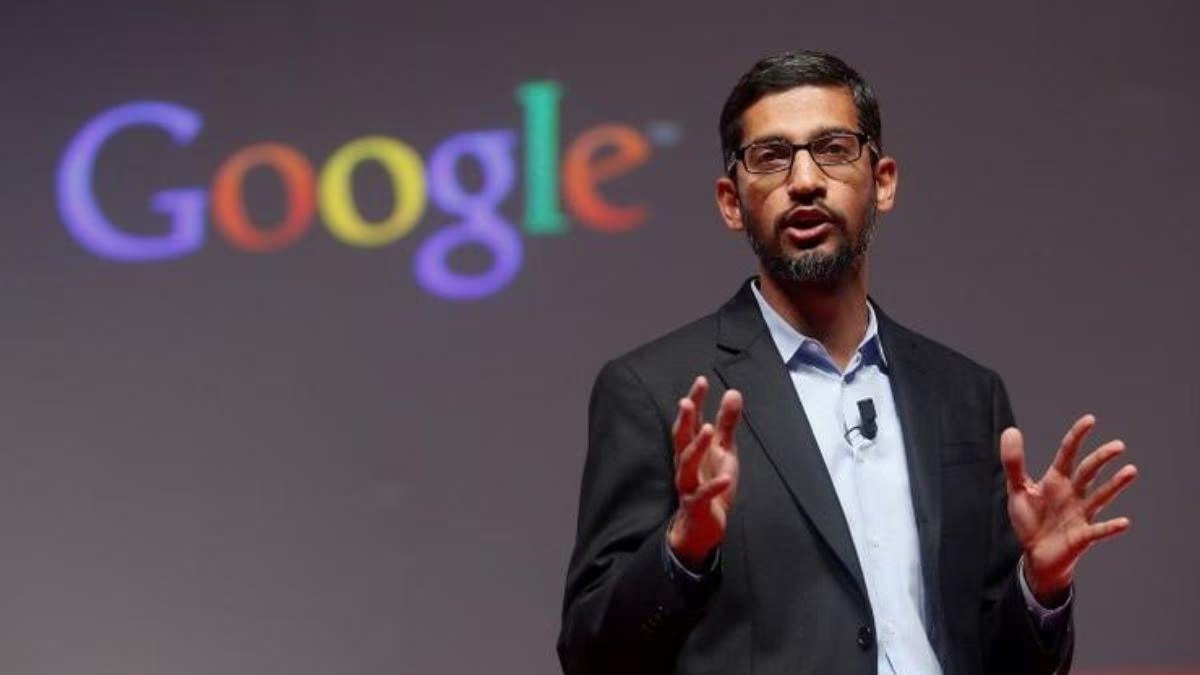
The journey to artificial general intelligence (AGI) is shaping up to be far messier than tech leaders once envisioned. Google CEO Sundar Pichai now describes this moment not as a steady march toward human-level intelligence, but as a bumpy ride filled with brilliant flashes and baffling stumbles — a stage he calls artificial jagged intelligence, or AJI.

Speaking on the Lex Fridman Podcast, Pichai explained that the term AJI captures the uneven development of AI systems — capable of astonishing feats one moment and nonsensical mistakes the next. He credits the phrase either to himself or Andrej Karpathy, the deep learning expert and former OpenAI cofounder.

“You see what they can do and then you can trivially find they make numerical errors or [struggle with] counting R’s in ‘strawberry,’ which seems to trip up most models,” Pichai said. “I feel like we are in the AJI phase where dramatic progress [is happening], some things don’t work well, but overall, you’re seeing lots of progress.”

The comment reflects a broader frustration emerging among both developers and users of advanced AI. The problem isn’t just novelty mistakes — it’s the persistence of a deeper flaw known as hallucination.

Hallucination — where AI models confidently generate false or misleading information — remains one of the most serious unresolved issues in the field. Despite billions of dollars in investment and waves of model upgrades, today’s most advanced systems from OpenAI, Google, and Anthropic continue to hallucinate frequently. These errors are not only embarrassing but potentially dangerous in sensitive use cases like legal advice, healthcare, or journalism.

Even OpenAI CEO Sam Altman, who once described GPT-4 as the most useful tool he’s ever used, recently admitted to being surprised by how stubborn hallucinations have been. Speaking at a private event earlier this year, Altman reportedly said he had expected hallucinations to be significantly reduced in newer iterations — but they weren’t.

The Chicago Sun-Times and the Philadelphia Inquirer recently learned this the hard way after publishing an AI-generated summer reading list that included several non-existent books — a mistake that reignited the debate over editorial responsibility and AI oversight.

Pichai Forecasts AGI by 2030 — Or Something Close

When DeepMind launched in 2010, its founders estimated it would take about 20 years to achieve AGI. Google acquired the lab in 2014, and Pichai says that while the timeline might stretch, we’re likely to see “mind-blowing” breakthroughs across several dimensions by 2030 — even if AGI in the strictest sense isn’t yet realized.

“I would stress it doesn’t matter what that definition is because you will have mind-blowing progress on many dimensions,” he said.

However, he emphasized that by then, the world will need clearer systems for labeling synthetic content to help people “distinguish reality” from AI-generated fiction.

Pichai has been one of the most vocal tech leaders pushing for coordinated global regulation of AI. At the UN’s Summit of the Future in September 2024, he outlined four ways AI could significantly benefit humanity: improving access to knowledge in native languages, accelerating scientific breakthroughs, combating climate change, and powering economic growth.

But he has echoed the call for AI safety, which aligns with the warning that without governance, AI could do more harm than good. He indicated the need for frameworks and safeguards — a point echoed by DeepMind CEO Demis Hassabis, who recently warned about autonomous models being misused by bad actors.

Speaking at the SXSW festival in London, Hassabis emphasized the need for tighter restrictions on access to powerful AI systems, warning that the world is moving too slowly to regulate tools capable of destabilizing entire economies and societies.

“Both of those risks are important,” Hassabis told CNN’s Anna Stewart during the interview. “But a bad actor could repurpose those same technologies for a harmful end… and so one big thing is how do we restrict access to these powerful systems to bad actors, but enable good actors to do many, many amazing things with it?”

Despite these concerns, Pichai remains optimistic. He sees AJI not as a failure, but as the awkward adolescence of a powerful new technology — still learning, still stumbling, but pushing toward a future that could reshape everything.

Meta Admits Smart Glasses Won’t Replace Smartphones Anytime Soon — But Says Adoption Is Growing

0

Meta’s top brass is reining in expectations about the future of smart glasses, noting that its chances of becoming the next means of mobile communication are slim.

Speaking at the Bloomberg Technology Summit in San Francisco on Wednesday, the company’s Chief Technology Officer, Andrew Bosworth, acknowledged that smart glasses — while promising — are nowhere close to replacing smartphones.

“That’s ways off,” Bosworth said. “Smartphones are incredible and it’s not just that they are great devices and convenient. We are used to them.”

According to him, smartphones are deeply entrenched in people’s lives because of their seamless connection to a global software and hardware ecosystem that smart glasses still struggle to tap into.

“There’s an incredibly entangled ecosystem of software connected to the rest of the world around us,” Bosworth said. “So I think that [smart glasses replacing phones] will take a longer journey. The good news is they work really well in concerts,” he added with a smile.

Not Just a Meta View

Bosworth isn’t alone in that assessment. Meta’s CEO Mark Zuckerberg echoed similar sentiments last year, telling The Verge that phones are here to stay — at least for now.

“It’s not like we’re going to throw away our phones,” Zuckerberg said. “But I think what’s going to happen is that, slowly, we’re just going to start doing more things with our glasses and leaving our phones in our pockets more.”

Zuckerberg suggested that 2025 would be a “defining year” to determine if smart glasses could evolve into “the next computing platform,” or if their growth would be “just a longer grind.” The Ray-Ban Meta AI Glasses, Meta’s flagship product in the category, has been well received by early adopters, but it’s still too early to know whether mass consumer behavior will shift.

During his Bloomberg interview, Bosworth also weighed in on Apple’s much-hyped Vision Pro headset. While he praised the engineering behind the device, he criticized its weight, calling it a “rookie mistake.”

“So from an engineering standpoint, it’s wonderful and congratulations to that team,” he said. “From a product standpoint, you can tell it’s their first offering in the space.” He argued that Apple misjudged key aspects of the user experience, particularly in how heavy and awkward the device feels to wear.

“First-generation products are hard. It’s not until the second or third generation that you really figure out and hone the thing, and they made a lot of mistakes in that in terms of weight and where the weight was,” Bosworth noted.

Market Slowly Heating Up for Ray-Ban AI Glasses

Despite skepticism about rapid adoption, Meta’s push into smart glasses is seeing steady momentum. In January, Zuckerberg told investors during the company’s earnings call that Meta’s Ray-Ban smart glasses had become “a real hit.”

EssilorLuxottica, which produces the glasses for Meta, confirmed in February that it had sold 2 million pairs since 2023. Its CEO, Francesco Milleri, said the company is aiming to manufacture up to 10 million units annually for Meta by the end of 2026 — a sign of growing confidence in the category.

Zuckerberg, who sees AI-infused glasses as a key component of future computing, noted that many breakthrough tech products historically hit their stride in their third generation.

“Many breakout products in the history of consumer electronics have sold 5–10 million units in their third generation,” he said.

That benchmark could determine whether AI smart glasses transition from niche gadgets to mainstream devices — or remain a futuristic curiosity in consumers’ accessory drawers. However, Meta appears content with playing the long game, at least, for now.

Lightchain AI Pulls Tactical Accumulation While Shiba Inu Pulls Reactions With Its Latest Meme Trend

0

Shiba Inu continues to pull reactions with its latest meme trend, captivating social feeds and casual traders alike. Meanwhile, Lightchain AI is quietly pulling tactical accumulation from strategic investors who see beyond fleeting hype. With all 15 presale stages completed and the Bonus Round now active, Lightchain AI is building momentum through real milestones and a robust AI-native blockchain architecture.

Featuring a purpose-built virtual machine and a consensus model that rewards meaningful computation, the project is attracting builders and buyers focused on long-term value. As the July 2025 mainnet launch approaches, Lightchain AI’s steady growth signals serious conviction over short-lived buzz.

Shiba Inu Leverages Viral Trends to Maintain Short-Term Visibility

Shiba Inu (SHIB) has been master of leveraging trending topics to maintain?short-term exposure in the highly volatile cryptocurrency space. The recent 137% single-day pump of the token was mainly driven?by the recent whale action, as well as the surge in large transactions, which shows just how alert it is to market conditions.

Key to SHIB’s?approach is its strong presence on social media. Social media platforms such as Twitter, Reddit and Discord have also played a vital role in the?formation of the “Shib Army” – an engaged group dedicated to supporting the coin with memes, discussions and coordinated efforts. This crowd-driven method was instrumental in provoking speculation and sustaining SHIB’s dominance, and it should?not be neglected by anyone.

In addition, SHIB’s ecosystem?growth such as Shibarium and partnership pushes may have also kept it afloat. Both of these?developments increase utility and interest from institutions and build on the momentum that SHIB already holds in the crypto space.

Ultimately, Shiba Inu’s capacity to capitalize on viral trends, along with rapid community and ecosystem growth, has played a major role in its short-term success and?continued presence in the cryptocurrency landscape.

Lightchain AI Sees Strategic Accumulation From Market-Savvy Buyers

Lightchain AI is seeing steady strategic accumulation from market-savvy buyers who recognize substance over speculation. With all 15 presale stages completed and a $21 million raise secured, the Bonus Round offers fixed pricing ahead of mainnet—drawing calculated entries from wallets aligned with long-term growth.

Buyers are responding to a platform backed by utility: the AIVM enables on-chain AI execution, while sharding ensures scalable performance. Zero-Knowledge Proofs protect data integrity, and democratized governance offers transparent, token-holder-driven decisions. The original 5% Team Allocation has been fully removed and redirected to grants and infrastructure, reinforcing builder-first values.

With a $150,000 grant fund already live and public GitHub access coming at launch, Lightchain AI is proving that real tech, transparency, and smart accumulation go hand in hand.

Smart Moves, Not Memes — Lightchain AI is Redefining the Game

Lightchain AI is making waves, but not with fleeting meme-driven hype—it’s all about smart, strategic moves. The Meme Launchpad is live, welcoming creators, but there’s more to the story. Backed by real infrastructure, grants, and powerful native tools, every launch has purpose and impact.

With over $21 million raised, decentralized nodes already in motion, and public GitHub access on the way, Lightchain AI is attracting investors and builders ready to think big. This isn’t about chasing trends—it’s about structured growth and a vision for the future. Here, momentum isn’t manufactured—it’s earned.

https://lightchain.ai

https://lightchain.ai/lightchain-whitepaper.pdf

https://x.com/LightchainAI

https://t.me/LightchainProtocol