DD
MM
YYYY

PAGES

DD
MM
YYYY

spot_img

PAGES

Home Blog Page 1057

While BNB Trades Sideways, Lightchain AI’s Smart Consensus Draws Whales and Retail Buyers Alike

0

While BNB continues to trade sideways in a cautious market, Lightchain AI is drawing attention from both whale wallets and everyday retail buyers—and it’s not by chance. With its July 2025 mainnet launch approaching and the Bonus Round of its presale currently live, Lightchain AI stands out with a consensus model built for more than just validation.

Its Proof of Intelligence mechanism rewards real AI computation, giving value to meaningful participation across the network. Combined with a dedicated virtual machine for AI tasks, the platform is designed for intelligent scalability. In a market full of noise, Lightchain AI offers builders something real.

BNB Holds Flat as Market Looks for New Catalysts

As of May 25, 2025, Binance Coin (BNB) price is priced at around $658.93 with a slight change to show, as the general market hunts for new waves of?catalysts.

Although BNB is the backbone of the Binance ecosystem?and the BNB Chain, investor sentiment is conservative. Analysts?are noting that a break above the resistance at $670 may spark a new wave of bull-side momentum. However,?the team at Standard Chartered forecasts BNB could go as high as $1,275 by the end of the year, influenced by Binance’s sustained dominance and ecosystem expansion.

But in the near term, the price action for BNB is likely to range between $620?and $675, with potential for accumulation unless the recent developments change abruptly. Traders will watch out for fresh news, which will emerge as triggers influencing?BNB’s trend.

Lightchain AI’s Intelligent Consensus Gains Broad Market Attention

Lightchain AI’s intelligent consensus mechanism is gaining broad market attention for reimagining how decentralized networks validate activity. Its Proof of Intelligence (PoI) rewards nodes not for idle staking or brute-force mining, but for completing meaningful AI computations like training, inference, and optimization.

This shift introduces real utility into consensus and aligns network growth with valuable outcomes. Traders and developers are increasingly drawn to Lightchain AI’s transparent, performance-based model—enhanced by Zero-Knowledge Proofs for privacy and dynamic pricing for efficiency.

As the Bonus Round continues and developer activity ramps up through its live portal, PoI stands out as a game-changer, signaling Lightchain AI’s ascent in next-generation blockchain infrastructure.

From Whales to Newbies—All Eyes Are on Lightchain AI

Lightchain AI is turning heads in 2025, capturing the attention of seasoned investors and first-timers alike. With a staggering $20.9 million raised during its presale at just $0.007125 per token, this project is on fire. What’s the buzz about? Lightchain AI’s game-changing blend of artificial intelligence and blockchain technology delivers scalable, real-world solutions that set it apart in the crowded crypto space.

As the final presale stage heats up, excitement is at an all-time high. Don’t miss your chance to join the next big thing in crypto and unlock the potential for major returns.

https://lightchain.ai

https://lightchain.ai/lightchain-whitepaper.pdf

https://x.com/LightchainAI

https://t.me/LightchainProtocol


DFSA Recognition of RLUSD Strengthens Ripple Position In The Stablecoin Market

0

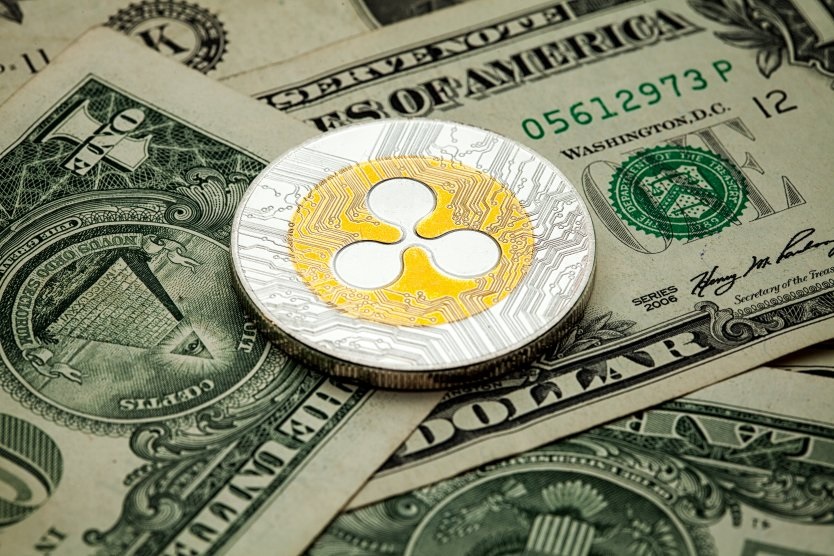
Ripple’s RLUSD stablecoin has been officially recognized as a compliant crypto token by the Dubai Financial Services Authority (DFSA) for use within the Dubai International Financial Centre (DIFC). This approval, announced on June 3, 2025, marks a significant milestone for Ripple, enabling RLUSD to be integrated into its DFSA-licensed payment solutions and used by nearly 7,000 registered businesses in the DIFC for virtual asset services like payments and treasury management.

RLUSD, backed 1:1 by USD reserves and issued on the XRP Ledger and Ethereum, is designed for enterprise-grade utility, focusing on efficient cross-border payments. The move aligns with Dubai’s ambition to become a global hub for digital assets, supported by a 55% year-on-year increase in stablecoin transactions in the UAE in 2024. Ripple’s partnerships with local entities like Zand Bank, Mamo, and Ctrl Alt for real estate tokenization further strengthen its regional presence.

RLUSD’s approval for use in the DIFC enables Ripple to integrate the stablecoin into its payment solutions for nearly 7,000 businesses, enhancing its utility for cross-border payments and treasury management. This strengthens Ripple’s position as a leader in enterprise blockchain solutions. As RLUSD is issued on the XRP Ledger and Ethereum, this recognition could drive increased activity on the XRP Ledger, potentially boosting XRP’s market relevance despite ongoing regulatory challenges elsewhere.

Ripple’s partnerships with UAE-based entities like Zand Bank and Mamo, and its role in tokenizing real estate with Ctrl Alt, signal deeper market penetration in the Middle East, a region with growing crypto adoption (55% year-on-year stablecoin transaction growth in the UAE in 2024). The DFSA’s approval positions Dubai as a forward-thinking regulator, fostering a crypto-friendly environment in the DIFC. This aligns with the UAE’s goal to become a global digital asset hub, potentially attracting more blockchain firms.

Stablecoin integration in payments and treasury operations could streamline financial processes for DIFC businesses, reducing costs and settlement times for cross-border transactions, a key feature of RLUSD’s design. RLUSD’s enterprise focus and regulatory compliance in Dubai could challenge dominant stablecoins like Tether (USDT) and USD Coin (USDC), especially in institutional use cases. Its 1:1 USD backing and transparency (with monthly attestations) may appeal to risk-averse businesses.

The approval underscores the growing acceptance of stablecoins as a bridge between traditional finance and crypto, particularly in regions with progressive regulations. Dubai’s embrace of RLUSD contrasts with stricter regulatory environments like the United States, where Ripple faces ongoing SEC scrutiny over XRP’s status. The UAE’s clear framework under the DFSA highlights a divide between jurisdictions fostering crypto innovation (e.g., UAE, Singapore) and those imposing stringent rules (e.g., U.S., parts of Europe).

Countries with favorable regulations are attracting blockchain firms, while restrictive regimes may push companies like Ripple to prioritize markets like the UAE, potentially slowing crypto development in less welcoming regions. RLUSD’s focus on enterprise use cases (e.g., payments, treasury) contrasts with stablecoins like USDT, which dominate retail and decentralized finance (DeFi) markets. This creates a divide between institutional adoption (fueled by regulatory clarity) and retail-driven ecosystems.

The Middle East’s rapid stablecoin adoption (evidenced by the UAE’s 55% transaction growth) contrasts with slower uptake in regions with regulatory uncertainty or limited infrastructure, deepening global disparities in crypto access. RLUSD’s entry intensifies competition with USDT and USDC, but its success hinges on capturing institutional trust. Dubai’s approval gives Ripple a first-mover advantage in a key financial hub, but scaling globally will require navigating varied regulatory landscapes.

RLUSD’s integration into DIFC businesses bridges crypto and traditional finance, but it also underscores a divide between blockchain-native solutions and legacy systems, which may resist adoption due to inertia or compliance concerns. The DFSA’s recognition of RLUSD strengthens Ripple’s position in the stablecoin market and bolsters Dubai’s status as a crypto hub, with implications for faster, cheaper cross-border payments and increased blockchain adoption in the region.

However, it also highlights a global divide: progressive jurisdictions like the UAE are accelerating crypto integration, while restrictive ones lag, creating uneven innovation and adoption landscapes. Ripple’s strategic focus on enterprise solutions and regional partnerships could give RLUSD a competitive edge, but scaling globally will require navigating this regulatory and adoption divide.

Proposal To End ApeCoin DAO And Launch ApeCo Could Reshape Yuga Labs’ Ecosystem

0

Yuga Labs CEO Greg Solano proposed an Ape Improvement Proposal (AIP) to dissolve the ApeCoin DAO and replace it with a new entity called ApeCo. The proposal, titled “Sunsetting the DAO and Launching ApeCo,” aims to address inefficiencies in the DAO’s governance, which Solano described as “sluggish, noisy, and often unserious governance theater” that has funded “vanity proposals and low-impact initiatives.” If approved, ApeCo would take over all DAO assets, including over a billion APE tokens, intellectual property, and infrastructure, except for funds allocated to staking contracts (11.25 million APE) and legal or transitional costs (10 million APE).

ApeCo would focus on three pillars: ApeChain, Bored Ape Yacht Club (BAYC), and the Otherside metaverse, prioritizing high-quality projects and streamlined operations. The proposal requires review by the ApeCoin DAO Special Council and a community vote, with voting periods opening on the first and third Thursdays of each month. Community sentiment on X and the ApeCoin forum leans heavily in favor, though some, like user Lanzer, criticize it as a potential power grab with “bad optics.” ApeCoin’s price dropped over 7% to $0.66 following the announcement, reflecting market uncertainty.

The proposal by Yuga Labs CEO Greg Solano to dissolve the ApeCoin DAO and replace it with ApeCo carries significant implications for the ApeCoin ecosystem, its community, and the broader NFT and Web3 space. The transition from a DAO—a decentralized, community-governed structure—to ApeCo, a corporate entity controlled by Yuga Labs, could reduce community influence over ApeCoin’s future. ApeCo’s leadership would likely streamline decision-making but at the cost of the DAO’s democratic ethos, which was a key selling point for Web3 enthusiasts.

Solano argues that the DAO’s inefficiencies (e.g., slow governance, low-impact proposals) have hindered progress. ApeCo could enable faster, more focused development of projects like ApeChain, BAYC, and Otherside, potentially strengthening Yuga Labs’ competitive position in the NFT and metaverse markets. Centralization may alienate community members who valued the DAO’s participatory model, potentially eroding trust and engagement, especially among those who see this as Yuga Labs consolidating power over a billion-dollar asset pool.

The 7% price drop to $0.66 reflects market uncertainty about the proposal’s outcome and its effect on ApeCoin’s utility. A successful transition to ApeCo could stabilize or boost the token’s value if projects deliver, but failure to execute or community backlash could deepen losses. Transferring over a billion APE tokens and other assets to ApeCo raises questions about transparency and allocation. The exclusion of staking and transitional funds (21.25 million APE) from the transfer suggests some community protections, but the scale of assets involved could spark concerns about mismanagement or favoritism.

Prioritizing ApeChain, BAYC, and Otherside could drive innovation and adoption, but it may sideline smaller community-driven initiatives previously funded by the DAO, potentially limiting ecosystem diversity. ApeCo’s top-down approach could eliminate the “governance theater” Solano criticized, but it risks reducing accountability. Without the DAO’s voting mechanisms, community members may have less recourse to challenge decisions.

The proposal’s fate hinges on the ApeCoin DAO Special Council’s review and a community vote. The voting schedule (first and third Thursdays monthly) gives the community a say, but the process’s outcome could deepen divides if perceived as rushed or manipulated. Dissolving a DAO and transferring its assets to a new entity involves complex legal and technical challenges. Mishandling this could lead to regulatory scrutiny, lawsuits, or operational disruptions, especially given the DAO’s global stakeholder base.

The proposal fuels debates about the sustainability of DAOs as governance models. If ApeCoin DAO—backed by a major player like Yuga Labs—cannot function effectively, it may cast doubt on other DAO-based projects, pushing Web3 toward hybrid or centralized models. As a leading NFT brand, Yuga Labs’ move could influence perceptions of NFT-related tokens and projects. A successful pivot to ApeCo might bolster confidence in Yuga’s ecosystem, while failure could further dampen enthusiasm in an already bearish NFT market.

Many community members agree with Solano’s critique of the DAO’s inefficiencies. Posts on X and forum comments highlight frustration with “vanity proposals” and governance gridlock, with users like @ApeCoinHodler (X) calling the DAO “a mess that funds nonsense.” Supporters see ApeCo as a way to refocus on high-impact projects like ApeChain and Otherside. This group likely includes investors and BAYC holders who prioritize financial returns and project delivery over ideological commitments to decentralization. They view Yuga Labs’ leadership as better equipped to navigate the competitive Web3 landscape.

Forum polls and X discussions show strong support, with some estimating 70-80% community approval based on early reactions. Supporters argue that Yuga Labs’ track record with BAYC justifies trusting them with ApeCo. Critics, such as forum user Lanzer, view the proposal as a “power grab” with “bad optics.” They argue that Yuga Labs is undermining the DAO’s decentralized principles to seize control of its assets, potentially marginalizing smaller stakeholders. On X, users like @Web3Purist questions e transparency of ApeCo’s governance and asset management.

Opponents value the DAO’s community-driven model, despite its flaws, and see its dissolution as a betrayal of Web3’s ethos. They worry that ApeCo will prioritize Yuga Labs’ interests over the broader ecosystem, reducing ApeCoin’s utility for non-BAYC holders. This group includes decentralization advocates, smaller token holders, and Web3 purists who see DAOs as experiments in collective governance. They may lack the voting power of larger stakeholders but are vocal on platforms like X and the ApeCoin forum.

Some community members are withholding judgment until more details emerge about ApeCo’s structure, leadership, and roadmap. On X, users like @CryptoApe123 ask for clarity on how ApeCo will engage the community post-transition. This group acknowledges the DAO’s flaws but wants assurances that ApeCo will deliver better outcomes. They are swayed by Yuga Labs’ promise of streamlined projects but remain cautious about centralization risks.

Undecided voters could tip the scales in the upcoming community vote, especially if Yuga Labs addresses concerns about transparency and community involvement. The debate pits Web3 idealists, who champion decentralization, against pragmatists, who prioritize efficiency and results. This reflects broader tensions in the crypto space about balancing principles with practicality.

Large stakeholders (e.g., Yuga Labs, BAYC whales) likely hold disproportionate voting power in the DAO, potentially sidelining smaller token holders. This fuels perceptions of an uneven playing field. Supporters trust Yuga’s vision, citing its success with BAYC, while skeptics point to past controversies (e.g., Otherside land sale issues) as reasons for caution.

The proposal to end ApeCoin DAO and launch ApeCo could reshape Yuga Labs’ ecosystem, with potential to streamline operations and refocus on high-impact projects. However, it risks alienating decentralization advocates and eroding community trust if mishandled. The divide—between supporters seeking efficiency and skeptics defending Web3 principles—highlights broader challenges in balancing governance, innovation, and community engagement in Web3. The upcoming vote will be a critical test of Yuga Labs’ ability to unify stakeholders and deliver on its promises.

JD Vance Says It’s “A Huge Mistake” for Musk to Go After Trump, Calls for Truce as The Clash Draws Business Heavyweights Into the Fray

0

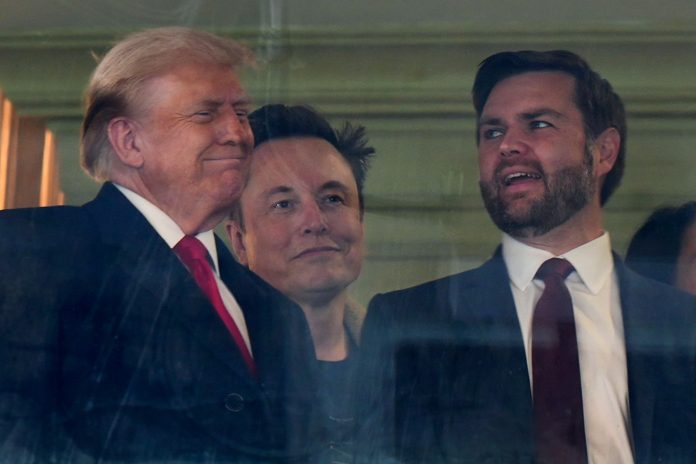
Vice President JD Vance is urging restraint amid the deepening feud between President Donald Trump and Elon Musk, warning that the high-profile clash between the world’s most powerful political leader and the world’s richest man risks harming the country if allowed to escalate unchecked.

Vance addressed the matter in an episode of This Past Weekend with Theo Von, recorded Thursday as the row was intensifying. Musk had earlier denounced Trump’s signature infrastructure and manufacturing bill as a “disgusting abomination,” prompting a wave of online backlash and a forceful response from the president during a White House event with German Chancellor Friedrich Merz.

“I think it’s a huge mistake for him to go after the president like that,” Vance said, emphasizing that while Musk is free to disagree, the public nature of the fight was damaging. “I’m not saying he has to agree with everything… I just think it’s a huge mistake for the world’s wealthiest man… to be at war with the world’s most powerful man.”

Vance acknowledged Trump had grown “a little frustrated” by Musk’s criticism but insisted the conflict could still be defused, calling it “bad for the country” and urging Musk to “come back into the fold.”

The spat, which began with policy criticism, soon spiraled into personal jabs. Trump, while initially muted, fired back Thursday, saying Musk had benefited enormously from the administration’s support.

“I’m very disappointed in Elon. I’ve helped Elon a lot,” Trump said, adding that Musk “never had a problem” with the bill while working closely with the administration, only to turn critical after stepping down from his advisory role.

Musk then launched a volley of posts on X (formerly Twitter), accusing the president of ingratitude and claiming Trump would have lost the 2024 election without his help. The billionaire even warned of “misleading spin” and hinted at deeper issues, before later deleting a controversial post in which he suggested Trump appeared in sealed Jeffrey Epstein files—implying that was why the documents hadn’t been made public. While the post was later taken down, it added fuel to a growing fire and drew sharp reactions online.

Business Titans Weigh In

The public feud has alarmed several prominent figures in business and tech, prompting calls for both sides to stand down.

Billionaire hedge fund manager Bill Ackman took to X to express support for both Trump and Musk, urging them to resolve their differences for the sake of national stability.

“We are much stronger together than apart,” Ackman wrote in a widely shared post. “Make peace for the benefit of our country.” Musk, in a notable shift in tone, replied, “You’re not wrong.”

Ackman has been a vocal supporter of Trump’s 2024 re-election bid, and his comments suggest a growing concern within elite financial circles over the public brawl between two of the country’s most influential figures.

Paul Graham, cofounder of Y Combinator and a revered figure in Silicon Valley, also weighed in on the matter: “A lot of people seem to be treating this as if it were just a beef. But the underlying allegation is a very serious one. If it’s true, Trump is surely going to have to resign,” he said.

Graham didn’t clarify which allegation he was referring to, but his comment is believed to be about the Epstein file.

Signs of a Thaw

Despite the heated exchange, there were signs late Friday that both parties were seeking to ease tensions. The White House’s rapid response team posted a clip of Trump aboard Air Force One, saying, “I wish Elon well.” Musk responded hours later with a one-word post: “Likewise.”

Though brief, the exchange suggested both men were open to cooling the rhetoric, particularly as pressure mounted from allies and business leaders to lower the temperature.

Musk had responded with “You’re not wrong,” when Ackman called on the two to put aside their differences and “make peace for the benefit of our country.”

The dispute, while personal on the surface, has far-reaching implications. Trump and Musk had cultivated a working alliance since Musk’s endorsement of Trump’s 2024 campaign. Their partnership represented a potent combination of political influence and technological power—one that could shape everything from energy and infrastructure policy to AI regulation and space exploration.

Now, the split threatens to fracture that alignment. Trump, whose administration has been heavily invested in anti-environmental policies, also hinted at reviewing Musk’s federal contracts in response to the Tesla CEO’s criticisms.

Vance, trying to keep the damage contained, said both Trump and Musk play critical roles in America’s future.

IBIT Entry Into The Top 25 ETFs By AUM Marks A Turning Point For Bitcoin Integration

0

The iShares Bitcoin Trust ETF (IBIT) has indeed made significant strides, entering the top 25 ETFs by assets under management (AUM). As of January 2025, IBIT has amassed over $52.9 billion in AUM, making it the largest spot Bitcoin ETF in the U.S. and a standout among all ETFs. This milestone was achieved in just 227 trading days, breaking records previously set by traditional ETFs like the iShares Core MSCI Emerging Markets ETF (IEMG).

IBIT’s rapid growth is attributed to its high liquidity, strong institutional support from BlackRock, and significant inflows, with nearly $38 billion in net inflows since its launch on January 11, 2024. It has outperformed competitors like the Grayscale Bitcoin Trust (GBTC), which saw outflows of over $21 billion, and even surpassed gold ETFs in AUM within its first year.

Other spot Bitcoin ETFs, such as Fidelity’s Wise Origin Bitcoin Fund (FBTC) with nearly $20 billion in AUM, ARK 21Shares Bitcoin ETF (ARKB), and Bitwise Bitcoin ETF (BITB), also rank among the top 20 ETF launches by AUM, highlighting the growing mainstream adoption of Bitcoin through regulated investment vehicles. The iShares Bitcoin Trust ETF (IBIT) entering the top 25 ETFs by AUM, with over $52.9 billion as of January 2025, carries significant implications for the financial landscape and highlights a growing divide in investor sentiment and market dynamics.

IBIT’s rapid rise signals increasing institutional and retail acceptance of Bitcoin as a legitimate asset class. Its backing by BlackRock, a titan in asset management, lends credibility, encouraging traditional investors to allocate capital to crypto through regulated vehicles like ETFs. The ETF’s success, alongside other Bitcoin ETFs like FBTC ($20 billion AUM), reflects a shift in portfolio diversification strategies, with Bitcoin now competing with traditional assets like gold (IBIT surpassed gold ETFs in AUM within a year).

IBIT’s high liquidity (average daily trading volume of $1.2 billion in its first year) makes Bitcoin more accessible to investors who prefer ETFs over direct crypto ownership, reducing barriers like managing private keys or navigating crypto exchanges. This liquidity also attracts institutional investors, such as hedge funds and pension funds, potentially stabilizing Bitcoin’s price volatility over time.

The success of spot Bitcoin ETFs, particularly IBIT, underscores the SEC’s approval of these products in January 2024 as a pivotal moment. It has spurred competition, with 12 spot Bitcoin ETFs now managing a combined $74.6 billion in AUM by January 2025. It may pressure regulators to approve similar products, like spot Ethereum ETFs, or expand crypto-related financial instruments, further integrating digital assets into traditional markets.

IBIT’s inflows ($38 billion since launch) indicate significant capital flowing into Bitcoin, potentially driving price appreciation. Bitcoin’s market cap grew to $1.92 trillion by early 2025, reflecting a 128% annualized return since IBIT’s inception. This growth benefits early adopters and institutional investors but could widen wealth gaps if retail investors are slow to participate or lack access.

IBIT’s success is driven largely by institutional inflows, with BlackRock’s marketing and infrastructure catering to large players. This gives institutions an edge in capturing Bitcoin’s upside, potentially marginalizing retail investors who may face higher fees or lack access to sophisticated investment vehicles. Retail investors, while benefiting from ETF accessibility, may still be hesitant due to Bitcoin’s volatility (e.g., a 20% drop in August 2024) or lack of financial education about crypto. This creates a knowledge and access divide.

Some in the crypto community view ETFs like IBIT as contrary to Bitcoin’s decentralized ethos, arguing they centralize ownership through custodians like Coinbase (which holds IBIT’s Bitcoin). They fear this could lead to market manipulation or dilute Bitcoin’s original purpose as a peer-to-peer currency. Wall Street’s embrace of Bitcoin via ETFs represents a co-opting of crypto into the existing financial system, prioritizing profit over ideological purity. This divide fuels debates about whether ETFs undermine Bitcoin’s core principles.

The rapid AUM growth of IBIT and other ETFs benefits wealthy investors and institutions with early exposure, while retail investors or those in developing regions may miss out due to limited access to U.S.-based ETFs or high minimum investments. This exacerbates global wealth disparities. IBIT’s dominance contrasts with outflows from competitors like Grayscale’s GBTC ($21 billion in outflows), highlighting a divide in investor preference. IBIT’s low fees (0.25%) and BlackRock’s reputation give it an edge over higher-fee funds like GBTC (1.5%), creating a winner-takes-most dynamic in the Bitcoin ETF space.

IBIT’s entry into the top 25 ETFs by AUM marks a turning point for Bitcoin’s integration into mainstream finance, boosting liquidity, institutional adoption, and market growth. However, it also deepens divides between institutional and retail investors, crypto purists and traditional finance, and winners and losers in the ETF market. These tensions reflect broader questions about Bitcoin’s role—whether as a revolutionary asset or a co-opted financial product—and who stands to benefit most from its rise.