DD
MM
YYYY

PAGES

DD
MM
YYYY

spot_img

PAGES

Home Blog Page 1061

Reddit Sues Anthropic for Scraping Its Data Without License, Escalating AI Copyright Wars

0

Reddit has filed a federal lawsuit against artificial intelligence startup Anthropic, accusing it of unlawfully using Reddit users’ content to train AI models without any licensing agreement — a legal challenge that deepens the growing rift between content owners and AI developers over data ownership and intellectual property rights.

The complaint, filed Wednesday in the U.S. District Court for the Northern District of California, alleges that Anthropic scraped Reddit’s data more than 100,000 times, ignoring the company’s robots.txt protocol and a direct warning that it did not have authorization to access or use the platform’s content. Reddit claims the scraping continued even after Anthropic told the company in 2024 that it had blocked its bots.

Reddit says the AI startup exploited this data for “billions of dollars” in value, using it to train its language models — a move Reddit argues was done without consent and in violation of its user agreement. The company is demanding compensatory damages and restitution and is also seeking an injunction to prevent Anthropic from using Reddit content in the future.

“We will not tolerate profit-seeking entities like Anthropic commercially exploiting Reddit content for billions of dollars without any return for redditors or respect for their privacy,” said Ben Lee, Reddit’s chief legal officer, in a statement to TechCrunch.

Anthropic responded to the lawsuit in a statement, saying: “We disagree with Reddit’s claims and will defend ourselves vigorously,” according to spokesperson Danielle Ghighlieri.

This legal clash makes Reddit the first Big Tech platform to sue an AI model developer over training data. But it is far from the first entity to raise the alarm. The New York Times filed a high-profile lawsuit against OpenAI and Microsoft in December 2023, claiming the companies used millions of its articles without compensation or permission to train generative AI models like ChatGPT and Copilot.

The Times’ complaint argued that OpenAI’s models could regurgitate near-verbatim excerpts from its articles, undermining both its journalistic product and subscription business. That case has become a watershed moment in the debate over AI and copyright, as it tests whether AI companies can freely scrape and repurpose content under the guise of “fair use.”

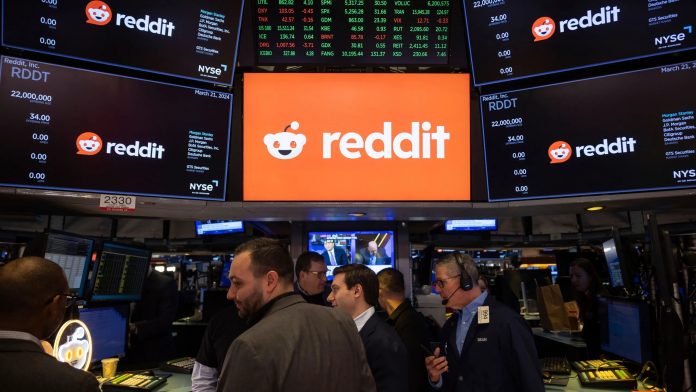
Reddit, which is preparing for an IPO, has meanwhile positioned itself as willing to license its vast archive of user-generated data — under controlled terms. It has inked training deals with OpenAI and Google, allowing them access to Reddit posts, but says those partnerships include specific provisions designed to protect users’ privacy and intellectual property.

Sam Altman, OpenAI’s CEO, owns 8.7 percent of Reddit, making him the third-largest shareholder in the company.

The core issue in Reddit’s case, as in many other lawsuits against AI firms, is the unlicensed use of creative or proprietary content to build commercially valuable AI systems. Similar legal complaints have been filed by authors like Sarah Silverman, artists, and music publishers against a wide range of AI developers, who are increasingly being asked to justify where and how they collect their training data.

With courts now being asked to define the boundaries of “fair use” in the context of large-scale scraping and machine learning, legal experts believe that these lawsuits could reshape the regulatory and financial landscape for the AI industry. If plaintiffs like Reddit or The New York Times succeed, AI developers may be forced to either pay for the data they use or significantly restrict their access to publicly available content.

As public concern grows over the unchecked use of intellectual property in AI development, these legal battles are poised to set the precedent for how future chatbots are trained, and whether the internet’s data — from news stories to social media posts — remains free for AI consumption or protected under copyright and data rights law.

Auto Industry Braces for Production Crisis as China’s Rare Earth Curbs Strain Global Supply Chains

0

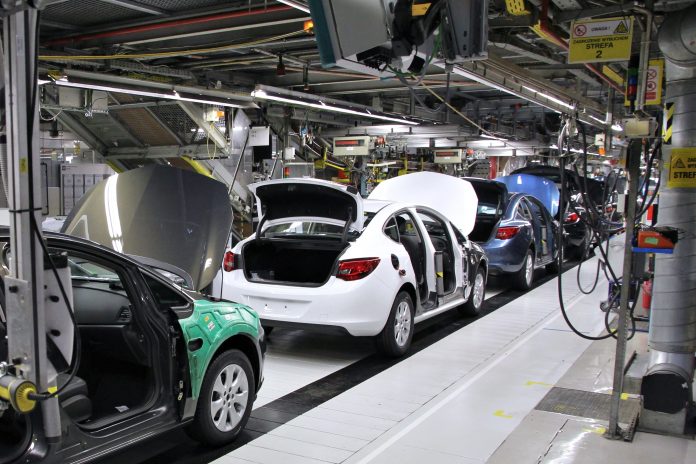
The global auto industry is inching toward a production crisis as China’s export restrictions on rare earth minerals and magnets begin to bite, halting some manufacturing lines in Europe and prompting dire warnings from US automakers.

The restrictions, in place since early April, require companies to obtain a license to export key materials used in electric vehicles and other critical technologies. But only about 25 percent of license requests have been approved, according to Nikkei, with others held up in bureaucratic limbo as tensions between Washington and Beijing deepen.

Auto parts suppliers across Europe have already started shutting down operations due to the shortage of rare earth components, according to the European Association of Automotive Suppliers (CLEPA).

“With a deeply intertwined global supply chain, China’s export restrictions are already shutting down production in Europe’s supplier sector,” said Benjamin Krieger, CLEPA’s secretary general. “We urgently call on both the EU and Chinese authorities to engage in a constructive dialogue to ensure the licensing process is transparent, proportionate, and aligned with international norms.”

In the United States, executives in the auto sector are warning that production cuts could follow within weeks unless supplies resume. Rare earth magnets are essential to electric and hybrid motors but are also found in traditional components like catalytic converters and electronic seats. Their absence could stall not just EV output, but wide swaths of conventional car production as well.

The export restrictions are part of China’s tit-for-tat response to US tariffs introduced by President Donald Trump. While many of those tariffs have been temporarily paused, China has not reversed its curbs on rare earth exports. That decision has made rare earth minerals a central lever in trade negotiations, and many analysts believe it gives Beijing the upper hand. China controls more than 90 percent of the global rare earth supply chain, leaving Western industries deeply exposed.

Trump on Thursday revealed that he had held his first direct conversation with Chinese President Xi Jinping since returning to the White House in January, describing the call as “very positive.” In a post on his social media platform, Trump said the hour-and-a-half-long discussion had led to a breakthrough, with both sides agreeing to hold trade talks aimed at resolving the standoff over tariffs and the supply of rare earths.

“Our respective teams will be meeting shortly at a location to be determined,” Trump wrote.

The US delegation will include Treasury Secretary Scott Bessent, Commerce Secretary Howard Lutnick, and US Trade Representative Jamieson Greer.

Trump also disclosed that Xi “graciously” invited him and First Lady Melania Trump to China and that he had extended a reciprocal invitation for the Chinese leader to visit the United States. While no formal meetings have been scheduled, expectations are building that rare earth access will be front and center in the upcoming talks.

In the meantime, manufacturers are bracing for worsening conditions. The New York Times reported this week that even Chinese magnet producers have begun pausing operations due to the licensing bottleneck, raising concerns of deeper shortages in the months ahead.

Beyond the auto sector, the restrictions threaten to disrupt industries from consumer electronics to defense systems. But carmakers — particularly those dependent on electric vehicle production — remain the most exposed, especially as they navigate the broader fallout of shifting trade policies under Trump’s renewed administration.

With negotiations pending, automakers on both sides of the Atlantic are in a holding pattern, anxiously awaiting any signal that rare earth shipments might resume.

Avalanche Gains Speed, But Lightchain AI Gains Value With AI Logic and a Surging Presale Momentum

0

Avalanche may be gaining speed, but Lightchain AI is gaining something far more lasting—real value through AI logic and accelerating presale momentum.

With all 15 presale stages completed and the Bonus Round now live, Lightchain AI is attracting developers, builders, and investors who recognize its long-term potential. The platform’s AI-native infrastructure includes a virtual machine purpose-built for intelligent workloads and a consensus model that rewards meaningful computation.

As the July 2025 mainnet launch nears, Lightchain AI continues to move with purpose—quietly building a scalable, utility-driven ecosystem. While others race for speed, Lightchain AI is constructing the architecture for intelligent growth.

Avalanche Impresses With Network Speed and Performance

Avalanche?(AVAX) is a Layer 1 protocol known for its unparalleled speed and scalability. Process in excess of?4,500 transactions per second (TPS) and achieve transaction finality in less than 2 seconds, this differentiates Avalanche from others.

This speed characteristic is due to its unique design of having three chains that work together: X-Chain for assets creation and trading, the C-Chain for smart contracts, and the P-Chain for coordinating validators?and subnets. The?project’s unique consensus method- the fusion of classical and Nakamoto’s protocols, guarantees both high speed and security.

Avalanche’s support for the Ethereum Virtual?Machine (EVM) also makes it easy to interface with developers already familiar with Ethereum, and thereby strengthens its play in the dapp ecosystem.

Lightchain AI Adds Real Value Through Built-In AI Logic

Lightchain AI delivers real value by embedding AI logic directly into its protocol—making intelligence a native feature, not an afterthought. Unlike traditional blockchains that rely on external systems for AI integration, Lightchain introduces the Artificial Intelligence Virtual Machine (AIVM), capable of executing complex AI tasks like model training and inference on-chain.

This logic is enhanced by the Transparent AI Framework, ensuring all outputs are verifiable and auditable. Developers benefit from dynamic gas optimization, allowing cost-effective deployment of AI-driven dApps.

Combined with a dedicated developer portal, APIs, and governance tools, Lightchain AI enables smarter execution, real-time responsiveness, and full accountability. This deep integration of AI functionality makes Lightchain AI not only more useful—but foundational for the next wave of decentralized, intelligent applications.

Presale Surge Signals Strong Market Confidence in Lightchain AI

The ongoing presale surge for Lightchain AI is a clear signal of strong market confidence in the project’s long-term potential. With over $20.9 million already raised and the Bonus Round now live, investors are responding to more than just momentum—they’re backing real infrastructure.

Lightchain AI integrates intelligent execution at the protocol level through the Artificial Intelligence Virtual Machine (AIVM) and the Proof of Intelligence consensus. Its developer portal is already active, offering APIs, SDKs, and a sandbox for streamlined deployment.

The complete reallocation of the original 5% Team Allocation to builder grants further demonstrates a community-first vision. As the Transparent AI Framework and privacy-focused architecture gain visibility, Lightchain AI is solidifying its role as the intelligent blockchain poised for breakout utility.

https://lightchain.ai

https://lightchain.ai/lightchain-whitepaper.pdf

https://x.com/LightchainAI

https://t.me/LightchainProtocol

Tesla Shares Crashes 14%, Sinking $152bn, as Trump Threatens to Cut Musk’s Government Contracts & Subsidies

0

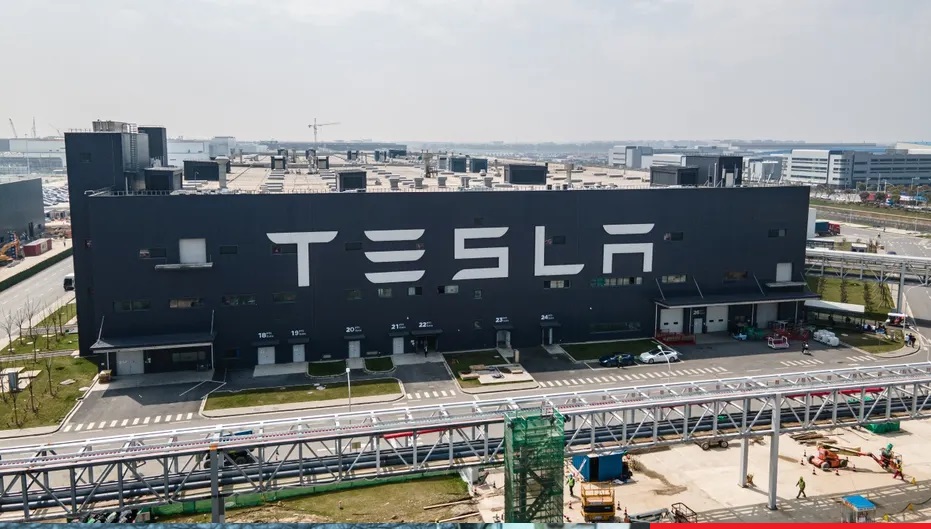
Tesla shares plunged 14% on Thursday, erasing $152 billion from the EV maker’s market capitalization, amid a heated feud between its CEO Elon Musk and President Donald Trump over the president’s proposed federal spending bill.

The drop marked Tesla’s biggest single-day loss ever, pushing its market value below the $1 trillion benchmark to $916 billion.

The financial hit came after Trump threatened to pull government contracts from Musk’s companies, including Tesla and SpaceX, accusing the billionaire of “going crazy” after the administration moved to scrap electric vehicle mandates and tax incentives.

“The easiest way to save money in our budget, billions and billions of dollars, is to terminate Elon’s Governmental Subsidies and Contracts. I was always surprised that Biden didn’t do it,” Trump wrote on Truth Social.

Speaking earlier from the Oval Office, Trump said Musk was frustrated that the new budget bill excludes EV tax credits.

“Elon was ‘wearing thin,’ I asked him to leave, I took away his EV mandate that forced everyone to buy Electric Cars that nobody else wanted… and he just went CRAZY!” Trump said.

“Elon and I had a great relationship. I don’t know if we will anymore,” Trump said. “I was surprised.”

Musk, who had largely refrained from publicly criticizing Trump until now, quickly responded on X: “Whatever.” He also posted, “Without me, Trump would have lost the election, Dems would control the House and the Republicans would be 51-49 in the Senate.”

“Such ingratitude,” Musk said in a follow-up tweet.

In response to Trump’s threat to cancel Elon’s government contracts, Musk said: “In light of the President’s statement about the cancellation of my government contracts, SpaceX will begin decommissioning its Dragon spacecraft immediately.”

The billionaire entrepreneur had already gone on a rampage against the spending bill, calling it a “disgusting abomination” and warning that it would increase the national deficit by $2.5 trillion. Musk cited an old 2012 tweet from Trump that read: “No member of Congress should be eligible for re-election if our country’s budget is not balanced—deficits not allowed!”

Trump had claimed that Musk had full knowledge of the legislation and only objected after learning that the bill would eliminate EV subsidies.

In a live post on X, Musk wrote: “False, this bill was never shown to me even once and was passed in the dead of night so fast that almost no one in Congress could even read it!”

Musk, who had served as a special government employee leading the Department of Government Efficiency (DOGE), left the role last Friday. Since then, he has launched a full-scale attack on Trump’s domestic economic policy. He even launched a poll on X asking: “Is it time to create a new political party in America that actually represents the 80% in the middle?”

The fallout between the two has divided the GOP, with some Republicans siding with the president and others backing Musk, who had donated more than $250 million to Trump’s 2024 campaign.

As tensions escalated, Musk raised even more controversy by alleging on X that Trump was named in the sealed Jeffrey Epstein files, suggesting that this was the reason they had not been made public.

While Musk had previously avoided clashing with Trump over trade policies, he also warned this week that Trump’s tariff-heavy approach “will cause a recession in the second half of this year.”

Beyond the political chaos, Tesla is facing serious operational hurdles. The company has been struggling with declining electric vehicle (EV) sales in key markets and mounting pressure to launch its long-delayed driverless ride-hailing service in Austin, Texas. Meanwhile, Musk’s rival Waymo has already begun commercial operations in the same city in partnership with Uber.

Biographer Walter Isaacson told CNBC, “One of the things about Elon is when he goes all in, he goes all in. He is seriously upset.”

Some analysts now believe that Musk’s aggressive stance could deal a further blow to Tesla, further denting the company’s near-term prospects.

“President Trump and Musk got into a massive feud over social media initially starting with disagreements over the tax bill, that the administration is looking to pass, which quickly escalated into essentially a high school friends feud.  Massive pressure on Tesla stock,” Wedbush Securities analyst, Dan Ives, said, adding that he is still bullish on Tesla.

However, others say the fallout could prompt a return of left-leaning customers who had abandoned Tesla due to Musk’s political alignment with Trump.

With Tesla shares down nearly 18% this week and nearly 30% year-to-date, the market’s message is that Musk may be losing more than just a political ally.

Whales Exit BNB for Lightchain AI, Predicting It Could Be the Top Gainer of the Next AI Crypto Cycle

0

As BNB sees whale exits and momentum begins to waver, a growing number of large holders are making a calculated pivot toward Lightchain AI—betting it could become the top gainer in the next AI-focused crypto cycle. This shift isn’t fueled by hype alone, but by confidence in Lightchain AI’s intelligent framework and developer-ready infrastructure.

With $20.8 million raised in its presale and tokens available at a fixed price of $0.007, the project is capturing serious capital from early movers. As market cycles shift and narratives evolve, Lightchain AI is emerging not just as an alternative—but as a frontrunner with purpose.

BNB Sees Outflows as Large Holders Rebalance Portfolios

Binance Coin?(BNB) sees its largest whales offloading heaps of the digital currency as the popular Ethereum competitor surges.Binance Coin’s Decoupling from BitcoinTriggers a Massive Exodus of WhalesThe BNB/BTC exchange rate on Tuesday was trading at 0.00193, down 16.21 percent from its local high of 0.0023. New data suggests these investors are making some of the largest short bets on BNB in the coin’s?history, while on-chain activity surges to three-year highs. This is a?form of hedging risk, not lack of confidence in the fundamental of BNB.

At the time of the screenshot, on May 24, 2025, BNB has an approximated trading price of 595.30$, with a 24-hour?decrease of 1.2%. BNB/USDT trading volume has also grown by 15% to exceed $1.8 billion, suggesting increased market?appetite.

The interplay of rising network activity and?whales shorting opportunistically speaks to a market that is nuanced in behavior. Meanwhile, despite what may turn out to be a protracted period of violent price action, confidence?in BNB’s future remains strong.

Whale Activity Signals Confidence in Lightchain AI’s Trajectory

Whale activity is surging around Lightchain AI, signaling strong confidence in its trajectory. With over $20.8 million raised during its presale, Lightchain AI has attracted significant attention from major investors, including Ethereum and XRP whales, who now hold substantial portions of the LCAI supply.

This influx of institutional interest underscores the project’s innovative approach, integrating AI directly into blockchain infrastructure through its Artificial Intelligence Virtual Machine (AIVM) and Proof-of-Intelligence (PoI) consensus mechanism. These technologies enable scalable, intelligent on-chain applications, setting Lightchain AI apart in the crowded crypto landscape.

As the mainnet launch approaches, the continued accumulation by large-scale investors suggests a strong belief in Lightchain AI’s long-term potential and its role in shaping the future of decentralized AI solutions.

Next Big Thing? Smart Money Is All In on Intelligence

The buzz is real—intelligence is leading the next cycle, and Lightchain AI is stealing the spotlight. Why? Because it’s more than just another name in the crowd. With cutting-edge infrastructure like the AIVM, optimized gas fees, and Zero-Knowledge Proof privacy, this platform is built for real-world utility—not empty hype.

Early adopters and savvy whales are already stacking up as the Bonus Round locks in fixed pricing. The future is shifting toward intelligent chains—and Lightchain AI isn’t just keeping up, it’s setting the pace. Don’t get left behind.

https://lightchain.ai

https://lightchain.ai/lightchain-whitepaper.pdf

https://x.com/LightchainAI

https://t.me/LightchainProtocol