DD
MM
YYYY

PAGES

DD
MM
YYYY

spot_img

PAGES

Home Blog Page 1068

Is Lightchain AI the Next 100x Token? Whales Leave Shiba Inu for AI-Backed Blockchain Innovation

0

As Shiba Inu’s momentum slows and speculative buzz fades, whales are beginning to reposition—this time toward a project with deeper fundamentals; Lightchain AI. With $20.8 million already raised in its presale and a fixed token price of $0.007, Lightchain AI is quickly gaining recognition as a serious contender for the next 100x run.

Rather than relying on hype, the project is built on real-world utility and intelligent infrastructure tailored for next-gen decentralized applications. As capital moves from meme coins to meaningful innovation, Lightchain AI stands out as the smarter choice—and early buyers are betting big that this shift is just beginning.

Shiba Inu Sees Outflows as Whale Confidence Shifts

Shiba Inu (SHIB) is seeing massive outflows as whale investors offload some of their holdings, which suggests that?the market sentiment has changed. Recent data shows SHIB whales dumped about 801 billion tokens on a single day, posting a 343 per cent increase in outflows?from previous day. “This heavy dumping has caused the netflow of -256.9B SHIB and it is such a?bearish behavior for the large addresses.”

Showing the dwindling whale action is a 311% drop in?whale netflows and a 68% fall in active addresses since Dec 2024. Indeed, whale trades have fallen by a staggering 70%, indicating decreased optimism amongst the?institutional class.

These factors have added downward pressure?on SHIB’s price, which is at the $0.00001449 level as of writing. The large-scale unwinding and low volume on the markets imply that SHIB is likely to move higher unless fresh reasons are found and a?recovery in confidence happens.

Lightchain AI Gains Traction With Its AI-Driven Ecosystem

Lightchain AI is gaining strong traction as it delivers on the promise of an AI-driven blockchain ecosystem designed for real utility. Its architecture integrates the Artificial Intelligence Virtual Machine (AIVM), enabling on-chain execution of machine learning tasks, inference, and data processing at scale.

Developers are drawn to its seamless workflows, gas-optimized design, and dynamic pricing model, which ensure efficient, cost-effective deployment. The Proof of Intelligence consensus shifts validation from raw computation to meaningful AI work, incentivizing useful contributions.

With a robust developer portal and grants funded by the reallocated 5% Team Allocation, Lightchain AI is actively onboarding creators and innovators. As the Bonus Round continues, the ecosystem’s real-world applications and performance focus are setting it apart from hype-driven projects in the space.

100x Question- Why All Eyes Are on Lightchain AI

Everyone’s asking the same thing: where’s the next big opportunity? Smart money keeps landing on Lightchain AI—and for good reason. With true AI integration, slashed gas fees, and over $20.8 million raised, this isn’t just another presale; it’s a movement with purpose. Builders are already building, tools are live, and grants are fueling innovation.

While others chase the hype, Lightchain AI is creating the foundation for the future. This isn’t a gamble—it’s a game-changer. If you’re looking ahead, Lightchain AI is the answer you’ve been waiting for.

https://lightchain.ai

https://lightchain.ai/lightchain-whitepaper.pdf

https://x.com/LightchainAI

https://t.me/LightchainProtocol

Acting Like Junior-Level Coworker: Altman Bets on AI to Soon Be Able to ‘Discover New Knowledge’, Solve Business Problems

0

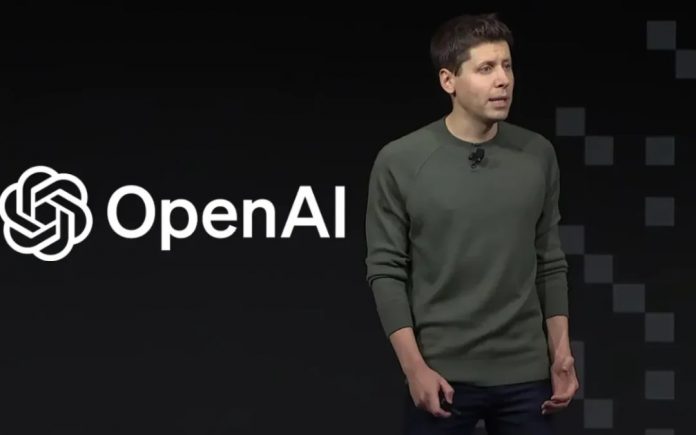
OpenAI CEO Sam Altman says artificial intelligence is fast becoming more than just a digital assistant — it’s now acting like a junior-level coworker and could soon cross into the realm of actual discovery.

Speaking Monday at the Snowflake Summit 2025, Altman told Snowflake CEO Sridhar Ramaswamy that AI agents are already performing tasks in ways that mirror early-career employees.

“You hear people that talk about their job now is to assign work to a bunch of agents, look at the quality, figure out how it fits together, give feedback — and it sounds a lot like how they work with a team of still relatively junior employees,” Altman said.

But Altman suggested something deeper is on the horizon. “I would bet next year that in some limited cases, at least in some small ways, we start to see agents that can help us discover new knowledge, or can figure out solutions to business problems that are kind of very non-trivial,” he added.

That vision marks a stark shift in how AI is perceived — not just as a tool, but as a collaborative partner capable of making original contributions. Altman’s remarks arrive as OpenAI continues to push the limits of generative models, with its GPT-4.5 hailed as the first version that feels “like talking to a thoughtful person.” The model, released in February, is currently restricted to Pro subscribers due to a global GPU shortage, though Altman hinted at broader access once infrastructure bottlenecks ease.

OpenAI has also introduced Codex, a multitasking AI agent that automates software development tasks like writing code, debugging, and testing. Already in use by OpenAI engineers, Codex is designed to interface with external software, meaning it can complete complex workflows like booking a reservation — hinting at a future where AI assistants handle both backend and real-world functions.

Corporate Adoption Signals a Shift in Workforce Structure

The potential of AI is already reshaping employment. Companies like Shopify now require managers to justify why a position can’t be filled by AI before they are allowed to recruit. Duolingo recently said it would replace some of its contract staff with AI systems.

Economist Zanele Munyikwa of Revelio Labs shared data showing that AI is already eating into the demand for certain roles. Speaking to Business Insider, she revealed that the share of AI-doable tasks in job postings has declined by 19% over the past three years, especially since the release of ChatGPT in late 2022. The drop is even steeper — up to 31% — in professions most vulnerable to automation, such as database administrators and IT specialists.

This hiring slump reflects growing confidence among firms that AI systems can handle routine technical tasks more efficiently and cheaply. That trend is accelerating even before Altman’s forecasted breakthrough: agents that not only execute instructions but independently uncover insights and solve high-level problems.

Altman’s bet on AI agents as discoverers of new knowledge hints at a broader revolution in research, development, and decision-making. If realized, it could mean that teams lean more heavily on autonomous systems for innovation, not just execution.

However, this evolution raises deep questions about how organizations balance AI efficiency with human employment — and whether the rapid rollout of agents like Codex and GPT-4.5 will further tilt that balance.

Altman, who has previously warned of both the promise and perils of artificial intelligence, seems to be signaling that the next chapter is here: one where humans no longer just use machines to find answers — but work alongside them as partners in thought.

Nigeria’s Business Performance Index Posts Fifth Consecutive Growth in 2025, But Deep Structural Fault Lines Threaten Sustainability

0

Nigeria’s Business Performance Index (BPI) has recorded its fifth straight month of growth in 2025, pointing to a continued — albeit cautious — rebound in private sector activity.

The index for May 2025 stood at +9.78, showing a modest expansion in business conditions, though down from the +12.29 recorded in April. The performance marks a continuation of the positive trajectory seen since January, which began with a BPI of +3.24 and has climbed gradually despite deepening macroeconomic and structural constraints.

The data, published in the latest NESG-Stanbic IBTC Business Confidence Monitor (BCM) released in June 2025, is captured under the title “Enduring Infrastructure and Financial Conundrum Constraint Business Growth.” The report paints a mixed picture — one that reflects increasing optimism in some sectors but signals a slow, uneven recovery marked by persistent bottlenecks in power supply, financing, and security.

Sectoral Breakdown: Manufacturing Gains, Agriculture Contracts

Sector-specific performance in May showed that Non-manufacturing maintained the strongest momentum, recording an index of +22.19. This was followed closely by Manufacturing (+14.43), Trade (+14.13), and Services (+4.49). While these sectors sustained positive territory, all except manufacturing experienced a slowdown from April, highlighting emerging fatigue across business operations.

The Manufacturing sector was the only segment to resist the downward trend. Its resilience was attributed to relatively stable demand, ongoing capacity utilization, and the adaptive strategies of producers in the face of rising costs and infrastructural hurdles.

By contrast, the Agriculture sector posted a negative index of -1.77, worsening from April’s already weak figures. Respondents cited climate change-related disruptions as the primary factor: erratic rainfall, prolonged droughts, and shorter wet seasons have compromised planting and harvest cycles. These climate stressors have further exposed the structural fragility of Nigeria’s agricultural value chain, which already suffers from limited mechanization, weak irrigation infrastructure, and poor access to financing.

Sub-Indices Indicate Slowing Momentum and Investor Apathy

While the overall index remained positive, a deeper look at sub-indicators reveals a softening in business optimism. The cost of doing business fell to +38.54 in May from +51.79 in April, showing that operational pressure has increased — especially in areas such as energy, logistics, and rent.

One of the most alarming shifts was in investment confidence, which plunged to -25.61. This sharp fall suggests that business leaders are holding back on long-term capital commitments due to heightened uncertainty and a lack of faith in near-term policy direction. Similarly, price level indicators dropped to -18.15, hinting at either lower sales margins or reduced pricing power across several industries, possibly linked to weaker consumer demand amid inflation.

Despite these setbacks, there were improvements in production levels, cash flow, operating profits, and employment, suggesting that businesses are finding ways to stay afloat — even as their margins narrow and future prospects dim.

Constraints of Power, Finance, Insecurity, and FX Crunch

The ranking of business constraints in May remained largely unchanged from previous months. Inadequate power supply continues to rank as the most severe impediment to growth. Respondents across sectors complained of frequent outages, excessive dependence on diesel and petrol generators, and surging energy costs that are eating into profits.

Access to finance also remains a structural bottleneck. While interest rates remain elevated, businesses — especially small and medium enterprises — face difficulty in securing working capital or expansion credit from banks, which continue to tighten lending conditions amid macroeconomic uncertainty.

The cost of commercial property in major cities such as Lagos, Abuja, and Port Harcourt was flagged again as a major operational strain. High lease rates, coupled with taxes and service charges, have forced some businesses to scale down physical operations.

Currency instability and foreign exchange scarcity further complicate the outlook for import-dependent firms. Many companies reported difficulties in sourcing FX for raw materials, machinery, and inputs, resulting in delays, rising production costs, and shrinking inventories.

A key drag on economic activity is insecurity, which remains acute in the North East, North West, and parts of the Middle Belt. Armed banditry, kidnapping, and communal violence have disrupted supply chains and deterred investment. Several firms, particularly those in logistics, agribusiness, and retail, reported that deteriorating security had made operations costlier and less predictable.

The inconsistent policy environment also drew criticism. According to the BCM report, frequent regulatory changes, lack of clarity on fiscal direction, and mixed signals from monetary authorities are undermining long-term business planning.

Fragile Growth Amid Deepening Risks

The continued rise in the Business Performance Index is encouraging but deceptive. Beneath the positive headline figure lies a fragile recovery that remains vulnerable to systemic threats. The Nigerian Economic Summit Group (NESG), in its commentary, warned that without urgent structural reforms, the private sector may not sustain its current growth streak.

With a nationwide unemployment rate still high and inflation continuing to erode purchasing power, analysts caution that improved performance in BPI must be viewed in the context of declining investment, limited productivity gains, and persistent uncertainty.

Outlook for the Rest of 2025

As the second half of the year approaches, Nigeria’s business environment faces a test of resilience. If government interventions — particularly around power sector reforms, improved credit support for MSMEs, and a coordinated security response — are not accelerated, the private sector’s ability to drive growth may falter.

For now, however, the five-month streak offers a cautious sign that businesses are adapting and staying afloat, even in one of the most challenging economic landscapes Nigeria has seen in years.

Living Overseas on a Student Budget? These Simple Moves Save You Hundreds

0

Studying abroad can be a life-changing experience — but between tuition fees, living expenses, and unexpected costs, your budget can disappear fast. Finding ways to cut costs without compromising your lifestyle or comfort is essential. One of the first decisions that impacts your wallet is where you live. Choosing affordable and well-located student accommodation Melbourne students trust can free up a significant chunk of your budget for other essentials.

Learn to Cook (and Actually Do It)

Eating out regularly is one of the fastest ways to drain your funds. Even “cheap” takeaway adds up over weeks and months. Learning to cook basic, balanced meals is one of the most effective ways to save money — and it doesn’t mean giving up flavour or variety.

  • Stick to a weekly grocery budget and plan meals ahead to avoid waste.

  • Cook in batches and freeze leftovers for quick, affordable meals later.

  • Share meal duties with flatmates to split costs and reduce cooking time.

The bonus? Cooking at home is often healthier and gives you more control over your nutrition.

Maximise Student Discounts

Being a student comes with perks — if you know where to look. Many retailers, transport providers, entertainment venues, and even gyms offer student discounts.

  • Always carry your student ID and ask if discounts apply.

  • Sign up for student deals platforms and newsletters for alerts on new offers.

  • Use student fares for public transport and travel where possible.

A few dollars saved here and there can add up quickly across a semester or year.

Ditch Unnecessary Subscriptions

Streaming services, meal kits, apps — it’s easy to sign up for multiple subscriptions and forget about them. Audit your accounts and cancel anything you don’t use regularly.

  • Stick to one streaming service at a time or share accounts with housemates.

  • Take advantage of student discounts or trial periods before committing.

  • Review your app store subscriptions and remove anything you’re not actively using.

You’ll be surprised how much those $10 or $15 monthly charges add up over time.

Buy Second-Hand or Swap

You don’t need to buy everything brand new, especially if you’re only living abroad temporarily. Pre-owned goods are not only more affordable, but often just as reliable.

  • Look for second-hand furniture, electronics, and textbooks online or through local student groups.

  • Join community swap pages where you can trade items for free.

  • Visit local op shops for household items and clothing at low prices.

Choosing second-hand is also a more sustainable option, reducing waste and giving items a new life.

Get Smart with Transport

Transport costs can creep up if you’re not careful. If you live centrally or close to campus, walking or cycling can save hundreds over the course of your studies.

  • Invest in a quality second-hand bike if the city is bike-friendly.

  • Use student fares for buses, trains, or trams.

  • Carpool or share rides when longer trips are needed.

Living close to school or public transport hubs is worth considering even if the rent is slightly higher — the overall cost can still work out cheaper.

Set a Weekly Spending Limit

Budgeting doesn’t have to be complicated, but it does need to be consistent. Set a realistic weekly allowance for non-essential expenses and stick to it.

  • Use a budgeting app or simple spreadsheet to track spending.

  • Withdraw cash for the week if you tend to overspend digitally.

  • Avoid impulse purchases by giving yourself a 24-hour rule before buying non-essentials.

Knowing where your money goes helps you make smarter choices and avoid financial stress.

Take Advantage of Free Events

One of the best parts of student life is the range of free or low-cost events available — you just need to look for them.

  • Check noticeboards, uni newsletters, and local social media pages.

  • Attend free workshops, networking events, and social meetups.

  • Explore outdoor spaces, local festivals, and community activities that cost nothing.

These events are not only budget-friendly, they’re also a great way to meet people and make the most of your time abroad.

Living on a student budget doesn’t mean missing out — it just means being smart about your choices. From how you cook and shop to where you live and socialise, small adjustments can lead to major savings. With a little planning and awareness, you’ll find it’s possible to enjoy your overseas experience without constantly stressing about money.

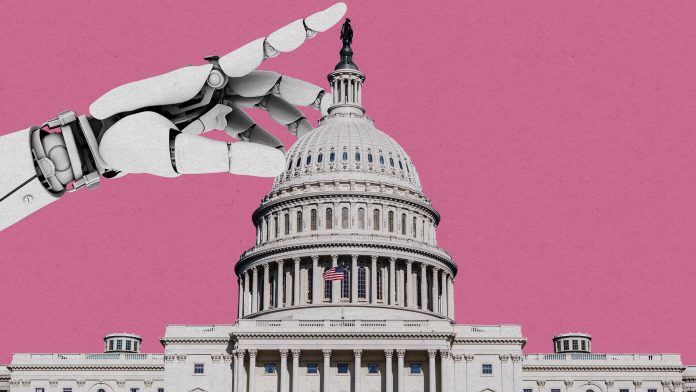
“No Rules, No Recourse”: Republican AI Moratorium Sparks Uproar After Hidden Clause Strips States of Regulatory Power for a Decade

0

A sweeping provision buried deep in the Republican-led budget bill, the Opportunity and Balanced Budget Blueprint (OBBB), has ignited backlash across party lines after it was revealed that it would prohibit all U.S. states from enacting or enforcing any laws regulating artificial intelligence for the next ten years.

The measure, largely unnoticed during the bill’s initial passage, has triggered concern from lawmakers, civil rights organizations, and policy experts who say it effectively guts state-level authority, granting tech companies a decade-long free pass to develop and deploy AI systems without local oversight — even as their use grows in sensitive areas like hiring, education, law enforcement, and child safety.

Even some Republicans who voted in favor of the bill have now expressed regret, saying the AI moratorium was not adequately disclosed.

“Full transparency, I did not know about this section on pages 278–279 of the OBBB that strips states of the right to make laws or regulate AI for 10 years,” said Rep. Marjorie Taylor Greene, in a statement on Thursday.

“I am adamantly OPPOSED to this and it is a violation of states’ rights, and I would have voted NO if I had known this was in there… We have no idea what AI will be capable of in the next 10 years, and giving it free rein and tying states’ hands is potentially dangerous.”

Greene added that she expects the Senate to strip the clause during its revision process and warned she would not support the final version of the bill if the language remains.

“We should be reducing federal power and preserving state power — not the other way around. Especially with rapidly developing AI that even the experts warn they have no idea what it may be capable of.”

A Decade Without Guardrails

The AI moratorium provision, described in just a few paragraphs toward the back of the nearly 300-page bill, bars states from introducing, enforcing, or maintaining any existing or future legislation aimed at regulating artificial intelligence.

The measure’s defenders, led by the U.S. Chamber of Commerce and supported by several leading AI firms, argue the move is necessary to prevent a chaotic “patchwork” of conflicting rules across the 50 states. They say the AI sector needs regulatory clarity and freedom from compliance burdens in order to maintain U.S. global leadership.

But critics say the provision is an overreach of federal power, and dangerously shortsighted.

The coalition of 77 advocacy organizations, including Common Sense Media, the Center for Humane Technology, and Fairplay, issued a scathing letter to congressional leadership this week demanding the clause be removed.

“By wiping out all existing and future state AI laws without putting new federal protections in place, AI companies would get exactly what they want: no rules, no accountability, and total control,” the letter reads.

At present, no comprehensive federal legislation exists to address AI risks — and none is expected anytime soon. If the moratorium passes, Americans would be left without AI-specific protections until 2035, aside from the costly option of suing companies for harm after the fact.

States on the Frontlines — and Now Sidelined

Over the last year, several states have moved quickly to address immediate and emerging risks posed by artificial intelligence. Tennessee passed the ELVIS Act to outlaw unauthorized AI voice impersonations, especially those affecting musicians. In California, two proposed bills would regulate AI chatbot platforms targeting teens, with one banning “anthropomorphic AI companions” designed to foster emotional dependence or manipulate children.

Lawmakers in New York, Massachusetts, and Illinois are also weighing AI-related bills covering areas from employment discrimination to facial recognition surveillance.

All of those state-level initiatives would be nullified under the federal moratorium.

A Familiar Pattern of Corporate Influence

Advocates like Camille Carlton, policy director at the Center for Humane Technology, say the federal AI moratorium fits into a long-standing pattern in tech policy: corporations oppose regulation at the state level, call for federal rules instead, then turn around and lobby Congress to stall or weaken those very laws.

“What we’re seeing is déjà vu. This is exactly how Big Tech delayed and diluted every major effort to protect consumers — from digital privacy to kids’ safety,” said Carlton. “Now the same playbook is being used for AI.”

Carlton said the idea that local AI laws are stifling innovation is a mischaracterization. Most of the proposed laws focus on narrow and urgent safety issues and often provide exemptions for small businesses or tiered obligations based on company size and use cases.

“These aren’t sweeping bans on AI,” she added. “They’re common-sense protections against fraud, deepfakes, and predatory chatbots aimed at children. But with this bill, even those guardrails vanish.”

Lessons from Social Media’s Free Rein

Legal scholars warn the moratorium risks repeating the same errors that allowed social media platforms to operate with near-total impunity for over a decade — leading to today’s mental health crisis among teens, rampant misinformation, and the rise of algorithmic manipulation.

Gaia Bernstein, professor at Seton Hall University School of Law, says states became the primary drivers of tech accountability precisely because Congress has failed to act — and may do so again with AI.

“If you’re saying states cannot do anything, then it’s very alarming,” Bernstein said. “Most of the effective protections we have today — for youth safety, for online privacy — came from state laws. Now we’re about to shut that down.”

Bernstein emphasized that AI is already embedded in algorithms that shape what children see online, govern how people are scored and hired, and determine what health information individuals receive.

“This is not some distant threat. AI is already shaping lives. And without oversight, it will do so with zero accountability.”

Tech Industry Wins Big — Again

Though few in Congress have acknowledged it directly, several of the companies positioned to benefit from a decade of AI deregulation are also major donors to President Donald Trump, raising questions about whether the provision serves public interest or corporate influence.

A former House staffer who helped analyze the bill called it “one of the most extreme handouts to Big Tech” he’s ever seen tucked into budget legislation.

“It’s a blank check,” the staffer said. “And if you know the history of how the tech industry operates, you know exactly what they’ll do with it.”

The bill now moves to the Senate, where Democrats and a growing number of Republicans are expected to push back against the AI moratorium clause. Senate staff have confirmed that discussions are underway to remove or amend the provision.

If the Senate returns a revised version, the bill must go back to the House for final approval — setting up a potential showdown over tech regulation, state rights, and federal power.

Rep. Marjorie Taylor Greene, said, having known better, she will oppose the bill.

“I will not vote for the final bill if this language is still in there,” she said. “Congress must not hand over ten years of unchecked power to tech companies while tying the hands of our states. That’s not leadership. That’s surrender.”