DD
MM
YYYY

PAGES

DD
MM
YYYY

spot_img

PAGES

Home Blog Page 1070

Samsung Ordered to Pay $117.7m in Damages to Japan’s Maxell Over Patent Infringement

0

A U.S. federal jury has ordered Samsung Electronics to pay $117.7 million in damages to Japanese electronics firm Maxell Ltd., ruling that the South Korean tech giant infringed on key patents tied to smart home platforms and smartphone technology.

The verdict, delivered on Wednesday in the U.S. District Court for the Eastern District of Texas, sided with Maxell’s claims that Samsung’s Galaxy smartphones, tablets, and other electronic devices violated three U.S. patents. These patents cover technology used for unlocking devices, managing data, and reproducing images and videos—features embedded across a wide range of Samsung products.

Although the jury awarded significant damages, the ruling is not final and remains subject to appeal. Samsung is widely expected to contest the decision.

Long-Running Dispute Over Expired License

The legal dispute stems from a licensing agreement signed in 2011 between Samsung and Hitachi Consumer Electronics, the predecessor of Maxell. The deal granted Samsung permission to use 10 patented technologies in its products for 10 years.

That agreement expired in 2021, but Maxell contends that Samsung continued using the protected technologies without renewal. According to court documents, Maxell reached out to Samsung after the expiration to renegotiate terms but was rebuffed. Samsung, the lawsuit alleges, opted to continue incorporating the technologies in devices ranging from SmartThings stations and smartphones to laptops and home appliances.

The alleged infringement prompted Maxell to sue in September 2023, accusing Samsung of violating seven patents in total. This latest ruling relates to only three of the contested patents, with other elements of the case still under review or pending further legal proceedings.

Broader Legal Campaign by Maxell

The case in Texas is part of a multi-jurisdictional offensive by Maxell. Beyond the United States, the company has launched related legal actions in Germany, Japan, and through the U.S. International Trade Commission (ITC). The firm appears to be targeting Samsung’s global footprint in a bid to enforce its intellectual property rights more aggressively.

In April, Maxell filed another lawsuit in Texas against Samsung, citing similar patent violations tied to a new set of devices. The fresh lawsuit underscores Maxell’s determination to hold Samsung accountable across its evolving product lineup.

Samsung’s Patent Challenges in the U.S.

The ruling adds to a growing list of intellectual property disputes Samsung has faced in U.S. courts, particularly in the Eastern District of Texas, a venue frequently used by patent holders due to its reputation for being plaintiff-friendly.

Samsung has not publicly commented on the verdict. However, legal experts say the case could serve as a warning to other tech giants that rely heavily on third-party intellectual property for software and hardware development. If the decision stands on appeal, it may force Samsung to either pay licensing fees retroactively or re-engineer parts of its ecosystem to avoid further legal exposure.

For Maxell, a company now focusing more on monetizing its technology portfolio, the verdict is expected to boost its morale to fight for the remaining patents issued to Samsung.
The Path to Financial Independence for Young Graduates

0

Question: “I am a young graduate who just started working in a Lagos bank. How can I create financial independence for the future?”

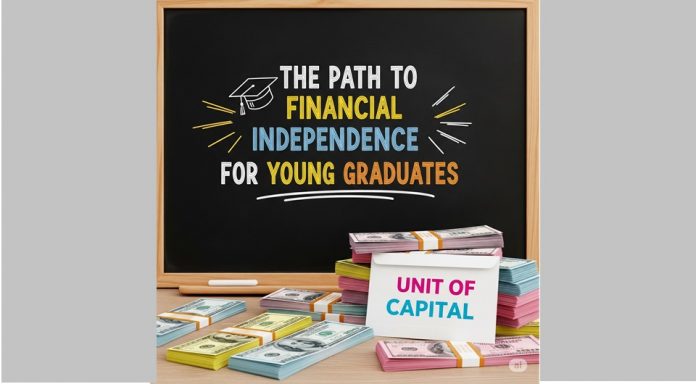
My Response: When you are paid at work, make sure to elevate a part of that salary to capital. Money is a unit of capital and does not have an inherent regenerative ability in its stable state. The reward of most Labour is money. But Labour expires or retires which means sources of money can be cut off. Breakthrough comes when one earns money via Capital/Equity because capital under most circumstances neither retires nor expires.

In other words, to find sustained financial independence, find how to turn some of your salaries (i.e. money) into capital. That principle is the same for individuals, families and nations. Poor nations operate at the level of money; rich nations operate at the capital level. Nigeria is always talking of money, but America focuses on capital. The formation of capital expands the wealth of nations. Simply, when people move their money to the level of capital, they create wealth. A man who has 100 acres of village land but is still poor is because his nation is built on money, not capital.

In the five factors of production – land, labour, Capital, entrepreneur and knowledge – there is no Money listed. Capital represents assets (physical and non-physical encapsulating skills, education, knowledge systems, etc) which are used to make goods and services during the transmutation process of turning ideas, and raw materials, into finished goods. Money does one thing: means to exchange goods and services!

In short, the unit of Capital is money (i.e capital is measured in monetary terms). When I began like you in Nigeria, I developed a model on the allocation of my salary. I kept a percentage for investment (mainly stock) under my 45-20-20-15 model; 15% of my gross went into investments.

Of course, the crash of the Naira makes that decision regrettable now, but if I had done that in a place with stable currency, my decision, which I always teach in Tekedia Mini-MBA Personal Economy lectures would have become a required reading. That said, look for asset classes that have the capacity to beat inflation and currency, and turn some of your money into capital. Good luck.

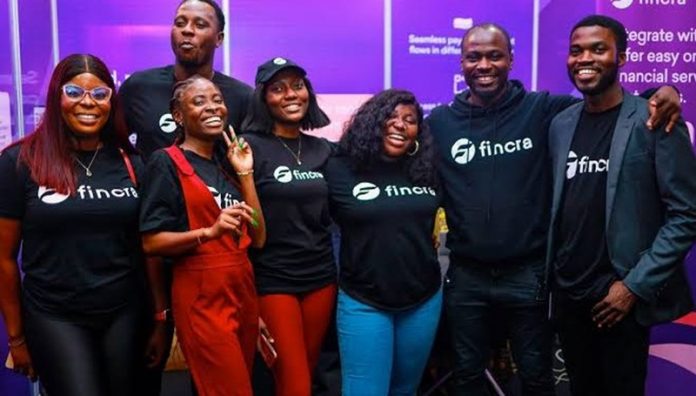
Fincra Secures Bank of Tanzania Payment System Provider License, Boosting East African Expansion

0

Fincra, a Nigerian payment platform offering solutions for online and offline payments, multicurrency accounts, and global transfers, has secured a payment system provider license from the Bank of Tanzania.

The license under the 2015 Payment Systems Licencing and Approval Regulations, authorizes Fincra to deliver secure, scalable, and compliant payment solutions to businesses and consumers in Tanzania.

Following this milestone, Fincra will roll out its comprehensive payment services, including local collections, business payouts, and API-driven real-time payment infrastructure. These offerings are tailored to support sectors like fintech, logistics, retail, travel, and remittances, helping businesses streamline operations and expand across borders.

“We’re excited to secure this license from the Bank of Tanzania,” said Wole Ayodele, Fincra’s CEO.

Fincra’s recent securement of a payment provider license in Tanzania is coming after it secured a TPPP provider license in South Africa, in collaboration with Nedbank last month. A significant step toward realizing its mission to build the rails for an integrated Africa.

The payments market in Tanzania is vibrant and rapidly evolving, driven by the widespread adoption of mobile money, increasing internet penetration, and a growing push for financial inclusion. The country achieved full mobile money interoperability by 2016, allowing users of different providers (e.g., M-Pesa, Tigo Pesa, Airtel Money) to transact directly with each other, a global first.

Currently, it is one of the world’s leading mobile money markets, with over 35 million mobile money subscribers, representing more than half of the country’s population of approximately 60 million. In 2021, the mobile money market was valued at US$54.5 billion, with projections to reach US$120.4 billion by 2027.

While Tanzania’s payments market, is advanced in mobile money (with US$82.3 billion in transactions in 2024), it is also faced with several challenges.

1. Regulatory and Compliance Barriers:

Tanzania’s fintech startups face stringent and costly regulatory requirements, often before achieving product-market fit. The regulatory environment can stifle innovation, particularly for new entrants navigating complex compliance frameworks.

Fincra’s Solution: Fincra secured a PSP license from the Bank of Tanzania, ensuring compliance with local regulations. It operates under the highest compliance standards across its operational countries, mitigating risks through robust systems and dedicated account managers to guide merchants. The company also benefits from Tanzania’s Fintech Regulatory Sandbox (launched in 2024), which allows testing of innovative solutions in a controlled environment, reducing regulatory hurdles.

2. Limited Interoperability for Merchant Payments:

While person-to-person (P2P) mobile money transactions in Tanzania are fully interoperable, merchant payments often lack seamless interoperability across different financial service providers, leading to mismatches in payment acceptance.

Fincra’s Solution: Fincra’s payment gateway integrates multiple payment methods (e.g., mobile money, cards, bank transfers), enabling merchants to accept payments from customers using various platforms like M-Pesa, Tigo Pesa, and Airtel Money. Its APIs facilitate interoperability by connecting businesses to Tanzania’s Instant Payment System (TIPS), which processed TZS 29.9 trillion in 2024, ensuring seamless transactions.

3. High Transaction Costs:

High operational and commission costs discourage digital payment adoption, particularly for small businesses and SMEs.

Fincra’s Solution: Fincra emphasizes low-cost transactions with transparent pricing and no hidden fees. Its virtual accounts and payout solutions reduce the cost of cross-border and local transactions, making digital payments more accessible for Tanzanian businesses, including SMEs, which account for significant economic activity.

Looking ahead

Fincra’s launch in Tanzania capitalizes on the country’s mobile money dominance and growing digital payments market. By addressing challenges like regulatory barriers, interoperability, high costs, talent scarcity, cash dependency, security risks, and funding constraints.

It positions itself as a key player in advancing financial inclusion and cross-border payments. Its low-cost, secure, and accessible solutions, backed by regulatory compliance and strategic partnerships, make it well-suited to thrive in Tanzania’s dynamic payments landscape.

Trump Seeks $1bn for Private Sector’s Mars Push, Slashes NASA Budget in Favor of Musk-Aligned Plan

0

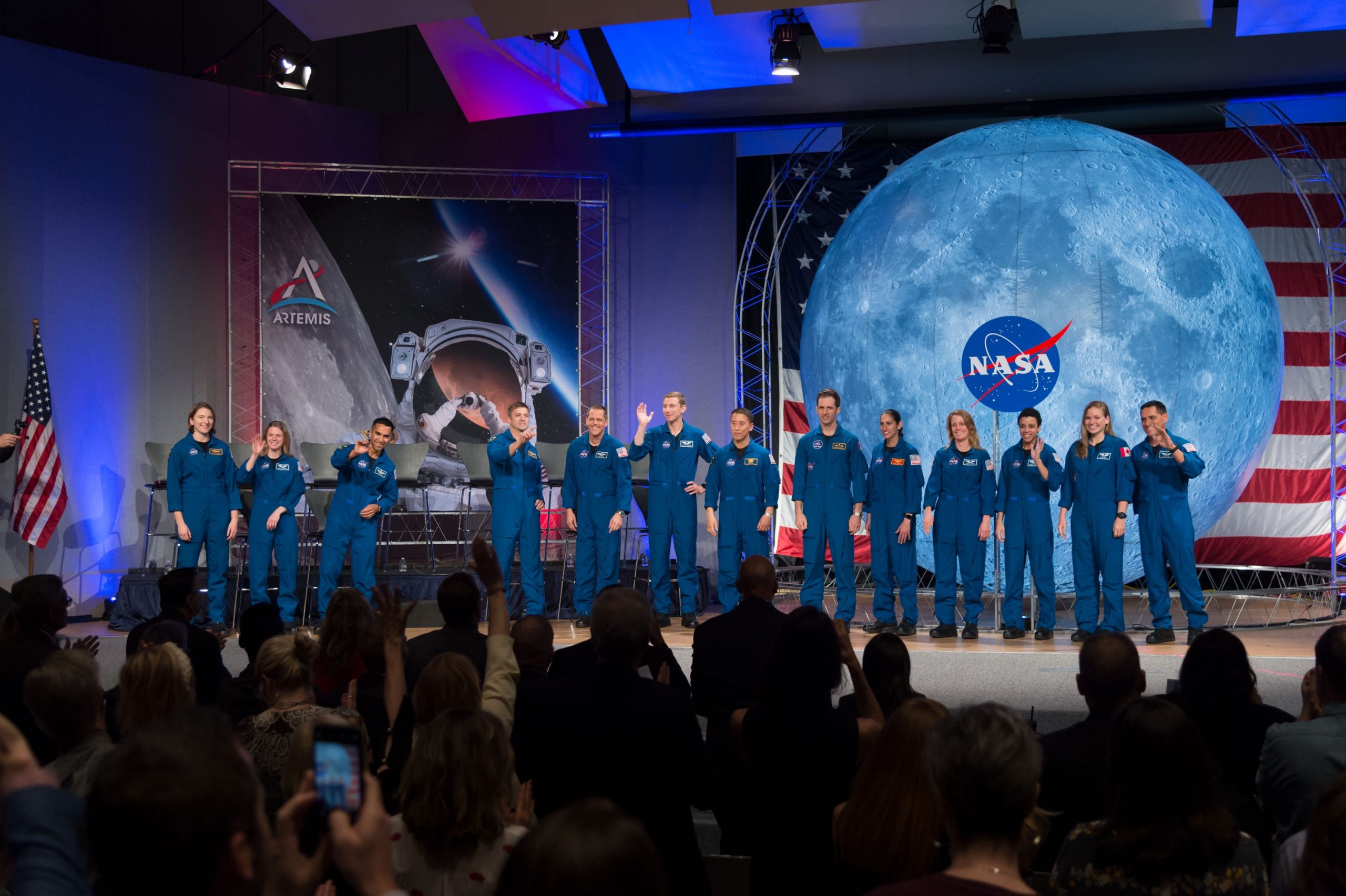
U.S. President Donald Trump is proposing a radical overhaul of the country’s space program that would lean heavily on private companies to lead the first human missions to Mars—while cutting NASA’s overall budget by a quarter, per Bloomberg.

The move sharply aligns with the ambitions of Elon Musk, whose SpaceX has long envisioned colonizing the Red Planet.

In a budget request sent to Congress late Friday, the White House asked for $18.8 billion for NASA in 2026, a steep drop from previous years, but earmarked more than $1 billion specifically for Mars exploration. A centerpiece of the proposal is a new initiative called the Commercial Mars Payload Services Program (CMPS)—modeled after an existing lunar program—that would see NASA award contracts to private companies for critical hardware, such as spacesuits, communications systems, and landing vehicles.

“We must continue to be responsible stewards of taxpayer dollars,” wrote NASA Acting Administrator Janet Petro in a letter accompanying the budget. “That means making strategic decisions—including scaling back or discontinuing ineffective efforts.”

The proposed shift is part of a broader strategy to privatize core components of U.S. space exploration, cutting back on traditional government-run programs in favor of commercial partnerships. The model reflects the one used for the Commercial Lunar Payload Services (CLPS) program, which has benefited companies like Intuitive Machines, Astrobotic Technology, and Firefly Aerospace, though with uneven success.

Under the new Mars plan, SpaceX could be a major beneficiary. The company is already developing a variant of its Starship rocket for NASA’s Artemis lunar program, and Musk recently reiterated his goal of building a human settlement on Mars during an internal SpaceX briefing.

Trump’s pick to lead NASA, billionaire pilot, and entrepreneur Jared Isaacman, told lawmakers the agency could pursue both the Moon and Mars in parallel, doubling down on a strategy that sidelines the current government-led approach. Isaacman, who flew on a private SpaceX mission in 2021, is known for advocating commercial space exploration.

However, even Isaacman has acknowledged the downsides of the proposed cuts. The budget slashes deeply into NASA’s science programs, drawing criticism from across the space sector.

“It wouldn’t be an optimal outcome,” Isaacman said of the science cuts during recent budget hearings.

Phasing Out Legacy Hardware

Perhaps most controversially, the Trump administration’s budget reveals plans to phase out the Space Launch System (SLS)—a Boeing-built rocket that has cost billions—and the Orion crew capsule developed by Lockheed Martin, after just three flights. These flagship projects have been in development for over a decade and form the backbone of current moon plans.

Instead, the administration wants to pivot toward new commercial missions to the Moon, using a public-private model akin to the one that enabled SpaceX to develop its Falcon 9 rocket and Northrop Grumman to deliver cargo with Cygnus. The White House said this would minimize costs and reduce schedule risks.

But the proposal is expected to face fierce opposition in Congress, especially from lawmakers in states with a deep stake in the legacy NASA programs. Texas Republicans Sen. Ted Cruz and Rep. Brian Babin, longtime defenders of the SLS and Artemis architecture, are expected to push back against the cuts.

Former Republican lawmakers Newt Gingrich and Bob Walker—both space policy advocates—have publicly criticized the science reductions. Even among conservatives who support space privatization, there is concern that gutting NASA’s research capacity could undermine the long-term mission.

The Mars push, however, underscores how closely the Trump administration’s vision for space mirrors the roadmap drawn up by Musk. And with Isaacman as the agency’s public face, the pivot toward a commercially-led era of U.S. space exploration appears firmly underway—if it can survive the Congress.

Apple Challenges EU Interoperability Order, Citing Innovation and Security Risks

0

Apple has filed an appeal against a European Union order that requires the company to make its iOS operating system more interoperable with rival tech products under the bloc’s sweeping Digital Markets Act (DMA), escalating tensions over how the EU seeks to rein in the power of Big Tech.

The company lodged the appeal on May 30 at the EU’s General Court in Luxembourg, challenging an earlier decision by the European Commission, which told Apple in March how it should open key parts of its iOS system to rival developers and hardware makers. The order is part of broader enforcement under the DMA, which aims to curb gatekeeping practices by dominant digital platforms.

Apple argues that the Commission’s demands go too far. In a statement Monday, the company said the EU’s interoperability requirements “threaten the foundation” of Apple’s integrated ecosystem and could “stifle innovation,” create security vulnerabilities, and compromise user privacy.

“At Apple, we design our technology to work seamlessly together, so it can deliver the unique experience our users love and expect from our products,” a company spokesperson said. “The EU’s interoperability requirements threaten that foundation, while creating a process that is unreasonable, costly, and stifles innovation.”

The Commission’s enforcement under the DMA compels so-called “gatekeepers”—large platforms with entrenched market dominance—to ensure interoperability. In Apple’s case, that includes sharing access to parts of the iOS operating system typically reserved for its own products, such as notifications, connectivity features, and device integration protocols that enable services like pairing with third-party wearables or supporting non-Apple apps on iPhones and iPads.

According to Apple, this means giving competitors access to sensitive system-level functionalities, a move the company says risks compromising user security and data privacy.

“Companies have already requested our users’ most sensitive data—from the content of their notifications to a full history of every stored WiFi network on their device—giving them the ability to access personal information that even Apple doesn’t see,” Apple said, referring to a December 2023 request from Meta Platforms as one of the contentious examples.

The iPhone maker said it is appealing “on behalf of its users” to protect the trusted experience and security that European customers expect from its devices.

European Commission Defends Its Decision

A Commission spokesperson responded Monday, saying the DMA is legally sound and the enforcement decisions issued are “fully in line” with the regulation.

“We will defend them in Court,” the spokesperson said.

The DMA, which came into effect in March 2024, targets large tech companies identified as gatekeepers under strict criteria, including annual revenue and market dominance across digital services. Apple, Alphabet (Google), Amazon, Meta, Microsoft, and ByteDance (TikTok) are among those under direct scrutiny.

The law gives Brussels the authority to impose fines of up to 10% of a company’s worldwide annual turnover for violations. In severe or repeated cases, the Commission can go as far as to demand the breakup of parts of a business.

A Broader Fight Over Control and Privacy

Apple’s resistance reflects a broader backlash among U.S. tech giants over how the EU is enforcing the DMA. While the bloc says it is leveling the playing field and promoting competition, companies like Apple say these rules dismantle the user-focused integration that differentiates their products.

The Commission’s March instruction to Apple reportedly focused on a range of interoperability requirements, including how the iPhone interacts with third-party smartwatches, VR headsets, cloud gaming platforms, and apps distributed outside the App Store.

Apple had already begun making changes to its business model in Europe in response to the DMA—such as allowing alternative app stores and payment systems in the EU—but the latest appeal indicates it is not willing to comply without a legal challenge on key issues tied to privacy and ecosystem integrity.

The case now heads to the General Court, where Apple will seek to overturn or limit the EU’s demands. A ruling could take months or even years, but the appeal could delay the full implementation of the Commission’s order in the meantime.