
DD
MM
YYYY

PAGES

DD
MM
YYYY

spot_img

PAGES

Home Blog Page 1079

Scott Bessent Thinks Stablecoin could Reinforce the U.S. dollar’s Global Dominance Rather than Threaten It

0

U.S. Treasury Secretary Scott Bessent has publicly stated that cryptocurrencies, particularly stablecoins, could reinforce the U.S. dollar’s global dominance rather than threaten it. In a video interview posted to X on June 18, 2025, Bessent argued that stablecoins, which are typically pegged to the U.S. dollar, could become significant buyers of U.S. Treasuries, thereby increasing demand for U.S. government debt and strengthening the dollar’s position in the global economy.

He emphasized that this could “lock in” dollar supremacy, especially as stablecoins facilitate dollar-based transactions worldwide, such as in Nigeria, without requiring physical dollars. Bessent’s remarks align with President Donald Trump’s pro-crypto stance and came a day after the U.S. Senate passed landmark stablecoin legislation, the GENIUS Act, on June 17, 2025. He also criticized the Biden administration for attempting to stifle crypto innovation, suggesting that embracing digital assets is key to maintaining U.S. financial leadership.

Scott Bessent’s belief that cryptocurrencies, especially stablecoins, will reinforce U.S. dollar supremacy carries significant implications for global finance, geopolitics, and domestic policy. Stablecoins, pegged to the U.S. dollar, incentivize global users to hold and transact in dollar-backed digital assets. Bessent highlighted in his June 18, 2025, X interview that stablecoins could become major buyers of U.S. Treasuries, increasing demand for U.S. debt and reinforcing the dollar’s role as the world’s reserve currency.

This could extend dollar dominance in emerging markets (e.g., Nigeria, as Bessent noted), where stablecoins facilitate dollar-based transactions without physical currency, reducing reliance on local currencies and central banks. A stronger dollar bolsters U.S. influence over global trade, sanctions enforcement, and financial systems, countering efforts by nations like China to promote alternatives (e.g., digital yuan).

Crypto as a U.S. Financial Asset

Bessent’s view aligns with the Trump administration’s pro-crypto pivot, evidenced by the GENIUS Act (passed June 17, 2025), which regulates stablecoins and encourages innovation. This contrasts with the Biden administration’s perceived hostility toward crypto, which Bessent criticized. By integrating crypto into the U.S. financial system, the U.S. could attract blockchain investment, talent, and infrastructure, potentially creating jobs and fostering a new tech-driven economic sector.

Stablecoin regulation ensures transparency and reserve backing, mitigating risks like those seen in past failures (e.g., TerraUSD), which could stabilize markets and build trust. Stablecoins bypass traditional banking rails, potentially reducing the role of commercial banks in cross-border payments and remittances. This could pressure banks to innovate or lose market share. While stablecoins may lock in dollar demand, they could complicate Federal Reserve control over money supply if digital dollars proliferate outside traditional channels.

The U.S. must balance innovation with oversight to prevent illicit use (e.g., money laundering), which could otherwise undermine the dollar’s credibility. Stablecoins enable unbanked populations in developing nations to access dollar-based financial systems via smartphones, promoting inclusion but also tying these economies to U.S. monetary policy. Increased reliance on dollar-backed stablecoins could deepen global dependence on the U.S. economy, potentially exacerbating vulnerabilities to U.S. policy shifts or sanctions.

Figures like Bessent, Trump, and crypto advocates (e.g., posts on X celebrate the GENIUS Act) see crypto as a tool to modernize finance, boost U.S. competitiveness, and lock in dollar supremacy. They argue stablecoins amplify the dollar’s reach without undermining its value. Traditional economists and regulators (e.g., some Federal Reserve officials) worry that crypto could destabilize markets, evade monetary policy, or enable illicit activity. They question whether stablecoins truly strengthen the dollar or merely shift control to private issuers like Tether or Circle.

As of June 2025, Tether (USDT) and USD Coin (USDC) dominate stablecoin markets, with over $150 billion in circulation, per web sources, underscoring their economic weight but also regulatory concerns about reserve transparency. The Trump administration, with Bessent as Treasury Secretary, champions crypto as part of a broader deregulation and innovation agenda. The GENIUS Act’s passage reflects GOP support for integrating crypto into U.S. finance, as seen in X posts from pro-Trump accounts praising the move.

Many Democrats, including Biden-era regulators, advocate stricter oversight, citing consumer protection and systemic risks. Some, like Senator Elizabeth Warren, have called crypto a haven for crime, creating a partisan split on policy. The GENIUS Act’s bipartisan Senate passage (June 17, 2025) suggests some convergence, but debates over enforcement and scope persist. Crypto purists on X and elsewhere argue that cryptocurrencies should challenge state-controlled currencies, including the dollar, by enabling decentralized finance (DeFi). They view Bessent’s dollar-centric vision as co-opting crypto’s revolutionary potential.

Bessent and establishment figures see crypto as a tool to extend, not disrupt, U.S. financial power. This aligns with Wall Street interests (e.g., BlackRock’s crypto ETFs) that seek to integrate digital assets into existing systems. The libertarian camp fears stablecoins, backed by U.S. policy, could centralize crypto markets, while statists worry that unregulated DeFi could undermine dollar stability.

Bessent’s vision positions the U.S. to lead the crypto economy, countering China’s digital yuan and Russia’s crypto experiments to evade sanctions. X posts from crypto analysts note that U.S. stablecoin dominance could marginalize rival digital currencies. Countries adopting crypto (e.g., El Salvador’s Bitcoin experiment) may resist dollar-backed stablecoins, fearing economic subordination, while others embrace them for stability and access.

Stablecoins could enhance U.S. sanctions enforcement by tracking dollar flows, but privacy-focused coins (e.g., Monero) could enable evasion, deepening global tensions. Bessent’s belief that crypto will lock in dollar supremacy signals a strategic embrace of digital assets to maintain U.S. financial dominance. The implications include stronger dollar demand, economic growth through innovation, and enhanced geopolitical leverage, but also risks like banking disruption and regulatory challenges.
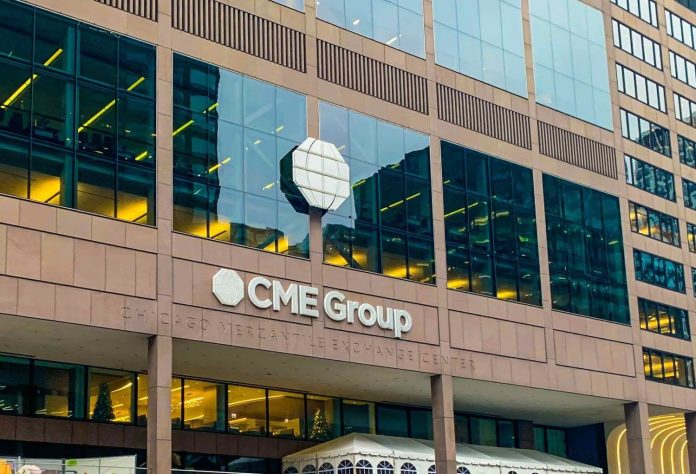

CME Group Plans To Launch Spot-Quoted Futures On June 30

0

CME Group plans to launch Spot-Quoted futures on June 30, 2025, pending regulatory approval. These contracts will allow investors to trade futures positions in spot-market terms for bitcoin, ether, and major U.S. equity indices, including the S&P 500, Nasdaq-100, Russell 2000, and Dow Jones Industrial Average. The contracts are designed to be smaller-sized, capital-efficient, and can be held for up to five years without needing to roll, making long-term positions more accessible for retail investors.

The launch of CME Group’s Spot-Quoted futures for bitcoin, ether, and major U.S. equity indices, pending regulatory approval, has several implications for markets, investors, and the broader financial ecosystem. These futures are designed to be smaller than traditional futures, lowering the capital required to participate. This democratizes access to sophisticated financial instruments typically dominated by institutional investors.

The ability to hold contracts without rolling reduces costs and complexity, making it easier for retail investors to take long-term positions in volatile assets like cryptocurrencies or equity indices. Pricing futures in spot-market terms simplifies understanding and aligns with how retail investors already view these assets, reducing the learning curve. Introducing futures for bitcoin and ether alongside equity indices could attract more participants, increasing liquidity in these markets.

Higher liquidity typically reduces bid-ask spreads and improves price discovery. The five-year holding period may encourage longer-term strategies, potentially stabilizing price volatility in cryptocurrencies, which are often subject to short-term speculation. CME Group’s involvement, as a regulated exchange, further legitimizes bitcoin and ether in traditional finance. This could accelerate institutional adoption and encourage other exchanges to offer similar products.

Spot-Quoted futures may bridge the gap between crypto and traditional markets, attracting investors who were previously hesitant due to regulatory or operational concerns. Investors can use these futures to hedge exposure to cryptocurrencies or equity indices without directly owning the underlying assets. This is particularly valuable for portfolio managers balancing risk in volatile markets.

The long-term nature of the contracts allows for strategic hedging over extended periods, appealing to businesses or investors with long-term exposure (e.g., crypto miners or tech-heavy portfolios). Pending regulatory approval highlights ongoing scrutiny of crypto-related financial products. Approval could signal a more favorable regulatory environment, while delays or rejection might dampen market enthusiasm.

These futures operate in a regulated environment, which may contrast with decentralized crypto markets, potentially creating tension between regulated and unregulated ecosystems. CME’s move could spur competitors like CBOE or Binance to develop similar products, fostering innovation in derivatives markets. The inclusion of both crypto and equity indices in one product type may blur lines between asset classes, encouraging hybrid investment strategies.

Smaller contract sizes and simplified pricing make these futures more accessible to retail investors, reducing the historical divide between institutional and individual market participants. This could empower a broader demographic to engage with crypto and equity markets. Despite lower barriers, not all retail investors have the financial literacy, access to trading platforms, or disposable income to participate. This could exacerbate wealth inequality if only moderately affluent or educated investors benefit. Additionally, access may vary by region due to regulatory differences or platform availability.

By offering crypto futures alongside equity indices, CME Group integrates cryptocurrencies into mainstream finance, narrowing the divide between decentralized and regulated markets. This could attract traditional investors to crypto and vice versa. Crypto purists who value decentralization may view regulated futures as a co-optation of their ethos, reinforcing a philosophical divide between “TradFi” and “DeFi” communities. This could lead to parallel markets where unregulated crypto trading persists outside CME’s ecosystem.

The long-term, capital-efficient nature of these contracts levels the playing field, allowing retail investors to mimic institutional strategies (e.g., long-term hedging or speculation). Institutions with superior resources (e.g., high-frequency trading algorithms, market data subscriptions) may still dominate liquidity and price movements

BNY Mellon, Standard Bank Launch Global Depositary Notes to Boost Foreign Access to Nigeria’s Bond Market

0

In a move poised to reshape access to Nigeria’s sovereign bond market, Bank of New York Mellon (BNY Mellon) and Standard Bank Group have launched a Global Depositary Notes (GDNs) program backed by Nigerian sovereign debt instruments denominated in naira.

The initiative, confirmed Thursday by the Central Bank of Nigeria (CBN) following an earlier report by Bloomberg, is aimed at attracting foreign investors to Nigeria’s high-yielding local currency bond and Treasury bill market.

The CBN described the development as a milestone in efforts to integrate Nigeria more deeply into the global financial system. In its official statement, the apex bank was quoted as saying, “The initiative is designed to give international investors streamlined access to the elevated yields available in Nigeria, Africa’s most populous nation. The depositary notes will be eligible for settlement through major international clearing systems, Euroclear and Clearstream, enabling broader participation from global institutional investors. This development represents a significant milestone in efforts to deepen foreign access to Nigeria’s local debt market.”

The program is expected to eliminate many of the structural barriers that have traditionally kept foreign portfolio investors at bay, including difficulties around currency repatriation, FX volatility, and regulatory complexity. By issuing GDNs, investors can access Nigerian sovereign instruments without needing to transact directly in the Nigerian market, instead buying internationally settled instruments backed by those assets.

Under the new structure, GDNs will be issued in two separate tranches per Nigerian bond: Regulation S notes for non-U.S. investors, and Rule 144A notes for qualified U.S. institutional investors. Both versions will be eligible for settlement through Euroclear and Clearstream, two of the world’s most widely used cross-border clearing systems.

Chris Kearns, global head of depositary receipts at BNY Mellon, emphasized the transformative potential of the initiative.

“This initiative reflects both institutions’ commitment to unlocking investment potential across Africa and delivering innovative solutions that support capital market development,” he said. “We look forward to building on this foundation and expanding access to other key markets across the region.”

The appeal of Nigerian sovereign debt lies in its exceptionally high returns. On June 4, the government issued 182-day Treasury bills at a yield of 18.5 percent. As of June 12, the country’s benchmark 2033 bond was trading at 19.33 percent. These yields are among the highest in the emerging and frontier markets universe and offer a compelling proposition to investors seeking inflation-beating returns in a low-growth global environment.

Sola Adegbesan, Head of Client, Africa Regions & International Global Markets at Standard Bank., described the program as a timely solution for global investors looking to diversify into African markets.

“As a bank with African roots and global reach, we are proud to introduce this innovative solution, which offers a simplified and accessible entry point into the Nigerian market — presenting investors with a compelling opportunity to invest in one of Africa’s most dynamic economies,” said Adegbesan.

BNY Mellon also elaborated that the GDNs would allow investors to hold exposures in naira-denominated assets while managing them through internationally recognized custodial systems. The firm said the GDNs will be issued in two series per Nigerian bond: Reg S and 144A, and will be eligible for settlement in Euroclear and Clearstream.

The launch comes as Nigeria moves aggressively to restore investor confidence and rebuild foreign capital inflows, which have suffered in recent years due to exchange rate misalignment, FX backlogs, and a perception of policy unpredictability. But under the leadership of CBN Governor Olayemi Cardoso, the country has initiated sweeping reforms: unifying the exchange rate, scaling back deficit financing from the central bank, refocusing monetary policy on inflation control, and fostering transparency in market operations.

This GDN program gives Nigeria a chance to attract dollar inflows without adding to its foreign debt stock. By keeping the debt in local currency while raising interest from international institutions, Nigeria avoids the repayment risks tied to external borrowing and exchange rate swings, which have proven costly in recent years.

The move mirrors successful models adopted in other emerging markets, such as Brazil and South Africa, where similar financial innovations have brought stability and capital inflows to previously underutilized segments of the debt market. With approximately 20 percent of the world’s population considered underbanked or underserved in terms of access to reliable financial instruments, tapping into these broader investor bases could prove pivotal.

If successful, this could also set the stage for Nigerian corporate bonds to be repackaged and offered globally under similar structures, opening new pathways for the private sector to attract capital without relying on Eurobonds or syndicated foreign loans.

For investors, the GDN initiative offers a rare opportunity: access to yields above 18 percent, managed via global custodians, and backed by the government of one of Africa’s largest economies.

“We believe that GDNs will ultimately benefit the country and wider West African region. We look forward to adding to this innovation in a way that underpins our overall bullish view of Africa,” added Adegbesan.

Amazon to Invest Over $233m in India’s Operations Network in 2025, Underscoring Rising US Corporate Shift Amid US-China Tensions

0

Amazon has announced plans to invest over $233 million in its Indian operations in 2025, marking a significant step in its continued expansion in the country.

The move is aimed at boosting the safety, efficiency, and reliability of its logistics network while also enhancing employee well-being and integrating advanced technologies into its operations.

“For over a decade now in India, we have been focused on building the best-in-class logistics infrastructure—designed to deliver with safety, speed, scale, and reliability for our customers across the country,” said Abhinav Singh, Vice President of Operations for Amazon India and Australia. “These latest investments reflect our commitment to continually expand and upgrade our operations across our fulfilment, sortation, and delivery network.”

India’s Growing Appeal for US Companies

The decision by Amazon to deepen its footprint in India aligns with a broader shift among US companies seeking to diversify supply chains and operations away from China. This pivot is largely driven by rising US-China tech rivalry, export restrictions on advanced technology, and the increased risk of operating under Beijing’s tightening regulatory environment. With strategic alternatives becoming a necessity, India has emerged as a clear front-runner.

India’s expanding consumer market, supported by strong GDP growth and a digitally savvy population of over 1.4 billion people, makes it a lucrative destination for American firms. The International Monetary Fund projects India will be the world’s fastest-growing major economy in 2025, further bolstering investor confidence.

Apple is perhaps the most prominent example of this US corporate rebalancing. For years, Apple relied heavily on China as both a key manufacturing hub and consumer market. But recently, the company has steadily ramped up its operations in India. Apple now assembles several iPhone models in Indian factories operated by its suppliers Foxconn and Pegatron.

In 2023, Apple opened its first retail stores in Mumbai and Delhi, a symbolic milestone that underscored its growing commitment to the Indian market. The company has also doubled down on expanding its local supplier ecosystem, encouraged by India’s Production Linked Incentive (PLI) scheme and a government push to build domestic manufacturing capacity. Reports suggest that Apple aims to produce 25% of all iPhones in India by 2026.

Amazon’s Investment Strategy

Amazon’s new $233 million investment in India will go toward upgrading its fulfilment centers, expanding processing capacity, and improving safety across its logistics network. A key objective is to ensure faster, more reliable deliveries across all serviceable pin codes in India.

The company is also prioritizing the health and financial stability of its employees and delivery partners through expanded initiatives such as:

  • Ashray, a rest-point programme for delivery workers, offering air-conditioned waiting areas, clean water, charging stations, and washrooms
  • Samridhi, a financial wellness programme focused on personal finance education
  • Pratidhi, a scholarship programme for children of Amazon associates
  • Sushruta, a healthcare support initiative for truck drivers

Amazon will also offer free health check-ups to over 80,000 delivery associates across the country by the end of 2025 and has committed to enhancing safety through the deployment of new technologies like the Helmet Adherence Application, which monitors helmet usage before each trip and sends real-time safety alerts.

To ensure equitable distribution of workloads and improved delivery safety, Amazon is enhancing its Driver App, simplifying workflows, improving GPS navigation for unstructured addresses, and introducing tools that verify deliveries using video and photo inputs. New analytics tools will also measure route complexity and encourage fair distribution among drivers.

In line with its global emphasis on energy-efficient operations, Amazon says its fulfillment centers will integrate smart building technologies aimed at reducing energy consumption and creating more inclusive, safer workplaces—particularly for employees with disabilities.

India as a Strategic Hub in a Reordering Global Economy

Amazon’s investment is seen as part of a larger pattern of American corporations reconfiguring global supply chains and market strategies in response to shifting geopolitical realities. The e-commerce giant, which has faced regulatory hurdles and stiff competition in China, India offers a clearer path to long-term growth, both as a consumer market and as a hub for regional logistics.

The company’s continued investment in local infrastructure and welfare schemes also reinforces its desire to build goodwill and secure a long-lasting presence in the country.

“By strengthening our infrastructure capabilities, enhancing processing capacity, and implementing state-of-the-art technology, we’re positioning Amazon to better serve customers throughout India while supporting our employees, associates and partners who are the heart of it all,” Singh said.

Now with this $233 million boost, Amazon is not just delivering packages faster—it’s delivering a strong vote of confidence in India’s role as a new pillar of global tech and trade realignment.

Tekedia Capital Congratulates Zeeh Africa for Winning Two Awards in VivaTech 2025

0

Tekedia Capital congratulates our portfolio company, Zeeh Africa, for winning two awards in VivaTech 2025, the most prestigious global tech event.

Yes, Zeeh Africa, the only African startup among 30 global finalists of the VivaTech 2025 competition, has emerged winner of two awards – the Fintech/eCommerce category at the 2025 AfricaTech Awards, hosted by VivaTech in partnership with Deloitte and supported by Edouard Mendy, and the Impact 2035 Award by OVHcloud, recognizing startups driving sustainable digital growth. Congratulations CEO David Adeleke.

“Out of thousands of startups worldwide, we were selected as one of the Top 30 Innovation Finalists by TechCrunch and VivaTech — and the only African fintech on that prestigious list” – David

Tekedia Capital >> a farmland breeding tech unicorns!