DD
MM
YYYY

PAGES

DD
MM
YYYY

spot_img

PAGES

Home Blog Page 1092

Microsoft Weighs Pulling Out of OpenAI Talks Amid High-Stakes Dispute Over Future of AI Alliance

0

Microsoft is reportedly prepared to walk away from ongoing high-stakes negotiations with OpenAI as both companies struggle to reach consensus on critical terms governing the future of their $13 billion partnership.

The tech giant has signaled that unless OpenAI presents a deal equal or superior to existing arrangements, it is ready to continue operating under its current contract—which secures exclusive access to OpenAI’s models through 2030—without committing to further equity investment or concessions.

This development, first reported by the Financial Times, throws a spotlight on the mounting tensions between the two AI powerhouses, with negotiations stalled over equity stakes, revenue sharing, infrastructure demands, and the strategic direction of the partnership.

A Fractured Alliance

OpenAI is in the midst of a structural transformation, seeking to shift from its original nonprofit status to a for-profit public-benefit corporation. This conversion is central to its goal of unlocking billions in funding, launching an IPO, and maintaining investor confidence. Microsoft’s approval is a legal requirement for this transition to succeed.

However, Microsoft is hesitant to commit to a restructuring that would diminish its control over OpenAI’s most valuable outputs. Sources familiar with the talks say both parties are clashing over how much of OpenAI’s restructured equity Microsoft should receive in exchange for its investment. While figures ranging from 20% to 49% have reportedly been discussed, Microsoft is reluctant to reduce its existing contractual benefits, particularly its share of revenues from OpenAI, currently capped at $92 billion with a 20% cut.

Insiders say OpenAI is now proposing to reduce Microsoft’s revenue share to as little as 10% by 2030, a move the tech giant views as diminishing its return on a massive outlay. Microsoft sources argue that public markets and shareholders care more about monetized access to AI infrastructure than about how much equity the company owns in a third-party vendor like OpenAI.

Strategic Stakes for Both Parties

Despite the tension, Microsoft and OpenAI released a joint statement saying, “We have a long-term, productive partnership that has delivered amazing AI tools for everyone. Talks are ongoing and we are optimistic we will continue to build together for years to come.”

However, the atmosphere behind closed doors tells a different story. According to reports, OpenAI has even contemplated a “nuclear option”—accusing Microsoft of anti-competitive behavior—to pressure the company into loosening its grip on the current partnership terms.

One person close to OpenAI described Microsoft’s negotiation stance as “just making OpenAI sweat,” underscoring the software giant’s leverage in the talks. Another Microsoft insider added, “The status quo is fine with us. We’re happy with the current contract and prepared to run it through until 2030.”

However, for OpenAI, securing this deal is not optional. Several investors in recent financing rounds—most notably SoftBank, which led a $30 billion round—have agreed to terms that require the nonprofit-to-for-profit conversion. Without Microsoft’s consent by the end of 2025, OpenAI risks losing billions in committed capital. SoftBank alone could retract $10 billion if the transition is not completed on time. Though OpenAI’s leadership believes backers will remain on board even in the event of delays, the pressure to deliver is significant.

Diverging Agenda

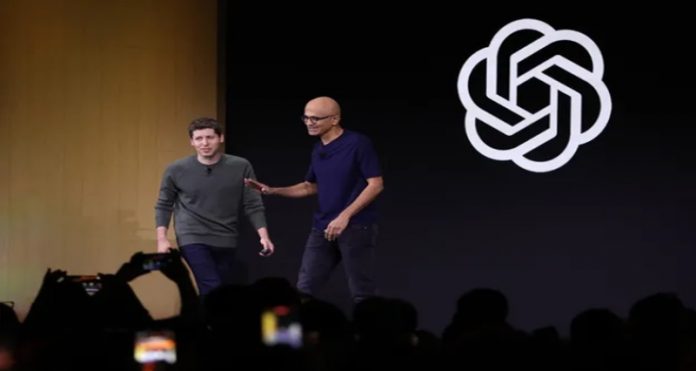
Microsoft, led by CEO Satya Nadella, has been actively reducing its dependence on OpenAI models, anticipating a future in which foundational AI models become commoditized. Instead of betting solely on OpenAI, Microsoft is integrating multiple AI models into its cloud services. In May 2025, it began offering access to Elon Musk’s xAI Grok model to Azure customers—a move that underscores Microsoft’s pivot toward a multi-model ecosystem.

According to several sources, Microsoft is also becoming less patient with OpenAI CEO Sam Altman’s escalating demands for computing infrastructure. Altman has reportedly pressured Microsoft for faster access to GPUs and expanded server capacity to handle ChatGPT’s soaring user base—now at 500 million weekly active users globally—while also training new models.

The partnership has become particularly strained over infrastructure issues, with OpenAI also exploring alternative cloud partnerships with Oracle, Google Cloud, and SoftBank to diversify its backend operations.

Legal and Regulatory Hurdles

Even if both companies reach a new agreement, it must survive scrutiny from U.S. regulators. The conversion of OpenAI into a for-profit entity is subject to review by attorneys-general in California and Delaware, given its original nonprofit charter. Elon Musk, a former OpenAI board member and current head of xAI, has launched a legal challenge against the transformation, which further complicates the timeline and risks.

Additionally, current contract elements are under renegotiation, including Microsoft’s exclusive right to sell OpenAI’s products through its Azure cloud, its right of first refusal on infrastructure services, and its early access to OpenAI’s intellectual property in the event of a breakthrough in artificial general intelligence (AGI). Reports suggest the AGI clause may be dropped entirely, as it has become a point of contention.

Nigeria, Japan Ink $51M Deal for Abuja Startup Hub to Power Tech Innovation, Job Creation

0

The National Information Technology Development Agency (NITDA) has formally signed an agreement with a Japanese consortium to begin the implementation of the Abuja Startup Hub Project—an ambitious initiative aimed at transforming Nigeria’s digital economy and building a generation of globally competitive tech entrepreneurs.

The agreement was sealed in partnership with Oriental Consultants Global Co., Ltd., Intem Consulting Inc., and Yachiyo Engineering Co., Ltd., all representing the Japanese International Cooperation Agency (JICA), which is financing the project.

This latest development follows an earlier Memorandum of Understanding (MoU) signed on April 10, 2025, between Nigeria’s Minister of Budget and Economic Planning, Senator Atiku Bagudu, and Mr. Yuzurio Susumu, Chief Representative of JICA’s Nigeria Office. The MoU established the groundwork for Japanese support in developing high-impact startup infrastructure in the Nigerian capital.

A Two-Tier Project Worth Over $51 Million

The Abuja Startup Hub Project has two primary components. The first, led by NITDA, will focus on building a state-of-the-art digital startup hub valued at $11.2 million. This facility will house co-working spaces, digital labs, and innovation studios to foster entrepreneurship and collaboration among Nigerian startups.

The second component, valued at $40 million, will be implemented by the Nigeria Sovereign Investment Authority (NSIA) and will aim to create a nationwide supportive framework for social startups—enterprises focused on addressing development challenges in sectors such as education, health, agriculture, and financial inclusion.

Speaking at the signing ceremony in Abuja, NITDA Director General Kashifu Inuwa emphasized the growing partnership between Nigeria and Japan in the digital space. He cited previous collaborations like the iHatch incubation program, which has generated over 117 direct jobs and more than 370 indirect jobs, as examples of what the bilateral relationship has already accomplished.

Inuwa said the Startup Hub Project aligns closely with President Bola Tinubu’s Renewed Hope Agenda, particularly its core objective of driving inclusive economic growth through digital innovation and private sector investment.

He noted that the hub is expected to play a key role in Nigeria’s strategy to become a regional technology powerhouse, stating, “This project is more than bricks and mortar; it is about transforming ideas into impact and empowering our youths with 21st-century tools.”

The project will span five years and eight months, starting from April 2025 through December 2030, during which NITDA and NSIA will jointly oversee implementation and ensure that the infrastructure serves as a platform for sustainable innovation.

Bridging Nigerian and Japanese Tech Ecosystems

The Abuja initiative also aims to strengthen ties between Nigeria and Japan’s tech ecosystems. Inuwa said that NITDA and JICA are actively working to expand exchange programs, promote bilateral networking opportunities, and sponsor Nigerian startups to participate in Japanese accelerator programs and global pitch events.

He described the collaboration as a “strategic alignment of innovation ecosystems,” and praised the Japanese government for choosing to invest in Nigeria’s digital future. He indicated that with Japan’s renowned experience in technological excellence and Nigeria’s growing youth-driven innovation landscape, this partnership sets a foundation for mutual prosperity.

A Leap for Nigeria’s Startup Scene

The Abuja Startup Hub is expected to become a cornerstone of Nigeria’s digital economy, offering a space where emerging entrepreneurs can receive mentorship, secure venture capital, and collaborate with local and international partners. It is also anticipated to attract foreign direct investment (FDI) into Nigeria’s technology sector, further strengthening the country’s position as a key player in Africa’s innovation economy.

As the country races toward its goal of building a $1 trillion economy by 2030, experts say initiatives like this will be critical to unlocking job creation, improving tech exports, and nurturing homegrown unicorns.

Some believe that the Startup Hub Project, once completed, is poised to serve not only as a physical infrastructure but as a symbol of Nigeria’s digital ambitions—a signal to global investors and innovators that the country is ready to lead in the 21st-century economy.

Listing and Trading of FARTCOIN On Binance.US Amplifies Its Visibility

0

FARTCOIN deposits went live on Binance.US on June 17, 2025, with trading for the FARTCOIN/USDT pair starting on June 18, 2025, at 7 a.m. EDT. Please note that FARTCOIN is not currently available for purchase or trade on Binance’s global platform, but it is listed on Binance.US and other exchanges like Bitget, KuCoin, and Kraken.

The listing of FARTCOIN deposits on Binance.US, which began on June 17, 2025, with trading for the FARTCOIN/USDT pair starting on June 18, 2025, at 7 a.m. EDT, carries several implications for the cryptocurrency market, particularly in the context of meme coins and the divide in trading availability between platforms like Binance.US and the global Binance platform. FARTCOIN, a Solana-based meme coin launched in October 2024, thrives on humor and community engagement, with features like submitting fart jokes for tokens and a “Gas Fee” digital fart sound.

Its listing on Binance.US, a major U.S.-based exchange, boosts its legitimacy and visibility, attracting speculative traders. The 24-hour trading volume surged to $373.2 million on its debut, a 66% increase, despite a 10% price drop, indicating heightened speculative interest. The listing triggered significant volatility, with FARTCOIN’s price dropping over 10% on its debut day after briefly surging past $1.30. This “sell the news” event reflects typical meme coin behavior, where hype drives initial price spikes followed by profit-taking. The Relative Strength Index (RSI) at 47.31 and weak MACD signals suggest market indecision, posing risks for investors chasing short-term gains.

FARTCOIN’s appeal lies in its playful branding and community-driven model, encouraging user participation through meme and joke submissions. The Binance.US listing amplifies this by exposing the coin to a broader U.S. audience, potentially growing its 56,000+ holder base. Its relatively balanced token distribution (top 10 holders own 9.97%, top 100 hold 42.96%) supports community inclusivity compared to more concentrated tokens like SPORE.

The listing reinforces the trend of meme coins leveraging internet culture for viral growth, as seen with predecessors like Dogecoin and Shiba Inu. However, FARTCOIN’s lack of intrinsic utility—focused on entertainment rather than decentralized finance (DeFi) or other practical applications—may limit its long-term sustainability. The listing aligns with a broader speculative mania in meme coins, as noted by industry observers like Owen Lamont, who described FARTCOIN as emblematic of a market cycle driven by “stupidity” and attention-grabbing tactics.

Its market cap, exceeding $1 billion, outpaces 38% of U.S. publicly traded companies, highlighting the absurdity and allure of meme coins in capturing retail investor enthusiasm.
Posts on X reflect this sentiment, with users like @RonytalksCrypto noting that Binance prioritizes transaction volume over decentralization, framing FARTCOIN as a “revenue stream” rather than a joke. This suggests exchanges capitalize on meme coin hype to drive fees, even for assets with questionable fundamentals.

The U.S. Securities and Exchange Commission’s (SEC) February 2025 clarification that community-oriented meme coins like FARTCOIN are not securities reduces regulatory hurdles, fostering a bullish outlook for such tokens. This contrasts with the previous SEC chair’s aggressive stance, which created uncertainty. The clearer guidelines may encourage further listings of meme coins on U.S. exchanges.

However, FARTCOIN’s low project profile score (48%) and unproven fundamentals raise concerns about its volatility and lack of historical performance, cautioning investors to approach with care. The divide in FARTCOIN’s trading availability between Binance.US and the global Binance platform underscores broader disparities in the cryptocurrency ecosystem. FARTCOIN is listed on Binance.US but not on the global Binance platform for spot trading, though Binance Futures announced a perpetual contract with up to 75x leverage in December 2024.

This discrepancy reflects regulatory differences, as Binance.US operates under stricter U.S. compliance requirements (e.g., Know Your Customer or KYC protocols), limiting its coin offerings compared to the global platform’s 400+ cryptocurrencies.
U.S. investors face restricted access to global markets, forcing reliance on Binance.US or other U.S.-compliant exchanges like Coinbase, Bitget, or Kraken, where FARTCOIN is also traded. This creates a fragmented trading experience, with U.S. users potentially missing out on global liquidity pools or alternative trading pairs.

The U.S.’s stringent regulatory environment, including SEC oversight and state-level restrictions, limits the range of cryptocurrencies available on Binance.US compared to the global Binance platform. For instance, FARTCOIN’s absence from Binance’s spot market but presence on its futures market suggests cautious integration due to regulatory scrutiny. This divide disadvantages U.S. investors, who may face higher fees or lower liquidity on Binance.US compared to global peers.

It also highlights the centralization trend in crypto exchanges, as noted in analyses of FTX’s collapse, where centralized platforms like Binance dominate market activity, potentially undermining the ethos of decentralized finance. Meme coins like FARTCOIN thrive on global platforms with broader user bases, but their limited availability on U.S. exchanges restricts American retail investors’ participation in early-stage hype cycles. This can lead to disparities in profit opportunities, as global traders may capitalize on price surges before U.S. listings occur.

Conversely, Binance.US’s listing of FARTCOIN may attract U.S.-based speculative traders, narrowing the gap for this specific token but not addressing the broader divide for other cryptocurrencies unavailable in the U.S. The absence of FARTCOIN on Binance’s global spot market may concentrate liquidity on Binance.US and other exchanges (e.g., Bitget, with $34.5 million in 24-hour FARTCOIN/USDT trading volume), potentially leading to price inefficiencies or arbitrage opportunities.

U.S. investors may turn to decentralized exchanges (DEXs) like Raydium to bypass restrictions, as outlined in Binance’s guide to buying FARTCOIN via Solana-based DEXs. This increases complexity and risk, requiring crypto wallets and technical knowledge, which may deter less experienced traders. Binance’s selective listing strategy—offering FARTCOIN on Binance.US and futures but not global spot trading—reflects a balance between capitalizing on meme coin hype and managing regulatory risks.

The listing of FARTCOIN deposits on Binance.US amplifies its visibility and speculative appeal, reinforcing the meme coin trend driven by community engagement and internet humor. However, its volatile debut and lack of utility highlight the risks of speculative mania, as seen in its $1 billion+ market cap and comparisons to absurd market cycles. The divide in trading availability between Binance.US and the global Binance platform reflects regulatory constraints, limiting U.S. investors’ access to global markets and creating disparities in liquidity and opportunity. While FARTCOIN’s listing bridges this gap for one token, the broader fragmentation in cryptocurrency trading underscores the challenges of centralized exchanges in a supposedly decentralized ecosystem.

Ondo Finance’s Global Markets Alliance Is A Pivotal Step Toward Mainstreaming Tokenized Securities

0

Ondo Finance announced the formation of the Global Markets Alliance, a coalition aimed at standardizing and accelerating the adoption of tokenized securities on blockchain platforms, including Solana. The alliance includes major players like the Solana Foundation, BitGo, Fireblocks, Trust Wallet, Bitget Wallet, Jupiter Exchange, 1inch, Rainbow Wallet, Alpaca, and Cowswap. The initiative seeks to establish unified standards for tokenized real-world assets (RWAs), such as stocks, ETFs, and mutual funds, to enhance interoperability, compliance, and liquidity across global financial markets.

This move aligns with the upcoming launch of Ondo Global Markets, a platform designed to provide non-U.S. users access to tokenized U.S. securities through crypto wallets and applications. The tokenized RWA market has grown significantly, reaching a $23 billion valuation by June 2025, with Ondo’s ecosystem TVL doubling to nearly $1.4 billion in the past year.

The announcement of Ondo Finance’s Global Markets Alliance and its focus on tokenizing securities on Solana has significant implications for the financial and blockchain ecosystems, while also highlighting a divide in adoption, regulation, and accessibility. The alliance’s push for unified standards for tokenized real-world assets (RWAs) could streamline development, reduce fragmentation, and foster trust among institutions and retail investors. This is critical for scaling tokenized securities like stocks, ETFs, and mutual funds.

By enabling non-U.S. users to access tokenized U.S. securities through crypto wallets (e.g., Trust Wallet, Rainbow Wallet), Ondo Global Markets could democratize access to traditionally exclusive markets, potentially increasing liquidity for tokenized assets. Solana’s high-throughput, low-cost blockchain is positioned as a preferred platform for tokenized securities, potentially boosting its adoption over competitors like Ethereum or Polygon for RWA use cases.

The $23 billion tokenized RWA market valuation and Ondo’s nearly $1.4 billion TVL reflect growing institutional and retail interest. The alliance’s involvement of major players like BitGo, Fireblocks, and Jupiter Exchange signals robust infrastructure support, which could attract more DeFi and TradFi participants. Partnerships with wallets and exchanges (e.g., 1inch, Cowswap) may integrate tokenized securities into broader DeFi ecosystems, enabling novel financial products like lending or yield farming with RWAs.

The alliance’s focus on compliance suggests a proactive approach to navigating global regulatory frameworks, which could set a precedent for other blockchain projects. This is crucial as tokenized securities operate in a legally sensitive space, requiring adherence to securities laws in multiple jurisdictions. Tokenization reduces intermediaries, lowers transaction costs, and enables 24/7 trading, challenging traditional financial systems. The alliance could drive innovation in how securities are issued, traded, and settled, potentially reshaping global capital markets.

Ondo Global Markets explicitly targets non-U.S. users, reflecting regulatory restrictions in the U.S., where tokenized securities face stringent SEC oversight. This creates a divide where non-U.S. investors gain easier access to tokenized U.S. assets, while U.S. investors may be excluded or face higher barriers due to compliance requirements. Non-U.S. jurisdictions with crypto-friendly regulations (e.g., Singapore, UAE) may see faster adoption, widening the gap with regions like the U.S. or EU, where regulatory clarity is still evolving.

Retail investors benefit from wallet-based access and fractional ownership of high-value securities, but institutional players (e.g., hedge funds, banks) may dominate early adoption due to their resources and familiarity with compliance. This could create an uneven playing field, where retail investors lag in accessing sophisticated RWA products. The alliance’s enterprise-grade partners (e.g., Fireblocks, BitGo) suggest a focus on institutional needs, potentially prioritizing their infrastructure over retail user experience.

Solana’s prominence in this initiative may deepen the divide between blockchain ecosystems. Projects on Ethereum, Polygon, or other chains may face competitive pressure to match Solana’s low fees and high throughput for RWA tokenization. Smaller blockchains or those without alliances may struggle to attract RWA projects, concentrating market activity on Solana and allied platforms.

Jurisdictions with clear regulations for tokenized assets (e.g., Switzerland, Singapore) will likely see faster adoption compared to regions with ambiguous or restrictive frameworks. This creates a divide in global market participation, where some countries become hubs for tokenized securities while others lag. The alliance’s compliance focus may exclude smaller players or jurisdictions unable to meet stringent standards, limiting inclusivity.

Users with access to supported wallets (e.g., Trust Wallet, Bitget Wallet) and exchanges will benefit most, while those using less-integrated platforms may face barriers. This could exacerbate the digital divide, particularly in regions with limited access to advanced crypto infrastructure. Technical expertise required to navigate tokenized securities (e.g., understanding custody, wallet security) may exclude less tech-savvy users, creating an adoption gap.

Ondo Finance’s Global Markets Alliance is a pivotal step toward mainstreaming tokenized securities, leveraging Solana’s infrastructure and a coalition of industry leaders to drive standardization, liquidity, and innovation. However, it underscores divides in geography (U.S. vs. non-U.S.), adoption (retail vs. institutional), blockchain ecosystems, regulatory environments, and technological access. These divides could shape the pace and inclusivity of tokenized securities’ global adoption, with Solana and compliant jurisdictions likely leading the charge.

U.S. Added Over 1,000 New Millionaires Daily in 2024, Cementing Its Place as the World’s Wealth Capital

0

The United States once again led global wealth creation in 2024, producing more than 1,000 new millionaires every day. This achievement not only widened its lead over every other country but also reinforced its enduring status as the world’s top destination for personal financial advancement.

According to the Global Wealth Report 2024 by UBS, the U.S. added 379,000 new millionaires last year alone. That figure dwarfs the 141,000 millionaires added by China, the world’s second-largest economy, and amounts to more than half of the 684,000 total new millionaires created globally in 2024.

This dramatic wealth expansion comes as global financial markets rebounded strongly last year, with the S&P 500 rising over 23% and the Nasdaq surging nearly 29%. UBS credited the U.S. boom to a mix of strong equity market performance and a stable U.S. dollar, which together delivered significant gains for both institutional investors and private individuals with exposure to capital markets.

America’s Millionaire Class Swells to Record High

The United States now boasts 23.8 million millionaires—more than Western Europe and China combined. That number gives the U.S. nearly 35% of the world’s total personal wealth, further solidifying its dominance in global finance.

China, by comparison, has 6.3 million millionaires and controls just under 20% of global wealth. Other wealthy nations like Japan, Germany, France, the U.K., and Canada each count just over 2 million millionaires, a far cry from the numbers seen in the U.S.

“Over the next five years, we expect North America and Greater China to be the main drivers of global wealth growth,” the report reads.

“Land of Dreams” Still Rings True

The widening gap between the U.S. and the rest of the world—especially China—underscores America’s continued reputation as the “land of opportunity.” While China’s economy has grown rapidly over the past two decades, the U.S. continues to offer a unique combination of capital accessibility, mature financial markets, legal protections for private enterprise, and innovation-driven ecosystems that make upward financial mobility not just possible but attainable.

Entrepreneurship, stock ownership, real estate investing, and participation in retirement markets like 401(k) plans continue to give millions of Americans direct access to wealth-building tools that are either limited or tightly controlled in other economies. In countries like China, restrictions on foreign investment, heavy regulatory burdens, and growing capital flight concerns have made personal wealth growth more difficult—even for the affluent.

Millionaire Creation to Accelerate Further

Looking ahead, UBS forecasts that the global number of millionaires will rise by another 5.34 million over the next five years—a 9% increase—with North America and Greater China driving most of that growth.

Meanwhile, a separate report by Henley & Partners and New World Wealth revealed that the U.S. has seen a 78% increase in so-called liquid millionaires—those with easily accessible financial assets of at least $1 million—over the past decade. That growth rate, unmatched by any other major economy, highlights the long-term resilience of American wealth accumulation.

The U.S. dominance in wealth creation has not gone unnoticed by economists. While wealth inequality remains a challenge, the American economic model still enables vast numbers of people to climb the financial ladder at rates unseen elsewhere. From tech entrepreneurs in Silicon Valley to real estate investors in Texas and retirees with strong equity portfolios, the paths to wealth in America remain broad and accessible.

As other countries face structural challenges—from demographic shifts to state intervention in capital markets—the U.S. continues to benefit from a combination of private sector freedom, financial transparency, and global investor confidence.

While millionaire status remains out of reach for most, nowhere else on earth produces more self-made millionaires, or does so as quickly, as the United States. As the global wealth landscape evolves, the American Dream—long questioned by skeptics—appears not only intact but thriving.