DD
MM
YYYY

PAGES

DD
MM
YYYY

spot_img

PAGES

Home Blog Page 11

Coinbase CEO Brian Armstrong Predicts Bitcoin Could Reach $300,000 to $400,000 by 2030

1

Bitcoin could be on track for a dramatic rise over the next four years, with Coinbase CEO Brian Armstrong predicting that the world’s largest cryptocurrency could reach between $300,000 and $400,000 by 2030.

Speaking on Fox Business Network, Armstrong pointed to improving U.S. regulatory conditions as a key supporting factor for the long-term outlook.

“I think over the next couple of years if I say 2030 I think it’s very likely we’ll see $300,000 and $400,000 Bitcoin and we’ll see how it goes”, he said.

His forecast reflects growing optimism around Bitcoin’s long-term adoption, institutional demand and its potential to become an increasingly important global financial asset.

Also, the comments came one day after President Donald Trump hosted a meeting at the White House with crypto executives and traditional finance leaders.

Trump called on Congress to pass a bill that would provide clearer definitions for the growing cryptocurrency sector, a top priority for industry executives who had gathered at the White House for an event with the President.

“Now we need Congress to take the next step by passing the Clarity Act- a fair version of the Clarity Act”, Trump said in remarks at the event.

Armstrong, who attended the meeting, said the discussion focused heavily on advancing the Clarity Act, legislation aimed at providing clearer rules for digital assets.

He described a strong sense of urgency from the administration and top regulators at the SEC and CFTC to move the bill forward. Notably, he has highlighted cryptocurrency’s growing role in expanding financial access globally, arguing that the industry has not received enough credit for the opportunities it has created.

According to Armstrong, crypto has helped break down traditional financial barriers by giving more people access to digital payments, global markets and financial services, particularly in regions underserved by conventional banking systems.

His forecast arrives as Bitcoin has shown renewed strength, recently climbing past $72,000 and posting gains of around 10% over the prior 24 hours.

The cryptocurrency climbed from the mid-$64,000 range earlier in the session to exceed the psychologically important $70,000 mark on several major exchanges, trading as high as $70031, before settling in the high $68,000s to low $69,000s, up roughly 7 percent on the day.

The Coinbase chief has also suggested the broader crypto market may be approaching the end of its recent downturn and could be nearing the start of a new phase of stronger spot trading activity.

While Armstrong has expressed bullish views on Bitcoin for years, including higher targets in earlier comments, the $300,000–$400,000 range by 2030 represents a specific and relatively grounded long-term projection tied to institutional adoption, Bitcoin’s fixed supply, and potential regulatory clarity in the United States.

As with any price forecast in a volatile asset class, the outcome remains uncertain and will depend on multiple economic, technological, and policy developments over the coming years.

Outlook

Looking ahead, Bitcoin’s path toward Armstrong’s $300,000–$400,000 target will likely depend on a combination of institutional adoption, regulatory clarity, market liquidity, and broader acceptance of the cryptocurrency as a global financial asset.

Continued demand from institutional investors and greater integration of Bitcoin into traditional financial markets could provide significant support for its long-term valuation.

While Armstrong has expressed bullish views on Bitcoin for years, including higher targets in earlier comments, the $300,000–$400,000 range by 2030 represents a specific and relatively grounded long-term projection tied to institutional adoption, Bitcoin’s fixed supply, and potential regulatory clarity in the United States.

U.S. Treasury Falls After Moves to Curb Long-Term Bond Rout, But Analysts Warn Relief May Be Temporary

0

U.S. Treasury yields fell sharply on Wednesday after the Treasury Department moved to increase its purchases of longer-dated government bonds, offering investors some relief after a sustained selloff pushed long-term borrowing costs to levels that are challenging for the U.S. government and private sector.

The yield on the 30-year Treasury fell nearly 10 basis points to 5.188% before recovering to around 5.208%. The move followed the Treasury’s announcement that it would double the size of liquidity-support buyback operations for longer-dated securities from $2 billion to at least $4 billion per operation. The programme will cover the 10-to-20-year and 20-to-30-year segments of the Treasury curve from September 9 through November 4.

The announcement also lifted risk assets. The Nasdaq Composite rose 0.4%, while the dollar weakened, with the dollar index falling 0.7% to 98.95. The reaction underscored how closely investors are watching the Treasury market for signs that policymakers are prepared to intervene as borrowing costs rise.

Relief Not for So Long

But the relief may prove temporary. The Treasury’s move can improve liquidity and reduce the immediate supply of some longer-term securities, but it does not address the underlying forces driving yields higher: enormous government borrowing requirements, uneven demand for long-dated debt and growing competition for capital.

Ryan Swift, chief U.S. bond strategist at BCA Research, said the announcement had two important effects. First, it signaled that Treasury officials were increasingly concerned about the rise in long-term yields. Second, it demonstrated the department’s effort to manage the maturity structure of its borrowing by relying more heavily on short-term Treasury bills while keeping longer-term coupon issuance relatively stable.

“The data does not indicate that rising long-maturity yields were driven by a deterioration of liquidity,” Swift said. The move instead showed that the Treasury “is sensitive to the increase in yields and is willing to take steps to try to mitigate it.”

The strategy, however, has a built-in limit. Shifting more borrowing toward short-term bills can reduce pressure on the long end of the curve, but it also increases the supply that investors must absorb at the front end. Swift said the market would ultimately determine how far the Treasury could pursue that approach.

“The market will be the ultimate constraint on how far the Treasury can shift its issuance away from long-dated coupons and into T-bills,” he said.

That means Wednesday’s rally should not be interpreted as evidence that the fundamental bond-market problem has been solved. Swift said the Treasury’s measures were likely to move yields only temporarily because the government’s ability to alter the maturity structure of its debt is limited.

“The Treasury’s toolbox is limited to changing the maturity structure of the debt,” he said. “If it does anything too extreme, then the market will push back and force them to reverse course.”

The bigger problem is the sheer amount of debt that needs to be financed.

Joseph Purtell, senior vice president and portfolio manager at Neuberger Berman, questioned whether an additional $2 billion per buyback was sufficient to counter the broader supply-demand imbalance that had pushed long-term yields higher.

“For us, in thinking about the context around this, is an extra $2 billion per buyback really worth a full 9 basis points, relative to supply/demand mismatch that got us into this mess in the first place? No,” Purtell said.

He said the Treasury’s intervention would probably help in the short term by signaling that officials have a level of yields they are uncomfortable with. But he warned that it would not resolve the fiscal problem.

“It’s going to help today,” Purtell said. “But it doesn’t address the glaring supply issue. Deficits show no reason to go down.”

That is the central issue confronting the bond market. Treasury buybacks can influence liquidity and the distribution of debt across maturities, but they cannot reduce the federal government’s underlying deficit. Unless Washington narrows the gap between spending and revenues, the government will continue to require large amounts of financing, leaving investors to determine what yield they require to absorb that debt.

The implications extend well beyond government finance. Treasury yields serve as a benchmark for borrowing throughout the economy, influencing corporate debt, mortgages and other forms of credit. A sustained rise in long-term yields can therefore tighten financial conditions even if the Federal Reserve lowers short-term interest rates.

The bond market’s recent behavior is seen as an indication that investors are increasingly demanding compensation for holding long-duration U.S. debt. Michael Lorizio, head of U.S. rates and mortgage trading at Manulife Investment Management, said the Treasury’s decision reflected “an inconsistent amount of demand, especially in off-the-run securities in the very back end of the Treasury curve.”

The timing matters because yields have reached levels that can have a material effect on the government’s interest bill. If higher borrowing costs persist, refinancing existing debt becomes more expensive while new deficits must be funded at higher rates.

That creates a potentially damaging feedback mechanism: larger deficits require more borrowing, greater borrowing increases the supply of government securities, weaker demand can push yields higher, and higher yields increase the cost of servicing the debt. Those additional interest expenses can then contribute to still larger deficits.

Several analysts quoted by Reuters therefore cautioned against viewing the Treasury intervention as a lasting solution.

Brian Jacobsen, chief economic strategist at Annex Wealth Management, described the market response as “a temporary salve.” He noted that the announcement illustrated a broader shift in which the Treasury is attempting to influence financial conditions through the composition of its borrowing rather than through a reduction in the government’s financing needs.

Peter Cardillo, chief market economist at Spartan Capital Securities, was even more blunt, calling the move “a gimmick” that would probably work for a period before renewed selling pressure returned.

“What this does is it relieves short-term pressures in the long end of the market,” Cardillo said. “It will probably work for a while until the vigilantes are back again.”

The reference to bond “vigilantes” rings a bell. It describes investors who demand higher yields when they believe governments are pursuing unsustainable fiscal or economic policies. If investors become convinced that Washington is unwilling or unable to bring deficits under control, the market can impose discipline through higher borrowing costs.

The Treasury is also operating in an environment where the Federal Reserve is unlikely to provide an easy backstop. Swift noted that the Fed has the capacity to purchase Treasury securities across maturities, but its current direction is toward shrinking its balance sheet rather than expanding it.

This leaves the Treasury with a narrower set of tools. It can alter the maturity of new issuance, adjust auction sizes and conduct buybacks, but it cannot permanently suppress market-determined yields without addressing the fiscal fundamentals.

Thomas Simons, chief U.S. economist at Jefferies, warned that the abrupt announcement could also damage the Treasury’s credibility with investors.

“If the aim of this is to reduce term premium or long-end yields, I think this is an incredibly short-sighted strategy,” Simons said. “I don’t think that they appreciate what kind of premium is built into yields that is related to the idea that we’re not surprised by things.”

His concern goes to the importance of predictable Treasury communication. Investors price government debt partly on expectations about future issuance. Sudden changes can alter those expectations and potentially increase the risk premium investors demand.

Yet the Treasury’s decision also shows that officials are increasingly sensitive to the economic consequences of yields approaching 5% and beyond.

René Albrecht, senior analyst at DZ Bank, said policymakers are concerned about the effect of high long-term yields on both government finances and private-sector borrowing.

“I think they fear the pain of 5% or higher yields on the long-end, not only because it raises the interest rate costs for the government but also for the private sector,” Albrecht said.

The broader backdrop makes the situation more difficult. Investors are confronting persistent fiscal deficits, elevated government debt, inflation uncertainty and the financing demands of the artificial intelligence boom. Technology companies and data-center operators are committing enormous sums to computing infrastructure, increasing competition for capital at the same time governments are issuing large quantities of debt.

Analysts have warned that competition could become more important if AI infrastructure investment remains elevated. Private-sector demand for capital does not necessarily crowd out Treasury demand directly, but it adds another major source of financing needs to an already capital-intensive global economy.

The bond market is therefore confronting a structural question rather than simply a temporary liquidity problem: who will ultimately absorb the enormous volume of U.S. government debt?

Purtell framed the issue directly: “There are structural fiscal issues that haven’t been addressed for a very long time. The more interesting battle will be addressing longer-term issues, and who will be there to underwrite that debt.”

Jeremy Stretch, head of G10 FX strategy at CIBC, said the Treasury’s intervention demonstrated that officials recognized the risk that the bond-market selloff could spill into other asset classes.

“There are still concerns about inflation, the debt profile in the G4, the impact of AI,” Stretch said. But the announcement also showed that “the U.S. Treasury recognizes what is going on the bond market and is prepared to adjust policy in order to limit pressures on the market.”

The immediate focus for investors will be on the Treasury’s intervention’s capacity to keep long-term yields below the 5% threshold and whether demand for U.S. government debt improves. Analysts see a sustained decline easing pressure on mortgages, corporate financing and equity valuations. A renewed rise, however, would signal that investors are demanding a larger premium to finance Washington’s fiscal requirements.

Wednesday’s rally therefore provides breathing room, not a resolution. The Treasury has shown it can influence the bond market, but the market ultimately retains the power to determine the price of government borrowing.

Riot Platforms’ Bitcoin Sales Signal a Major Shift in Mining Strategy

0

Riot Platforms’ decision to sell more than $730 million worth of Bitcoin during the first half of 2026 highlights a significant change in the way major cryptocurrency miners are managing their digital-asset treasuries.

Rather than holding most of the Bitcoin they produce, Riot has increasingly used its BTC reserves as a source of liquidity to support operations, capital expenditures and its broader transition into digital infrastructure.

The company’s first-quarter figures provide a clear indication of the scale of the selling. Riot sold 3,778 Bitcoin during the first quarter for approximately $289.5 million, at an average net price of $76,626 per BTC.

At the end of March, the company held 15,679 Bitcoin, including 5,802 BTC pledged as collateral. The reported first-half sales therefore represent a substantial expansion beyond the first-quarter liquidation.

The move comes as Bitcoin miners face a difficult combination of rising network competition, significant infrastructure costs and pressure to generate cash in an increasingly capital-intensive industry.

Riot has also been pursuing a broader transformation beyond traditional Bitcoin mining. In its first-quarter results, the company described 2026 as an inflection point because it had become an active, revenue-generating data-center operator.

Riot reported $33.2 million in data-center revenue during the quarter and said it had secured 50 megawatts of contracted capacity with AMD.

That strategy helps explain why Bitcoin has become an important financing resource. Building large-scale data centers requires substantial investment in land, power infrastructure, equipment and computing capacity.

Selling BTC allows Riot to convert part of its cryptocurrency treasury into dollars without necessarily issuing additional equity or taking on more debt. However, the strategy also carries an opportunity cost.

Bitcoin held on a balance sheet provides miners with exposure to potential future price appreciation. Once those coins are sold, Riot no longer benefits from their upside. This makes the timing and size of treasury sales particularly important for shareholders.

Riot’s first-quarter filing acknowledged that Bitcoin sales were used to fund company operations. The filing also warned that volatility and declines in Bitcoin’s market price could reduce the purchasing power of its holdings, potentially requiring the company to sell more Bitcoin to generate liquidity.

The broader mining industry is experiencing a similar strategic evolution. As Bitcoin mining becomes more competitive and electricity and hardware costs remain significant, miners are increasingly looking toward artificial intelligence and high-performance computing as alternative sources of revenue.

Riot’s data-center expansion places the company firmly within that trend. The company’s ability to monetize its substantial power portfolio could ultimately reduce its dependence on Bitcoin sales. If data-center contracts generate predictable and recurring revenue, Riot may have less reason to liquidate BTC reserves to finance expansion.

For Bitcoin market,, large miner sales remain important. Miners are among the ecosystem’s natural sources of BTC supply, and substantial liquidations can add selling pressure, particularly when several miners simultaneously reduce their holdings.

Riot’s more than $730 million in first-half Bitcoin sales therefore represent more than a treasury transaction. They reflect the changing economics of the mining industry and the growing competition between Bitcoin mining and AI infrastructure for energy, capital and computing resources.

The key question for investors is whether Riot can transform the proceeds from its Bitcoin sales into higher, more stable infrastructure revenue. If successful, the company could emerge as a diversified digital-infrastructure operator. If not, continued BTC liquidation could expose the underlying financial pressures facing its mining business.

Hong Kong IPO Pipeline Broadens Beyond AI As Fundraising Surpasses 2025 Total

0

Hong Kong’s initial public offering pipeline is gaining strength across a broader range of industries, with biotechnology, mining and consumer companies joining a surge in listings from artificial intelligence and other technology sectors, Hong Kong Exchanges and Clearing CEO Bonnie Chan said on Thursday.

More than 100 companies have listed in Hong Kong so far this year, raising more than $40 billion, according to Chan. The proceeds have already exceeded the $37 billion raised through IPOs during the whole of 2025, pointing to a sharp recovery in the city’s primary market.

Speaking to CNBC’s Emily Tan, Chan said the strength of the pipeline extended well beyond the technology companies that have dominated investor attention during the global AI boom.

“We still have a lot of pretty good high quality companies in the pipeline trying to get their IPOs done before the end of the year,” Chan said.

The comments highlight the breadth of Hong Kong’s current capital-market revival. While AI-related companies have attracted significant investor demand and helped drive some of the market’s most prominent new listings, Chan said the exchange was also seeing prospective issuers from biotechnology, mining and consumer industries.

The rebound in IPO activity comes as HKEX itself reported record half-year revenue and profit on Wednesday. Net profit rose 24% year on year to HK$10.57 billion ($1.35 billion), beating analysts’ expectations.

“Market activity remained buoyant, supported by factors like sustained IPO momentum and growing interest from global issuers and investors,” HKEX said.

The strength of Hong Kong’s equity market has also extended beyond new listings. Follow-on offerings have generated more than $50 billion so far this year, compared with $66 billion for all of 2025, Chan said.

That performance suggests companies already listed in Hong Kong are also making greater use of the market to raise fresh capital, adding another source of activity for the exchange beyond IPOs.

Trading activity has accelerated alongside the recovery in primary-market fundraising. Average daily turnover in Hong Kong has reached HK$280 billion since the beginning of the year, compared with an average of HK$250 billion for the whole of 2025, Chan said.

Average daily turnover measures the total value of shares or contracts traded in a market on a typical trading day and is widely used as an indicator of market liquidity and investor participation.

Chan said the increase in trading volumes was being driven by a broadening investor base rather than a single source of capital. Mainland Chinese investors, international institutional investors and demand associated with the IPO market and AI-related companies have all contributed to liquidity, she said.

Southbound trading, which tracks investment flows from mainland China into Hong Kong-listed securities, has remained broadly stable, according to Chan. The rise in overall turnover therefore suggests that investors outside mainland China are accounting for a growing share of activity.

“As overall ADT has increased, that means that the rest of the world is trading more in our market,” Chan said.

She said the exchange was seeing increased participation from institutional investors globally, while regional retail investors were also returning to Hong Kong equities in meaningful numbers.

“Broadly speaking, I see more participation from institutional investors from around the world. Even regional retail investors have come to our market in meaningful volumes,” she said.

The composition of cornerstone investors in recent IPOs has provided another indication of international demand. Chan said sovereign wealth funds from “every corner of the world” had participated as cornerstone investors, reinforcing Hong Kong’s role as a fundraising venue for companies seeking access to both mainland Chinese and international capital.

The combination of stronger IPO issuance, substantial follow-on fundraising and higher secondary-market turnover marks a significant expansion in activity for Hong Kong’s capital markets. The challenge for the exchange will now be to sustain that momentum through the remainder of the year while converting its sizeable pipeline of prospective listings into completed deals.

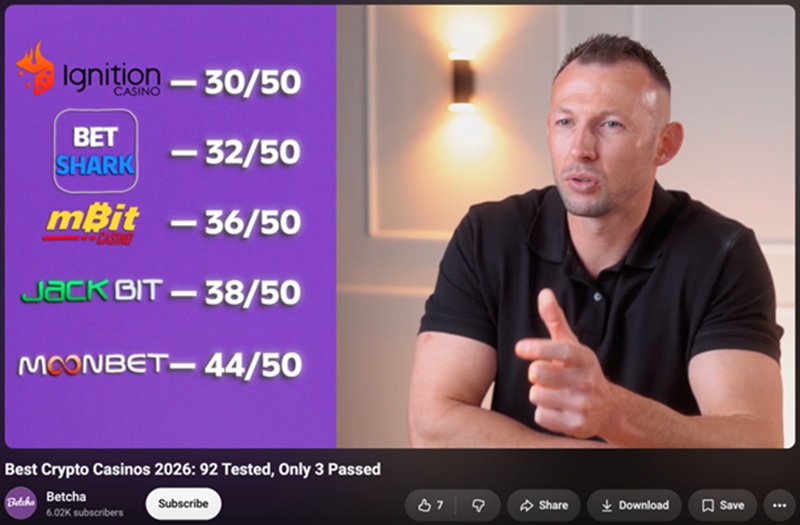
We Tested 5 New Crypto Casinos in 2026

1

New crypto casinos surface almost weekly, each promising faster payouts, better odds, or a smoother experience. But “new” doesn’t always mean “good”, so we tested 50+ casinos to bring you the 5 most trusted new crypto gambling sites.

As always, online gambling is 19+ (or 21+ depending on your jurisdiction), and availability varies by country and state, always confirm the legal status of crypto gambling where you live before signing up.

Here is our pick:

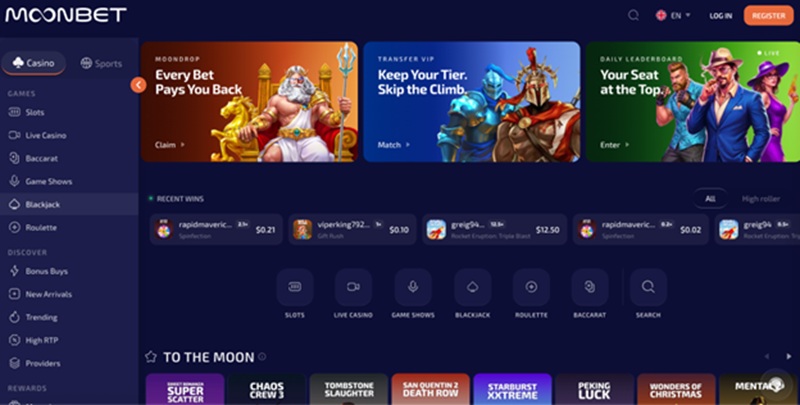
  1. Moonbet: Loved by high rollers for its unlimited withdrawals and no-KYC setup.
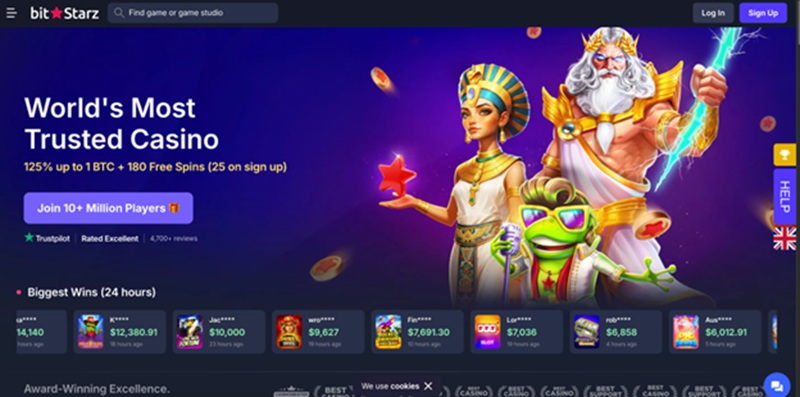
  2. BitStarz: Known for its huge game selection and crypto-friendly experience.
  3. Ignition Casino: A popular choice for Bitcoin poker alongside its casino games.
  4. Thunderpick: Built around crypto betting, with a strong focus on esports and sports.
  5. Mbit Casino: A straightforward Bitcoin casino with a good mix of games and bonuses.


Why crypto casinos moving up in 2026

A few trends are driving the shift toward crypto-first gambling platforms this year:

  • Speed of payouts. Traditional online casinos can take days to process a withdrawal. Crypto withdrawals, once verified, often land in a player’s wallet within minutes to a few hours.
  • Lower friction for international players. Because crypto sidesteps a lot of traditional banking rails, players in regions with limited payment options have an easier time funding accounts.
  • Provably fair gaming. Many crypto-native games publish the cryptographic seed used to generate results, letting players independently verify that a spin, roll, or hand wasn’t manipulated after the fact.
  • Crypto deposits generally require less personal financial data upfront than a linked bank card, though most licensed operators still require identity verification before withdrawals.

With that context, here’s a closer look at the five top crypto casinos worth putting on your radar.

1. Moonbet

Moonbet combines a fast, streamlined interface with a casino built for crypto players, from provably fair games to slots, table games, and live casino titles. The platform also caters to high rollers, with features such as Moonback rakeback designed to give regular players more value over time. No KYC is required, making it possible to get started without going through a lengthy verification process.

What stands out:

  • Regular players can get a portion of their losses back through Moonback, helping improve their effective RTP and stretch their bankroll further.
  • Moonbet is particularly suited to players who prefer larger bets, higher limits, and a platform designed to accommodate bigger bankrolls.
  • Moonbet now offers no-KYC access for everyone, removing the need for the previous $2,000 KYC threshold and making deposits, gameplay, and withdrawals more straightforward.
  • Play with a broad selection of cryptocurrencies across casino games, including provably fair titles, slots, table games, and live dealer options.
  • Players can move between crypto casino games and sports betting without needing separate platforms.

Worth knowing: Moonbet is best suited to crypto players who value fast access, bigger betting options, and ongoing rewards through Moonback rather than simply choosing a casino based on the size of its slot library.

2. Bitstarz

Bitstarz is one of the longest-running names in crypto gambling, and it’s often used as the benchmark other crypto casinos are compared against. It supports both crypto and fiat currencies, which makes it a comfortable entry point for players who aren’t fully committed to crypto-only platforms yet.

What stands out:

  • One of the largest game libraries in the space, with thousands of slots and table games from dozens of software providers.
  • A loyalty and VIP program that rewards long-term play rather than just first deposits.
  • A track record of relatively fast payout processing and responsive customer support, which matters more than almost anything else once you’re ready to cash out.

Worth knowing: Because Bitstarz has been around for years, expectations are high — some players find the bonus wagering requirements stricter than on newer, more aggressively promotional platforms.

3. Ignition

Ignition has carved out a strong reputation specifically among poker players, thanks to anonymous tables that hide opponents’ stats and usernames, a feature poker regulars appreciate because it reduces the advantage that tracking software normally gives sharks against recreational players.

What stands out:

  • Anonymous poker tables, a genuinely differentiated feature you won’t find on most competitors.
  • A strong casino side too, with live dealer games and a solid slot selection beyond the poker room.
  • Crypto deposits and withdrawals processed alongside traditional payment methods, giving players flexibility.

Worth knowing: Ignition’s strength is really the poker room. If poker isn’t your focus, it’s still a decent casino, but it’s not the platform’s standout feature.

More new crypto casinos worth a look

  1. JACK
  2. MyStake
  3. Betshark

How we tested these new crypto casinos

Whichever platform you’re considering, a few checks apply universally:

  1. Licensing. Look for a recognized gaming license (Curaçao, Malta, or similar) displayed clearly on the site, and confirm it’s still active.
  2. Provably fair verification. If a game claims to be provably fair, check that the platform actually explains how to verify a result — not just that it uses the term as marketing.
  3. Withdrawal limits and KYC. Even crypto-first sites usually require identity verification before a first withdrawal. Read the terms so you’re not surprised later.
  4. Customer support responsiveness. Test live chat before you deposit real money. Slow or evasive support is a red flag.
  5. Bonus terms. Wagering requirements, maximum bet limits while a bonus is active, and game weighting all affect how realistic it is to actually clear a bonus.

Why Moonbet tops this list

Moonbet earns the top spot because it’s built around the things high-stakes crypto players actually care about: speed, flexibility, and a rewards structure that scales with how much you play. The rakeback system stands out in particular, instead of a one-time bonus that dries up after your first few sessions.

The sportsbook sits alongside the casino rather than feeling bolted on, deposit and withdrawal limits are built with bigger bankrolls in mind, and the platform leans into a streamlined.

Benefits & Drawbacks of the Best New Crypto Casinos

Here’s a quick comparison of top bitcoin casino sites before your deposit:

Casino Benefits Drawbacks
Moonbet Rakeback rewards consistent play; high limits for big bankrolls; sportsbook + casino in one place (fast payouts & No KYC, no threshold is there) Less online process right now
Bitstarz Massive game library from dozens of providers; long-standing reputation; crypto + fiat supported Stricter bonus wagering requirements; less standout for newer-platform perks
Ignition Anonymous poker tables (rare feature); solid live dealer casino; crypto + traditional payments Casino games feel secondary to poker; less appealing if poker isn’t your focus
Thunderpick Strong esports betting (CS2, League, Dota 2); provably fair in-house originals; modern interface Smaller traditional slot/table selection; esports-first, casino second
mBit Casino Broad multi-coin support; frequent promotions and seasonal offers; mobile-friendly, no app needed Bonus terms require close reading; game library doesn’t have a standout specialty


Which cryptocurrency is best for gambling?

Stablecoins (like USDT or USDC) are often the practical choice since their value doesn’t fluctuate while you play or wait to withdraw. Bitcoin and Ethereum remain the most widely accepted across casinos, but their price can shift between deposit and cashout. The “best” option really depends on whether you prioritize broad acceptance (BTC/ETH) or price stability (stablecoins).