DD
MM
YYYY

PAGES

DD
MM
YYYY

spot_img

PAGES

Home Blog Page 1103

Trump Mobile Unveils $499 “Made in America” Smartphone—but Questions Swirl Around Specs, Origin, and Reality

0

The Trump Organization’s latest venture, Trump Mobile, has ignited a media storm and public curiosity—not just because it’s a Donald Trump-branded wireless service, but because it comes bundled with a new $499 smartphone called the T1.

Unveiled Monday at Trump Tower, the phone was pitched as an American-made alternative to foreign-dominated devices and mobile networks. However, early scrutiny of the product’s specifications and marketing raises far more questions than answers.

According to the Trump Mobile website, the T1 phone will be released in September and supports a subscription plan pegged at $47.45 per month—an on-the-nose reference to Trump’s second tenure as the 47th U.S. President. The wireless service is being promoted with calls to “take back control” from Big Tech and coastal elites, echoing Trump’s populist tone.

But despite the nationalistic messaging and a flashy launch, the T1’s feature list has already sparked skepticism and even derision among tech analysts and journalists.

The Phone Specs: Ambitious or Absurd?

Here’s what Trump Mobile claims the T1 offers:

  • A 6.78-inch AMOLED display with a punch-hole selfie camera
  • 120Hz refresh rate
  • Triple rear camera setup: 50MP main sensor, 2MP macro, and 2MP depth sensor
  • 16MP front-facing camera
  • 5,000mAh battery
  • 256GB of storage and 12GB of RAM
  • In-display fingerprint reader and face unlock
  • Android 15
  • 3.5mm headphone jack
  • USB-C charging port

The specs put the T1 in a peculiar position—not quite a flagship device but also not entry-level. While similar features can be found on higher-end Android phones like the Asus ROG Phone 9 or even the Samsung Galaxy S23 Ultra, those devices typically retail for significantly more than $499. Critically, the Trump Mobile website leaves out one of the most important details of any smartphone: the processor.

Without information on the chip powering the phone, it’s impossible to verify whether the T1 can truly deliver the performance its specs imply. There’s also no mention of durability, water resistance, or other basic features typically listed for a modern device at this price point.

The phone’s promo image—which has been called out for clumsy Photoshop work—further clouds the issue. Observers note visual inconsistencies such as misaligned camera sensors and poorly rendered bezels that do not resemble any known phone design.

Made in America? Not Likely

The Trump Organization claims the phone is “Made in the USA,” a claim many industry experts view as improbable. Nearly every smartphone sold in America today is assembled overseas due to high labor costs and entrenched supply chains. Even U.S.-based tech companies like Apple and Google rely on Chinese, Indian, and Vietnamese factories to build their phones.

Tech analyst Paolo Pescatore dismissed the made-in-America pitch as “highly unlikely,” noting there is virtually no smartphone manufacturing infrastructure in the U.S.

“Even small-scale assembly for niche phones takes years to build and validate,” he said.

A Cloud of Uncertainty

Beyond the hardware, the Trump Mobile ecosystem raises additional concerns. The T1 phone is branded under a trademark license, and the Trump Organization is not directly involved in its engineering or manufacture. That leaves questions about who actually built it, who owns the data, and how the carrier operates.

Trump Mobile’s wireless service is almost certainly piggybacking on an existing U.S. network—most likely through a mobile virtual network operator (MVNO) arrangement with T-Mobile, Verizon, or AT&T. But no such partnerships have been disclosed.

Meanwhile, DTTM Operations, which manages Trump’s trademarks, has filed applications for broader telecom uses of the “Trump” and “T1” brands. These cover accessories, mobile services, and even retail stores, hinting at broader ambitions—but also raising the possibility of a business-driven more by branding than by tech chops.

A Phone Full of Questions

Critics are already drawing comparisons to vaporware—products hyped before they exist, often to capture political or financial momentum. Among the many unanswered questions:

  • Will the T1 actually ship by September?
  • Is it water-resistant or rugged?
  • Why are the rear cameras oddly spaced?
  • Will it ship with Trump-themed wallpapers, pre-installed apps, or crypto-related bloatware?
  • And most pressing: what phone model is it really based on, if any?

The Verge, in its breakdown, described the T1 as “as vapor-y as it gets,” warning that the promotional render “bears no resemblance to any existing phone on the market.” The website also joked about the oddly titled “T1 Phone 8002,” asking, “What happened to the first 8,001 tries?”

Political Branding in a Saturated Market

The launch of Trump Mobile and the T1 smartphone is part of a broader trend in conservative commerce—ideologically aligned products and platforms for voters who distrust mainstream institutions. But while the branding may appeal to Trump’s base, it’s entering a brutally competitive market where specs, performance, and trust matter.

The U.S. smartphone market is dominated by Apple and Samsung, who together account for the vast majority of phone sales. And with most telecom traffic handled by three national carriers—Verizon, AT&T, and T-Mobile—Trump Mobile may struggle to find a competitive edge beyond its name.

Unless more details emerge confirming the viability and origin of the T1 phone, many in the industry will continue to view it with skepticism. This means that it remains a branding gamble in a market where political loyalty might not be enough to carry a tech product.
“JPMD” Trademarking Positions JPMorgan To Bridge Traditional Finance and Crypto

0

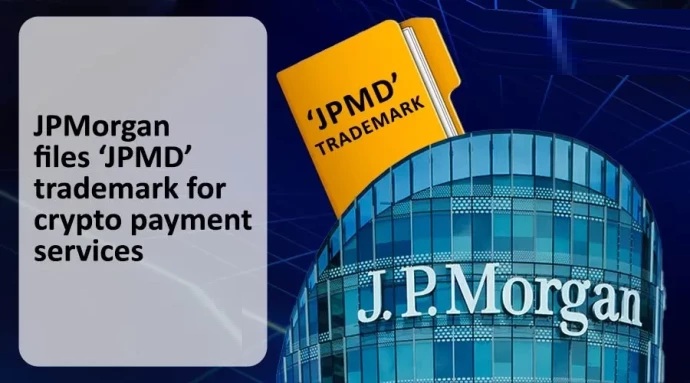
JPMorgan Chase filed a trademark application for “JPMD” with the U.S. Patent and Trademark Office, sparking speculation that it may be preparing to launch a USD-backed stablecoin, potentially named the J.P. Morgan Dollar. The filing covers a broad range of digital asset services, including trading, exchange, payments, custody, and fund transfers, but does not explicitly mention the term “stablecoin.” Industry experts suggest the “D” in JPMD likely stands for “Dollar,” aligning with naming conventions like Circle’s USDC (U.S. Dollar Coin).

This move follows JPMorgan’s existing blockchain efforts, including JPM Coin, a private stablecoin launched in 2019 for institutional settlements, which processes over $1 billion in daily transactions on its Quorum blockchain (now Kinexys). Reports from May 2025 indicate JPMorgan is also exploring a joint stablecoin venture with other major U.S. banks like Bank of America, Citigroup, and Wells Fargo to compete with crypto-native issuers like Tether (USDT) and Circle (USDC), which dominate the $245.9–$252 billion stablecoin market.

The timing aligns with regulatory developments, as the U.S. Senate advanced the GENIUS Act, a bipartisan bill to establish a clear framework for stablecoin issuers, expected to pass in summer 2025. This could facilitate broader adoption by traditional financial institutions. Despite CEO Jamie Dimon’s historical skepticism toward Bitcoin, JPMorgan has embraced blockchain technology and recently began accepting Bitcoin ETFs as loan collateral.

Speculation on X suggests strong market interest, with users viewing JPMD as a potential game-changer for institutional crypto adoption, though some express caution about centralized control resembling CBDCs. No official confirmation or launch timeline for a JPMD stablecoin has been provided by JPMorgan. The filing of the “JPMD” trademark by JPMorgan Chase signals a potential expansion of its blockchain and digital asset strategy, with significant implications for the financial and crypto ecosystems:

Mainstream Adoption of Stablecoins

A JPMorgan-backed stablecoin could accelerate institutional adoption of digital assets, leveraging the bank’s global reach and credibility. With JPM Coin already processing $1 billion daily, JPMD could target broader retail or cross-border payment use cases, competing with USDT ($139 billion market cap) and USDC ($61.5 billion market cap as of June 2025). Integration with JPMorgan’s Kinexys blockchain (formerly Quorum) could enhance efficiency in settlements, remittances, and trade finance, reducing costs and transaction times compared to traditional systems.

The timing of the filing aligns with the U.S. Senate’s advancement of the GENIUS Act, which aims to regulate stablecoin issuers with clear reserve and compliance requirements. A JPMD stablecoin would likely comply with these regulations, positioning JPMorgan as a trusted player in a market where Tether has faced scrutiny over reserve transparency. This could pressure crypto-native issuers to meet stricter standards, potentially reshaping the competitive landscape.

Reports of a joint stablecoin venture with banks like Bank of America, Citigroup, and Wells Fargo suggest a consortium approach, similar to SWIFT for traditional finance. A shared stablecoin could standardize interbank settlements and challenge crypto-native dominance, creating a “walled garden” for institutional players. However, this could limit interoperability with decentralized finance (DeFi) ecosystems, as traditional banks may prioritize private blockchains over public ones.

A JPMD stablecoin could reduce reliance on volatile cryptocurrencies for payments and increase dollar-based liquidity in blockchain ecosystems. It may also strengthen the U.S. dollar’s global dominance by embedding it further into digital finance, potentially countering central bank digital currencies (CBDCs) from other nations. However, widespread adoption could concentrate financial power among major banks, raising concerns about centralization and control over digital money flows.

JPMD could drive innovation in tokenized assets, enabling new financial products like tokenized bonds or real-world asset (RWA) markets. JPMorgan’s recent acceptance of Bitcoin ETFs as collateral suggests growing openness to crypto integration. Competition with USDC and USDT may intensify, potentially lowering fees and improving transparency for users, but could also lead to market consolidation if banks dominate.

The potential launch of JPMD highlights a growing divide between traditional finance (TradFi) and the decentralized crypto ecosystem, with distinct perspectives and tensions. JPMorgan and other banks favor centralized, permissioned blockchains (e.g., Kinexys) for control, compliance, and scalability. A JPMD stablecoin would likely operate under strict regulatory oversight, appealing to institutions but limiting integration with DeFi protocols like Uniswap or Aave, which rely on public blockchains (e.g., Ethereum).

Decentralized communities on X and elsewhere express skepticism about bank-backed stablecoins, likening them to CBDCs due to potential surveillance and control. They argue that USDC and USDT, while centralized, already integrate with DeFi, and a JPMD stablecoin might prioritize profits over user autonomy. JPMorgan’s reputation and regulatory compliance could make JPMD a “safer” option for risk-averse institutions and retail users, especially compared to Tether, which has faced reserve audits.

The GENIUS Act’s framework may further bolster trust in bank-backed stablecoins. Crypto purists on X criticize centralized stablecoins for opacity and reliance on custodial reserves, advocating for algorithmic or decentralized alternatives like DAI. They fear JPMD could enable banks to dominate the stablecoin market, sidelining smaller players. JPMorgan’s stablecoin could democratize access to digital payments for unbanked populations through regulated channels, but its focus may remain on institutional clients or high-net-worth individuals.

DeFi advocates argue that public blockchains offer permissionless access, allowing anyone with an internet connection to participate. A JPMD stablecoin tied to a private blockchain might exclude smaller players or require KYC/AML compliance, limiting inclusivity. Banks like JPMorgan aim to integrate blockchain into existing systems, prioritizing efficiency and compliance over radical disruption. JPMD could streamline cross-border payments but may not support the experimental ethos of DeFi (e.g., yield farming, DAOs).

The crypto community values permissionless innovation, where developers can build without gatekeepers. On X, users speculate that JPMD might stifle this by creating a closed ecosystem, potentially lobbying for regulations that favor TradFi over DeFi. Posts on X reflect enthusiasm for JPMD as a bullish signal for crypto adoption, with some users predicting it could drive stablecoin market cap past $300 billion by 2026. Others caution that bank-backed stablecoins could “colonize” crypto, reducing its decentralized ethos to a corporate ledger.

This split underscores a broader ideological divide: TradFi sees blockchain as a tool to enhance existing systems, while crypto natives view it as a means to replace them. The JPMD trademark filing positions JPMorgan to bridge traditional finance and crypto, potentially transforming payments and asset tokenization. However, it deepens the divide between centralized, regulated systems and decentralized, open protocols. While TradFi gains trust through compliance and scale, crypto natives prioritize autonomy and innovation.

CoinShares Files For Solana-Based ETF With US SEC

0

European asset manager CoinShares filed an S-1 registration with the U.S. Securities and Exchange Commission (SEC) on June 13, 2025, to launch a spot Solana (SOL) exchange-traded fund (ETF). The proposed CoinShares Solana ETF would track SOL’s price, be listed on Nasdaq, and include staking rewards to offer investors passive income from Solana’s proof-of-stake mechanism. Coinbase Custody and BitGo Trust are named as custodians. This filing makes CoinShares the eighth firm, joining VanEck, Fidelity, Grayscale, Franklin Templeton, Bitwise, 21Shares, and Canary Capital, in the race for a U.S. spot Solana ETF.

Solana’s price surged up to 9.5% to over $157 following the news, reflecting market optimism. The SEC has 240 days to review, with a decision expected by March 2026. Analysts estimate a 90% approval probability, driven by growing institutional interest and recent SEC engagement on staking and redemption details. The filing by CoinShares for a spot Solana ETF in the U.S. has significant implications for the crypto market, institutional adoption, and Solana’s ecosystem:

Increased Institutional Adoption

A spot Solana ETF would provide institutional investors with a regulated, accessible vehicle to gain exposure to SOL without directly holding the asset. This could drive significant capital inflows, as seen with Bitcoin and Ethereum ETFs, which attracted billions in assets under management. The inclusion of staking rewards in the ETF structure is a novel feature, potentially setting a precedent for future crypto ETFs. It could attract yield-seeking investors, enhancing Solana’s appeal over non-staking assets like Bitcoin.

Solana’s price jumped up to 9.5% to over $157 following the filing, signaling market optimism. Approval could further boost SOL’s price, with some analysts predicting a rally to $200-$250 by mid-2026, depending on ETF inflows. Increased liquidity and trading volume on Solana’s network could strengthen its position as a leading layer-1 blockchain, competing with Ethereum, BNB Chain, and others.

The SEC’s review of Solana ETFs, especially with staking features, could clarify regulatory treatment of proof-of-stake assets. Approval would signal a more crypto-friendly stance, potentially accelerating approvals for other altcoin ETFs (e.g., Cardano, Polkadot). However, the SEC’s concerns about staking (e.g., whether it constitutes a security) and custody arrangements could delay or complicate approval, impacting market sentiment.

An ETF could increase demand for SOL, benefiting Solana’s decentralized applications (dApps), DeFi protocols, and NFT marketplaces. Higher network usage could enhance Solana’s transaction fees and validator rewards, reinforcing its economic model. The ETF’s visibility could attract more developers to Solana, which already processes over 3,000 transactions per second, compared to Ethereum’s 15-30 TPS.

With eight firms (VanEck, Fidelity, Grayscale, etc.) competing for Solana ETFs, the race could lead to innovation in fee structures and marketing, benefiting investors. However, first-mover advantage (likely VanEck or Fidelity) could dominate market share. The 90% approval probability cited by analysts (e.g., Bloomberg’s Eric Balchunas) and recent price surges reflect confidence in Solana’s institutional appeal. Posts on X highlight excitement, with users like @CryptoBull predicting “SOL to $300 by Q2 2026.”

The SEC’s approval of Bitcoin and Ethereum spot ETFs in 2024 sets a precedent. Solana’s classification as a non-security in some legal contexts (e.g., Coinbase’s defense in SEC lawsuits) supports the case for approval. The ETF’s staking rewards (potentially 5-8% APY) differentiate it from Bitcoin ETFs, appealing to income-focused investors. This could drive higher inflows compared to Ethereum ETFs, which lack staking in current U.S. products.

Solana’s high throughput, low fees (~$0.01 per transaction), and growing ecosystem (e.g., 1.2M daily active users in Q2 2025) position it as a strong candidate for ETF-driven growth. The SEC may view staking rewards as securities, complicating approval. Past rejections of altcoin ETFs (e.g., Ripple’s XRP) and ongoing lawsuits against Coinbase and Kraken fuel skepticism. Some X users, like @RegSkeptic, warn of “SEC roadblocks until 2027.”

With eight Solana ETF filings, competition could dilute inflows, especially if Bitcoin and Ethereum ETFs continue dominating. Total U.S. crypto ETF assets are ~$90B (June 2025), with Bitcoin holding 70% market share. Critics argue Solana’s network is less decentralized than Ethereum, with 1,900 validators compared to Ethereum’s ~1M. High hardware requirements for validators ($5,000/node) could raise SEC concerns about manipulation risks.

A crypto market correction or macroeconomic headwinds (e.g., rising interest rates) could dampen ETF enthusiasm. Solana’s 2022 crash (from $260 to $8) lingers in some investors’ minds, as noted in bearish X posts like @CryptoBear2025’s “SOL ETF hype won’t last.”

The divide hinges on regulatory outcomes and market dynamics. Approval by March 2026 could validate bullish sentiment, driving SOL to new highs and cementing Solana’s institutional legitimacy. However, delays or rejections could reinforce bearish fears, capping SOL’s upside and slowing altcoin ETF progress. The SEC’s stance on staking and Solana’s ability to address centralization concerns will be pivotal.

African Startups Cross $1 Billion in Funding by May 2025, Surpassing Last Year’s Pace

0
Fund, money cash dollar

African startups have officially raised over $1.06 billion in funding in 2025 (excluding exits), marking a major milestone for the continent’s tech ecosystem.

The majority of this year’s funding has flowed into the continent’s traditional tech hubs. Egypt leads the pack with more than $332 million in funding, roughly 31% of the total. South Africa follows with $273 million+ (26%), while Nigeria and Kenya have attracted $162 million (15%) and $132 million (12%), respectively.

Altogether, the “Big Four” continue to dominate, accounting for 84% of all investments so far in 2025. This concentration of funding highlights the strength of these countries’ tech ecosystems, driven by factors like robust infrastructure, regulatory support, and high innovation rates. Despite the heavy concentration, the funding activity is geographically diverse, with at least one $100,000+ deal recorded in 20 African markets.

Fintech remains the standout sector, pulling in more than $484 million, which represents 46% of all capital raised this year. In 2023, African fintech startups raised around $960 million, accounting for roughly 40% of total tech startup funding on the continent, despite a global funding slowdown.

In 2024, fintech secured 43.9% of overall startup funding, with Kenya, South Africa, Nigeria, and Egypt leading the charge. The sector’s appeal stems from addressing critical needs like financial inclusion, with 90% of transactions still cash-based and over half of Africans unbanked.

While fintech dominates African startup funding, the Healthtech sector is a strong contender, though it trails behind. In 2024, African healthtech startups raised $65 million in equity funding, a sharp 70% drop from $212 million in 2023, with deal counts falling 40% from 52 to 31. This year, the sector raised over $149 million (14%), significantly boosted by hearX’s $100 million deal in April.

The energy sector rounds out the top three, attracting $106 million (10%) in funding this year. The sector’s prominence is driven by Africa’s urgent need for sustainable energy solutions, with 600 million people lacking electricity access. Key players like Sun King ($87M, Nigeria/Kenya), d.light ($176M, Kenya/Tanzania/Uganda), and BasiGo ($42M, Kenya) are leading the charge, focusing on off-grid solar, electric mobility, and microgrids.

In terms of deal structure, equity financing dominates, representing 77% of all announced deals at $810 million+. Debt deals make up 13%, while grants account for $24 million. Notably, a $50 million corporate bond issued by Tasaheel, part of Egypt’s MNT-Halan, marked the largest bond issuance ever by a startup in the country.

When comparing the pace of funding to previous years, 2025 is ahead of schedule. In 2024, it took startups until mid-July to surpass the $1 billion mark—making this year’s progress roughly seven weeks faster. The performance is on par with 2021, although still shy of the hyper-growth years of 2022 and 2023, when the $1 billion milestone was hit within the first seven weeks of the year.

Investors and ecosystem watchers are hopeful that the momentum will continue, potentially pushing 2025 to exceed 2024’s total of $2.2 billion in startup funding. Notably, much of the current buzz centers around Nigerian mobility startup Moove, which is reportedly in the process of raising $300 million—a deal that could catapult the company to unicorn status. Industry insiders suggest the announcement is imminent, framing it as a matter of “when,” not if.”

As the year progresses, all eyes remain on Africa’s vibrant startup ecosystem, which is showing promising signs of recovery and growth.

MultiChoice Tests Weekly DStv Subscriptions in Uganda Amid Mounting Losses, May Expand to Nigeria

0

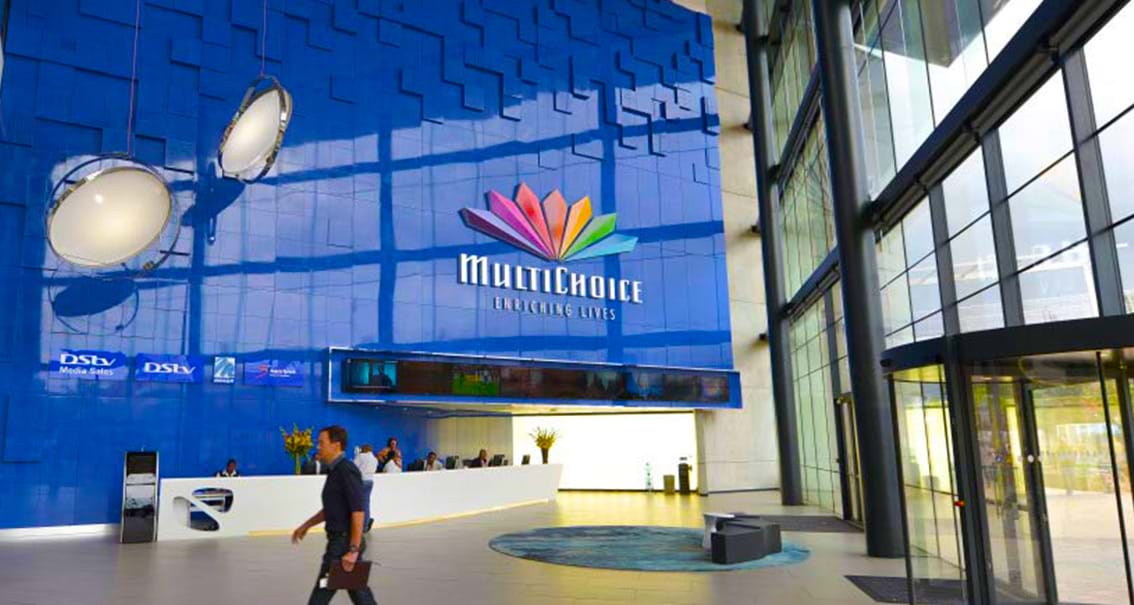
Faced with mounting subscriber losses and declining revenues across its traditional pay-TV business, MultiChoice Group has begun piloting weekly subscription options for DStv customers in Uganda — a major shift that could soon be rolled out to key markets like Nigeria.

The test, which quietly launched seven weeks ago, is part of MultiChoice’s strategy to adjust its pricing model to better match the economic realities of its customer base, particularly in markets where inflation and currency depreciation have made monthly subscriptions increasingly unaffordable.

“It is a big change,” said MultiChoice CEO Calvo Mawela in an interview with Sunday Times. “We think when people are struggling, as we have seen, offering them weekly passes will help in the same way cellphone prepaid has changed the mobile industry.”

Mawela noted that the company expects to evaluate the success of the pilot within three to six months. If it performs well, MultiChoice plans to replicate the model in Nigeria and other major African markets.

Sharp Declines in Nigeria Fuel Urgency

The move comes amid a steep downturn in the company’s core pay-TV performance, especially in Nigeria — one of its most important markets. MultiChoice’s financial report for the year ended March 31, 2025, shows a 9 percent drop in overall revenue to $2.87 billion (ZAR50.8 billion), largely driven by an 11 percent fall in subscription income.

Operating profit fell by 34 percent to $263.50 million (ZAR4.7 billion), while trading profit plunged nearly 50 percent to $228.14 million (ZAR4.1 billion). The pressure has been most severe in its Rest of Africa (RoA) segment, which includes Nigeria, Kenya, Zambia, and Angola.

Over the last two years, MultiChoice has lost a staggering 2.8 million active linear subscribers. Between March 2024 and March 2025 alone, the company shed 1.4 million subscribers in Nigeria — representing 77 percent of the 1.8 million it lost across the RoA segment.

“Nigeria saw sizeable customer losses as high inflation adds more pressure on consumers,” the company wrote in its annual report. Inflation in Nigeria reached 23.71 percent in April 2025, severely eroding purchasing power and forcing many households to cut discretionary spending like pay TV.

As a result, MultiChoice Nigeria’s subscription revenue dropped sharply from $355.93 million (ZAR6.3 billion) in the year ending March 2024 to $197.74 million (ZAR3.5 billion) in the latest fiscal year.

In response, MultiChoice is not only trialing weekly subscription options but also exploring new packages that allow users to build their own viewing bundles by selecting preferred channels. This unbundled, low-cost model could help retain customers who can’t afford or are unwilling to pay for large preset bouquets.

These steps form part of a broader pivot to digital services, which appear to be the only bright spot in MultiChoice’s latest earnings. Revenue from DStv Internet jumped 85 percent year-on-year, while KingMakers — the company’s sports betting platform — surged 76 percent (in constant currency). DStv Stream posted a 48 percent increase, and Showmax, the streaming service, saw a 44 percent rise in active paying customers.

“Our strategy is shaped by developments in our industry, such as changes in technology, which are driving shifts in consumer behavior, as well as the impact of a rise in piracy, streaming services, and social media,” Mawela said.

Nigeria, Next in Line for Weekly Passes?

While MultiChoice has not set a specific timeline for expanding the weekly pass system beyond Uganda, Nigeria is high on the list, given the severe customer attrition and pricing resistance the company faces there. Introducing something close to the widely-touted pay-as-you-go model could mirror the transformation that prepaid mobile services brought to African telecoms — a shift that democratized access and boosted penetration.

With streaming platforms, free content online, and economic hardship eroding the appeal of monthly DStv subscriptions, MultiChoice may have little choice but to adapt or risk further contraction in its most lucrative markets.

If the Ugandan test proves successful, Nigerian consumers could soon be paying for DStv the same way they buy mobile data: one week at a time.