DD
MM
YYYY

PAGES

DD
MM
YYYY

spot_img

PAGES

Home Blog Page 1105

5 Ways Non-VoIP Temporary Numbers Can Protect Your Privacy Online

0

Ever stopped to think about how often you’ve given out your phone number online in the last month alone? How about the past six months? This year? 

When almost every website expects you to share this personal data when you want to create an account or make a purchase, it can feel impossible to keep your identity private online. But, aside from buying a separate phone just for account signups, what can you do?

The more cost-effective solution is to use a site like https://www.smspool.net/ to buy a temporary number that can be used in place of your real one for SMS verification purposes. They’re linked to a real SIM card, like your real phone, and you can access verification codes sent to them via the website you buy them on. 

Here are five ways non-VoIP temporary numbers can protect your privacy online. 

  • Keeps your Real Phone Number Private

The biggest benefit of using a non-VoIP number in place of your own is that you can keep your real phone number private. That way, companies and unknown contacts can’t store or share it (which they often do without your permission). Instead, they’ll store the temporary number you use during signup, which is fine for you since you’ll only use it for the initial account creation process.

  • Helps You Avoid Spam Contact

Another big perk of using a temporary number instead of your own is that your real phone won’t be targeted by spam and robocalls. You’ll discard the temporary number once you’ve used it, so you won’t even be aware if that number ends up being spammed in the future. 

  • Protects Your Identity On Marketplaces

A lot of people are rightfully hesitant to sign up for classified sites and marketplaces like Craigslist or Facebook Marketplace. These sites demand a lot of information upfront, and if you don’t want to disclose too many personal details tied to your identity, using a non-VoIP number is the safer alternative. 

  • Lets You Test Services With No Commitment

When you’re signing up for services or trials and don’t want to commit in the long run, it makes sense to use a non-VoIP number. This will also prevent you from giving away personal contact details when you just want to take advantage of a deal or a trial.

  • Helps You Steer Clear of Data Leaks

Even when a site or service promises security, you never quite know what might happen to your number once it’s stored online. There have been at least 12,195 confirmed data breaches in 2025 so far, and if you don’t want your main phone number to be part of them, you can use non-VoIP numbers to limit how many services have access to it.

Takeaway

Using a non-VoIP number just makes sense if you want to protect your personal data or identity online. 

Sites like SMSPool make it easy to buy temporary numbers, use them to create an account or sign up for a trial, then discard them when you’re done. Don’t share your real number online unless it’s absolutely necessary. 

FinScorpio Review: Can You Trust This Platform?

0

In the ever-growing landscape of online trading platforms, it’s hard to know which ones truly deliver on their promises. FinScorpio has quickly become a name that’s drawing interest, especially for its support across multiple asset classes and a clean, user-first experience. But is it trustworthy? This review unpacks how the platform functions, what real users are saying, and whether FinScorpio earns its spot among the reliable trading solutions.

What Is FinScorpio?

FinScorpio is a fully licensed trading platform that enables users to engage in a wide range of financial markets — including Forex, Stocks, Crypto, Metals, Commodities, and Indices. Built with a focus on both functionality and simplicity, it caters to beginner traders as well as those with years of market experience.

It combines a sharp user interface with a toolkit that includes both manual and automated trading options, live charting, and integrated market analysis. What makes FinScorpio stand out is its transparency in pricing and its strict approach to user safety and compliance.

The platform has been operational since 2021 and complies with international financial regulations, operating under an offshore license in a recognized jurisdiction.

How FinScorpio Trading Works?

To trade on FinScorpio, users first need to sign up and complete the Know Your Customer (KYC) process, which typically takes less than 24 hours. Once verified, deposits can be made using traditional payment methods like credit cards or via cryptocurrency wallets.

The trading terminal is intuitive and offers full customization: from changing chart types to applying advanced indicators. Automated tools such as trade bots and preset triggers can be used to streamline strategy execution. Real-time updates and multi-screen charting further enhance the user experience, allowing traders to act on market changes immediately.

Most withdrawals are processed within 1–2 business days, depending on the payment method and region.

FinScorpio Review: Advantages & Disadvantages

Advantages:

  • Regulated & Transparent: Licensed operations with published terms, risk warnings, and a transparent fee structure.
  • Variety of Assets: Trade across six core market types with one unified account.
  • User-Centric Interface: Whether you’re using desktop or mobile, the experience is smooth and intuitive.
  • Fast Support: Live chat and multilingual email support ensure prompt help when needed.
  • Automation Support: Traders can access signal-based execution or plug in third-party bots.

Disadvantages:

  • Lack of Social Trading: There’s no current option to copy or follow other traders.
  • Advanced Tools Locked by Tier: Some advanced indicators are only available after hitting a minimum account balance.
  • No Demo Account: Unlike some competitors, FinScorpio does not offer a demo mode for practice trades.

Is FinScorpio a Scam?

There are no red flags that suggest FinScorpio is a scam. It provides a clear overview of its licensing, terms of use, and user responsibilities. Financial transactions are secure and backed by bank-grade encryption.

KYC is mandatory for all users, and transaction records are available in each user’s profile. Unlike questionable platforms, FinScorpio does not promote unrealistic returns or high-risk bonuses. The platform also avoids aggressive advertising, focusing instead on performance and client satisfaction.

Is FinScorpio Legit?

Yes, FinScorpio is a legitimate trading platform. It adheres to the latest compliance standards and puts effort into security and transparency. The site is fully encrypted, all client funds are kept in segregated accounts, and trading risks are clearly disclosed.

Traders who’ve used FinScorpio regularly report a consistent experience with no hidden fees or issues withdrawing profits. The company appears to take reputation seriously, offering direct support and conducting regular updates to the trading system.

How to Start Trading with FinScorpio?

The onboarding process is user-friendly:

  1. Register: Provide your name, email, and password to create an account.
  2. KYC Process: Submit ID verification documents to unlock full access.
  3. Deposit Funds: Choose from crypto or traditional banking options to load your wallet.
  4. Start Trading: Use FinScorpio’s tools to analyze markets, place orders, and manage risk.

Everything happens via the web app or mobile application, which are both optimized for speed and usability.

FinScorpio Platform Testimonials

“I was skeptical at first, but FinScorpio has delivered exactly what they promised. Fast deposits, clean UI, and no surprises.” – Anya, Poland

“I like the ability to trade metals and crypto from the same screen. It’s fast, and I’ve never had issues with withdrawing.” – Jerome, Netherlands

“Support team was helpful when verifying my account. I feel safe trading here, and everything’s been smooth.” – Katia, Brazil

Summary About FinScorpio

FinScorpio positions itself as a balanced platform for traders looking for control, clarity, and multi-market flexibility. It doesn’t rely on hype — instead, it offers practical tools, secure infrastructure, and a customer-first design.

Whether you’re day trading crypto or building a longer-term portfolio in stocks and commodities, FinScorpio offers a trustworthy space to execute your strategy. For anyone looking for a serious trading environment without distractions or gimmicks, it’s a name worth considering.

Trump Media Files for Bitcoin-Ethereum ETF After $320 Million Windfall

0

Donald Trump’s media company has filed plans to launch a new cryptocurrency exchange-traded fund (ETF) that would directly invest in Bitcoin and Ethereum — a move that comes just days after a financial disclosure revealed the president’s firm has already generated an estimated $320 million in fees from its Truth Social stock, $TRUMP.

The combination of political power, personal profit, and expanding influence in the digital asset space is stoking a fresh wave of criticism and ethical scrutiny.

The proposed Truth Social Bitcoin and Ethereum ETF, disclosed in a regulatory filing on Monday, aims to give investors simplified access to the two largest cryptocurrencies without needing to manage digital wallets or navigate crypto exchanges. The ETF will be sponsored by Yorkville America Digital and will become part of a broader ecosystem of Trump-branded ventures seeking to capitalize on digital asset enthusiasm.

Trump Media & Technology Group (TMTG) — which operates the social media platform Truth Social and is majority-owned by the president — has in recent months rapidly expanded its crypto ambitions. Earlier in June, the company filed to launch a separate Bitcoin-only ETF and announced plans to borrow cash to buy and hold Bitcoin as a treasury asset. Trump Media has also indicated that it plans to invest in the very ETFs it is now proposing to bring to market.

$320 Million Windfall Fuels Questions

The new ETF filing follows a legally required personal financial disclosure that sheds light on the inner workings of TMTG. According to the document, the company has already raked in approximately $320 million in fees from its Truth Social stock, $TRUMP, largely from enthusiastic retail investors — many of them supporters of the president.

The fees were generated from share-based compensation and transaction-related gains, and they represent one of the most lucrative aspects of Trump’s post-White House business operations.

Some believe that Trump is now leveraging his presidency to directly influence and benefit from financial products that rely on regulatory clarity and political momentum. With Trump positioned to shape cryptocurrency regulation, monetary policy, and financial oversight, ethics experts are concerned the overlap between public office and private enrichment will be stark.

A Crowded, Yet Growing Market

Trump’s entry into the crypto ETF space arrives as investor demand continues to climb. The iShares Bitcoin Trust has pulled in $12.5 billion in 2025 alone, with total assets reaching $70 billion. Ethereum ETFs are also gaining ground — the iShares Ethereum Trust ETF and the leveraged 2x Ether ETF have collectively attracted more than $2 billion in inflows this year, making them the second and third most popular crypto ETFs in the U.S., according to Bloomberg data.

Despite the crowded landscape, Trump Media believes it can break through by blending financial access with political identity. Truth Social already caters to a core user base skeptical of traditional tech giants, and the company sees an opportunity to convert ideological loyalty into investor capital. The ETF products are expected to be promoted heavily on Truth Social and other conservative platforms aligned with the president’s messaging.

Family Control and Business Entanglements

While the White House insists the president is walled off from his businesses, Trump has transferred an estimated $4 billion worth of TMTG stock into a trust controlled by his eldest son, Donald Trump Jr. The structure allows the family to retain control while shielding the president from direct management — a legal workaround that has done little to quiet concerns about self-dealing.

On the same day the ETF was filed, Trump’s sons also launched Trump Mobile, a branded phone service marketed with the same populist pitch — “made in America” and offering an alternative to mainstream providers.

If approved by regulators, the Truth Social Bitcoin and Ethereum ETF would be the first digital asset fund directly tied to a sitting U.S. president. Supporters say the move is consistent with Trump’s long-standing stance as a disruptor of both politics and finance.

With billions already flowing into crypto ETFs this year, and regulatory momentum behind Ethereum-based products in particular, the president’s foray into the space is likely just the beginning.

OpenAI Secures $200m Pentagon Contract as Military Becomes New Frontier of AI Profits

0

OpenAI has landed a $200 million contract with the U.S. Department of Defense, marking a pivotal shift in its business as the company formally enters the lucrative defense technology sector.

The one-year agreement, announced Monday, tasks OpenAI with building prototype “frontier AI” capabilities to support U.S. military operations and internal government functions—a move that underscores how national defense has become a key frontier for artificial intelligence firms seeking growth beyond commercial applications.

This is the first contract with OpenAI listed on the Pentagon’s procurement database and comes at a time when U.S. military agencies are racing to incorporate cutting-edge AI tools into both battlefield strategy and back-office operations. The agreement is being executed under a newly launched initiative, OpenAI for Government, which includes OpenAI’s public-sector-tailored ChatGPT Gov product.

“Under this award, the performer will develop prototype frontier AI capabilities to address critical national security challenges in both warfighting and enterprise domains,” the Department of Defense said in its official contract notice.

From Research Lab to Military Contractor

Founded as a nonprofit research organization, OpenAI has undergone a dramatic transformation in recent years. With soaring commercial demand for its generative AI models and deepening ties to Microsoft, the company is now expanding its reach into defense, healthcare, finance, and enterprise productivity. But this deal with the Pentagon marks perhaps the clearest signal yet that OpenAI is not just a tech company but an emerging contractor in America’s trillion-dollar defense apparatus.

“This contract… will bring OpenAI’s industry-leading expertise to help the Defense Department identify and prototype how frontier AI can transform its administrative operations—from improving how service members and their families get healthcare, to streamlining how they look at program and acquisition data, to supporting proactive cyber defense,” OpenAI said in a blog post.

The $200 million ceiling, while modest relative to the scale of Pentagon procurement, is expected to be just the beginning. With the U.S. defense budget topping $800 billion annually, and artificial intelligence now seen as a core asset in military competitiveness, analysts believe OpenAI is well positioned to secure a larger share of government AI spending in the years ahead.

Military Spending Offers Path to Close Revenue Gap

While OpenAI has surged in popularity thanks to ChatGPT and enterprise licensing deals, the company is still in an aggressive expansion phase. It currently generates more than $10 billion in annualized revenue but faces mounting infrastructure costs and competition in both consumer and enterprise markets. Defense contracts like this one offer a new—and highly stable—revenue stream that could help close the company’s capital gap as it pursues longer-term dominance in AI development.

Competitors like Anthropic have already entered the race. In December, Anthropic announced a collaboration with Palantir and Amazon to deliver AI solutions to defense and intelligence agencies. Around the same time, Anduril Industries—OpenAI’s defense tech partner—secured a $100 million Pentagon contract, further indicating that the military sector is fast becoming a core market for AI innovation.

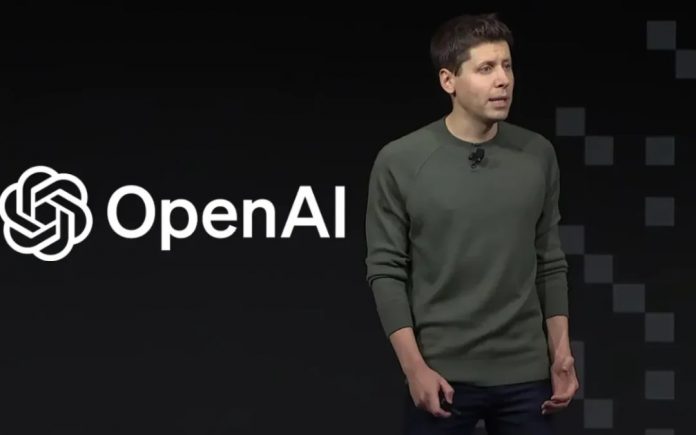
OpenAI CEO Sam Altman, speaking in April alongside OpenAI board member and former NSA director Paul Nakasone, made it clear that the company sees national security not as an obligation, but as a strategic mission.

“We have to and are proud to and really want to engage in national security areas,” Altman said during a public event at Vanderbilt University.

The new OpenAI for Government initiative is designed to cater to this strategy. It offers U.S. agencies access to customized AI models, implementation support, and roadmap insights tailored to defense needs. OpenAI emphasized that all applications under the defense contract will remain within the boundaries of its usage policies—though the company did not specify how oversight or enforcement would work in highly classified environments.

From the White House to the War Room

The contract announcement comes on the heels of OpenAI’s participation in the Stargate Project, a $500 billion U.S.-based AI infrastructure initiative announced in January by Altman alongside President Donald Trump at the White House. The project, aimed at building large-scale computing power within the U.S., positions OpenAI at the center of Washington’s push to outpace China and other geopolitical rivals in artificial intelligence capabilities.

Meanwhile, Microsoft, which provides OpenAI’s cloud infrastructure, has secured clearance from the Defense Information Systems Agency (DISA) to handle classified data through its Azure OpenAI service. This regulatory green light further strengthens OpenAI’s credentials as a trusted partner for national security work.

As AI reshapes industries from finance to healthcare, its deepening role in military and intelligence operations signals a profound change in how technology companies relate to the state. What was once the domain of traditional defense contractors is now being populated by Silicon Valley’s most powerful AI labs.

Nigeria’s Option As Dangote Refinery Scales Its Mission in Downstream Oil Sector

0

I smile: “The Petroleum Products Retail Outlets Owners Association of Nigeria (PETROAN) has once again raised concerns over the growing influence of the Dangote Refinery in Nigeria’s downstream petroleum sector, warning that the company’s forward integration strategy could lead to monopolistic control, threaten thousands of jobs, and cripple small players across the fuel value chain.

“On June 15, Dangote Refinery announced it would begin nationwide distribution of diesel and premium motor spirit (PMS), commonly known as petrol, starting August 15. With a daily refining capacity of 650,000 barrels, it is the largest refinery in sub-Saharan Africa, and many had initially welcomed the move as a long-awaited breakthrough in Nigeria’s fuel-sufficiency efforts.”

The wailing has started. Before you know it, no one will remember how bad it was before Dangote Refinery was born. Yes, a monopolistic has received the refining sector from the gods of Nigeria, free! Nothing like that: Nigeria needs efficient supply chain and competition is the only way to make that happen since the governments at all levels are severely underfunded to deliver platforms of commerce.

Every economy needs big companies especially when governments do not show up. Before the Central Bank of Nigeria had its mojo, the First Bank of Nigeria acted as banks’ bank, clearing cheques for other banks, with the same authority you would have expected from an apex bank.

What the government should focus on is creating smart regulations and not going after big companies. Think of it: before CBN had zonal offices, First Bank ran the zones but was required to support other banks. And First Bank did and everyone was fine.

So, as Dangote expands, we can ask it to open its networks so that qualified trucks can participate, making sure those who want to work stay at work. But we must not be intimidated by associations.  Nigeria needs railway investors, postal system investors and broad investors in platforms of commerce for the economy to have any chance, as you need those investors for entrepreneurs to plant companies on them.

Petrol Marketers Warn of Dangote Refinery’s Threat to Jobs, Market Competition, Analyst Dismisses Fears